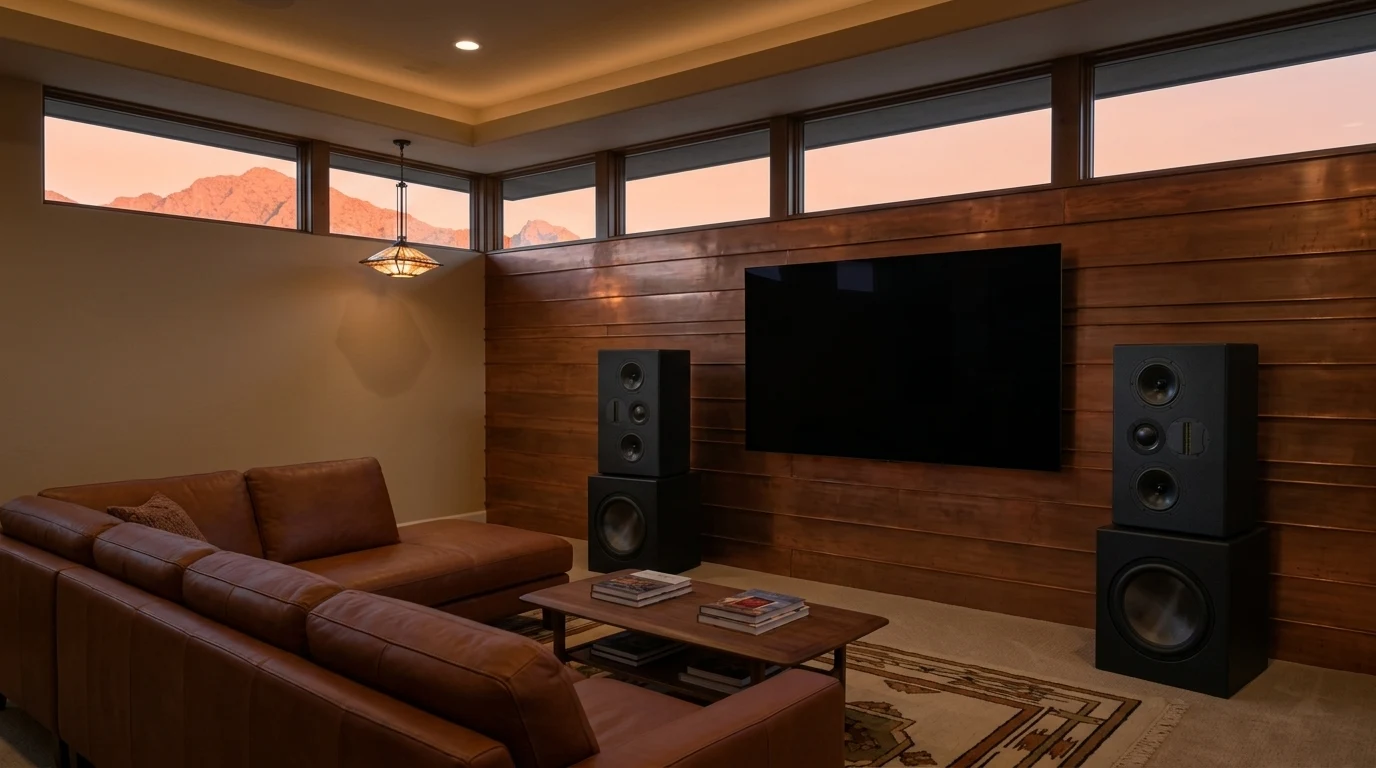
Mike Knows Audio Video designs and installs custom home theater and whole-estate audio for Biltmore Estates, the Wrigley Mansion area, and the entire Camelback Corridor. Frank Lloyd Wright-influenced architecture, contemporary glass-and-steel estates, and the kind of design ambition that demands audio integrated into the architecture itself, not added after the fact.
★ 5.0 on 61 Google & Yelp Reviews · 10-Year Speaker Warranty · Max 15 Clients/Year
Scottsdale office at 5635 N Scottsdale Rd · 5 minutes from the Camelback Corridor · By appointment
I've used two other home theatre installers in our last homes and it does not compare. He follows up, shows up on time, takes the time to finish the job right. If you're looking for great quality at the best price, Mike is your man.
We've got multiple video sets, and a multiple zone audio system, all embedded in the walls and ceilings, inside and outside. The audio is epic! We feel like he is not a vendor, but a friend you can count on.
He is very meticulous on his installs. Everything is perfectly level and neat! Thanks to Mike and his amazing team we now have the theatre of our dreams.
The Camelback Corridor — running from 24th Street east to 56th Street, anchored by the Arizona Biltmore Resort, the Wrigley Mansion, and the surrounding estate enclaves — is the most architecturally serious stretch of Phoenix. Frank Lloyd Wright’s influence runs through the original Biltmore architecture and bleeds into the neighborhood’s aesthetic vocabulary: long horizontal rooflines, cantilevered overhangs, integration of stone and steel, the deliberate compression-and-release rhythm of moving through interior space.
This is not the place for off-the-shelf audio. Estates here are designed with intent, built with custom materials, and detailed at a level that doesn’t tolerate visual or acoustic compromise. The audio system installed has to disappear into the design or it ruins the design. Speakers screwed to a finished wall, exposed cable runs, equipment racks in plain sight, soundbars on the mantle — all of these violations are immediately legible and immediately wrong.
We design audio for these homes the way the architects designed the homes themselves: from the inside out, materials-first, with integration as a primary constraint. Cabinet finishes match the home’s existing palette. Speaker placement respects sight lines. Equipment racks are tucked into closets and pantries with cooling and access planned during construction. The result is audio that you hear but never see — and when you hear it, it sounds intentional.
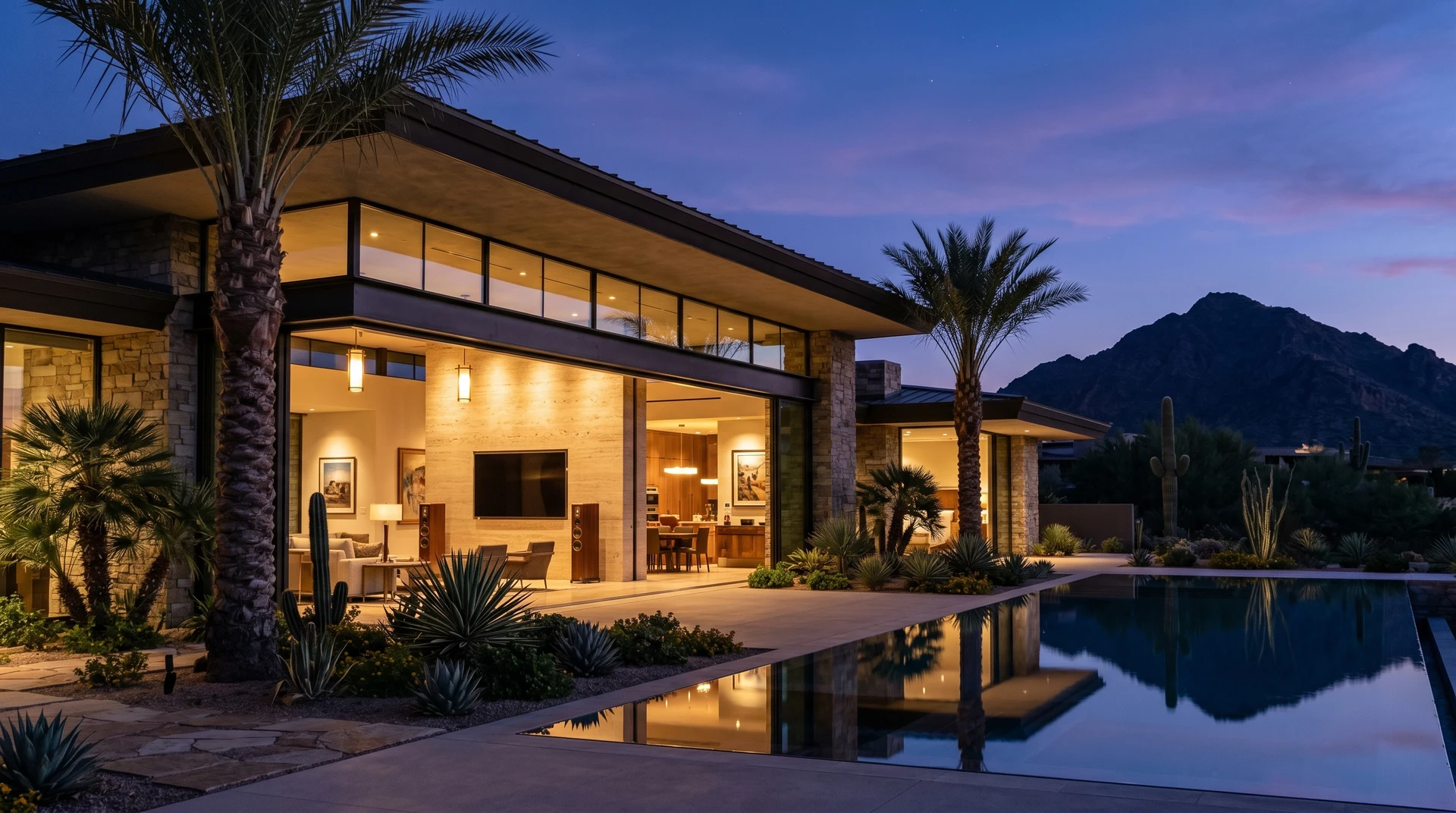
The original 1929 development surrounding the Biltmore Resort, with significant Frank Lloyd Wright influence in the architecture. Properties here trend $2-8M with serious design heritage. Custom audio installations in this neighborhood are about respecting the original architectural intent — horizontal lines, indirect lighting, the relationship between built form and desert landscape.
The hilltop enclave surrounding the historic Wrigley Mansion (built by the Wrigley chewing-gum family in 1932). Estates here are some of the highest-priced in Phoenix, often with multi-acre lots and views that command the entire Valley. Audio integration at this level involves multi-zone whole-estate systems, dedicated listening rooms, and outdoor audio that extends to multiple terraced levels.
The country club and surrounding residential neighborhoods between 24th and 36th streets. Mature properties with renovated estates and serious horticultural landscaping. Many of our clients here are doing major renovations of original estates — preserving architectural character while modernizing systems and infrastructure including AV.
The east-west commercial-and-residential spine running Camelback Road from 24th to 56th. Mix of estate residential, luxury condominium developments (Esplanade, Optima Camelview), and the highest-end retail in Phoenix. Some of our most architecturally adventurous projects sit along this corridor.
The hillside neighborhoods north of the Biltmore proper — including Tatum Heights and the Phoenix Mountain Preserve perimeter. Properties here often have dramatic mountain views and complex elevation challenges. We’ve done multi-level audio integrations that span listening rooms, great rooms, and outdoor terraces tied to a single ecosystem.
The transition zone between Biltmore and Arcadia along the 44th-56th Street arc. Mix of original Biltmore-era estates and Arcadia-style renovations. Some of our most varied work happens here — one project might be a Wright-influenced ultra-luxury new build, the next is a faithful mid-century preservation.
Searching home theater installer near me in Biltmore or along the Camelback Corridor? Our Scottsdale office is 5-10 minutes away.
Free phone consultation. No pressure, no obligation. Talk directly with Mike.
Call (928) 440-1950For Biltmore estate projects we integrate into your design team alongside your architect, interior designer, builder, and landscape architect during the early design phase. Speaker placement, conduit pathways, equipment-rack locations, and acoustic considerations get integrated into the original construction drawings rather than retrofitted later.
Biltmore-area projects often involve multiple zones: great room theater, dedicated listening room, primary suite, multiple outdoor zones (pool deck, multiple terraces, outdoor kitchen, putting green). Each zone is independently controlled, properly engineered for its specific acoustic environment, and integrated into a single ecosystem accessible from your phone or in-wall control panels.
CNC-machined cabinets in powered or passive configurations, built in our Arizona workshop. Finishes designed for the Biltmore aesthetic palette — rich walnut, blackened steel, polished travertine-matched coatings, original-material veneers. Towers, on-wall thin-mount, custom center channels. Every pair is built for one specific home, ships with a birth certificate, and carries our 10-year warranty.
Many Biltmore estates have the floor area for a dedicated theater room — a space specifically engineered for cinema rather than a great-room compromise. Full Dolby Atmos engineering, acoustic treatment integrated into the wall and ceiling finishes, tiered seating riser construction, calibrated projection, and dedicated audio chain. These projects typically run $50,000-$150,000+ depending on scope.
Every Biltmore installation gets calibrated manually using a Phonic PAA6 acoustic analyzer and measurement microphones at every primary seating position. Frequency response, time alignment, channel balance, reflection management — all dialed in by hand to your specific room. No auto-calibration shortcuts.
Biltmore outdoor spaces deserve resort-grade audio. We design zone-based outdoor systems with weather-rated components, proper dispersion engineering, and the kind of coverage that works for a quiet dinner party or a 200-person event. Pool deck, multiple terraces, outdoor kitchen, putting green, casita, ramada — each handled appropriately.
Yes — the Camelback Corridor (24th Street to 56th Street) and Biltmore Estates are 5-10 minutes from our Scottsdale office. We routinely work on estates throughout the area including properties near the Wrigley Mansion, Arizona Biltmore resort, and the Tatum Highlands. The architectural ambition here — Frank Lloyd Wright-influenced design, contemporary glass-and-steel estates, restored historic properties — demands audio integration that respects the architecture rather than getting bolted on after construction.
Biltmore-area projects represent some of the highest-end installations we do. Comprehensive home theater systems for Biltmore estates typically range from $25,000–$80,000+. Dedicated theater rooms with full Dolby Atmos, acoustic treatment, and tiered seating run $60,000–$150,000+. Whole-estate audio systems integrating great room, multiple zones, outdoor spaces, and dedicated listening rooms exceed $100,000 routinely. Every project gets a detailed proposal after a comprehensive on-site assessment.
Yes, and for projects of this caliber it’s essential. Most Biltmore Estates and Camelback Corridor projects involve an architect, interior designer, custom builder, and sometimes a landscape architect or AV consultant. We integrate into that team during the design phase so speaker placement, cable infrastructure, equipment-rack locations, and acoustic considerations are part of the original drawings. Audio added after construction is always a compromise, and at this price point compromises are not acceptable.
Absolutely. The horizontal-line, prairie-style architecture of the Biltmore area — and the original Wright-designed Arizona Biltmore Resort that gives the neighborhood its name — has specific aesthetic requirements. Our custom on-wall and thin-mount speakers, finished in materials matched to the home (rich walnut, blackened steel, polished concrete, original masonry), respect these design lines. We don’t punch holes in walls for in-wall speakers; we don’t drop ceiling speakers into architecturally-significant T-beam ceilings. The audio integration follows the architecture’s lead.
Phone consultations same day. In-home site survey ($250, credited toward your project) within 7–10 days. Our office at 5635 N Scottsdale Rd is 5 minutes from the eastern end of the Camelback Corridor (56th Street) and 10 minutes from the Arizona Biltmore. Service calls, calibration adjustments, and follow-up visits are easy at this proximity.
Yes — and outdoor audio at Biltmore properties is some of the most demanding work we do. Resort-grade pool decks, multiple outdoor entertaining zones, putting greens, outdoor kitchens, ramadas, casitas — each gets independent zone control with proper audio coverage engineered for the specific landscape. All outdoor speakers are weather-rated and we engineer dispersion patterns for the exact layout rather than dropping in generic patio audio.
Free phone consultation. We’ll walk through your design intent, your architectural goals, and how audio integrates into your project. Pull us in during the design phase.
Page last reviewed: May 2026