
A Cambridge company sold speakers to fund a TV, matched a speaker twice its price, then went bankrupt and became a nameplate. This is the story of Advent.
Every hobby has a gatekeeping problem, and in 1969 hi-fi had a bad one. Great sound cost real money. The speakers the magazines raved about were priced like furniture, and plenty of music lovers just couldn't get there. Then a small Cambridge company shipped a plain brown box that changed the math.
The pitch was almost rude in its simplicity: just as good, at half the price. Advent didn't invent a new technology to pull it off. It took a proven idea, built it honestly, and refused to pad the price. That's the part of this story I keep coming back to, because I build speakers for a living and I know exactly how hard "cheaper but not worse" really is.
Key Takeaways
- Advent Corporation was founded in 1967 in Cambridge, Massachusetts by Henry Kloss, who had already co-founded Acoustic Research and KLH.
- Kloss sold speakers mainly to fund his real dream: a big-screen projection TV for the home.
- The Advent Loudspeaker (1969) rivaled the far pricier Acoustic Research AR-3a at roughly half the price and became one of the best-selling speakers of the early 1970s.
- The Advent 201 (1971) is widely credited as the first cassette deck with Dolby B, helping turn tape into a hi-fi medium.
- Advent went bankrupt in 1981; the name was later sold hand to hand until it became a budget nameplate now controlled by VOXX, acquired by Gentex in April 2025.
What was the Advent Loudspeaker, and why did it matter?
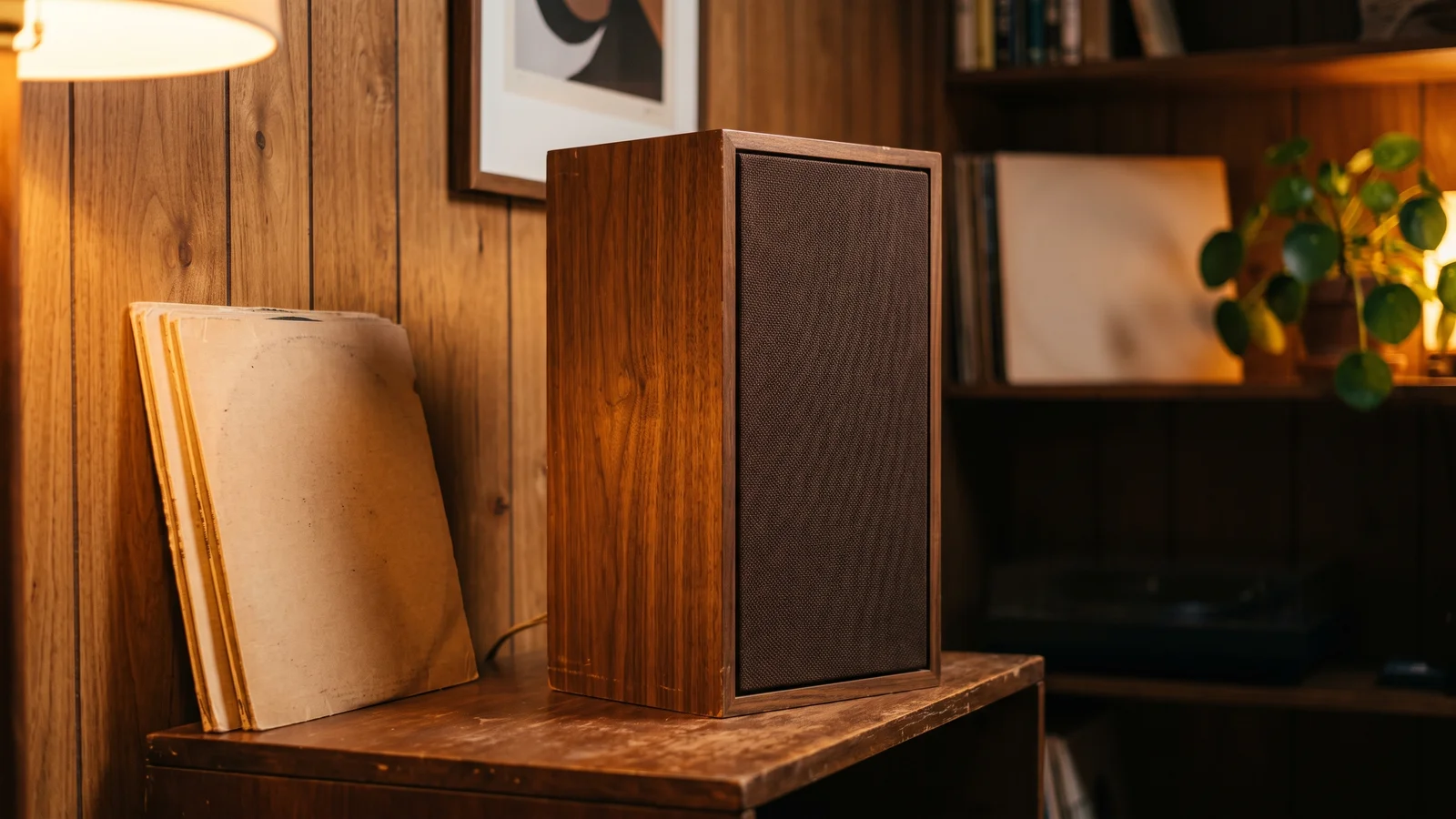
The Advent Loudspeaker, launched in 1969, was a two-way acoustic-suspension design with a 10-inch woofer that rivaled the far more expensive Acoustic Research AR-3a at roughly half the price, as The Absolute Sound recounts in its history of the speaker. It became a genuine phenomenon. For a lot of people, it was their first taste of real high fidelity.
Here's why it landed so hard. Acoustic suspension, the sealed-box approach that traded efficiency for tight, deep bass in a small cabinet, was a proven idea by the late 1960s. Advent didn't reinvent it. The company just executed it beautifully and priced it for people with jobs instead of trust funds. Audio writers have since called it one of the best-selling speakers of the early-to-mid 1970s, an assessment Audioholics makes in its rundown of the most influential loudspeakers.
After a smaller model arrived, folks started calling the original "the Larger Advent" to tell them apart. The naming was accidental, the way the best nicknames are. What stuck was the reputation. When you can put a speaker in front of someone and they can't hear the difference between yours and the one costing twice as much, you've done something that matters. That's the whole game.
Who founded Advent, and why sell speakers to build a TV?
Advent Corporation was founded in 1967 in Cambridge, Massachusetts by Henry Kloss, who by then had already co-founded Acoustic Research in 1954 and KLH in 1957, according to his Sound & Vision obituary. The man was on his third loudspeaker company before he turned 40. But speakers weren't actually the point this time.
Kloss wanted to build projection television for the home, and the research was going to be expensive. So he did something quietly shrewd: he sold speakers to generate the cash flow to fund the TV work, as Stereophile noted in remembering him. The Advent Loudspeaker wasn't the mission. It was the engine that paid for the mission. Knowing that reframes the whole company for me. Advent was a TV startup wearing a speaker company's clothes.
I won't retell Kloss's full life here, because he earns his own chapter in this series. The short version: he was one of the most important figures in American audio, a serial founder who kept giving up the companies he named and starting over. For Advent, what matters is that his ambition ran ahead of his cash, and that pattern would eventually catch up with the company.
The cassette decks that made tape hi-fi
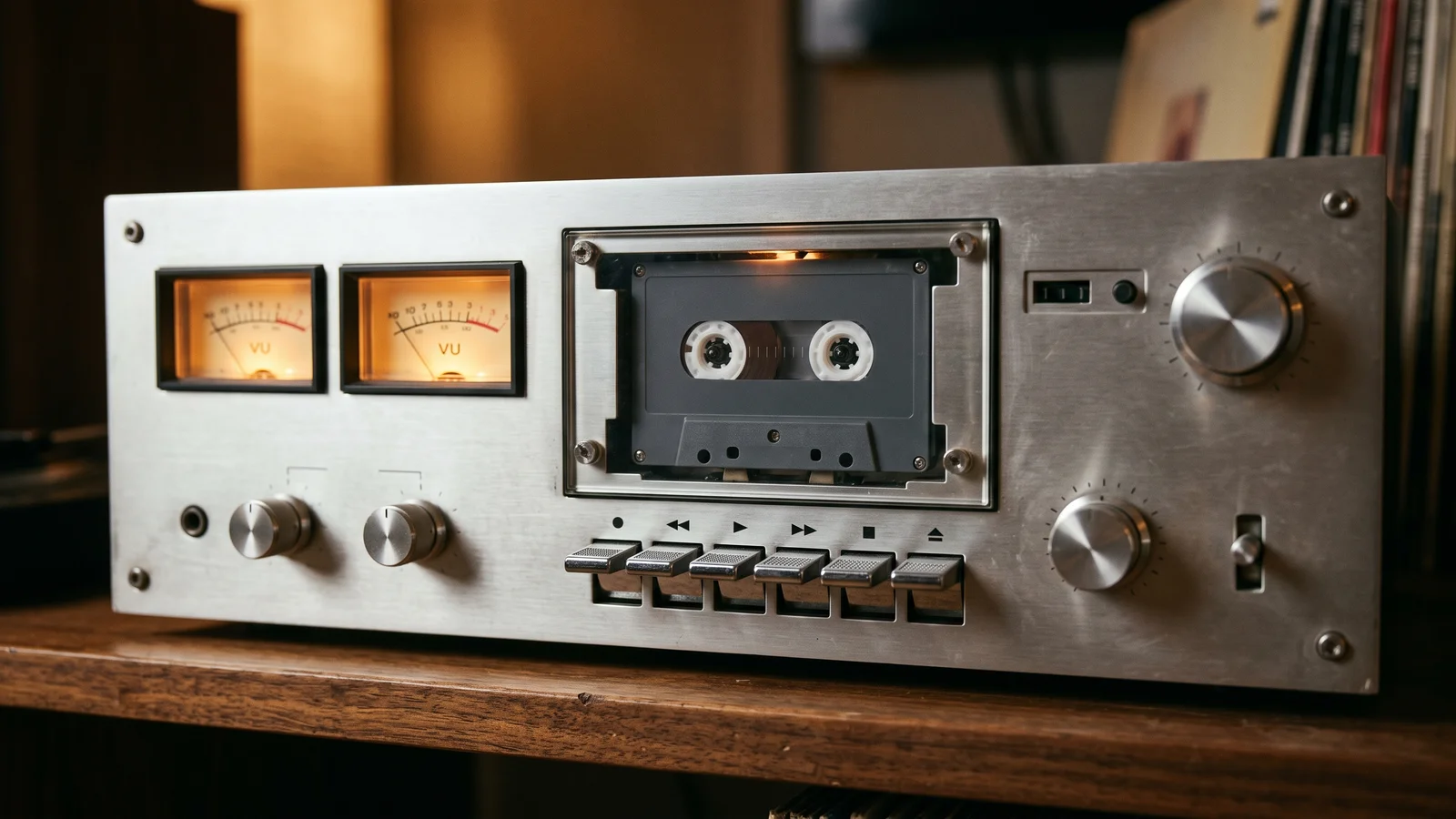
Advent also picked a fight nobody else wanted. The compact cassette was considered a toy for dictation in 1970, too hissy and low-fi for music. The Advent 200 deck arrived that year, ran into mechanical problems, and got replaced quickly, as the company's history records. Then came the one that counted.
The Advent 201, released in 1971, is widely credited as the first cassette deck to include Dolby B noise reduction, which cut the tape hiss that had kept cassettes out of serious systems, per the Advent Corporation history. Pair Dolby B with good tape and suddenly the cassette could hold real music. That single decision helped turn a dictation format into a hi-fi medium, and eventually into the mixtape culture a whole generation grew up on.
What was the Advent VideoBeam projection TV?
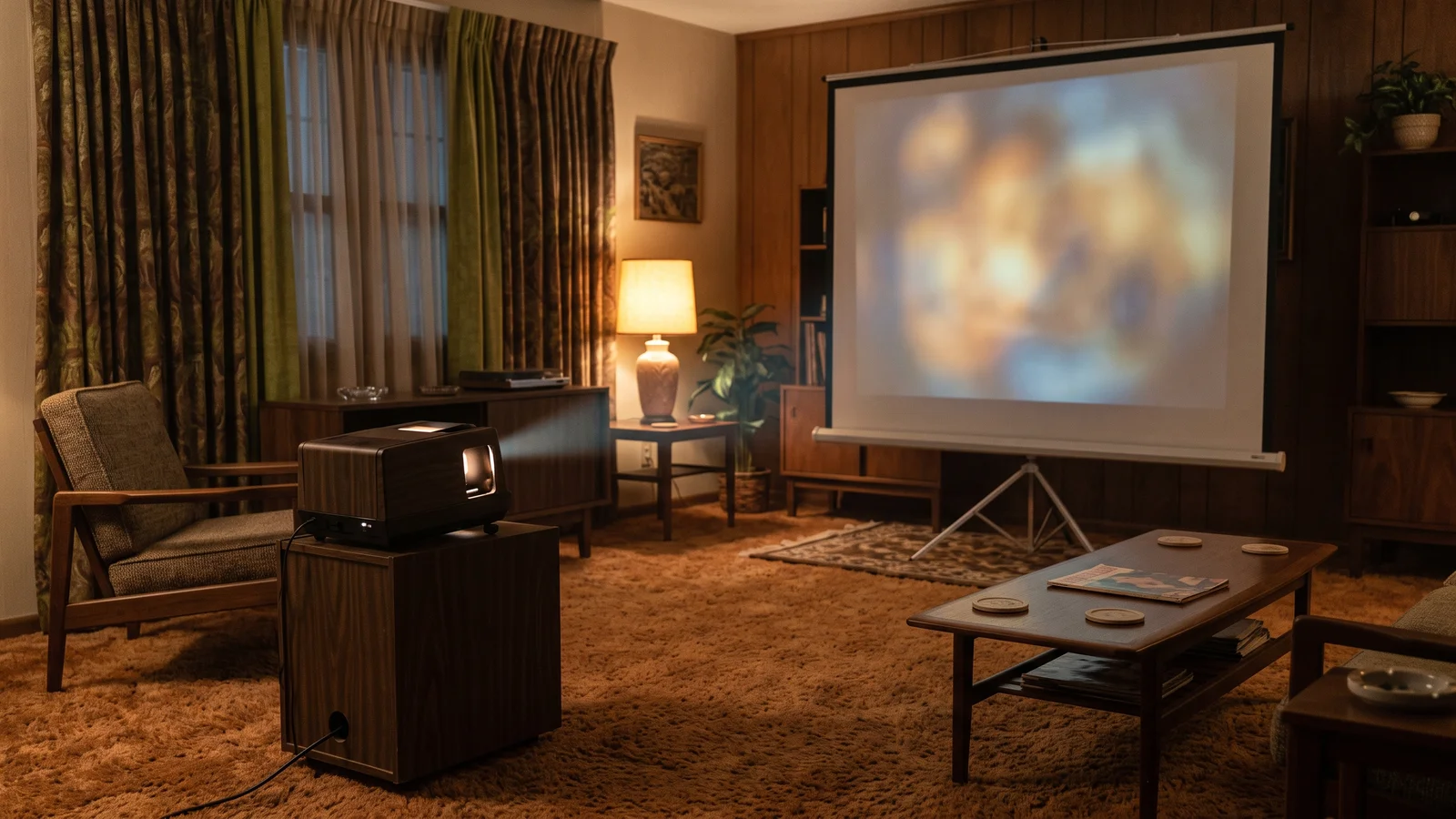
The Advent VideoBeam Model 1000, introduced in 1972 and in production by 1973, is widely called the first commercially successful large-screen projection TV for the home, projecting onto a 7-foot screen and selling for around $2,500 at launch, as Sound & Vision has documented. Note the careful wording. Not the first projection TV ever, the first successful one.
This was the machine Kloss built Advent to build. A 7-foot picture in your living room in 1973 was science fiction. The engineering was real, and Kloss was later credited with an Emmy for the projection-TV work, a rare honor for an audio guy, as the VideoBeam history notes. For a moment, Advent looked like it had leapt ahead of everyone.
There was just one problem, and it was fatal. Advent lost money on every single unit it sold, according to the VideoBeam history. The company had cracked a hard technical problem and priced itself into a hole doing it. Every VideoBeam that rolled out the door made the balance sheet worse. You cannot outsell that kind of math, and Advent tried.
Why did Advent Corporation go bankrupt?
Advent declared bankruptcy in March 1981, and the collapse traced back to a leadership split as much as to the money-losing VideoBeam, as Inc. magazine detailed in its 1981 post-mortem. The company had the products. What it didn't have was one hand on the wheel.
Per that Inc. account, Advent faltered because the visions of three key people never merged: inventor Henry Kloss, financier Peter Sprague, and marketing executive Bernie Mitchell, as the magazine reported. Kloss wanted to chase the next breakthrough. The money side wanted margins and discipline. The marketing side wanted a business it could actually sell. Three smart people, three different companies in their heads, one boardroom. That rarely ends well.
Kloss left the company he founded around 1976 to 1977 amid that split, and he didn't sit still. He went on to found Kloss Video Corporation in 1977 and later Cambridge SoundWorks in 1988, as Stereophile recorded in his obituary. The man kept building. But Advent without Kloss was a company that had lost its inventor and kept its debts. The Cambridge factory closed in 1979 with around 650 people laid off, per the Advent Corporation history, and the bankruptcy followed in 1981. Advent never recovered.
Who owns the Advent brand now?
Nobody, in the sense that matters. Advent the company died in 1981. What survived was the trademark, and it has been passed hand to hand for decades: from Jensen interests to Recoton in 1996, to Audiovox in 2003, and on to VOXX International, which Gentex Corporation acquired in April 2025, as VOXX's own brand history and corporate record show. The badge outlived the mission.
Trace the relay and it reads like a cautionary tale. After the 1981 bankruptcy the Advent name moved to Jensen and later International Jensen interests, though the exact mechanism is murky enough that I won't pretend to know every step, as period filings hint. Recoton picked up the Jensen brands in 1996, as Crain's Chicago Business reported at the time. Then Audiovox won the Recoton audio brands out of bankruptcy in 2003 for about $40 million plus assumed debt, taking on Advent, Jensen, and Acoustic Research together, as TWICE covered the deal. Some sources put final completion in 2004.
Audiovox became VOXX International in 2012, and today "Advent" is a dormant, budget nameplate: a label you might find on a clock radio or an outdoor speaker rather than on a speaker that rivals gear twice its price. That slow slide from a proud independent to a line in a brand portfolio is what the writer Cory Doctorow calls enshittification, and audio is full of it.
But let me be fair, because the lazy version of this story is wrong. VOXX didn't ruin a living company. Advent was already dead in 1981, years before any of these buyers showed up. What VOXX and the owners before it bought was a trademark, and putting a still-recognized name on affordable gear is ordinary brand-portfolio economics, not sabotage. Nobody stabbed Advent. It bled out in a boardroom in Cambridge, and the name was simply sold off afterward like any other asset.
Still, there's a lesson in the relay, and it's the reason some of us build the way we do. A name can be sold. Real value can't be, because it lives in the object, not the label. When Advent shipped a speaker that matched one twice its price, that value was built into the box by people who cared. We build custom speakers by hand in our Arizona workshop, one small batch a year, each one signed off and shipped with a birth certificate. You can't buy that at auction. You have to build it in.
Frequently Asked Questions
What was the Advent Loudspeaker?
The Advent Loudspeaker was a two-way acoustic-suspension speaker launched in 1969 with a 10-inch woofer. It rivaled the far pricier Acoustic Research AR-3a at roughly half the price, and audio writers consider it one of the best-selling speakers of the early 1970s. After a smaller model arrived, the original became known as "the Larger Advent."

Who founded Advent?
Advent Corporation was founded in 1967 in Cambridge, Massachusetts by Henry Kloss, who had already co-founded Acoustic Research in 1954 and KLH in 1957. Kloss sold speakers mainly to fund his real ambition, a big-screen projection TV for the home. He left Advent around 1976 to 1977 and later founded Kloss Video Corporation and Cambridge SoundWorks.
What was the Advent 201 cassette deck?
The Advent 201, released in 1971, is widely credited as the first cassette deck to include Dolby B noise reduction. By cutting the tape hiss that had kept cassettes out of serious systems, it helped turn the compact cassette from a low-fi dictation format into a genuine hi-fi medium.
What happened to Advent?
Advent lost money on its money-draining VideoBeam projection TV, and a split among its inventor, financier, and marketing leadership left it without clear direction. The Cambridge factory closed in 1979, laying off about 650 people, and the company declared bankruptcy in March 1981. It never recovered, and only the trademark survived.
What was the Advent VideoBeam?
The Advent VideoBeam Model 1000 was a big-screen home projection TV introduced in 1972 and in production by 1973. It projected onto a 7-foot screen and sold for around $2,500. It is widely called the first commercially successful large-screen home projection TV, though Advent reportedly lost money on every unit it sold.
Who owns the Advent brand now?
The Advent trademark is controlled by VOXX International, which Gentex Corporation acquired in April 2025. After Advent's 1981 bankruptcy, the name passed through Jensen interests, then Recoton in 1996, then Audiovox in 2003, which became VOXX in 2012. Today Advent is a dormant, budget nameplate rather than a living hi-fi brand.
Sources
- Wikipedia, "Advent Corporation": https://en.wikipedia.org/wiki/Advent_Corporation
- Wikipedia, "Henry Kloss": https://en.wikipedia.org/wiki/Henry_Kloss
- Wikipedia, "Advent VideoBeam Television": https://en.wikipedia.org/wiki/Advent_Video_Beam_Television
- Wikipedia, "Voxx International": https://en.wikipedia.org/wiki/Voxx_International
- The Absolute Sound, history of the Advent Loudspeaker: https://www.theabsolutesound.com/articles/the-advent-loudspeaker
- Sound & Vision, on the VideoBeam and big-screen TV: https://www.soundandvision.com/content/big-picture
- Sound & Vision, "Henry Kloss (1929-2002)": https://www.soundandvision.com/content/henry-kloss-1929-2002
- Stereophile, Henry Kloss obituary: https://www.stereophile.com/news/11447
- Inc. magazine, 1981 Advent post-mortem: https://www.inc.com/magazine/19810301/advent
- TWICE, "Audiovox Wins Recoton Audio Bid" (2003): https://www.twice.com/news/audiovox-wins-recoton-audio-bid-36868
- Crain's Chicago Business, Jensen/Recoton (1996): https://www.chicagobusiness.com/article/19960615/ISSUE01/10004869
- U.S. Securities and Exchange Commission, EDGAR (International Jensen filings): https://www.sec.gov/cgi-bin/browse-edgar?action=getcompany&company=international+jensen
- VOXX International, corporate brand history: https://en.wikipedia.org/wiki/Voxx_International
- Audioholics, most influential loudspeakers: https://www.audioholics.com/audio-technologies/most-influential-speakers
Mike Vincent is the founder of Mike Knows Audio Video and WubWub Audio, where he designs and hand-builds custom loudspeakers and home theaters in Arizona, the old way, for about fifteen clients a year. He has enormous respect for anyone who ever shipped a speaker that matched gear twice its price; if you want that kind of honest value built into the box by hand, start with our custom loudspeakers.
Comments
Leave a Comment