
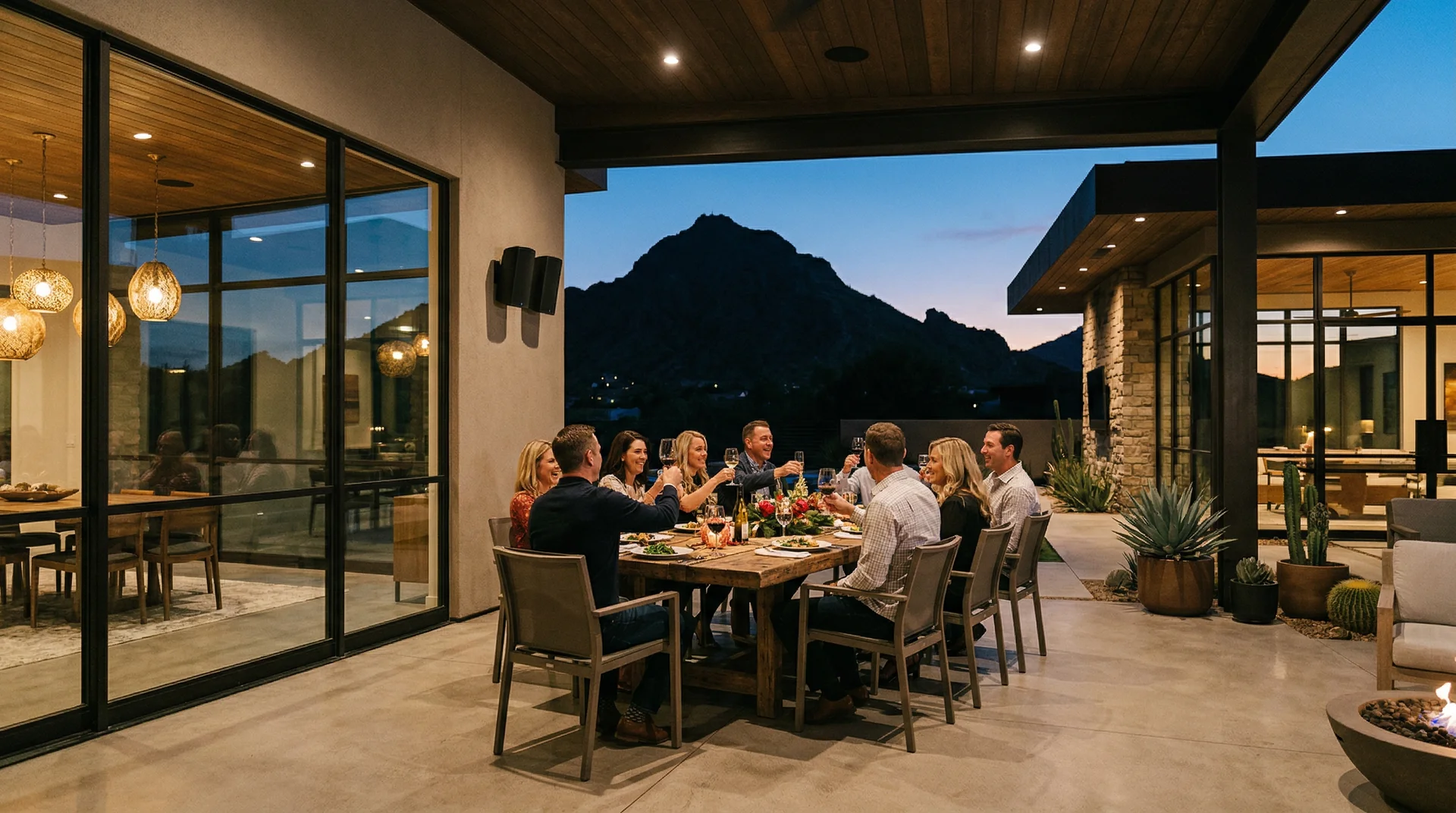
Paradise Valley homeowners entertain year-round. Learn how audio zones transform dinner parties, Super Bowl Sundays, and 50-guest gatherings with one-button control and indoor-outdoor flow.
Paradise Valley has a reputation for entertaining that few communities in the country can match. Country club memberships, resort-style backyards, and a social calendar that never slows down. According to the Luxury Portfolio International 2025 report, 73% of luxury homeowners host social gatherings at least once a month. In Paradise Valley, I'd wager that number is even higher.
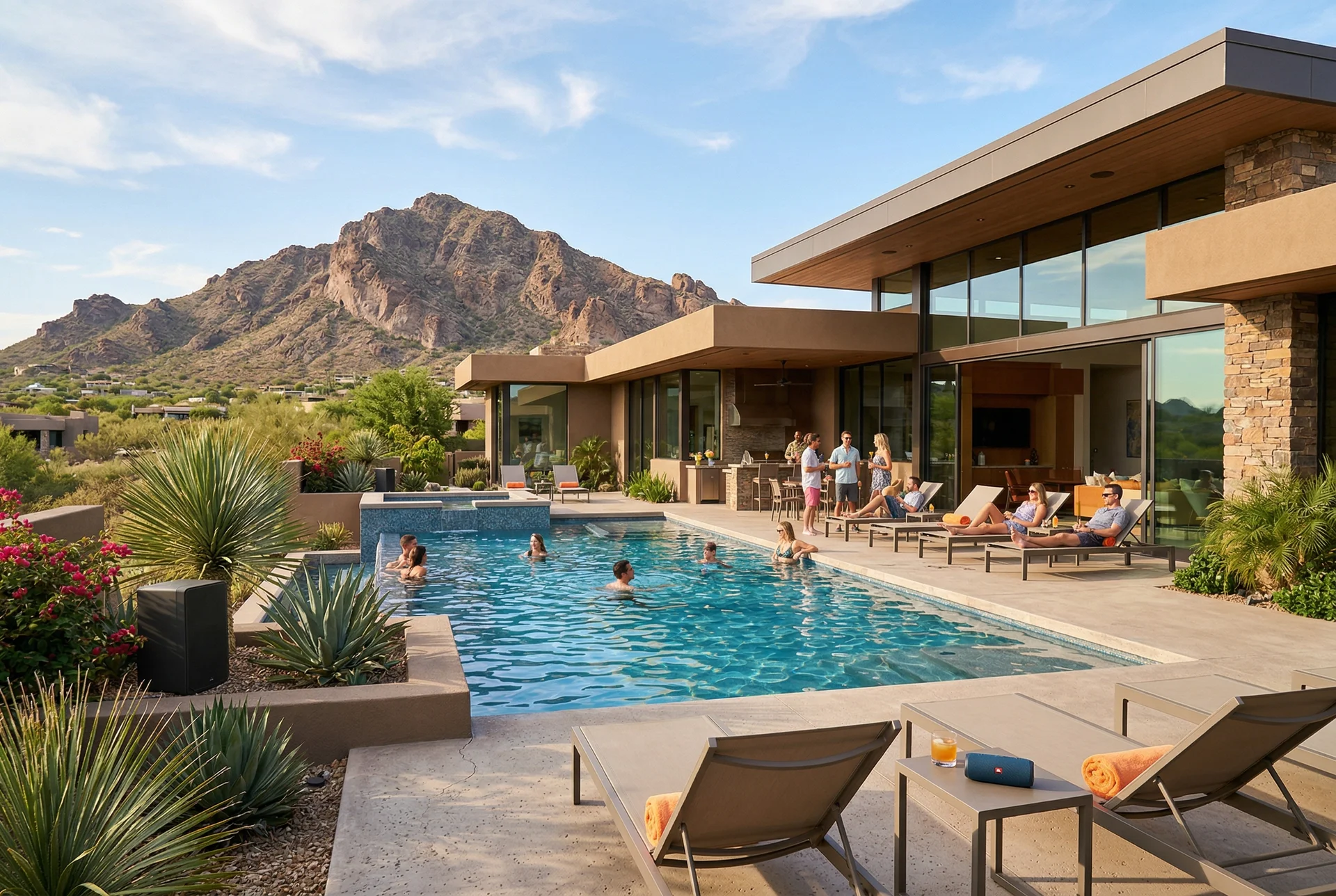
But here's the thing most homeowners don't think about until it matters: your audio system determines whether a party feels alive or flat. Background jazz for eight guests around the dining table requires a completely different setup than a Super Bowl watch party with 50 people spread across the patio and great room. The good news is that a properly designed zone system handles both scenarios, and everything in between, with almost no effort on your part.
Why Does Paradise Valley Entertaining Demand More From Your Audio?
Paradise Valley isn't a typical suburb. It's a town built around entertaining. The Town of Paradise Valley reports a median home value exceeding $3.5 million, with most estates featuring dedicated outdoor living spaces designed for hosting. That creates audio challenges most standard systems simply can't solve.
Think about a typical Saturday at a PV estate. Morning coffee on the patio with soft acoustic music. An afternoon pool gathering with upbeat playlists. Evening dinner party where conversation matters more than volume. Each scenario needs different speakers, different volume levels, and different coverage patterns.
In my experience working with Paradise Valley clients, the number one complaint about their existing audio is this: it works fine for one scenario but falls apart for everything else. A system tuned for background dinner music can't fill a backyard during a pool party. And a system loud enough for game day overwhelms an intimate gathering. That's exactly the problem audio zones solve.
What Are Audio Zones and How Do They Work?
Audio zones divide your home into independent listening areas, each with its own source, volume, and speaker configuration. The CEDIA 2025 Integrated Technology Insights report found that 68% of custom residential projects now include three or more audio zones. For Paradise Valley estates, I typically design four to six zones minimum.
Each zone operates independently. Your covered patio plays dinner jazz at conversation-friendly volume while your pool deck plays something livelier for the swimmers. Your great room runs the pregame show. Your kitchen keeps its own playlist going for the caterers. Every zone has its own volume control and source selection.
The real power shows up when you group zones together. Hosting a big event? Group the patio, pool deck, and great room into one mega-zone playing the same source at matched volumes. Intimate dinner? Isolate just the dining area and patio. One button on a control panel or phone app handles the switch.
How Should You Set Up Audio for Dinner Parties?
Dinner parties are about conversation first and music second. Research from the Journal of the Acoustical Society of America (2024) confirms that background music above 70 decibels forces guests to raise their voices, reducing perceived enjoyment by up to 30%. For a dinner party, your audio should sit around 55 to 65 decibels, just enough to fill silence without competing with conversation.
I configure dinner party zones with speakers positioned to create even, low-level coverage. On-wall speakers flanking the dining area or patio fireplace work perfectly for this. Tower speakers in a great room can be dialed back to provide warm ambient fill. The key is even distribution so there are no hot spots where one guest is blasted while another hears nothing.
Source selection matters here too. A dedicated streaming zone pulling from a curated playlist eliminates the awkward moment when someone's phone rings mid-song. Most of my Paradise Valley clients keep two or three preset "scenes" saved: dinner party, cocktail hour, and morning coffee. Each adjusts volume, source, and active zones automatically.
What Does Game Day Audio Look Like in a Paradise Valley Home?
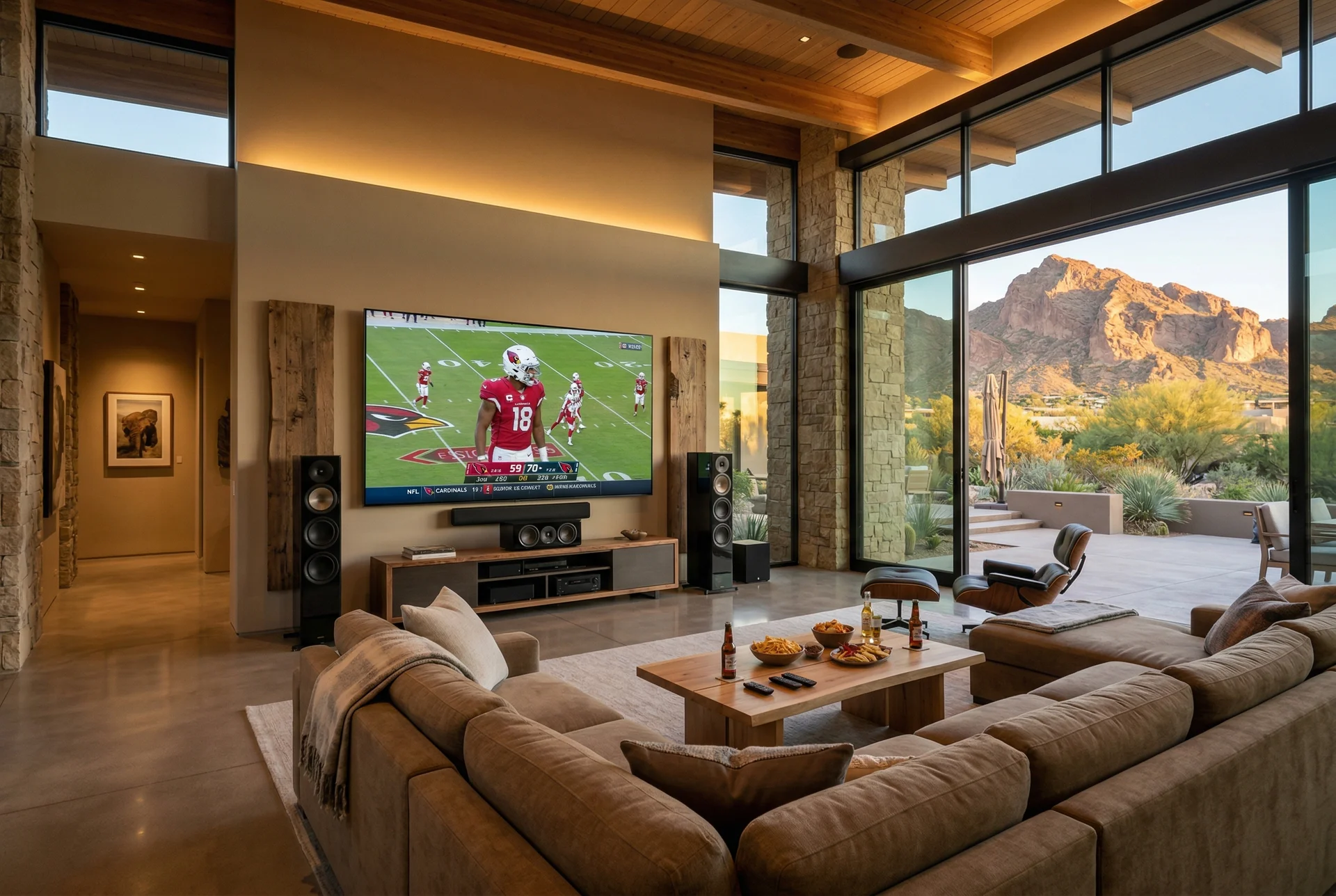
Super Bowl Sunday is practically a holiday in Paradise Valley. According to the National Retail Federation (2025), Americans planned to spend a record $17.3 billion on Super Bowl Sunday, with the average viewer spending $86.04 on food, drinks, and merchandise. In a town where watch parties routinely draw 30 to 50 guests, the audio system has to deliver.
Game day demands a completely different approach than dinner parties. You want the broadcast loud and clear in the main viewing area. Surround speakers create that stadium feel for the great room. But you also need the audio piped to the patio and pool deck where half your guests are gathered around the outdoor TV or just socializing.
Here's what most installers miss: game day audio isn't just about volume. It's about synchronization. If the patio audio is even a half-second behind the great room, guests walking between spaces hear an echo effect that's genuinely disorienting. Proper zone grouping locks all speakers to the same source with zero delay. That's a configuration detail, not a hardware upgrade, but it makes a massive difference.
I also set up a secondary zone for the kitchen or bar area during game day. That zone gets the broadcast audio at a lower volume so folks grabbing food or mixing drinks can still follow the game without the full stadium experience two feet from the guacamole.
How Do You Handle Indoor-Outdoor Flow for Large Events?
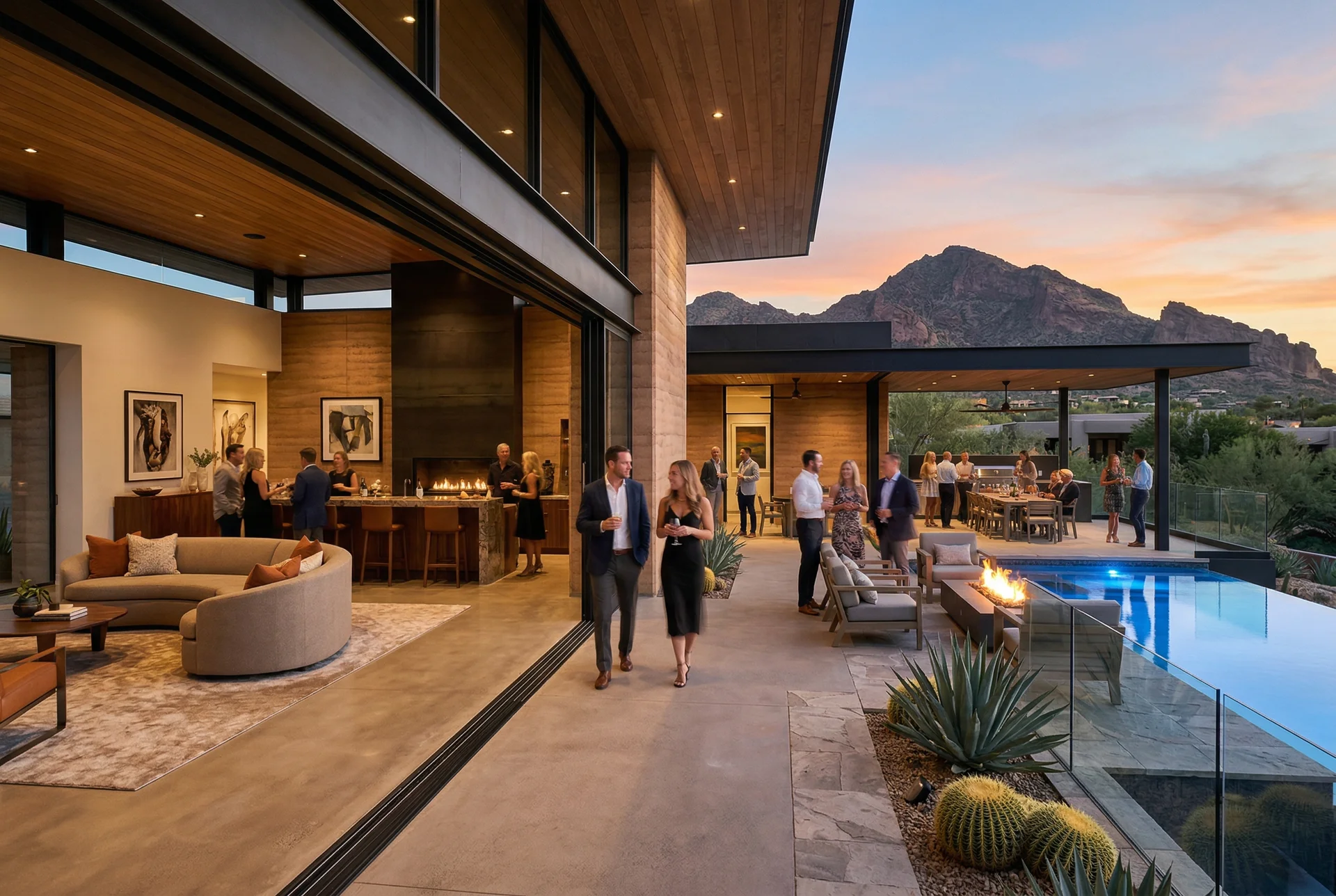
This is where Paradise Valley entertaining gets interesting. A Houzz 2024 Outdoor Living Trends study found that 78% of homeowners who renovated outdoor spaces specifically designed them to extend indoor entertaining. In PV, the line between inside and outside barely exists. Retractable glass walls, covered patios that feel like living rooms, and outdoor kitchens that rival indoor ones. Your audio has to flow just as naturally.
The solution is overlap zones at transition points. Where the great room opens to the covered patio, I position speakers so both zones share coverage in that doorway area. When zones are grouped for a big event, guests move from inside to outside without noticing a change in the music. When zones are separated, each side maintains its own identity.
For events with 50 or more guests, I typically recommend grouping three to four zones: great room, covered patio, pool deck, and outdoor kitchen. That creates one unified sound field across the entire entertaining footprint. Volume balancing between zones accounts for the fact that outdoor spaces need more output than enclosed rooms to achieve the same perceived loudness.
What Speakers Actually Work for Outdoor Entertaining in Arizona?
Arizona's climate is brutal on electronics. Summer temperatures above 115 degrees, monsoon dust storms, and UV exposure that degrades plastics within a few seasons. Any speaker going outdoors in Paradise Valley needs to be purpose-built for it.
For covered patios, I use on-wall speakers rated for outdoor use. These mount under the eave where they're protected from direct sun and rain but still exposed to heat and dust. IP65 or IP66 ratings are the minimum I'll specify for this application. For open pool decks and yard areas, landscape-style speakers designed to sit at ground level provide 360-degree coverage that fills space without visual clutter.
I build custom on-wall speakers at my Arizona workshop that are specifically finished for outdoor durability. Standard cabinet materials don't survive a Sonoran Desert summer. The UV, the thermal cycling from 115-degree days to 60-degree winter nights, the calcium dust from hard water misting systems. Every outdoor speaker I install accounts for these conditions because I've seen what Arizona does to hardware that wasn't built for it.
Ceiling speakers work well under covered patios too, with a maximum of four per zone providing even overhead coverage. Combined with a pair of on-wall speakers at ear level, that gives you both ambient fill and focused listening from the same zone.
Can You Really Switch From Dinner Party to House Party With One Button?
Yes, and it's simpler than most people expect. Modern control systems store "scenes" that recall every setting at once: which zones are active, what source each zone plays, the volume of each zone, and any EQ adjustments. According to Statista (2025), the global smart home market reached $134.4 billion, with whole-home audio control ranking among the top five most-used automation features.
A typical Paradise Valley client might have four or five scenes saved. "Dinner Party" activates the dining room and patio at low volume with a jazz playlist. "Pool Day" fires up the pool deck and outdoor kitchen with a summer mix. "Game Day" groups the great room, patio, and bar area on the broadcast source. "Full House" links every zone to one source at party volume.
Switching between them takes one tap. The system adjusts volumes, activates the right zones, and queues the right source. No walking around the house adjusting individual speakers. No asking guests to turn something down in the other room. It just works, because it was designed to work that way from the start.
What's the First Step for Paradise Valley Homeowners?
Every entertaining audio project starts with understanding how you actually use your home. Not how a brochure says you should use it, but how your life really works. Do you host 10 dinner parties a year or 50? Is the Super Bowl your biggest event, or is it the holiday open house? Do your guests congregate on the patio or spread across the property?
I start every Paradise Valley project with an in-home walkthrough. I want to see the spaces, understand the traffic flow, and hear what you're hoping to achieve. From there, I design a zone layout that matches your actual lifestyle. Custom speakers are built at my Arizona workshop over 6 to 12 weeks, calibrated to your specific rooms, and installed with zero guesswork.
If you're building a new home or renovating, the best time to plan audio zones is during the design phase when your architect can accommodate speaker placement and wiring runs. But retrofit projects are absolutely doable in existing Paradise Valley homes too.
Ready to make your next dinner party, pool day, or Super Bowl Sunday sound as good as it looks? Reach out for a free consultation and let's talk about what's possible for your home.
Comments
Leave a Comment