
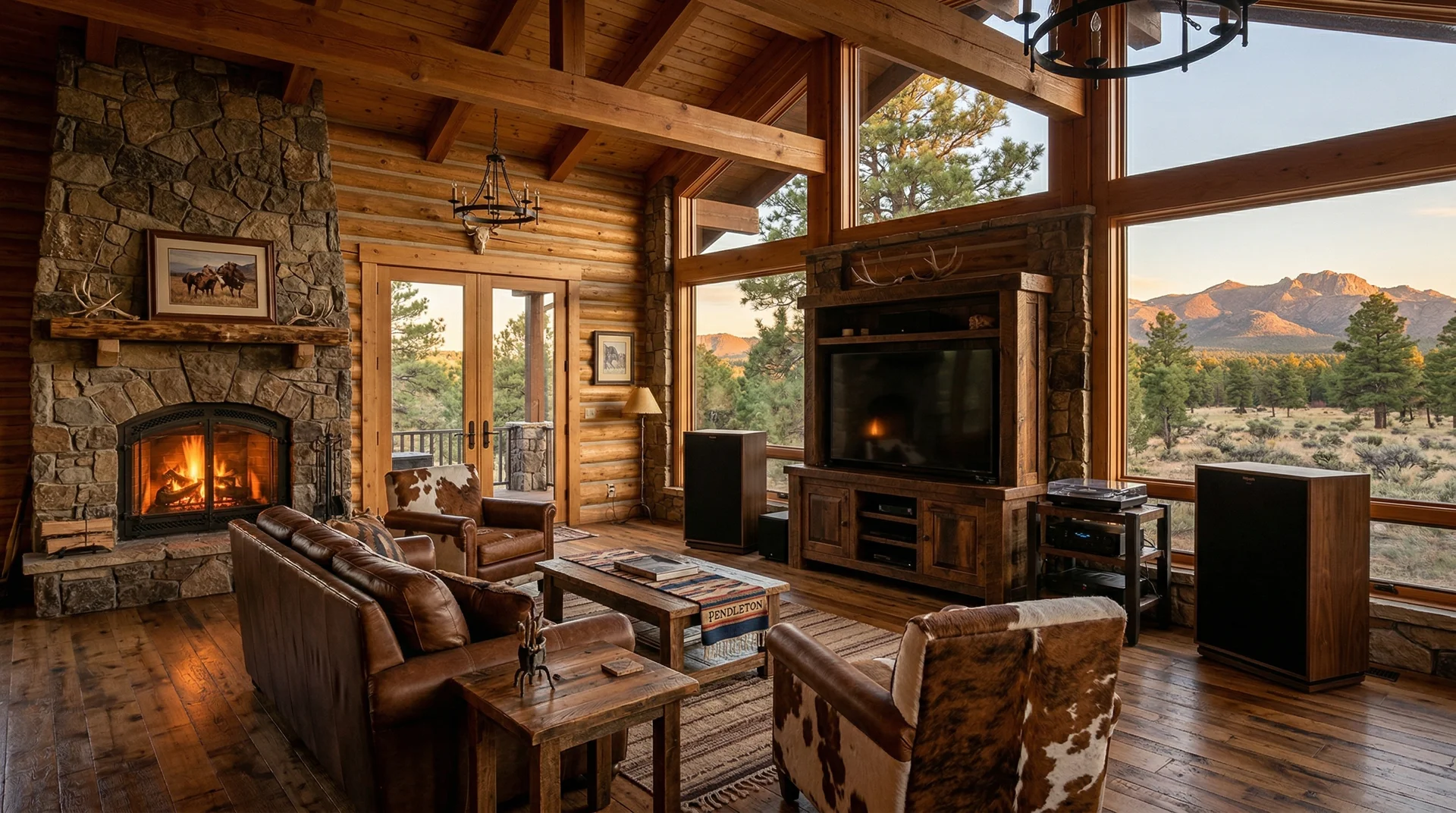
Chino Valley and Dewey-Humboldt are two of the fastest-growing towns in the Quad Cities, and homeowners here are building spaces that deserve real audio. From ranch properties with detached shops to custom-built homes on acreage, here's what to consider before you set up a sound system.
Chino Valley and Dewey-Humboldt are two of the fastest-growing towns in the Quad Cities, and homeowners here are building spaces that deserve real audio. From ranch properties with detached shops to custom-built homes on acreage, here's what to consider before you set up a sound system.
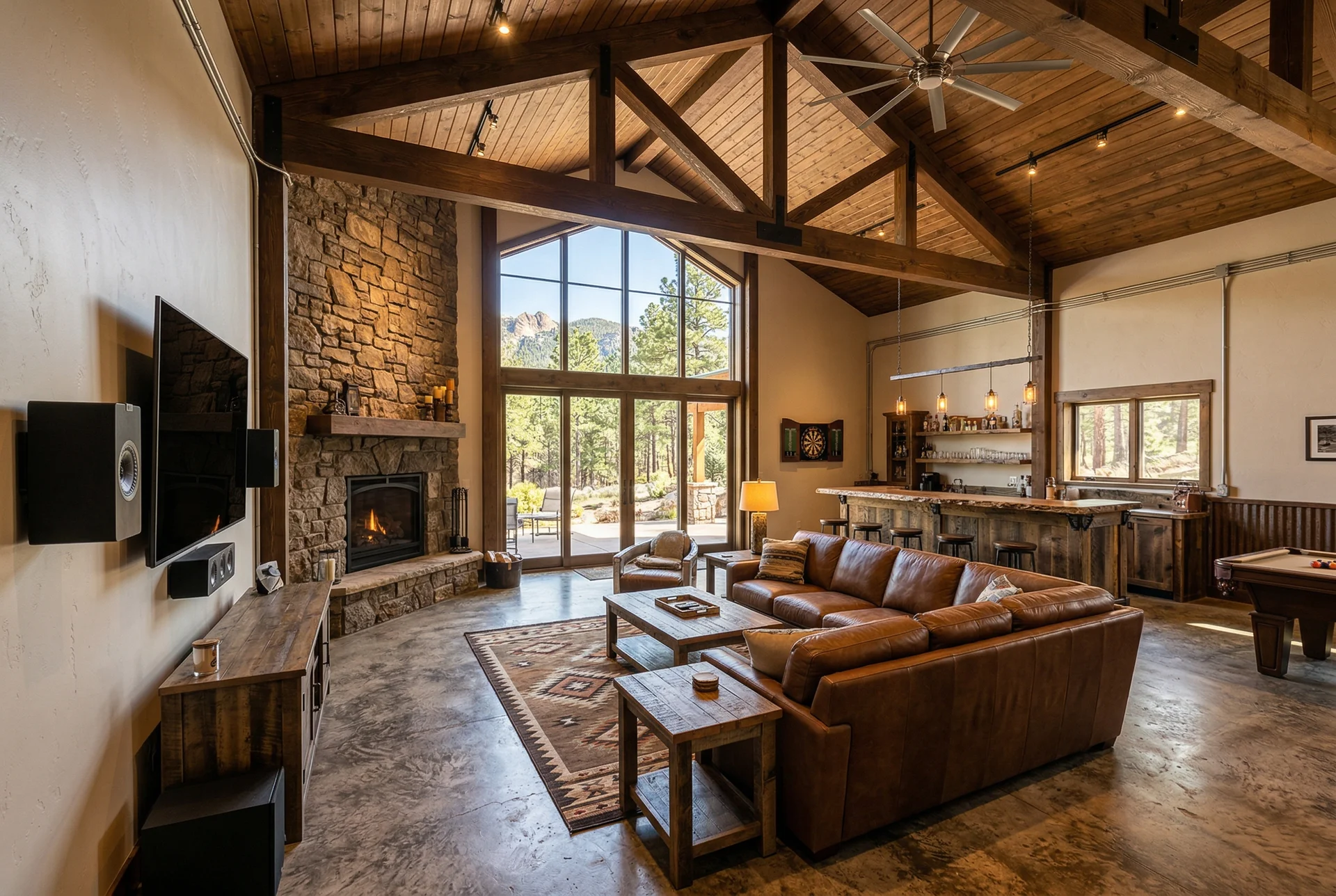
If you own a home in Chino Valley or Dewey-Humboldt, you already know the appeal: space, privacy, and the freedom to build things the way you want. What most people don't realize is that these same qualities make for some of the best home audio setups I've seen anywhere in Yavapai County.
I'm Mike Vincent, and I build custom speakers and design home theater systems from my workshop in the Arizona high desert. I serve the full Quad Cities area, including Chino Valley, Dewey-Humboldt, Prescott, and Prescott Valley. Here's what homeowners in these two underserved communities should know about getting serious audio into their homes.
Why Are Chino Valley and Dewey-Humboldt Growing So Fast?
Chino Valley's population reached approximately 13,020 residents as of the 2020 Census, a 23.6% increase from 2010 (U.S. Census Bureau, 2020). Dewey-Humboldt grew at a similar pace during the same period. Both towns are attracting homeowners looking for larger lots, lower costs per square foot, and a rural lifestyle within reach of Prescott's amenities.
New construction permits in Yavapai County totaled over 2,400 single-family units in 2022, reflecting sustained building activity across the Quad Cities (U.S. Census Bureau Building Permits Survey, 2023). A good share of those permits land in Chino Valley and Dewey-Humboldt, where land is still relatively affordable and zoning allows for larger footprints.
What does this have to do with audio? Everything. New construction is the ideal time to plan speaker placement, run wiring, and design a system that works with your floor plan rather than fighting against it.
What Makes Ranch Properties Ideal for Home Audio?
The National Association of Home Builders found that 47% of buyers in the Western U.S. want a dedicated media or entertainment room (NAHB, 2024). In Chino Valley, that room might be a converted shop, a finished barn, or a bonus room above the garage. These properties give you something most suburban homes can't: space and separation.
Ranch and horse properties in Chino Valley commonly sit on 1 to 5+ acres. That kind of buffer between you and your neighbors means you can actually turn up the volume. No shared walls. No HOA noise complaints. Just your system, your space, and the music or movie you're enjoying.
I've done projects in detached shop buildings that started as metal-frame utility structures and ended up as dedicated entertainment rooms. The acoustics in those spaces are surprisingly workable once you address the reflective surfaces. A pair of on-wall or tower speakers, a quality subwoofer, and some basic acoustic treatment can transform a 30x40 shop into one of the best-sounding rooms on your property.
The key with ranch layouts is planning for connectivity between structures. If your shop or barn sits 100 feet from the house, you'll need either a hardwired network run or a point-to-point wireless bridge to integrate it with your main system. Both options work well.
How Does Dewey-Humboldt's Character Shape Audio Design?
Dewey-Humboldt is one of the smallest incorporated towns in the Quad Cities, with around 4,300 residents (U.S. Census Bureau, 2020). But what it lacks in population it makes up for in custom-built homes. Many properties here sit on irregular lots carved into the rolling terrain between Prescott Valley and the Agua Fria corridor.
These homes tend to be owner-designed rather than production-built. That means unique layouts, varying ceiling heights, and room shapes that don't follow a template. For audio, this is actually an advantage. Cookie-cutter speaker placement guides don't apply. Instead, I design around your specific room geometry, furniture layout, and how you actually use the space.
Have you ever walked into a room where the TV is on one wall but the couch faces a window? I see it more often than you'd think. Getting the speaker placement right in a custom-built home means starting from scratch with measurements and listening positions, not following a generic diagram from the internet.
What Type of Speakers Work Best in These Homes?
The Consumer Technology Association reported that U.S. speaker and sound system revenue reached $7.8 billion in 2024 (CTA, 2025). Most of that money goes toward portable Bluetooth speakers and soundbars. For homes with real rooms and real potential, those products barely scratch the surface.
I build on-wall and tower speakers exclusively. No in-wall. Here's why: an in-wall speaker is a permanent compromise. It sacrifices cabinet volume, driver performance, and serviceability for the sake of looking invisible. My speakers are designed to be seen and heard. They're built with CNC-fabricated cabinets, self-powered amplification, and DSP tuning that adapts to your room.
In ranch and rural properties, you often have larger rooms with higher ceilings than suburban homes. Tower speakers excel in these environments because they move more air and deliver fuller bass response. A pair of towers in a 500-square-foot great room will outperform a full in-wall surround system in a room half that size.
For secondary rooms, patios, and shops, compact on-wall models work perfectly. They mount cleanly, project sound into the room instead of into the wall cavity, and they're easy to relocate if you rearrange your space.
Should You Plan Audio During New Construction?
According to the Joint Center for Housing Studies at Harvard, homeowner spending on improvements and repairs topped $427 billion nationally in 2023 (Harvard JCHS, 2024). A significant share of that spending goes to projects that could have been done more efficiently during the original build. Audio is a perfect example.
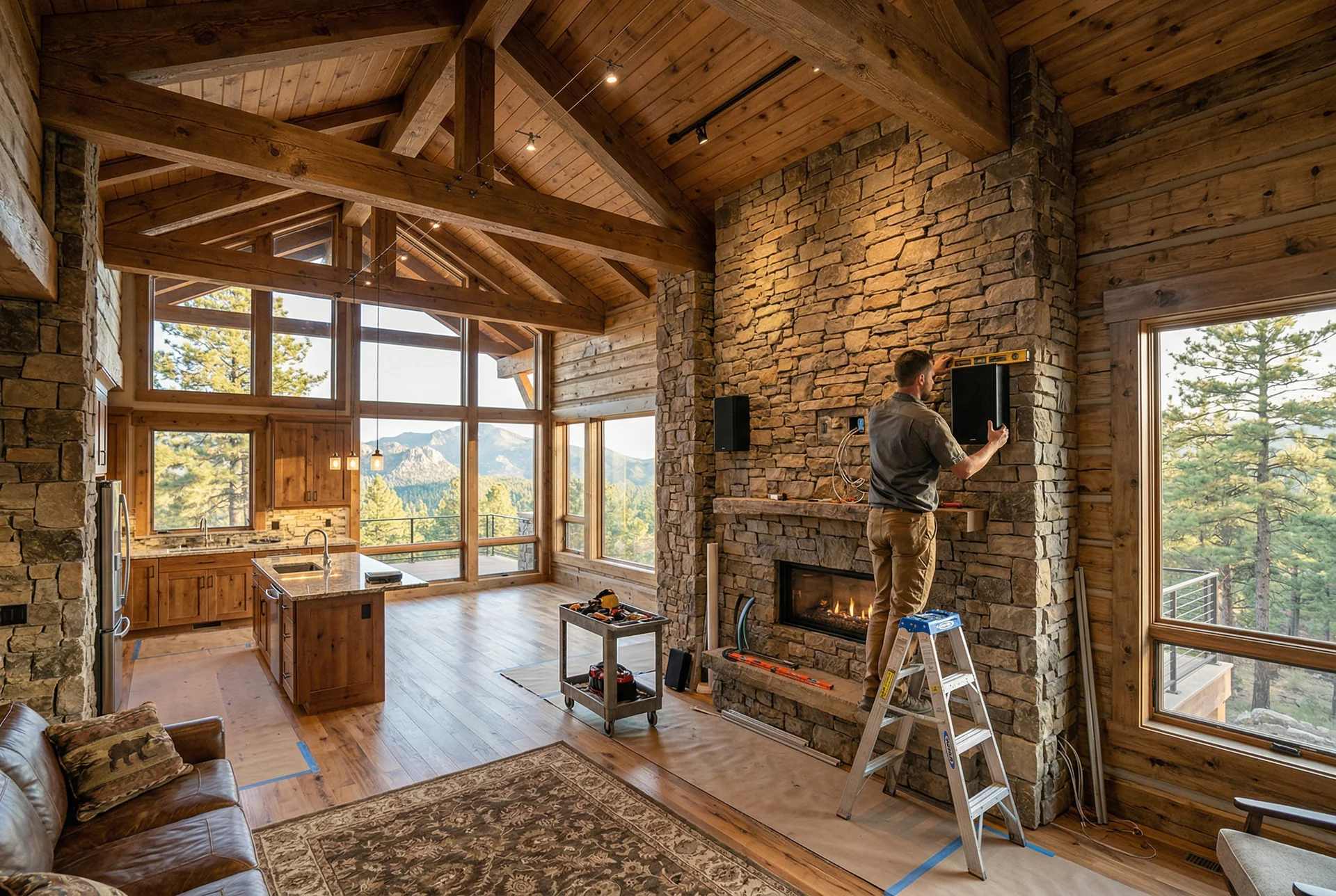
If you're building a new home in Chino Valley or Dewey-Humboldt right now, this is the single best time to plan your audio system. Running speaker wire and network cable during framing costs a fraction of what it costs to retrofit later. Even if you're not ready to buy speakers yet, having the wiring in place gives you options down the road.
I work with builders and homeowners during the construction phase to map out speaker locations, wire runs, and equipment placement. It doesn't slow down your build timeline, and it saves real money compared to tearing into finished walls later.
From my experience working on new builds across the Quad Cities, adding pre-wire for a whole-home audio system during construction typically runs 60-70% less than a retrofit after drywall is up. That's the difference between a simple wire pull and a full-day fishing job through insulated walls.
What About Outdoor Audio on Larger Properties?
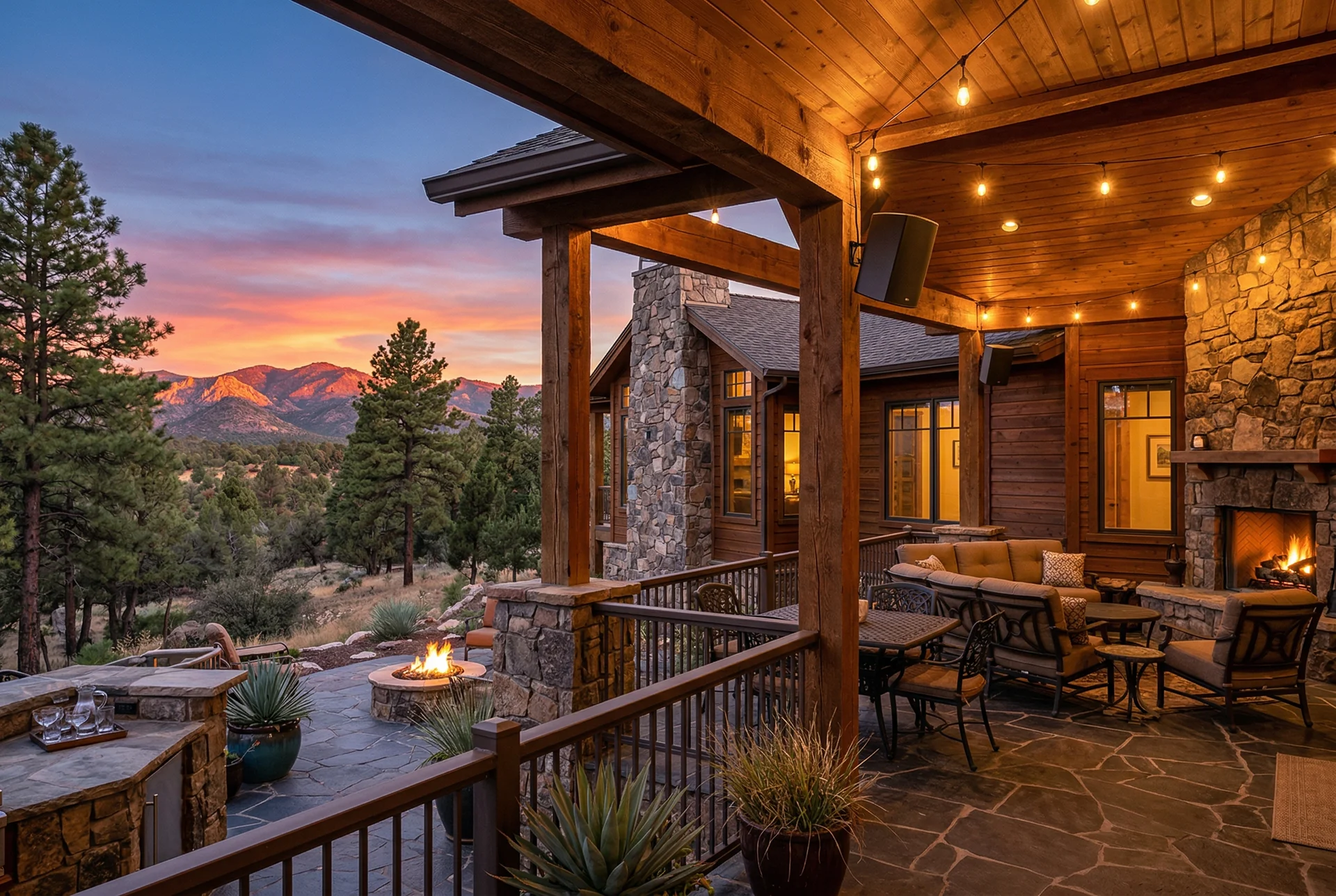
Covered patios, fire pit areas, and outdoor kitchens are standard features on Chino Valley and Dewey-Humboldt properties. With 278 sunny days per year in the Prescott area (BestPlaces), outdoor living spaces get used year-round. Your audio should be out there too.
Outdoor systems on larger properties work best when designed in zones. Your covered patio might get a pair of weather-rated on-wall speakers. The fire pit area further from the house might use a compact landscape speaker setup. Each zone runs independently so you're not blasting music across 3 acres when you just want background audio on the patio.
The Arizona high desert is tough on equipment. UV exposure, monsoon dust, and wide temperature swings mean you need speakers rated for outdoor use. I spec outdoor-rated models with UV-stable enclosures and sealed driver assemblies. They handle the climate without degrading.
How Do You Get Started with a Quad Cities Home Audio Project?
Every project I take on starts with an in-home visit. I'll look at your rooms, talk about how you use the space, and figure out what makes sense for your home and your budget. No pressure, no upsell. I take on roughly 15 projects per year, so every one gets my full attention from design through installation.
Whether you're in a new build in Chino Valley, a custom home in Dewey-Humboldt, or anywhere else in the Quad Cities, I'd like to hear about your project. Reach out through my contact page or call me directly at (928) 440-1950. Let's talk about what's possible in your space.
Frequently Asked Questions
How much does a home audio system cost in Chino Valley or Dewey-Humboldt?
Pricing depends on the number of rooms, speaker type, and complexity. A single-room system with quality on-wall speakers typically starts around $3,000 to $5,000. Multi-room or whole-home systems with dedicated zones range from $8,000 to $25,000 or more. I provide a custom quote after seeing your space.
Can you install audio in a detached shop or barn on my property?
Absolutely. Shop and barn conversions are some of my favorite projects. The main consideration is running a network or wireless bridge from the main house to the detached structure for whole-home integration. Standalone systems in outbuildings are also an option and often simpler to set up.
Do you serve the full Quad Cities area?
Yes. I serve Prescott, Prescott Valley, Chino Valley, and Dewey-Humboldt, plus surrounding areas throughout Yavapai County. Every project starts with an in-home visit so I can see your space, understand how you use it, and design something that fits.
How long does it take to build and install a custom speaker system?
Custom speaker builds take 6 to 12 weeks or more depending on size and complexity. That includes cabinet fabrication, driver assembly, DSP tuning, finish work, and final installation. I'll give you a realistic timeline during the consultation so there are no surprises.
Comments
Leave a Comment