
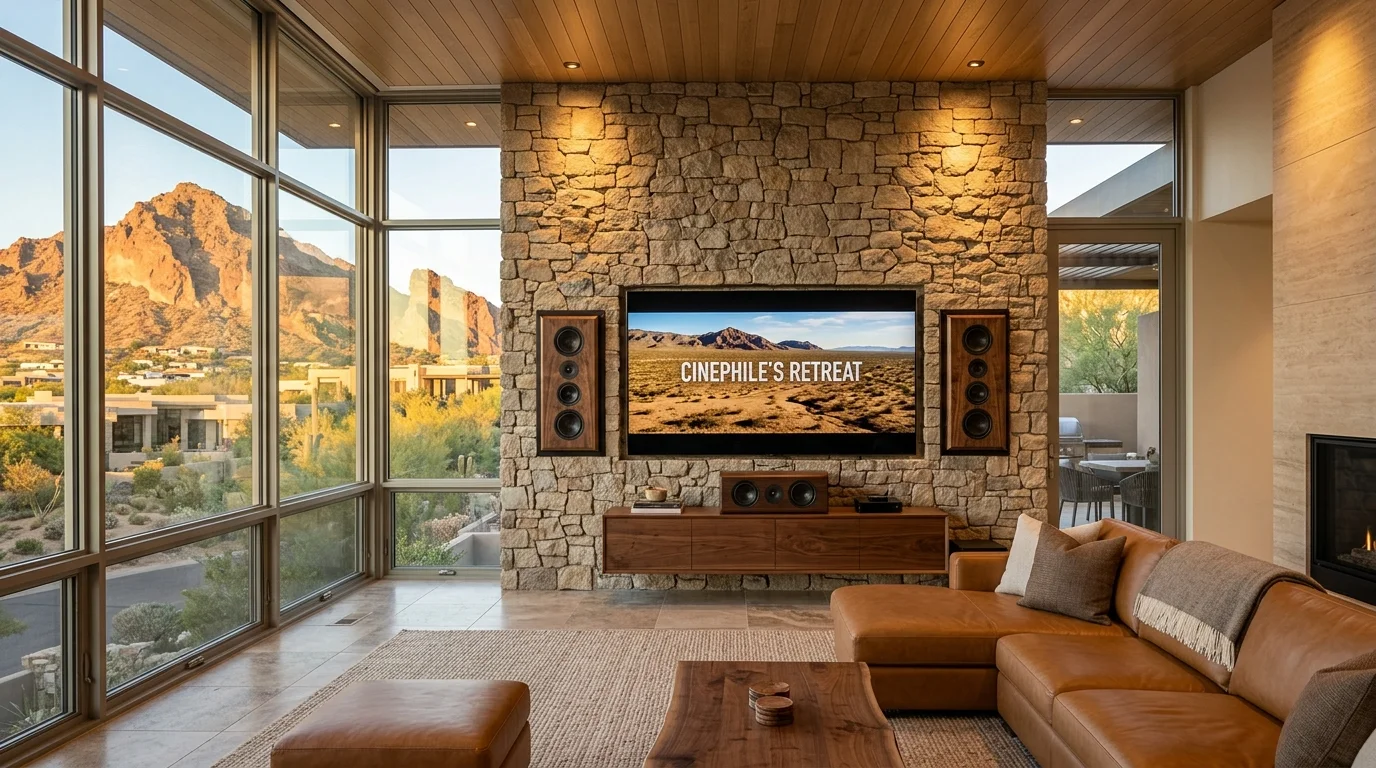
Paradise Valley homes are designed to impress — soaring ceilings, glass walls, open floor plans. But those same features create serious acoustic challenges. Here's how custom-built speakers and professional calibration deliver the sound these homes deserve.
Home theater installation in Paradise Valley, AZ starts with one reality most installers ignore: these homes weren't designed for sound — they were designed to look extraordinary. In a municipality where the median home sells for $3.5 million and 85253 ranks among the 23 most expensive zip codes in the country (PropertyShark, 2025), homeowners expect every system in the house to perform at the level of the architecture. The audio should be no exception.
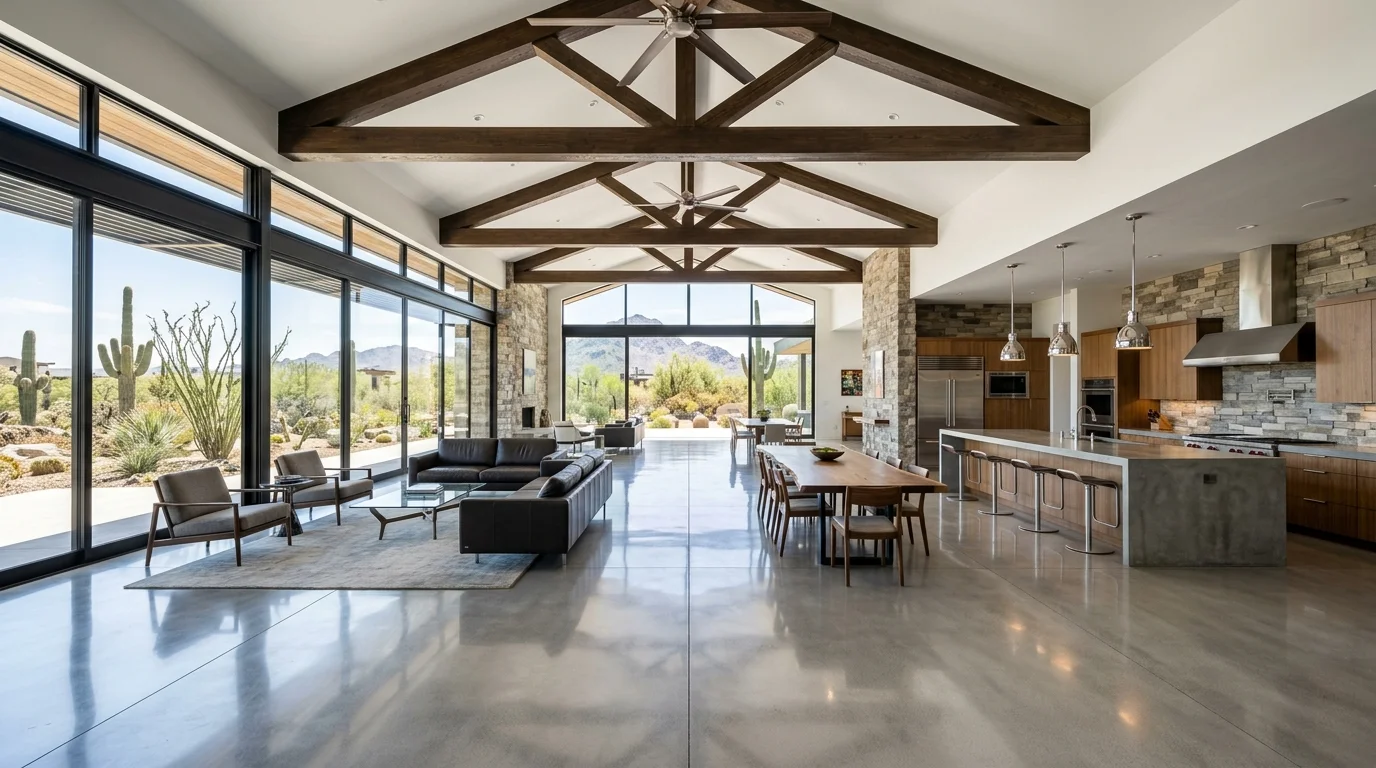
I've installed custom home theater systems in Paradise Valley estates along Camelback Mountain, Mummy Mountain, and Clearwater Hills. The homes are stunning — vaulted ceilings, walls of glass, open floor plans that connect great rooms to patios and pool decks. But those same design features that make the space feel expansive make it a nightmare for sound. That's the problem I solve.
The Acoustic Reality of Paradise Valley Homes
Glass reflects sound almost as efficiently as it transmits light. When you have floor-to-ceiling windows on two or three walls, every note and every word of dialogue bounces around the room instead of reaching your ears cleanly. Add 20-foot vaulted ceilings and the bass energy that should pressurize the listening position dissipates into empty volume overhead. Polished concrete, natural stone, and tile — surfaces that look beautiful — create a reverberant, harsh listening environment.
The acoustic panel market alone hit $8.6 billion in 2025 (Global Market Insights), driven in part by residential demand from homeowners building dedicated theaters and media rooms. That number tells you how seriously people now take room acoustics. In Paradise Valley, where open-concept architecture is the norm and the design was often drawn by a named architect, the acoustic solution has to be as considered as the interior itself.
I've walked into homes near Scottsdale's Camelback corridor — some of the same neighborhoods I serve — where a previous installer treated the room like a standard living room with drywall and carpet. They mounted decent speakers, ran the receiver's auto-calibration, and called it done. The result was hollow, harsh, and nothing like what the homeowner expected. That's not a speaker problem — it's a design problem. The installer didn't account for the room.
Speakers That Belong in the Architecture
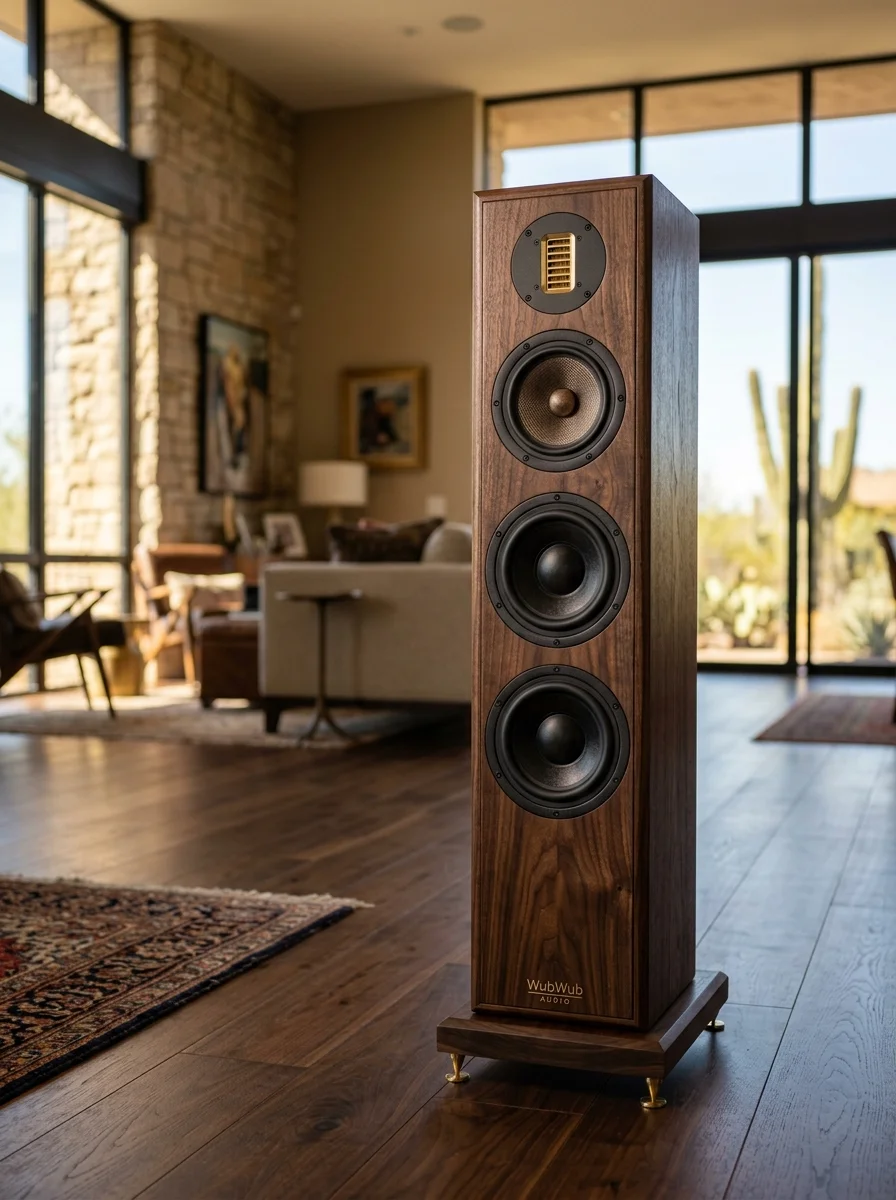
This is where building my own speakers makes a real difference. I design and fabricate WubWub Audio speakers in my Arizona workshop — CNC-machined hardwood cabinets built in powered or passive configurations depending on the project. Every cabinet is built for a specific client's room.
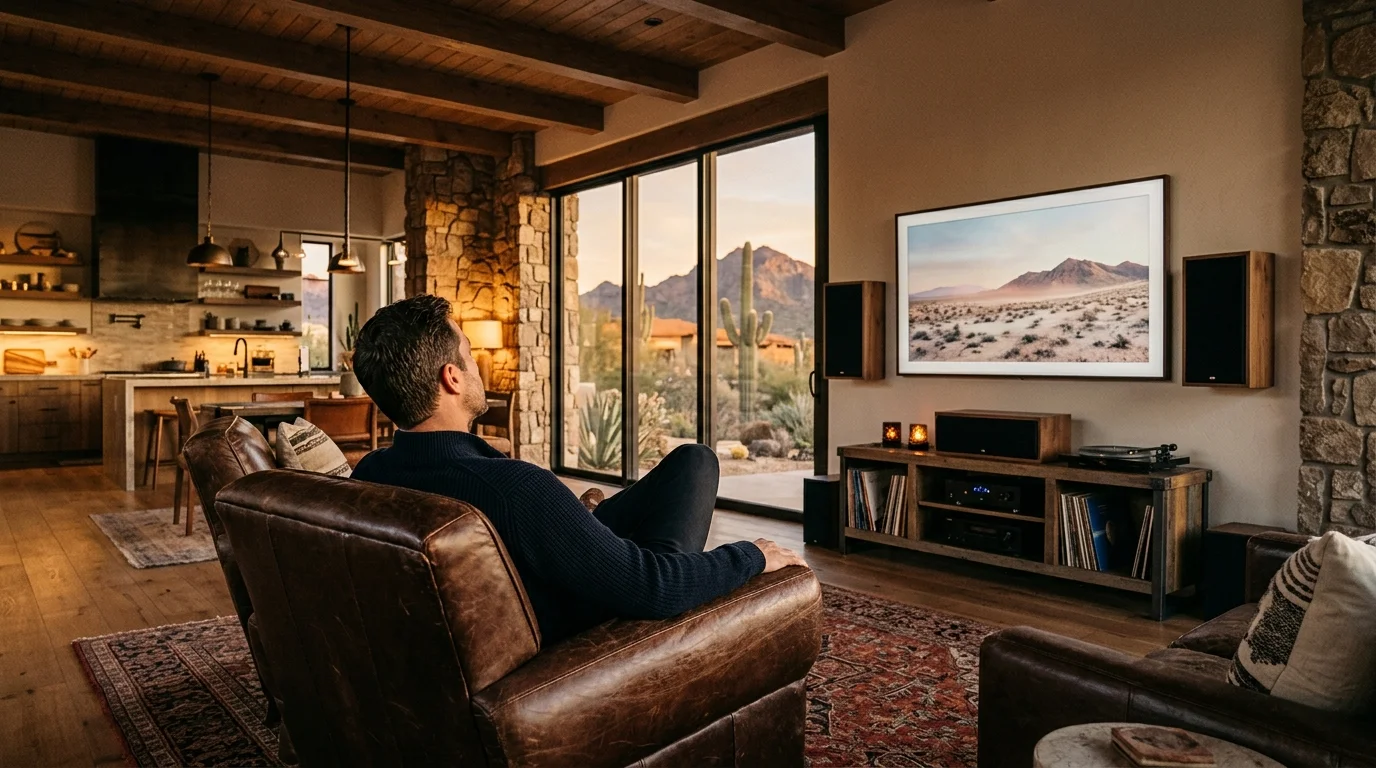
For Paradise Valley projects, I typically build on-wall thin-mount or tower speakers with cabinet geometry calculated for the room's dimensions and surface materials. The cabinets are finished in walnut, cherry, or whatever hardwood matches the client's interior. I've built center channels width-matched to sit under a specific TV on a specific mantle. I've designed tower speakers finished to match custom millwork. These aren't products pulled from a catalog — they're built for you.
For rooms like these, I often recommend powered speakers with integrated DSP. Each powered speaker has its own amplifier and digital processing, which gives me per-driver control over crossover points, EQ, time alignment, and output level. I make those adjustments after installation, in the room, based on actual acoustic measurements with a calibrated microphone and analyzer. In a room full of glass and stone, that level of precision makes a real difference — though passive configurations work well too depending on the system design.
Many of my Paradise Valley clients have architects or interior designers still involved with the home. I work with them directly. For new construction, I provide speaker placement specs and wire routing plans early enough to get into the architectural drawings. For renovations, I coordinate with the design team so the finished system looks like it was always part of the plan.
How We Work Together
Every project starts with a phone call — free, no obligation, no pressure. I'll ask about your space, what you watch and listen to, and what's most important to you.
If you'd like to move forward, I schedule an in-home site survey at your Paradise Valley home. I bring multiple speaker configurations so you can hear good, better, and best options in your actual room — not in a showroom with treated walls that sound nothing like your space. The site survey is $250, fully credited toward your project when you decide to go ahead.
From there I design the system, build the speakers (typically 6–12 weeks or more), handle the full installation with clean cable management, and calibrate everything using professional measurement tools — a Phonic PAA6 analyzer and calibrated measurement microphones. I never rely on receiver auto-calibration. The global smart home market is expected to reach $848 billion by 2034 (Fortune Business Insights, 2026), and entertainment systems are a core driver. But numbers aside, what matters is that your system sounds right in your room, for the way you actually use it.
Every custom speaker carries a 10-year warranty. Installation includes 2 years of unlimited service calls with no trip fees. Full warranty details are here.
Frequently Asked Questions
What does home theater installation cost in Paradise Valley?
A complete custom home theater with handcrafted WubWub Audio speakers typically runs $20,000 to $80,000+ depending on room size, speaker configuration, and component choices. I provide a detailed, line-item quote after the in-home site survey — no surprises.
Do you install in-wall speakers?
No. I build on-wall and tower speakers exclusively. On-wall and tower designs give me full control over cabinet geometry, driver alignment, and acoustic tuning that in-wall installations can't match. The center channel sits directly under the TV, width-matched to the display — never in the ceiling. If surround channels require it, I'll use up to four ceiling speakers, but the front stage is always on-wall or tower.
Can you coordinate with my architect or designer?
Yes — I do this regularly on Paradise Valley projects. For new builds, I provide specifications early enough for the architectural drawings. For remodels, I work with your design team to make sure the system integrates with the finished interior. The goal is for the audio to look like it was always part of the home.
How long does the full process take?
From design approval to finished installation, plan on 10–14 weeks. Speaker fabrication is the longest phase at 6–12 weeks or more. Installation and calibration typically take 1–3 days depending on system complexity. I'll give you a specific timeline during the design phase.
If you're considering a home theater for your Paradise Valley home, I'd enjoy talking through what's possible in your space. Call me at (928) 440-1950 or reach out through the contact form.
Comments
Leave a Comment