
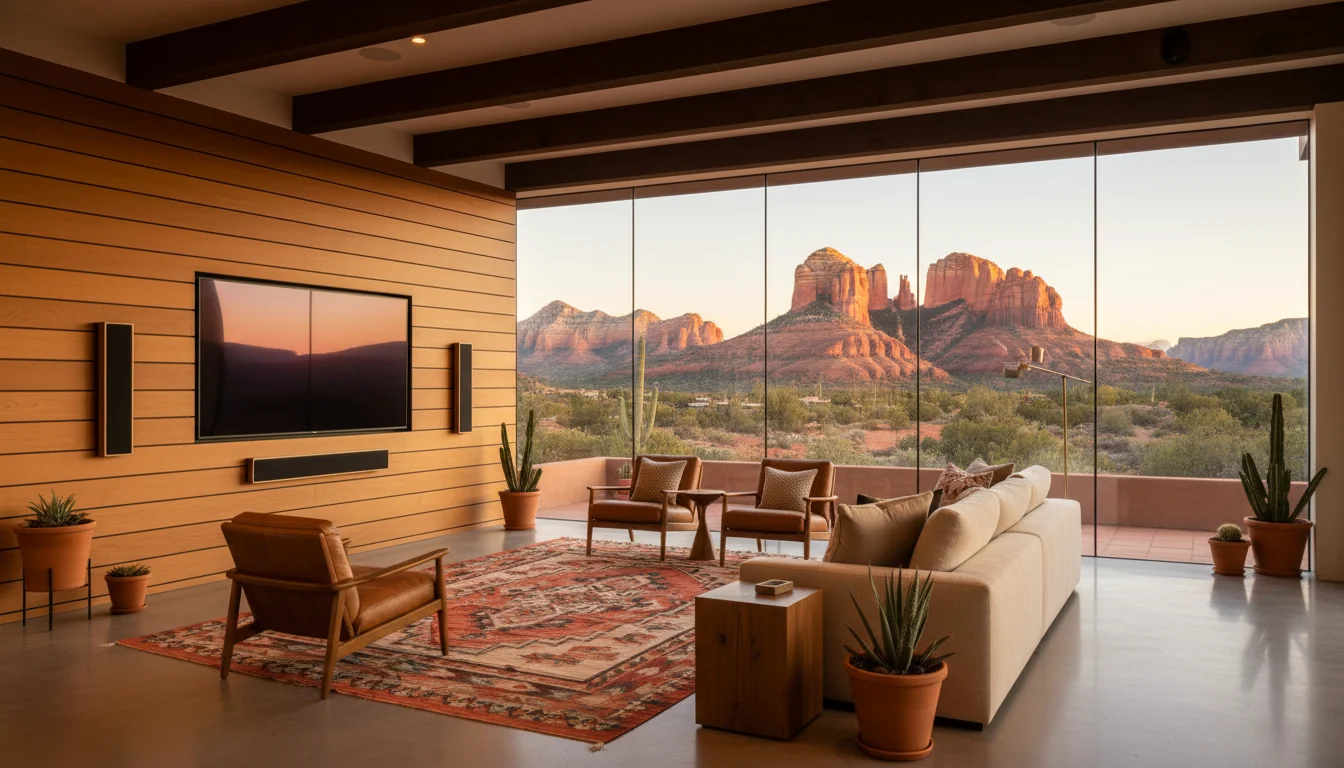
Sedona homes are designed around sensory experience — dramatic views, natural materials, indoor-outdoor flow. Here's what it takes to make the audio match, from glass-wall acoustics to patio sound systems facing the buttes.
Sedona homeowners tend to notice things most people don't. The way light hits a wall at 4pm. How a room's proportions feel when you step inside. Whether the music filling a space matches the mood of the place itself. It's that same attention to sensory detail — the thing that draws people to Sedona's galleries, its retreats, its red rock sunsets — that makes home theater installation in Sedona, AZ a very different conversation than it is almost anywhere else.
I'm Mike, owner of Mike Knows Audio Video. I'm based in Prescott and work with Sedona homeowners regularly. The homes here aren't cookie-cutter, the clients aren't looking for cookie-cutter solutions, and the rooms themselves fight back harder than most. Here's what I've learned.
- Sedona's glass-heavy, open-plan luxury homes need acoustic strategies most installers don't think about
- Glass walls and vaulted ceilings need acoustic treatment before speaker selection — equipment alone won't fix a reflective room
- Outdoor audio facing the buttes is just as important as indoor sound for many Sedona clients
- Design-conscious homeowners want speakers that disappear into the architecture, not dominate it
The Acoustic Reality of Sedona Architecture
Most of the homes I work in around Sedona were designed to frame a view. Floor-to-ceiling glass facing Bell Rock. Hilltop estates with walls of windows opening onto the Mogollon Rim. Contemporary southwestern designs with soaring ceilings, polished concrete, and exposed steel beams.
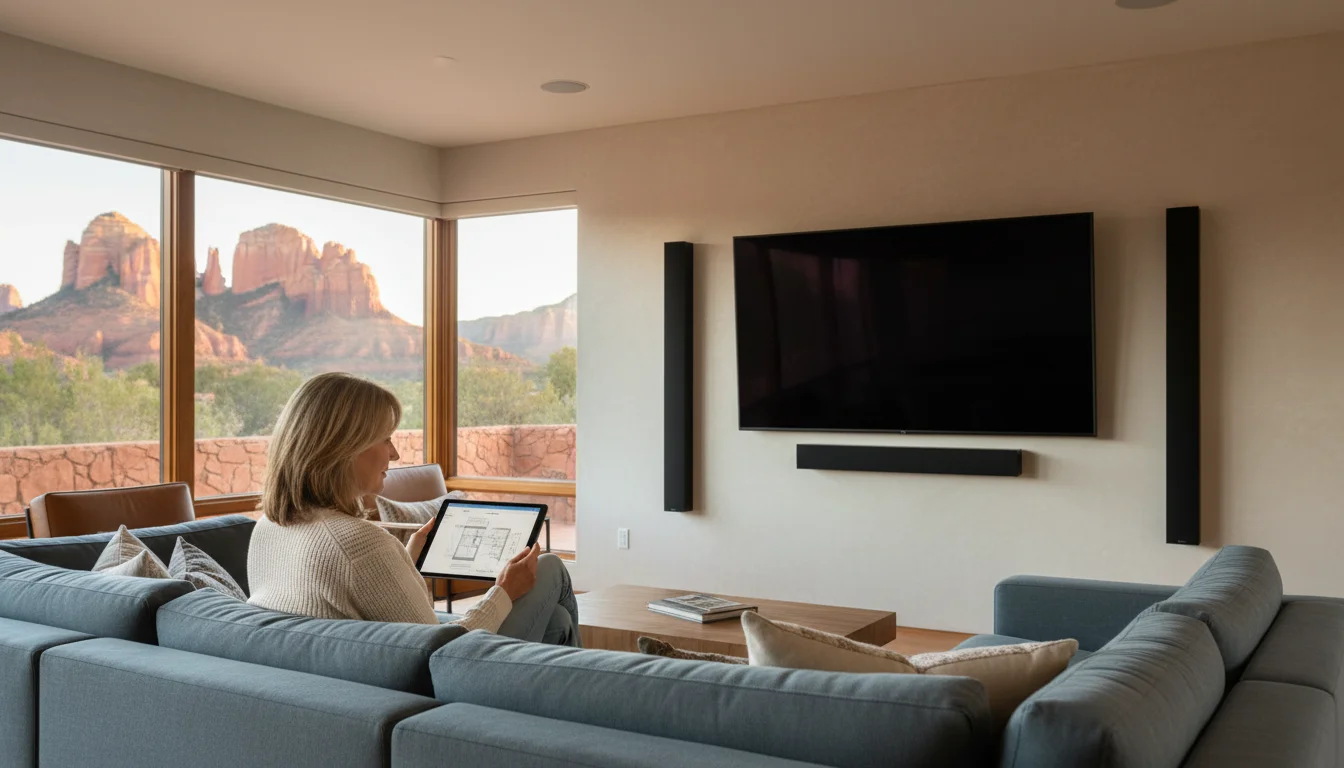
Gorgeous to look at. Terrible for sound.
Glass reflects sound almost perfectly. So does stone, polished concrete, and the smooth stucco common in adobe-inspired builds. A room with three glass walls and a vaulted ceiling isn't a room — acoustically, it's a racquetball court. Dialogue gets smeared, bass pools in corners, and music loses every ounce of subtlety. You can throw expensive speakers at that problem all day and it won't help. The room itself has to be addressed first.
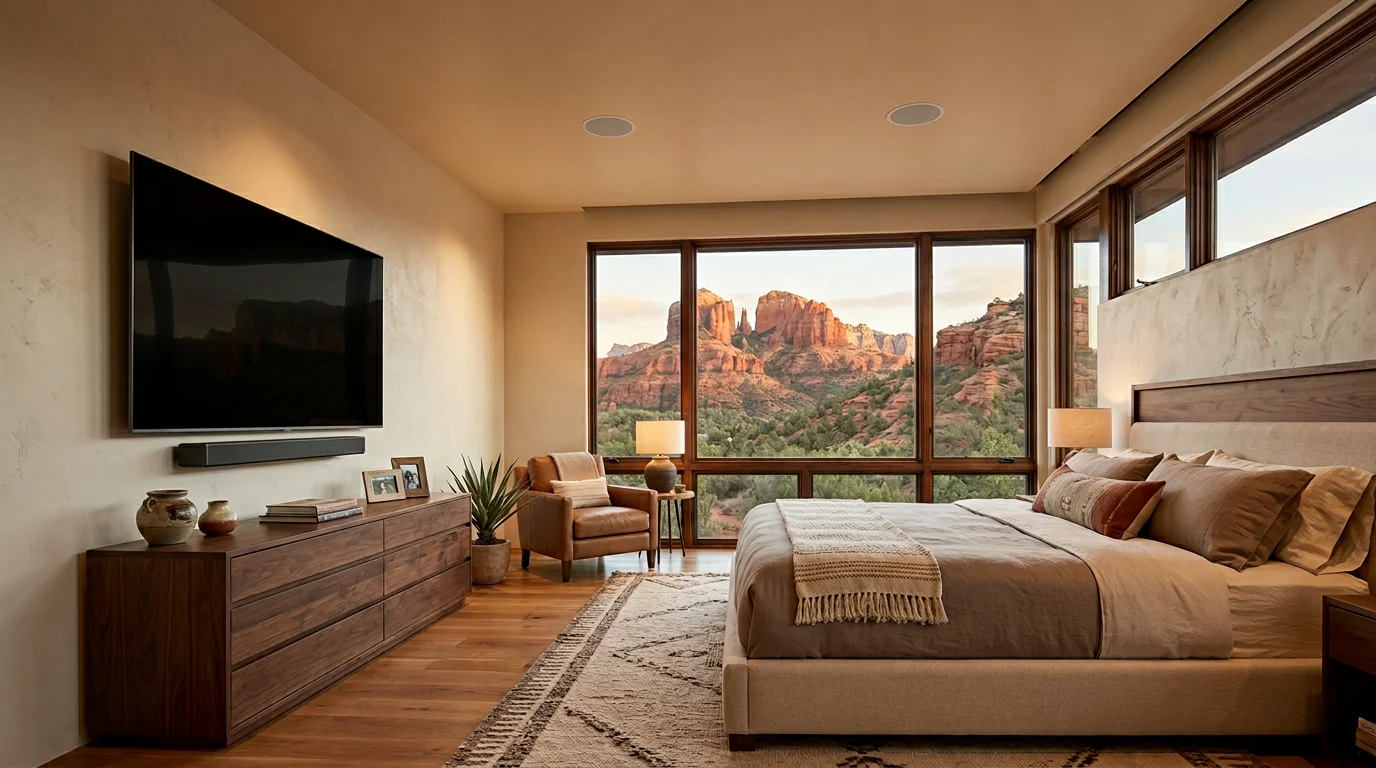
That's why every Sedona project I take on starts the same way: I spend time in the room. I listen to how it behaves. I look at where reflections are hitting, where bass is building up, and where the furniture and finishes might help or hurt. Only then do I start recommending equipment.
What Makes Sedona Clients Different?
Sedona's luxury real estate market saw 254 home sales above $1 million in 2025, up 17% year-over-year, with a median price of $1.5 million (SedonaRealEstate.com, 2026). These aren't first-time buyers stretching for a mortgage. They're second-home owners, retirees from the Valley, and people relocating from markets like San Francisco and Denver who've already lived with good audio and expect it in their next home.
Many have already worked with an interior designer. Some have architects still on retainer. They care about how equipment looks in their space — not just how it sounds. That changes the conversation. Instead of "where do we put the speakers?" it becomes "how do we make the speakers disappear into the architecture while still sounding exceptional?"
In-wall and in-ceiling architectural speakers are the norm for my Sedona work, not the exception. Invisible subwoofers behind drywall. Control systems that run from an iPad or phone with no visible rack. Acoustic panels that look like the art you'd find in a Tlaquepaque gallery, not foam tiles from a music store.
Indoor Sound Is Only Half the Story
Here's something that surprises people outside of Arizona: in Sedona, outdoor audio matters just as much as indoor. Maybe more.
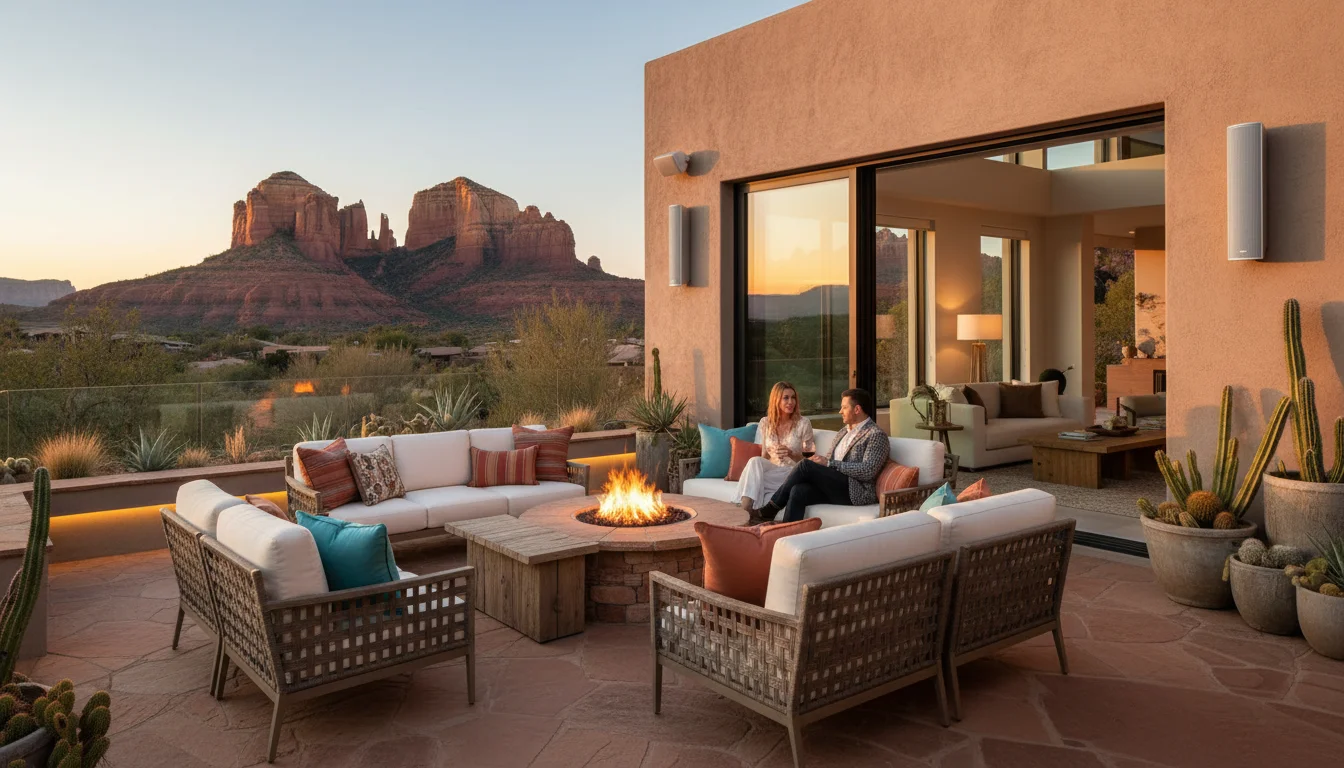
Sedona homeowners live on their patios. Sunset dinners looking out at Cathedral Rock. Morning coffee facing the buttes. Weekend gatherings around a fire pit. If your audio system stops at the patio door, you're missing the space where these homeowners actually spend their time.
Outdoor audio for Sedona properties means weather-rated landscape speakers that can handle monsoon season, distributed zones so you're not blasting the neighbors, and a system that flows naturally from indoor to outdoor without volume drops or dead spots as you walk through the doors. I design these systems as one integrated whole — not as an afterthought you bolt on later.
What a Custom Home Theater in Sedona Involves
A custom Sedona theater is rarely a four-walls-and-a-projector job. The homes here are usually open-plan, glass-heavy, and tied into a wider audio system that runs through the kitchen, primary suite, and outdoor zones. The work has to start with the room, not the gear list.
A typical Sedona project with me includes:
- In-home acoustic assessment — Walking the space, listening to how sound behaves against your specific materials and layout
- Architectural speaker design — In-wall, in-ceiling, or invisible speakers selected to complement the room's aesthetics
- Acoustic treatment that looks intentional — Fabric panels, ceiling clouds, and furniture placement that tame reflections without fighting the design
- Multi-zone audio — Indoor rooms, outdoor patios, and transition areas all as one unified system
- Display calibration — Projectors or large-format TVs tuned for Sedona's intense natural light and west-facing afternoon glare
- System programming — One app, one remote, zero confusion
I take on about 15 projects a year across Northern Arizona. That's deliberate. It means I'm not rushing through your installation to get to the next one. Each custom home theater in Sedona gets the time it deserves.
Working with Your Design Team
Most of my Sedona clients have a designer, architect, or builder already involved. That's ideal. Getting me into the conversation early — during the design phase or framing stage — means speaker locations, wire runs, and acoustic treatment can be planned around the design rather than shoehorned in afterward.
I'm used to this conversation. Where to hide the equipment closet. How to route wiring through timber-frame construction. Which in-wall speakers can be painted to match a custom finish. The goal is always the same: the sound should be stunning, and the equipment should be invisible.
Frequently Asked Questions
Can you work with my interior designer or architect?
I prefer it. Getting involved early means speaker locations, wire runs, and acoustic treatment can be planned around the design, not squeezed in after. I work with designers and builders regularly and I'm comfortable with the conversation about making equipment invisible. Reach out here to start coordinating.
Do you install outdoor audio systems?
Yes, and in Sedona it's one of the most requested services. Landscape speakers, patio zones, and pool-area audio all designed to handle monsoon weather and Arizona sun. I design outdoor systems as part of the whole-home plan so indoor and outdoor audio feel like one continuous experience.
What kind of speakers work best in Sedona's glass-heavy homes?
Architectural in-wall and in-ceiling speakers are usually the best fit. They deliver excellent sound without adding visual clutter to a carefully designed room. For bass, I often use multiple smaller subwoofers — sometimes invisible models mounted in walls — to distribute low frequencies evenly across open floor plans.
How far in advance should I schedule a consultation?
I typically book 2-4 weeks out. For new construction or remodels, the earlier the better — pre-wiring during framing saves significant cost and gives us the cleanest installation. Get in touch early and I'll work with your builder's timeline.
Let's Talk About Your Sedona Home
Whether it's a hilltop estate, an Oak Creek Canyon retreat, or a contemporary build where the architecture demands the audio system be felt and not seen — I'd enjoy hearing about your project. Every installation starts with a visit and an honest conversation about what's possible in your space.
Schedule a free consultation or visit the Sedona service area page to learn more about what I do in the area.
Comments
Leave a Comment