
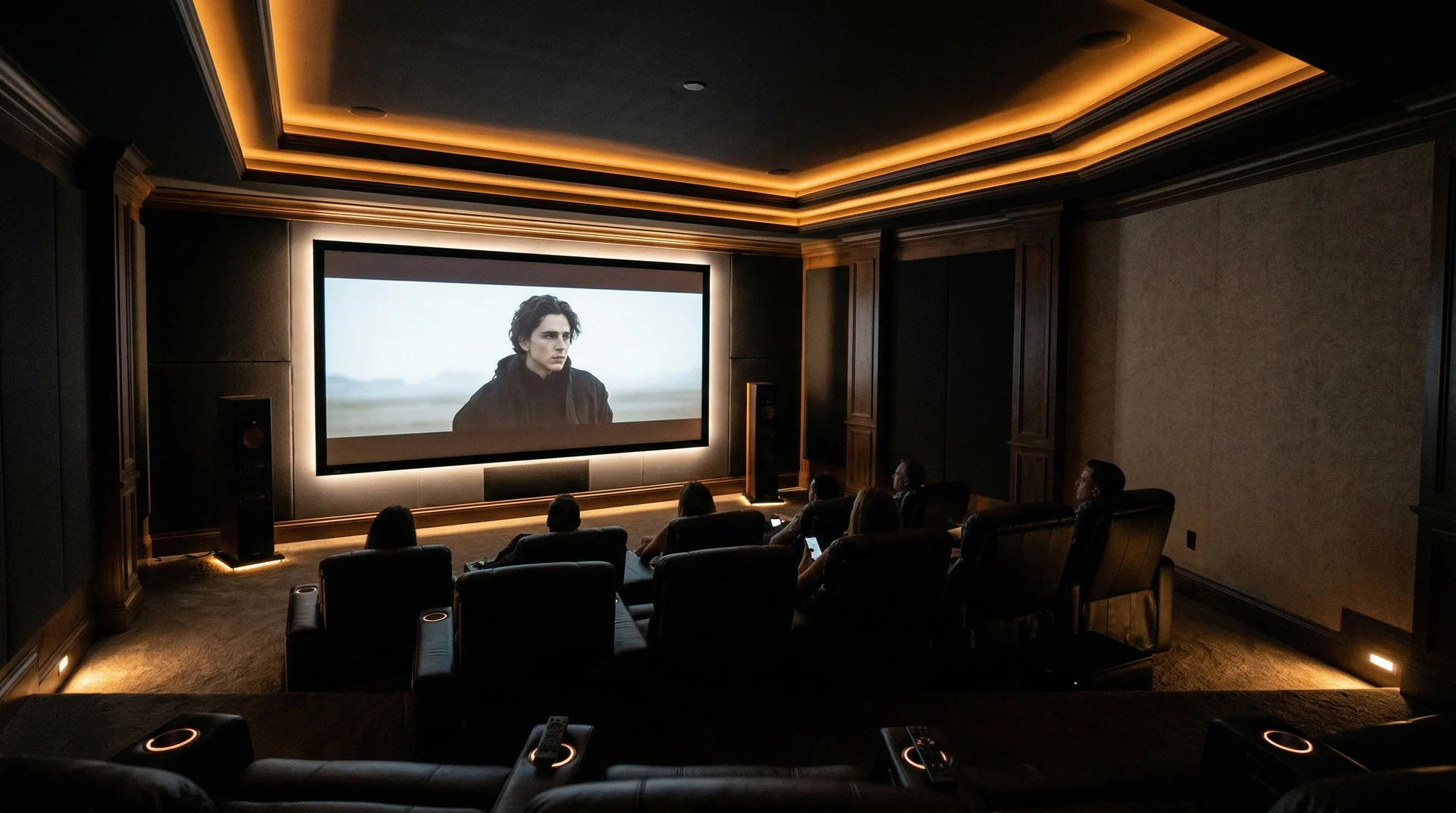
Lighting is the most overlooked part of home theater design. Learn how bias lighting, LED cove strips, smart scenes, and blackout solutions transform your Scottsdale theater room from good to incredible.
I've walked into dozens of Scottsdale home theaters where the homeowner spent serious money on the screen, the speakers, and the seating, only to leave the room lit by a single overhead fixture on a basic dimmer. That one detail undermines everything else. Lighting is, hands down, the most overlooked element in home theater design. It affects image quality, eye comfort, safety, and the overall mood of the room.
According to Parks Associates (2025), 87% of US smart home device owners use automated lighting, making it the single most adopted smart home feature. Yet in theater rooms, lighting often gets treated as an afterthought. That's a missed opportunity. The right lighting design doesn't just look good. It makes everything sound and feel better, too.
Why Do Overhead Lights Ruin a Home Theater?
Standard overhead lighting destroys image contrast and causes eye strain during long viewing sessions. Research from the US Department of Energy (2024) shows that improperly positioned ambient lighting can reduce perceived display contrast by 30% or more. In a Scottsdale theater room, that means your $5,000 projector performs like a $1,500 one.
The problem is direct light hitting the screen surface. Even recessed can lights create reflections that wash out dark scenes. And overhead light aimed at seating causes your pupils to constrict, making the screen appear dimmer than it actually is. It's a lose-lose setup.
The fix isn't complicated. Remove all overhead lighting from the theater room entirely. Replace it with indirect sources: cove lighting along the ceiling perimeter, sconces on side walls, and bias lighting behind the display. These keep light off the screen while giving you enough visibility to find your seat and your drink.
What Is Bias Lighting and Why Does Every Theater Need It?
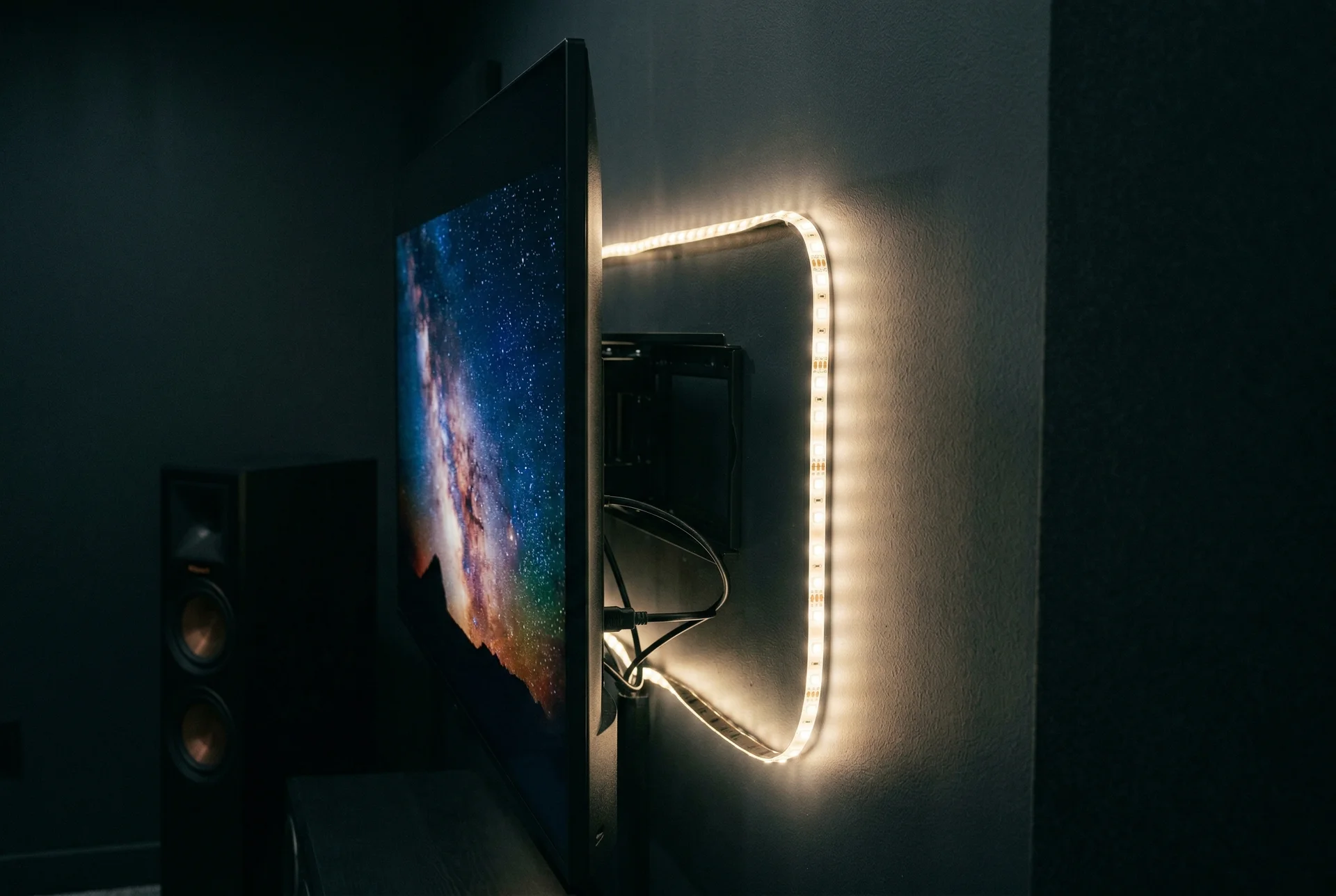
Bias lighting is a strip of soft light placed behind your TV or projection screen. A study by LG Display's research division found that bias lighting reduces perceived eye strain by up to 50% during extended viewing. The American Academy of Ophthalmology also recommends ambient backlight to reduce the contrast ratio between a bright screen and a dark room.
Here's what happens without it. Your eyes constantly adjust between the bright screen and the pitch-black wall around it. After 30 minutes, that adjustment cycle leads to fatigue, headaches, and reduced enjoyment. Bias lighting eliminates the harsh contrast by raising the light level immediately surrounding the display.
I install bias lighting on every theater project I build, and the feedback is always the same: "I didn't know my eyes were tired until they weren't." It's one of the least expensive upgrades in a theater build, typically $200 to $500 for quality LED strips, and it makes the biggest perceived difference in comfort.
For best results, use a bias light rated at 6500K color temperature. That matches the D65 white point standard used in video production. Warmer tones behind the screen will shift your color perception and make the image look slightly blue by comparison.
How Does LED Cove Lighting Set the Right Mood?
Cove lighting is the backbone of theater room ambiance. The global smart lighting market reached $14.1 billion in 2023 and is projected to hit $35.4 billion by 2030, growing at a 14.1% CAGR according to Grand View Research (2024). That growth is driven largely by residential entertainment spaces, including home theaters.
LED strips installed in a recessed channel along the ceiling perimeter create a soft, indirect glow. The light bounces off the ceiling and washes down the walls without ever touching the screen. In warm white (2700K to 3000K), it creates an inviting, cinema-like atmosphere.
I recommend RGBW strips over RGB-only. The dedicated white channel produces a much cleaner, more natural warm tone than mixing red, green, and blue to approximate white. The color options also let you match lighting to the mood: a deep amber for movie night, a cool blue for gaming, or full bright white for cleaning.
What most people don't realize is that cove lighting also helps your audio system. When the room feels right visually, your brain interprets the entire experience as more immersive. I've had clients tell me the sound got "better" after we installed cove lighting, even though we didn't touch a single speaker or cable. Perception shapes experience.
Are Step Lights Really Necessary in a Theater Room?
Step lighting isn't optional in a properly designed home theater. It's a safety feature. The International Association of Certified Home Inspectors (InterNACHI) identifies inadequate stairway and pathway lighting as a leading cause of residential trip-and-fall injuries. In a darkened theater room with tiered seating, the risk multiplies.
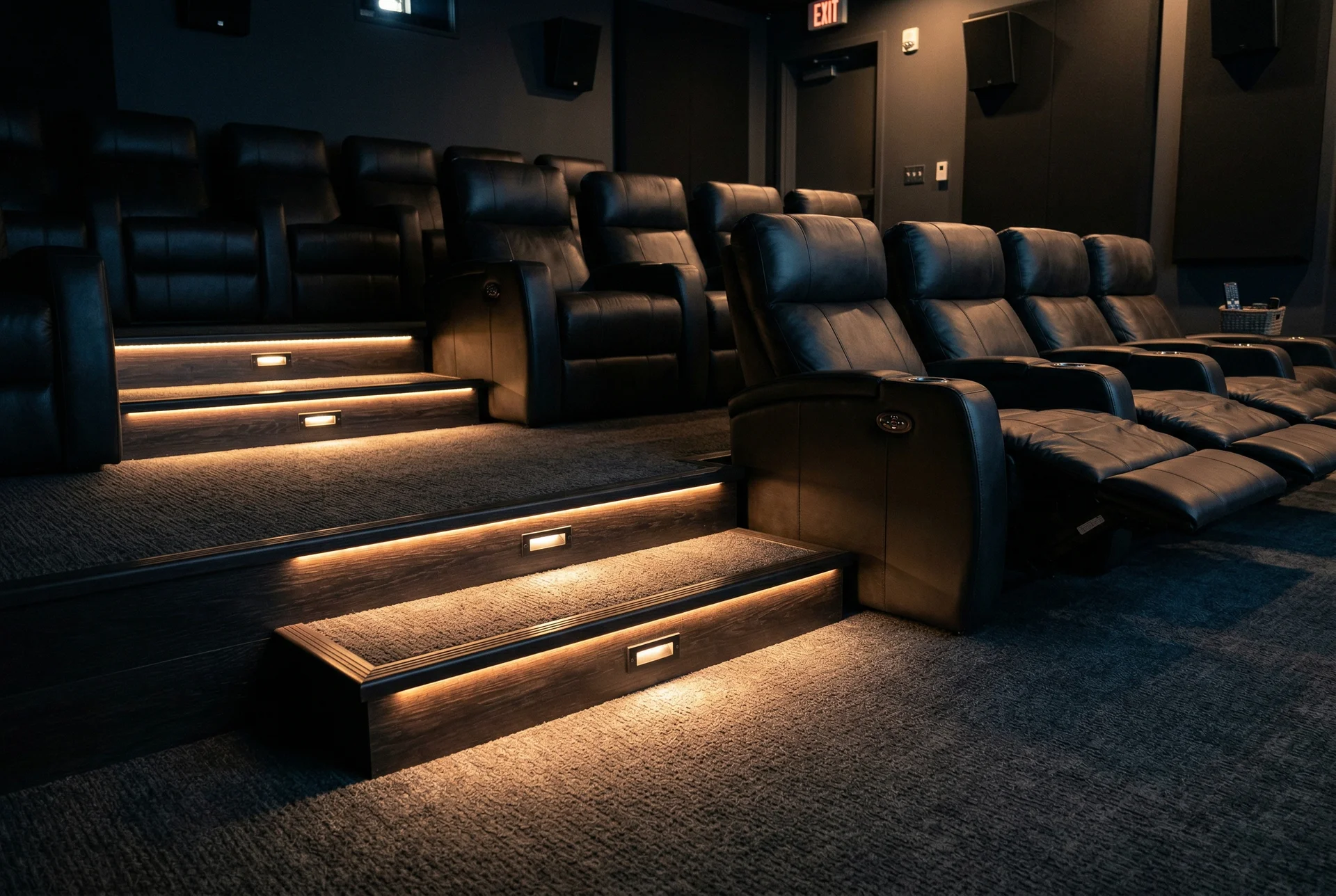
Small, low-profile LED fixtures installed along aisle edges and stair risers provide just enough illumination to navigate the room without disrupting the screen. They should run at 5% to 10% brightness during a movie and ramp up to full brightness when the lights come on.
In Scottsdale homes with theater rooms on a lower level or with split-level floor plans, step lights are even more critical. Many of the custom theaters I design include two or three rows of seating on risers, and every riser gets a light. It's one of those details that seems minor until someone trips in the dark carrying a plate of nachos.
How Do Smart Lighting Scenes Transform the Experience?
Smart scenes let you control every light in the theater with a single button or voice command. According to Statista (2025), the US smart home penetration rate reached 57.2% of households in 2025, with lighting control ranking as the top automation category. For a Scottsdale theater room, scenes are what turn a good room into a great one.
Here are the scenes I typically program for my theater clients:
Movie Mode
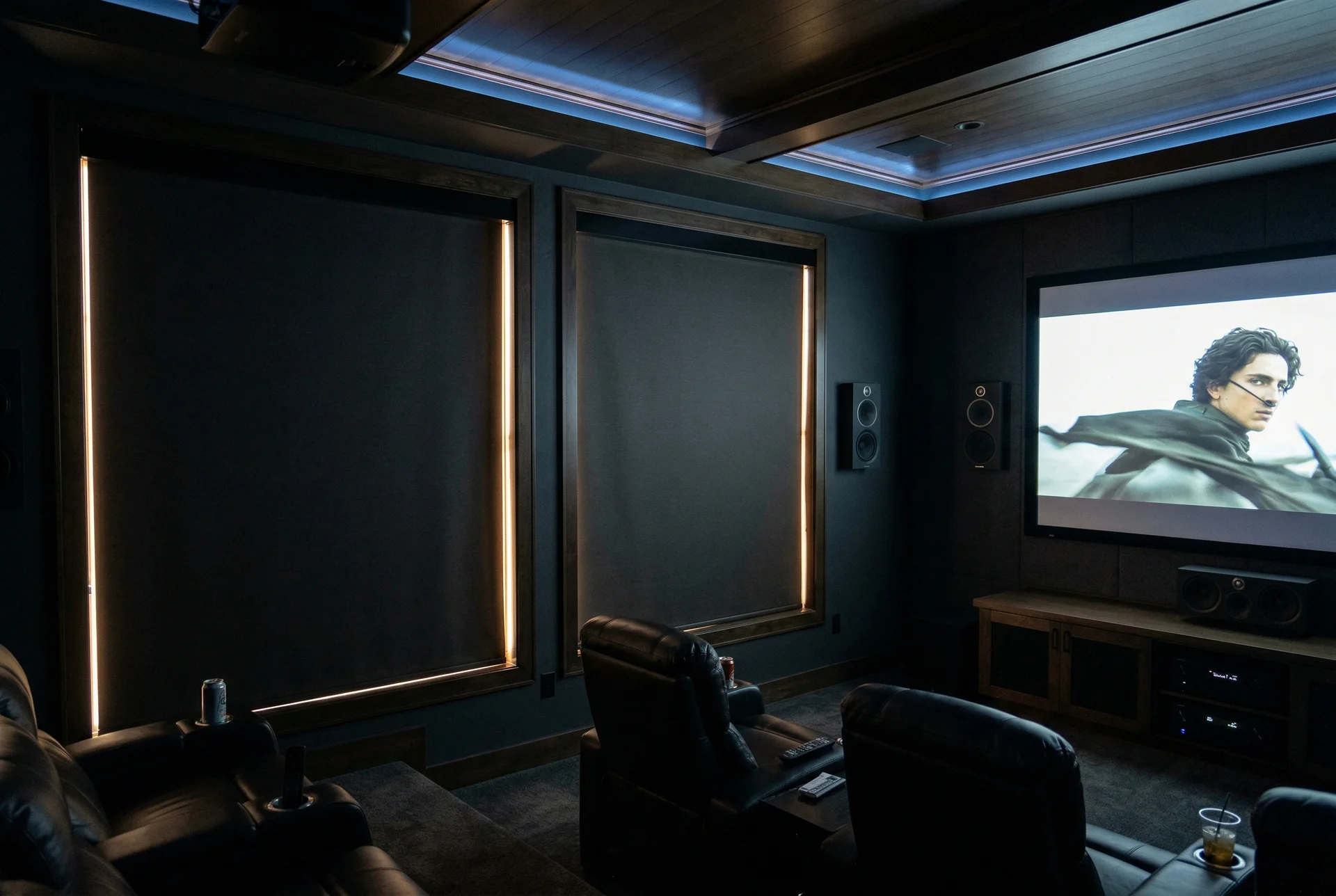
Cove lights dim to 5%. Bias lighting activates. Step lights drop to minimum. Blackout shades close. The projector or TV powers on. Audio system switches to the correct input. One button does all of it.
Intermission Mode
Cove lights rise to 40%. Step lights brighten. The content pauses automatically on supported systems. This gives everyone enough light to move around safely without resetting the entire room.
Cleanup Mode
All lights to full brightness. Shades open. System powers down. The room returns to its daytime state for cleaning or general use.
These scenes work through control systems that communicate with your lighting, shades, and AV equipment over a single network. The programming happens during the installation phase, and I calibrate each scene to the specific light fixtures and room dimensions of your theater.
How Do You Handle Scottsdale's Intense Sunlight?
Scottsdale averages over 299 days of sunshine per year, and afternoon sun in the desert is relentless. Without proper blackout solutions, a theater room with any window exposure becomes unusable between noon and sunset. This is the single biggest lighting challenge specific to Arizona theater builds.
In my experience building theaters across the Phoenix metro area, west-facing and south-facing windows are the biggest offenders. Even with heavy curtains, light leaks around the edges and bounces off the ceiling. I've tested rooms where a single uncovered window raised ambient light levels enough to cut projector contrast by more than half.
The solution is motorized blackout roller shades with side channels. The channels seal the gap between the shade and the window frame, blocking 99%+ of incoming light. Dual roller systems work well too: a sheer shade for daytime use and a blackout shade behind it for theater mode.
These shades integrate directly into the smart scene system. When you hit "Movie Mode," the blackouts close automatically. When you're done, they open back up. No manual fiddling, no forgotten shades washing out the first 10 minutes of a film.
How Does Lighting Integrate with Your Audio System?
Theater lighting and audio aren't separate systems. They're two halves of the same experience. A 2023 study published in Frontiers in Psychology confirmed that ambient lighting conditions significantly influence how people perceive audio quality, with dim, warm environments rated as producing "richer" and "more immersive" sound than bright, cool ones.
When I design a Scottsdale home theater, the lighting plan and the speaker layout happen at the same stage. The cove lighting channels need to clear the speaker wire runs. The bias lighting power supply needs to live near the equipment rack. The step lights need to avoid interfering with subwoofer placement along the risers.
I've found that clients who invest in proper theater lighting consistently rate their overall system satisfaction higher than those who skip it, even when the audio equipment is identical. The room's atmosphere shapes how you experience everything in it. A $40,000 speaker system in a room with fluorescent overhead lights will never feel like a real theater.
Every element in the room works together. The speakers, the screen, the seating, the acoustics, and the lighting all contribute to whether the space feels like a dedicated cinema or a converted spare bedroom. Lighting is the piece that ties it all together.
Frequently Asked Questions
What is the best lighting color temperature for a home theater?
Most theater lighting designers recommend warm white LEDs between 2700K and 3000K for ambient and cove lighting. Cooler temperatures above 4000K create a clinical feel and can interfere with on-screen color accuracy. Bias lighting behind the screen should sit around 6500K to match the D65 video standard, reducing perceived eye strain during long viewing sessions.
How much does home theater lighting design cost in Scottsdale?
Theater lighting costs vary based on room size and complexity. A basic setup with bias lighting and dimmable cove LEDs might start around $1,500 to $3,000. A full smart lighting system with motorized blackout shades, step lights, and scene control typically runs $5,000 to $12,000 or more. I always include a custom quote during the design consultation.
Do I need blackout shades for a home theater in Scottsdale?
In Scottsdale, yes. The Phoenix metro area receives over 299 days of sunshine per year, and afternoon sun can wash out even the brightest projector screens. Motorized blackout shades or dual roller systems with light-blocking side channels are essential for any Scottsdale theater room with windows, especially west-facing rooms.
Can smart lighting be integrated with a home theater system?
Absolutely. Modern control systems can trigger lighting scenes automatically when you press play. A single button can dim the cove lights to 10%, activate bias lighting, lower the blackout shades, and power on the audio system. According to Parks Associates, 87% of smart home device owners report using automated lighting, making it the most common smart home feature.
Ready to Light Your Scottsdale Theater the Right Way?
Lighting design is one of those things that separates a home theater from a room with a big TV. If you're planning a theater build in Scottsdale, or if your current room never quite feels right, the lighting is probably why. I design every theater as a complete system: speakers, screen, acoustics, and lighting working together from day one.
If you're thinking about a home theater project in Scottsdale, I'd love to talk through what's possible. Reach out here and let's start the conversation.
Comments
Leave a Comment