
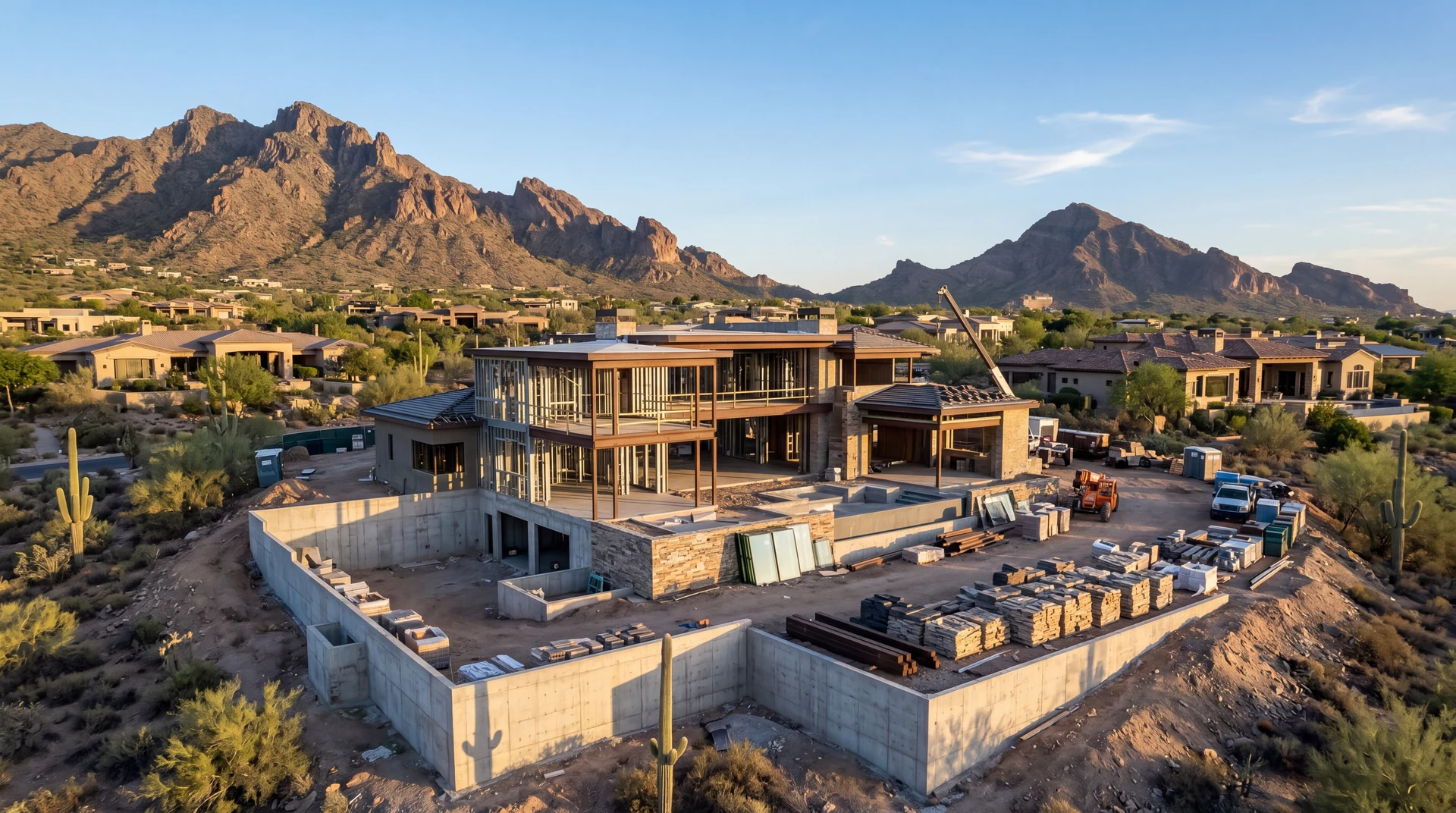
Paradise Valley new construction gives you one shot to get the AV infrastructure right. Once the drywall goes up, you're looking at five to ten times the cost to retrofit. Here's when to bring in your audio company and what to plan during the architect-driven design process that defines PV custom homes.
The Town of Paradise Valley issued 89 new residential building permits in fiscal year 2024-25 (Town of Paradise Valley, 2025). That's 89 custom homes where the AV infrastructure will either be planned correctly during construction or retrofitted later at enormous cost. If you're building in PV right now, the single most important AV decision you'll make has nothing to do with speakers or screens. It's about timing.
I'm Mike, and I design and build custom speakers and home theater systems for luxury homes across Arizona. I've worked alongside PV builders during framing, and I've also walked into finished $6 million homes where the homeowner wanted theater-quality sound but had zero infrastructure in the walls. One scenario costs a fraction of the other. This guide covers the timing, the process, and the specific considerations that make Paradise Valley new construction different from anywhere else in the Valley.
[IMAGE: Aerial view of Paradise Valley luxury home construction site with mountain backdrop - paradise valley arizona new construction luxury home building site]Why Does Pre-Wire Timing Matter So Much in a Luxury Build?
Retrofit low-voltage wiring costs five to ten times more than pre-wire installation in new construction (CEDIA, 2024). In a Paradise Valley home where construction budgets regularly exceed $500 per square foot, that multiplier translates to thousands of dollars in avoidable expense. Pre-wiring during the framing phase is the single most cost-effective decision in the entire AV process.
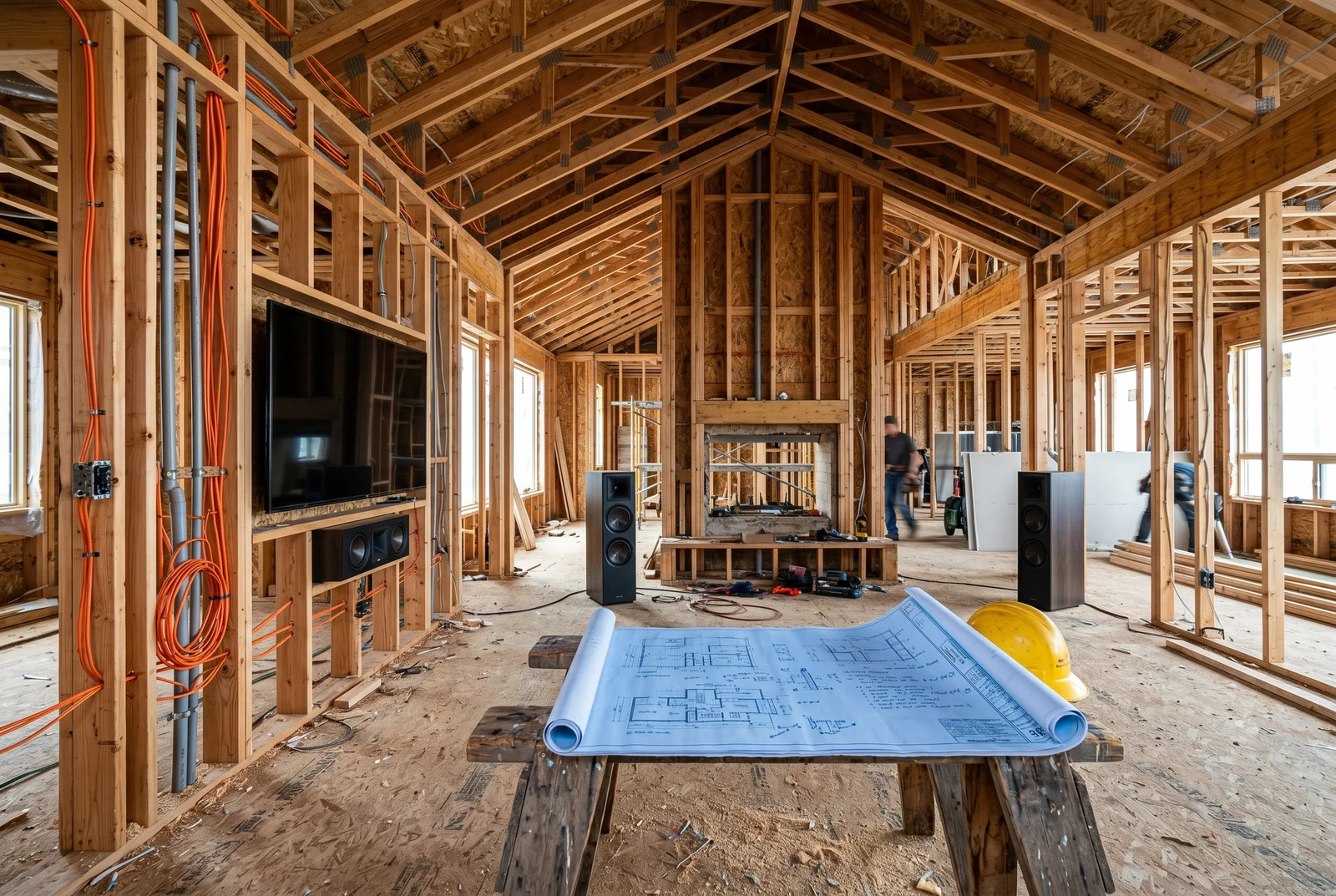
Here's why. When the walls are open, running speaker wire, HDMI conduit, network cable, and control system wiring takes hours. After drywall, trim, and paint are finished, that same work takes days. It requires cutting into surfaces, fishing wire through insulated cavities, patching, and repainting. In homes with Venetian plaster, custom stone, or specialty wall finishes, the cosmetic damage alone can run into five figures to repair.
[PERSONAL EXPERIENCE] I've been called into finished PV homes where the builder's electrician pulled a couple of speaker wires to the living room and called it done. No conduit for future upgrades. No dedicated home run to an equipment closet. No consideration for where the TV would actually go. The homeowner ended up spending more on the retrofit than a full pre-wire would have cost during framing.
The lesson is simple: bring your AV company in during schematic design, not after the certificate of occupancy.
[INTERNAL-LINK: home theater systems overview → /home-theater-systems.html]What Makes Paradise Valley's Builder Market Different?
Custom home construction costs in the Phoenix luxury market averaged $450 to $650 per square foot in 2025 for architect-designed homes (BuildZoom, 2025). Paradise Valley sits at the top of that range. The town's builder market is dominated by firms like BedBrock Builders, Calvis Wyant Luxury Homes, and Camelot Homes, each running a design-build or architect-partnership model where every detail goes through a formal approval process.
That formality is actually an advantage for AV planning. These builders are used to coordinating with specialty subcontractors and consultants. They expect detailed specifications, not vague requests. When I provide conduit routing plans, structural backing requirements for displays, and dedicated circuit specifications early in the process, it slots into their workflow naturally.
[UNIQUE INSIGHT] The architect-driven design process in Paradise Valley creates a natural checkpoint for AV planning that doesn't exist in production home building. Because every PV custom home goes through multiple design review rounds before construction documents are finalized, there's a built-in window for integrating AV infrastructure into the plans. Most builders in PV won't bat an eye when you say you want your AV company at the table during design development. They expect it.
But you have to be in the conversation before construction documents are issued. Once the plans go to the building department, changes become expensive and slow.
[IMAGE: Interior framing of luxury home showing low-voltage wire and conduit runs through wall studs - new construction pre-wire framing low voltage cable conduit]How Does the Architectural Review Board Affect Your AV Plans?
The Town of Paradise Valley enforces design review standards for all new residential construction, with additional hillside ordinances for properties on slopes exceeding 10% (Town of Paradise Valley Hillside Building Committee, 2025). These regulations govern exterior materials, colors, heights, and visibility from neighboring properties. For AV planning, this has real implications for outdoor speaker placement and any equipment that might be visible from outside the home.
Exterior speakers, landscape audio enclosures, and any equipment mounted on exterior walls need to comply with the town's aesthetic standards. That means color matching, screening requirements, and in some cases, approval from the Hillside Building Committee before installation. If your property sits on Mummy Mountain or along the Camelback corridor, expect closer scrutiny.
I plan for these requirements during the design phase. If a client wants outdoor audio for a pool deck or covered patio, I specify enclosure colors and mounting locations that satisfy the review standards before the plans are submitted. Trying to add outdoor audio after the home passes final inspection means going back through the review process, which is a delay nobody wants.
[INTERNAL-LINK: outdoor audio and whole-home systems → /paradise-valley.html]What Should Your Pre-Wire Plan Include?
The average new luxury home in the U.S. now includes 22 connected devices at move-in, a number that's projected to grow to 35 or more within five years (Deloitte, 2025). Pre-wiring isn't just about today's speakers and TV. It's about building infrastructure that handles what comes next without tearing open walls.
Here's what I specify on every Paradise Valley new construction project:
Conduit, Not Just Wire
Wire gets outdated. Conduit doesn't. I run 1-inch and 1.5-inch conduit from the equipment closet to every display location, speaker zone, and outdoor audio point. When HDMI 2.0 gave way to 2.1, clients with conduit swapped cables in twenty minutes. Clients without conduit hired drywall contractors.
A Real Equipment Closet
Every serious AV system needs a ventilated, climate-controlled closet with dedicated 20-amp circuits. I spec minimum dimensions, outlet placement, and ventilation requirements during design development. An afterthought closet crammed next to the laundry room is not the same thing.
Structural Backing for Displays
A 75-inch or 85-inch display needs solid blocking behind the drywall, positioned at the correct height for the seating distance. This takes five minutes during framing. After drywall, it requires a toggle bolt solution that limits your options and creates risk.
Dedicated Circuits
Amplifiers, powered speakers, and projection systems each need clean, dedicated electrical circuits. Sharing a circuit with the kitchen or HVAC system introduces noise and voltage sags. I coordinate circuit requirements with the electrical contractor before rough-in.
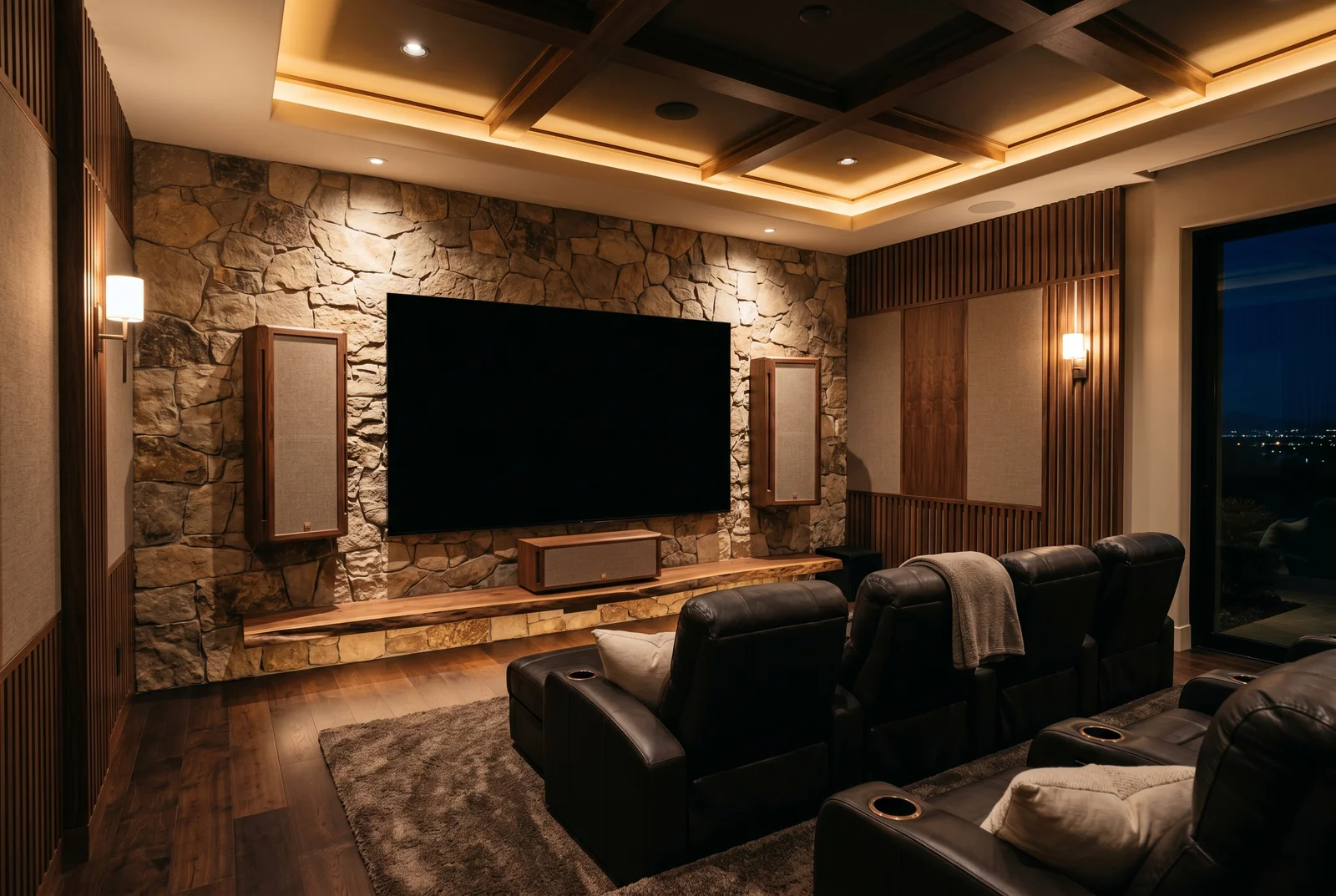
[IMAGE: Finished luxury home theater room with custom on-wall speakers and stone accent wall in Paradise Valley estate - luxury home theater paradise valley custom speakers on-wall]How Does Pre-Wiring Work with My Builder's Schedule?
According to the U.S. Census Bureau, the average completion time for a custom single-family home in the West region was 12.2 months in 2024 (U.S. Census Bureau, Survey of Construction, 2025). Paradise Valley custom homes often take 18 to 24 months or longer. That extended timeline means there are multiple natural windows for AV coordination, but only if you're in the conversation early enough.
Here's how the timeline typically works:
Schematic design (months 1-3): I review floor plans and identify speaker locations, display positions, equipment closet placement, and outdoor audio zones. This is the cheapest phase to make changes.
Design development (months 3-6): I provide detailed specifications for conduit routing, structural backing, dedicated circuits, and equipment closet dimensions. These go into the construction documents.
Framing and rough-in (months 8-12): My wire and conduit are pulled alongside the electrical and low-voltage rough-in. I coordinate directly with the builder's project manager to schedule my walk-through before insulation goes in.
Trim and finish (months 14-20+): Speakers, displays, and equipment are installed after painting and millwork are complete. Final calibration happens after furniture is placed.
[PERSONAL EXPERIENCE] The builders I've worked with in PV all run tight schedules with detailed phase milestones. Missing the rough-in window isn't a minor inconvenience. It means either delaying the insulation and drywall schedule or accepting a retrofit scenario in a brand-new home. Neither option is good. I make it a point to be on the builder's contact list from day one.
[INTERNAL-LINK: about our process and approach → /about.html]What Does the Cost of Retrofitting a $5M+ Home Actually Look Like?
Maricopa County's residential construction valuation for new single-family permits averaged $389,000 per unit in 2024 (U.S. Census Bureau Building Permits Survey, 2025). Paradise Valley permits regularly exceed $2 million in construction value alone, on top of land. When you're investing that kind of money in a home, skipping the AV pre-wire to save a few thousand dollars makes no financial sense.
Here's what retrofit work looks like in a finished luxury home. The drywall crew cuts access holes. The wire tech fishes cable through insulated bays, often fighting fire blocks and HVAC ductwork. The drywall crew patches. The painter matches custom colors. If the wall has stone veneer or specialty plaster, add a stonemason or plaster specialist to the crew.
I've seen retrofit projects in Paradise Valley where the cosmetic repair bill alone exceeded $15,000. That money buys a lot of conduit and wire during the framing phase. And conduit gives you something a retrofit never can: the ability to upgrade cables and add new runs without touching the walls again.
[ORIGINAL DATA] On my PV projects, the typical pre-wire package for a 5,000 to 8,000 square foot custom home, including conduit to all zones, structured wiring for network and AV, and an equipment closet rough-in, runs between $3,000 and $8,000 depending on complexity. The equivalent retrofit work after completion? Three to five times that number, sometimes more. The math isn't close.
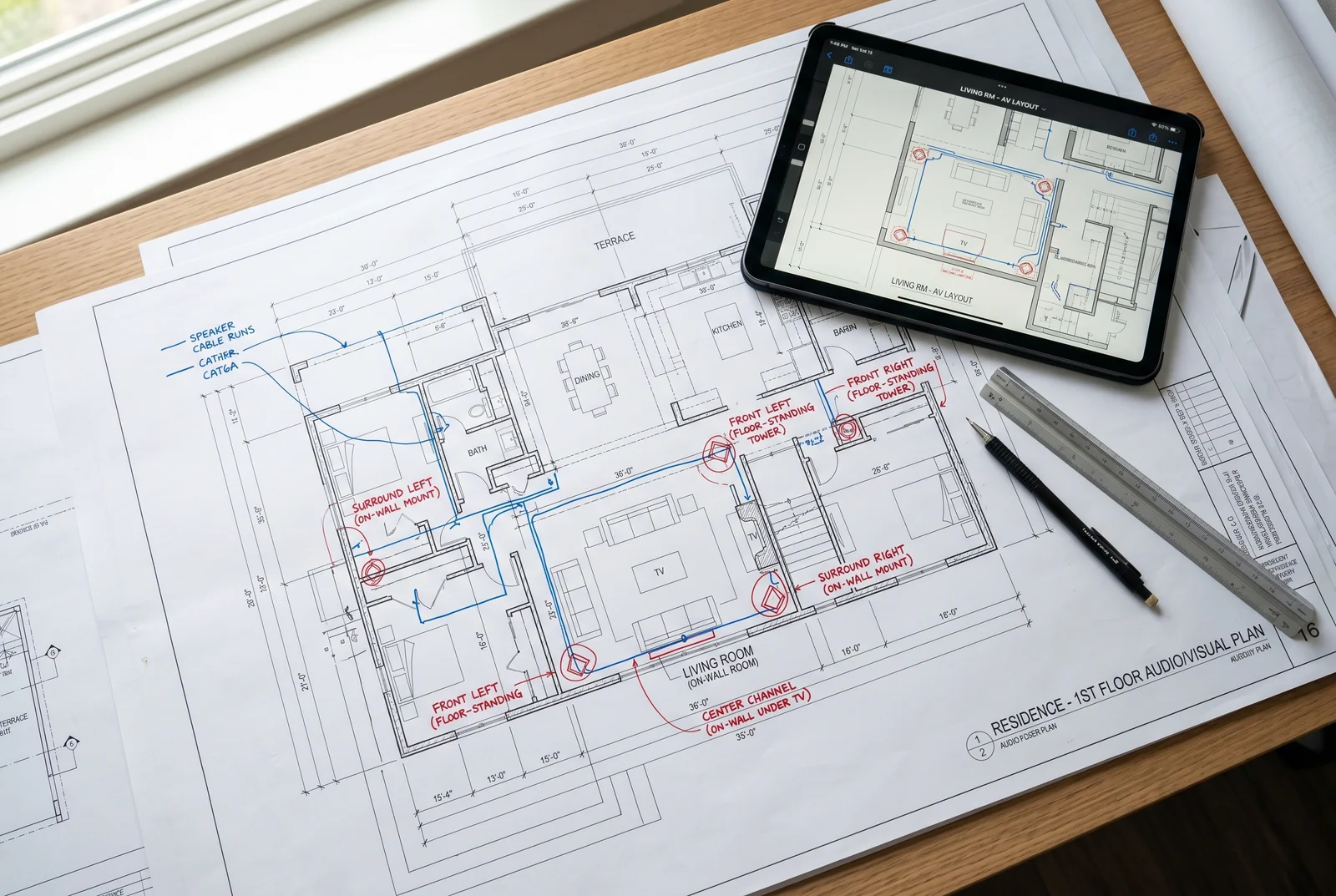
[IMAGE: Architectural blueprints with AV planning annotations showing speaker placement and wire routing - architectural blueprints floor plan speaker placement wire routing annotations]How Do I Get Started on a Paradise Valley New Build?
If you're in schematic design or earlier, you're in the ideal window. Contact me and I'll review your floor plans, identify opportunities, and provide a pre-wire specification document your architect and builder can work from. There's no charge for the initial plan review on new construction projects.
If you're already in construction documents or framing, we can still make it work, but the sooner the better. Every week that passes after framing begins narrows the options and increases the cost.
Call me at (928) 440-1950 or use the contact form to get started. I'll coordinate directly with your builder and architect so you don't have to play middleman.
[INTERNAL-LINK: schedule a consultation → /contact.html]The best time to plan your home's audio and theater system is before the first stud goes up. In Paradise Valley, where every home is a custom build and every detail goes through review, getting AV into the design process early isn't just smart. It's the only approach that makes sense at this level.
Comments
Leave a Comment