
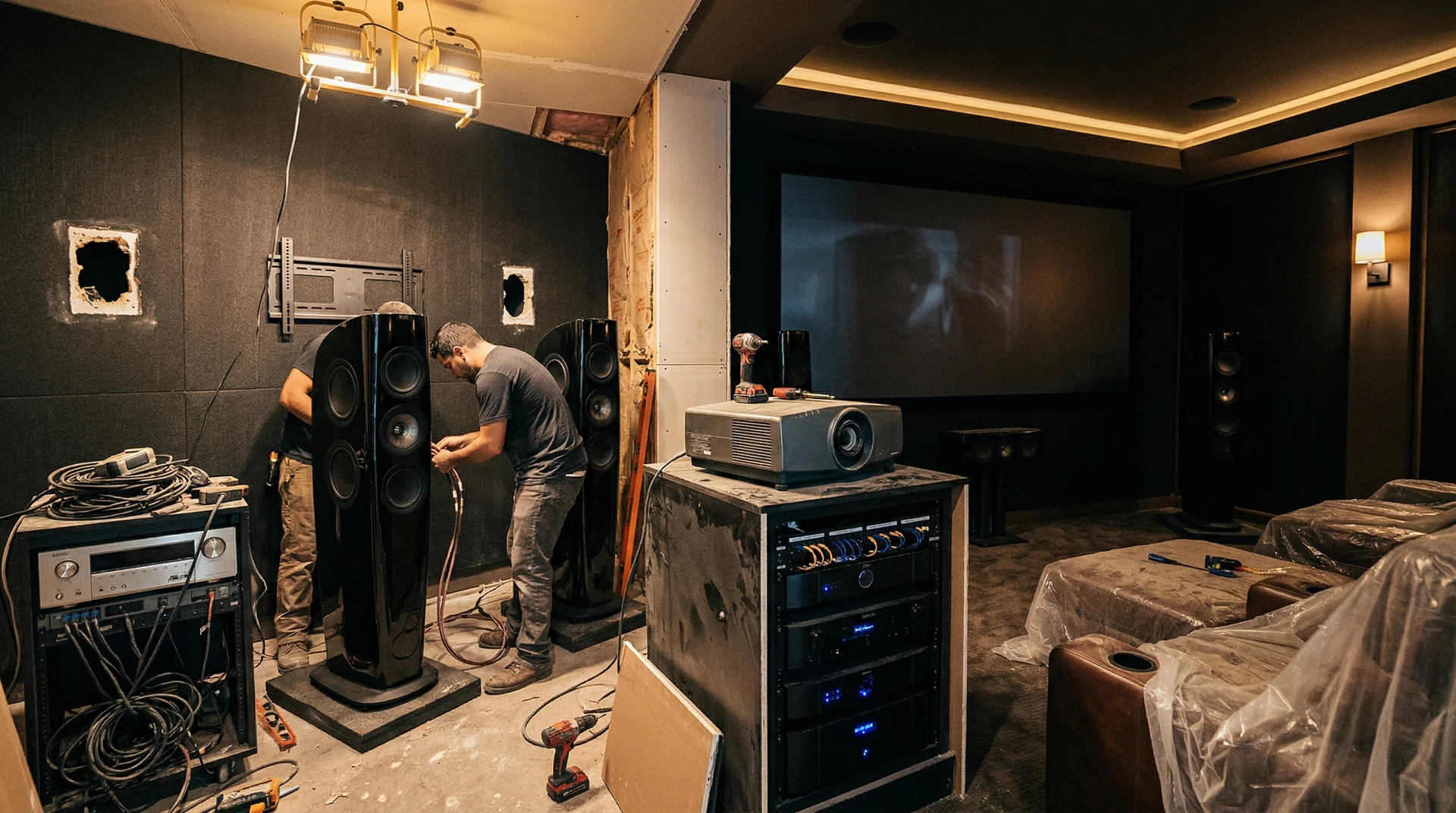
Many Scottsdale homes have 10-15 year old home theater systems with outdated receivers, blown speakers, and messy wiring. Here's how to tell when it's time for a renovation and what the upgrade process actually looks like.
I get at least two calls a month from Scottsdale homeowners who say the same thing: "My home theater just doesn't sound right anymore." They bought their house five or ten years ago with a pre-installed system, and it's slowly fallen apart. Crackly surround speakers. A receiver that won't pass 4K. HDMI cables that can't keep up with their new TV. Sound familiar?
You're not alone. US homeowners spent $481 billion on home improvements in 2024 (Joint Center for Housing Studies, Harvard University, 2025), and AV system upgrades are one of the fastest-growing categories. Scottsdale homes, especially those in communities like DC Ranch, Troon North, and Grayhawk, are prime candidates. The bones are good. The wiring is there. The room is built. You just need better equipment and someone who knows how to put it together properly.
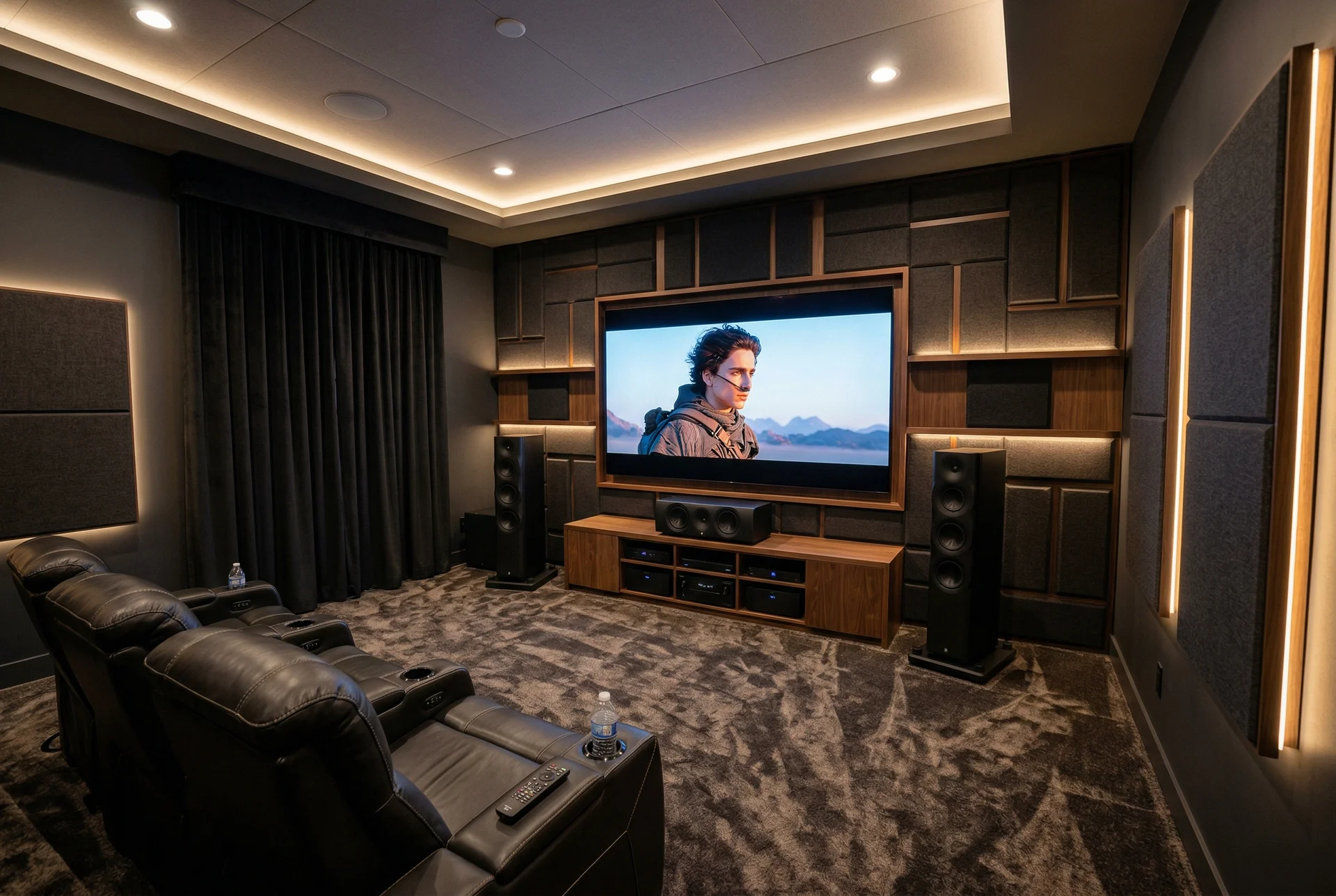
How Do You Know Your Home Theater Needs a Renovation?
The average AV receiver lasts 7-8 years before key features fall behind current standards (Consumer Technology Association, 2024). If your system was installed before 2018, it's likely running HDMI 1.4 or 2.0, which means no 4K HDR passthrough, no eARC for lossless audio, and no support for current streaming formats. That's the single biggest red flag.
Here are the signs I see most often during consultations in Scottsdale:
- Your receiver only has HDMI 1.4 ports. It can't pass 4K, HDR10, or Dolby Vision from your streaming device to your TV.
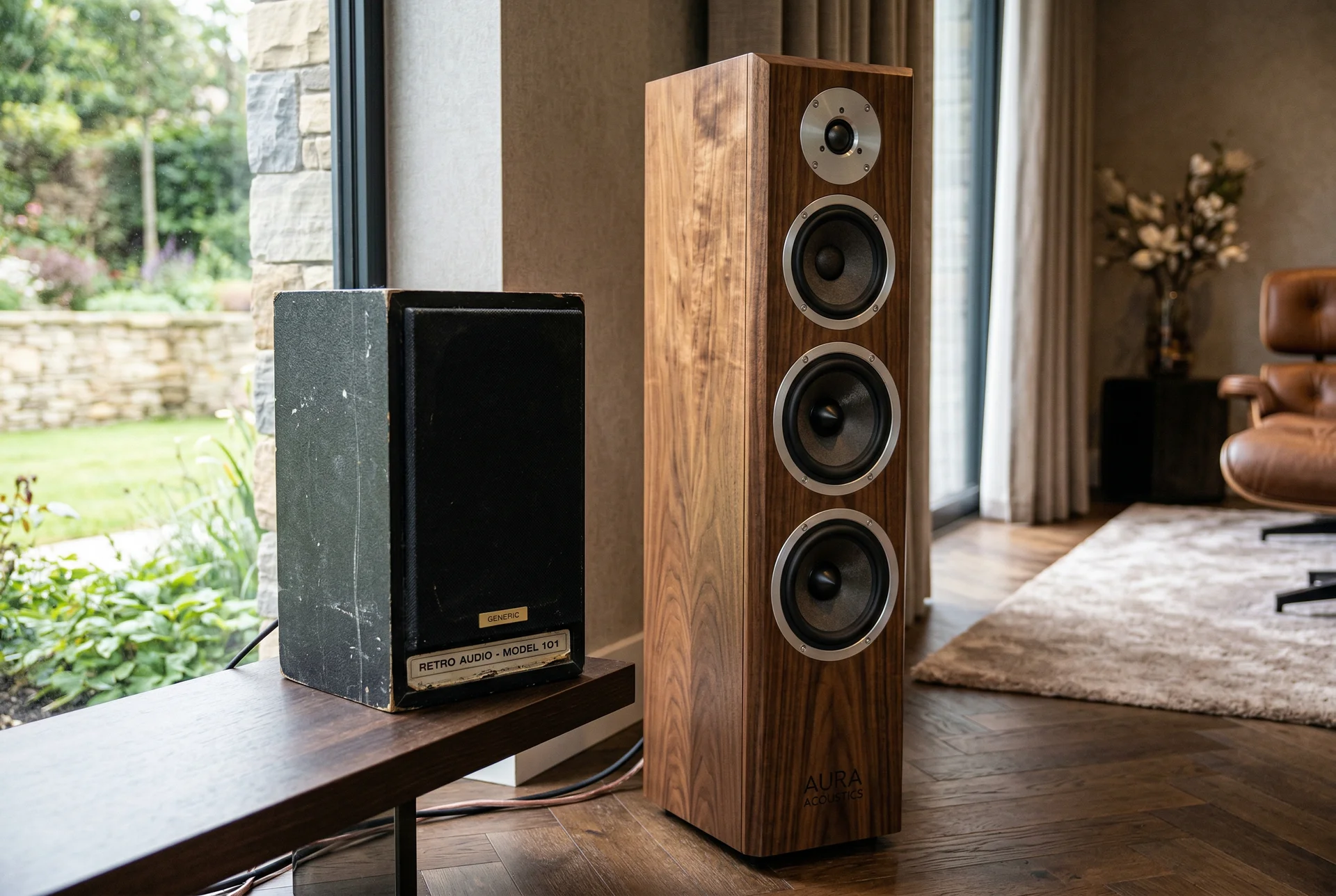
- Speakers crackle, buzz, or sound "thin." Foam surrounds on older woofers deteriorate in Arizona's dry heat. I've pulled speakers out of Scottsdale walls that were literally crumbling.
- You're using optical audio instead of HDMI ARC. That caps you at compressed 5.1 audio. No Atmos, no DTS:X, no lossless tracks.
- The subwoofer barely registers. Older subs lose punch over time, especially cheap ones bundled with speaker packages.
- Messy, unlabeled wiring behind the rack. This is surprisingly common. Builders run wire, but they don't think about serviceability.
If you're nodding along to three or more of these, it's renovation time. Not a tweak. Not a firmware update. A proper rethink of the whole signal chain.
What Does a Home Theater Renovation Actually Involve?
A home theater renovation isn't just swapping a receiver. According to the National Association of Realtors, interior technology upgrades recover approximately 75% of project cost at resale (NAR Remodeling Impact Report, 2024). So this isn't money thrown away. It's an investment in how you use and eventually sell your home.
Here's what a typical Scottsdale renovation looks like from start to finish:
Assessment and Planning
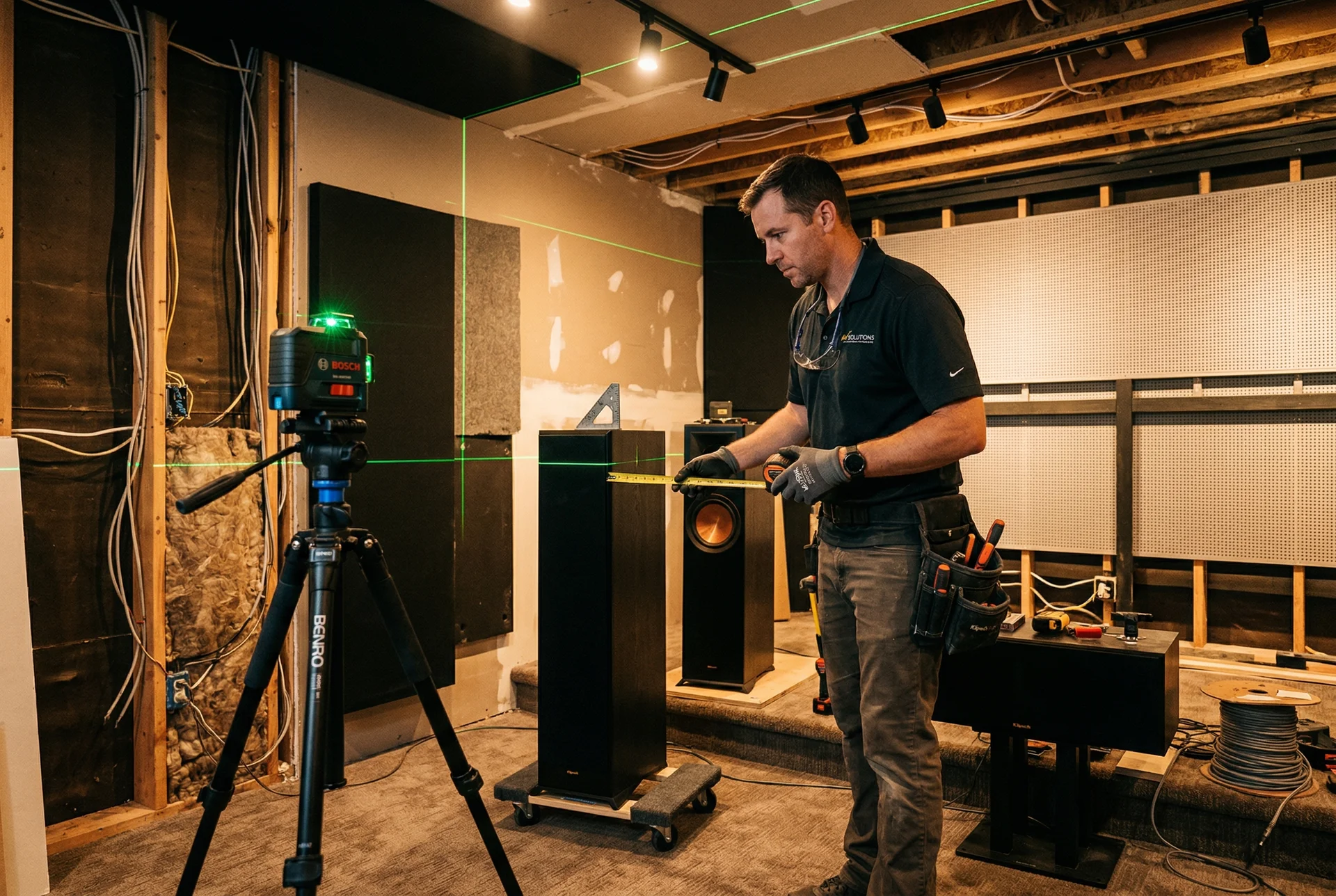
I start with an in-home consultation. I look at the existing equipment, test every speaker, trace the wiring, and measure the room acoustically. Most Scottsdale homes have decent room dimensions for theater. The problem is almost always the gear inside.
In about 70% of the Scottsdale renovations I've done, the homeowner didn't even know what equipment they had. They bought the house, it came with speakers in the ceiling or on a shelf, and they never questioned it until it stopped working.
Equipment Selection
Based on the assessment, I design a system around the room, not around a budget line in a catalog. The receiver, speakers, subwoofer, and source components all need to work together. I spec everything before a single cable gets touched.
Installation and Calibration
Old equipment comes out. New equipment goes in. Every cable gets labeled. Every speaker gets positioned for the room geometry. Then I calibrate the entire system with measurement tools, not just the auto-EQ button on the receiver. That last step is where most installations fail.
What Can You Reuse in a Home Theater Remodel?
Good news: you don't always have to start from scratch. Harvard's Joint Center for Housing Studies found that targeted room upgrades cost 40-60% less than full remodels (JCHS, 2025). In a home theater context, several components often survive the renovation.
What Usually Stays
- Speaker wire runs. If the previous installer used 14-gauge or better copper wire, it's fine. Wire doesn't go bad. I test continuity and impedance, and if it passes, we reuse it.
- Your TV or projector screen. If you bought a 4K display in the last 3-4 years, there's no reason to replace it.
- Theater seating and room layout. These are expensive to change and usually not the problem.
- Acoustic treatments. Panels, bass traps, and diffusers don't wear out. If they're placed well, they stay.
What Almost Always Gets Replaced
- The AV receiver. This is the brain of the system. If it's more than 8 years old, it's holding everything back.
- Speakers. Builder-grade speakers are the number one offender. They were cheap when they went in, and they haven't gotten better with age.
- Subwoofer. Underpowered subs are the most common complaint I hear. A proper sub transforms the room.
- HDMI cables. Older cables can't handle 4K/120Hz or eARC. New certified Ultra High Speed HDMI cables are inexpensive and necessary.
Here's something most people don't consider: the weakest link in your chain determines the quality of the entire system. I've seen $3,000 TVs fed by $200 receivers through decade-old HDMI cables. That TV is operating at maybe 30% of its potential. A renovation aligns every component to the same performance tier.
Why Are Scottsdale Homes Especially Prone to Outdated Systems?
Scottsdale issued over 4,800 residential building permits between 2012 and 2017 (City of Scottsdale Planning Division, 2023). Many of those homes came pre-wired with builder-grade AV systems that are now 8-13 years old, right in the replacement window.
The pattern is predictable. A builder installs the cheapest speakers and receiver that technically fill the "home theater included" checkbox. The homeowner enjoys it for a few years, then notices the picture doesn't look as good as their friend's new setup. The audio sounds flat compared to a decent soundbar. Something has to change.
Arizona's climate adds another factor. Extreme heat accelerates the breakdown of rubber surrounds on speaker drivers. I've pulled speakers from Scottsdale media rooms where the foam was completely disintegrated. Dry air and temperature swings in unconditioned spaces do real damage over time.
How Much Does a Home Theater Renovation in Scottsdale Cost?
Costs vary widely, but the national median for a residential AV project is $12,500 according to CE Pro's 2025 State of the Industry report (CE Pro, 2025). Scottsdale renovations tend to land between $8,000 and $35,000 depending on scope.
Here's a rough breakdown by level:
- Receiver + sub swap ($3,000-$6,000): New receiver with HDMI 2.1, new subwoofer, recalibration. This is the minimum viable renovation.
- Full speaker and electronics replacement ($8,000-$18,000): New receiver, new speakers (on-wall or tower), new sub, new cables, full calibration. The sweet spot for most Scottsdale homeowners.
- Complete system overhaul ($18,000-$35,000+): Everything above plus new display, acoustic treatment, rack rebuild, lighting control, and custom speaker builds from WubWub Audio.
From my own project records, the average Scottsdale renovation I've completed in the last two years has been around $14,000. Most homeowners come in expecting to spend less, then realize how much of their existing system needs to go.
What Is the WubGrade Upgrade Path?
If you already own WubWub Audio speakers, the Ultimate WubGrade Program gives you a direct path to upgrade. In years 1-5, you receive 100% of your original speaker purchase price as credit toward a new set. That's not a trade-in estimate. It's full value.
The program scales down over time: 80% in year 6, 60% in year 7, and so on through year 10. The upgrade must cost at least twice the trade-in value, and speakers need to come back in working condition. Paired speakers (left and right, surround sets) upgrade together.
Why does this matter for renovations? Because it means your speakers aren't a dead-end purchase. When technology moves forward or your room changes, your investment moves with you. Every upgraded set gets a fresh 10-year warranty and a new birth certificate.
How Long Does a Home Theater Renovation Take?
72% of US households now own at least one 4K television (CTA, 2025), which means most Scottsdale homeowners already have the display side covered. That simplifies the timeline. A typical renovation breaks down like this:
- Consultation and assessment: 1-2 weeks (includes room measurement and equipment audit)
- Design and equipment sourcing: 2-4 weeks
- Installation day: 1-2 days for most renovations
- Calibration: 2-4 hours, scheduled after the system breaks in
If custom WubWub Audio speakers are part of the build, add 6-12 weeks for fabrication. Every set is CNC-cut and hand-assembled in our Arizona workshop. There's no warehouse shelf to pull from, which is exactly the point.
Total timeline from first call to final calibration: 4-16 weeks depending on complexity. But here's what I tell every client. Don't rush it. A properly planned renovation sounds better than a fast one.
Frequently Asked Questions
Can I upgrade my home theater without ripping out the walls?
Yes. Most renovations reuse existing wiring and don't require any drywall work. On-wall and tower speakers mount to the surface, and modern receivers connect with the same cable paths your old system used. It's a swap, not a construction project.
Is it worth upgrading just the receiver?
Sometimes. If your speakers are decent and you just need 4K passthrough and modern audio decoding, a receiver swap plus recalibration can make a meaningful difference. But if the speakers were builder-grade to begin with, a receiver alone won't fix thin, lifeless sound.
Do you service systems you didn't originally install?
Absolutely. The majority of my Scottsdale renovation clients come in with systems installed by builders or other companies. I assess what's there, identify what's worth keeping, and design the upgrade around it.
What's the difference between a renovation and a new build?
A new build starts from bare walls. A renovation works with what's already in the room. Renovations are typically faster and less expensive because the infrastructure (wiring, room layout, power) already exists. The focus shifts to equipment quality and calibration.
How do I know if my existing wiring is good enough?
I test every cable run during the assessment phase. If the wire is 14-gauge or better copper and passes continuity and impedance tests, it stays. Aluminum wire, damaged runs, or undersized gauge gets replaced. Most Scottsdale homes built after 2005 have adequate wiring.
Ready to Upgrade Your Scottsdale Home Theater?
If your system is showing its age, you don't have to live with mediocre sound and a picture that doesn't match what your TV can actually deliver. A home theater renovation in Scottsdale is one of the most satisfying upgrades you can make to your home. You use it every single day.
I'd love to take a look at what you have and show you what's possible. Reach out here to schedule a consultation. No pressure, no upsell. Just an honest assessment and a plan that fits your room and your goals.
Comments
Leave a Comment