
A practical guide to turning an unused bedroom, bonus room, or den into a dedicated home theater in Scottsdale, from choosing the right room to acoustic treatment, light control, and realistic budgets.
Most Scottsdale homes have at least one room that's doing nothing. A spare bedroom full of boxes. A bonus room with a treadmill nobody uses. A den that became a dumping ground. These rooms have real potential, and converting one into a dedicated home theater is one of the most satisfying upgrades I've done for clients.
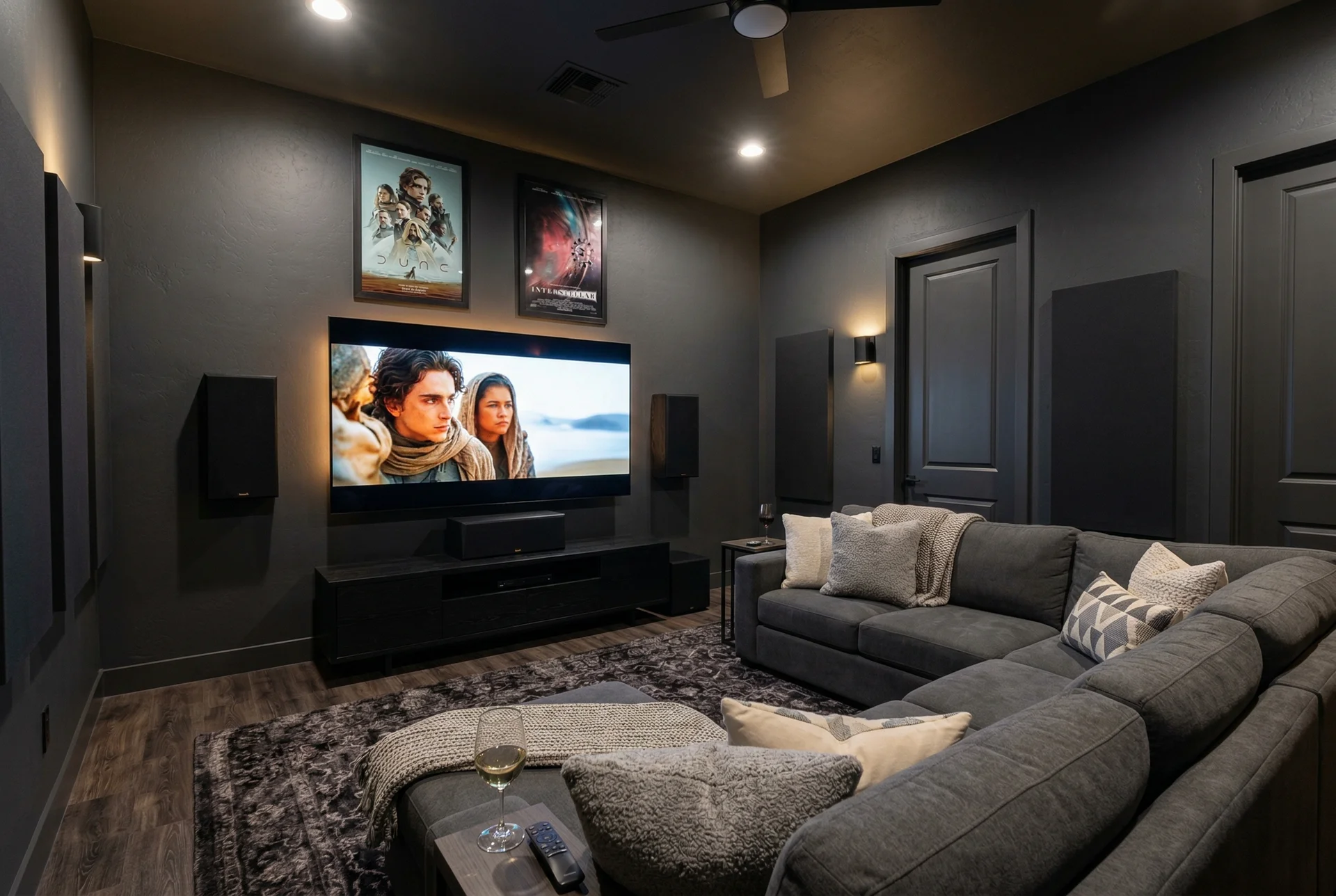
According to the National Association of Home Builders (2024), 55% of home buyers say they want a dedicated media room. That demand isn't slowing down. But a room conversion isn't the same as building from scratch, and understanding the difference saves time, money, and frustration.
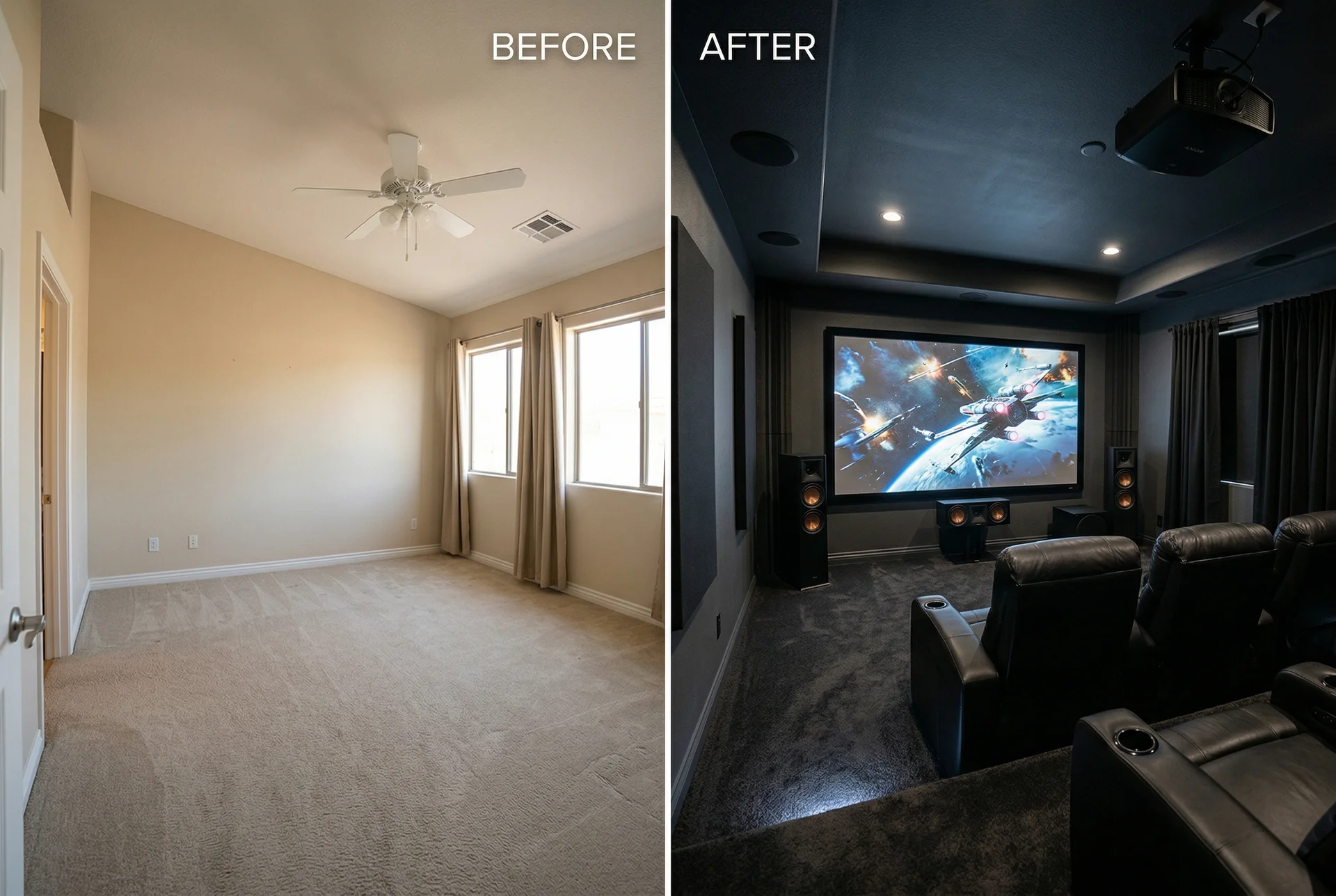
Which Rooms Convert Best for a Home Theater?
The ideal conversion candidate is a rectangular room with minimal or no windows. According to a Houzz & Home study (2024), 32% of renovating homeowners updated a spare room or bonus room in the past year. Not every spare room makes a great theater, though. Shape, size, and window placement matter more than most people expect.
Room Shape and Size
Rectangular rooms outperform square ones for audio. Square rooms create standing waves where bass frequencies pile up in the corners and cancel in the center. A 12x16 or 14x18 room gives you enough depth for proper speaker placement and enough width for a convincing soundstage. Most Scottsdale bonus rooms fall right in this range.
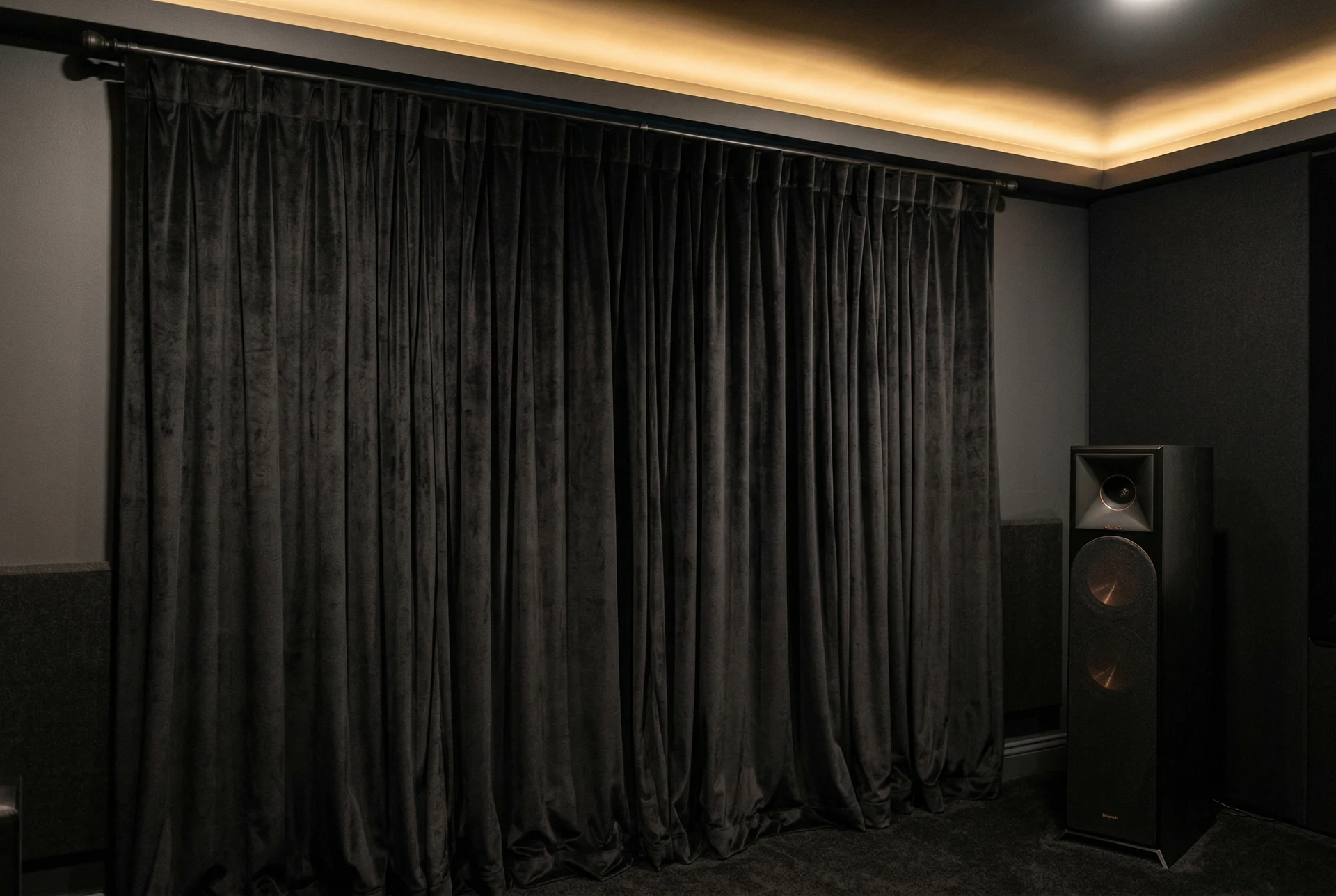
Ceiling height matters too. Standard 8-foot ceilings work fine. If you have 9 or 10-foot ceilings, that's even better for vertical spacing and speaker mounting options.
Windows and Light
Fewer windows means less work. A windowless interior room is the easiest conversion. Rooms with one small window are manageable with blackout treatments. Rooms with large picture windows or sliding glass doors facing west? That's fighting the Arizona sun on hard mode.
I've converted rooms with floor-to-ceiling windows in Scottsdale, but it adds cost and complexity. Light leaks are the enemy of picture quality, especially with projector setups.
What Modifications Does a Spare Room Actually Need?
Room conversions require three categories of work: light control, acoustic treatment, and electrical upgrades. The National Association of Realtors' Remodeling Impact Report (2024) found that homeowners rate home theater and media room projects at 9.6 out of 10 on their "Joy Score," one of the highest satisfaction ratings of any renovation. The satisfaction comes from doing the prep work right.
Light Control
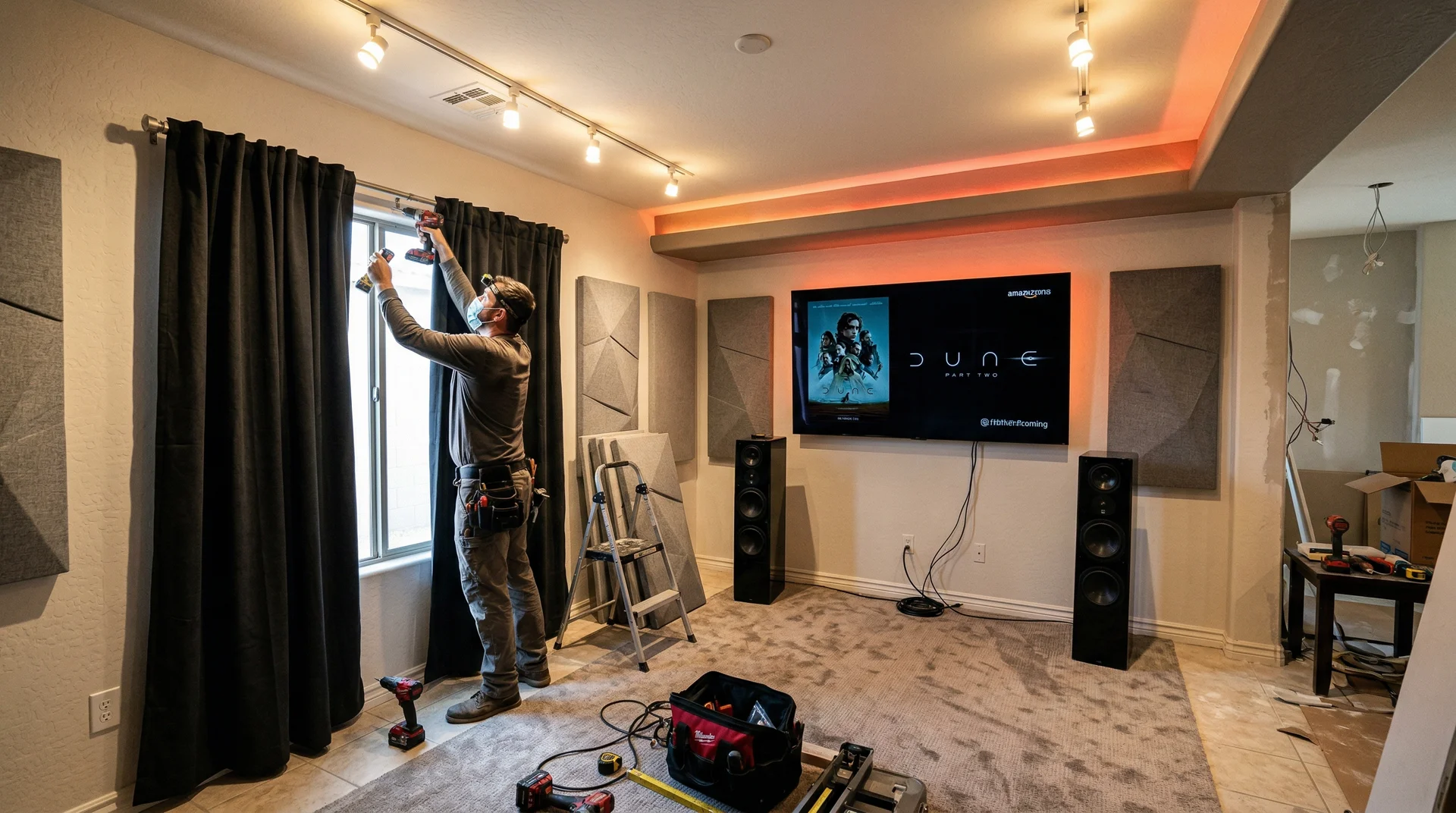
Blackout curtains or motorized shades handle windows. But don't forget about light bleed from doorways, hallways, and recessed lighting. I typically recommend replacing existing overhead lights with dimmable LED fixtures on a separate circuit. A dedicated lighting scene for movie mode makes a real difference.
In Scottsdale homes, I've found that west-facing rooms need double-layered window treatments. The desert sun at 4 PM punches through single blackout curtains like they aren't there. Budget an extra $500 to $1,500 for proper window treatment on problem windows.
Acoustic Treatment
This is where conversions differ most from purpose-built theaters. Spare bedrooms have drywall, carpet (sometimes), and not much else. Bass frequencies pass right through standard walls, which annoys everyone in the next room.
At minimum, you'll want absorption panels at first reflection points, bass traps in the corners, and potentially a second layer of drywall with Green Glue compound for sound isolation. The acoustic treatment alone can run $2,000 to $8,000 depending on how thorough you go.
Electrical and Wiring
Most bedrooms have one or two electrical outlets and a single overhead light. A home theater needs dedicated 20-amp circuits for equipment, structured wiring for speakers, and often a new subpanel or at least additional breaker space. I run all speaker wire and power before any finish work begins. This is where doing it right the first time saves thousands later.
How Does a Room Conversion Compare to Building from Scratch?
Building a dedicated theater room from the ground up during new construction costs 30% to 50% more than converting an existing room, based on project data from the Custom Electronic Design & Installation Association (CEDIA). Conversions save money because the room already has walls, flooring, HVAC, and basic electrical. You're upgrading, not constructing.
Here's what surprises most clients: a converted spare room can actually outperform a purpose-built theater if the original room has the right dimensions. Purpose-built rooms sometimes get designed around aesthetic goals, with odd shapes, soffits, or oversized volumes that create acoustic problems. A simple rectangular bedroom with 8-foot ceilings? That's acoustically predictable. Predictable is good.
The trade-off is flexibility. New construction lets you specify wall mass, room dimensions, HVAC isolation, and wiring from day one. Conversions work within existing constraints. But for most Scottsdale homeowners with a 200 to 400 square foot spare room, conversion is the smarter path.
What Should You Budget for a Room Conversion in Scottsdale?
A typical spare room home theater conversion in Scottsdale runs $15,000 to $50,000 or more, depending on equipment quality and room modifications. The Consumer Technology Association (2025) reports that US home audio spending reached $7.6 billion last year. That's a lot of people investing in better sound at home, and room conversions are a big part of that growth.
Where the Budget Goes
Here's a rough breakdown for a mid-tier conversion of a 14x18 room:
- Room modifications (acoustic treatment, light control, electrical): $5,000 to $15,000
- Speakers (on-wall or tower, center channel, surrounds, subwoofer): $4,000 to $20,000+
- Display (TV or projector with screen): $2,000 to $10,000
- Electronics (receiver/processor, streaming, control): $2,000 to $8,000
- Seating and finishing: $2,000 to $10,000
I build custom speakers at my Arizona workshop specifically for rooms like these. On-wall and tower designs that match the room's dimensions and your listening preferences. That's where the real performance difference lives.
What Stays and What Changes in the Room?
According to the NAHB (2024), 55% of home buyers actively seek dedicated media rooms, which means a well-done conversion adds real appeal if you ever sell. But you don't have to gut the room to get there. Knowing what stays saves money and construction time.
Typically Stays
- Walls (unless adding mass for sound isolation)
- Ceiling drywall (unless adding a second layer)
- HVAC supply and return
- Door frame and location
- Flooring subfloor
Typically Changes
- Flooring surface (carpet is ideal for theaters)
- Lighting fixtures and switches
- Electrical outlets and circuits
- Window treatments or window blocking
- Wall surfaces (paint color, acoustic panels, potential second drywall layer)
- Door (solid core replacement for sound isolation)
- Closet (often converted into equipment rack or subwoofer housing)
One modification I make on almost every conversion: replacing the hollow-core door with a solid-core door. It's a $200 to $400 upgrade that cuts sound transmission to adjacent rooms by roughly half. Clients are always surprised how much difference a door makes.
How Long Does a Home Theater Room Conversion Take?
From first consultation to final calibration, expect 6 to 12 weeks or more for a room conversion in Scottsdale. Custom speaker builds from my Arizona workshop add time, but the result is speakers designed for your specific room rather than generic boxes pulled off a shelf.
Typical Timeline Breakdown
- Consultation and room assessment: Week 1
- Design and equipment selection: Weeks 2 to 3
- Room modifications (electrical, acoustic, light control): Weeks 3 to 6
- Custom speaker fabrication: Weeks 4 to 8 (overlaps with room work)
- Equipment installation and wiring: Weeks 7 to 10
- Calibration and fine-tuning: Weeks 10 to 12
The timeline depends on the scope of room modifications. A room that needs minimal work, good dimensions and no windows, can be finished faster. A room requiring sound isolation, new electrical, and heavy acoustic treatment takes longer. I don't rush it because calibration at the end is what ties everything together.
Frequently Asked Questions
Do I need a dedicated room for a home theater?
No, but a dedicated room delivers significantly better results. A shared living room involves compromises on light control, speaker placement, and volume levels. A converted spare room with proper treatment gives you a controlled acoustic environment where every component performs at its best. Even a 12x14 bedroom works well.
Will converting a room to a home theater hurt my home's resale value?
It typically helps. The NAHB (2024) reports 55% of buyers want a dedicated media room. A well-designed theater adds lifestyle appeal, especially in Scottsdale's luxury market. The key is quality execution, not a DIY job with exposed wires.
Can I still use the room for other purposes?
Yes. Many conversions I've done serve double duty as a theater and a music listening room, gaming room, or quiet reading space. The acoustic treatment and comfortable seating work for all of those. What you lose is the original function as a bedroom, since the blackout treatments and equipment make it impractical for guests.
What size room do I need for a home theater conversion?
A minimum of about 150 square feet (roughly 10x15) gives you enough space for a proper speaker layout and comfortable seating for two or three. The sweet spot is 200 to 350 square feet, which fits most Scottsdale bonus rooms and spare bedrooms. Larger is nice but not necessary.
Do I need a permit for a home theater room conversion in Scottsdale?
Electrical work in Scottsdale requires a permit when adding circuits or a subpanel. Structural modifications like removing a closet wall also need permits. Cosmetic changes, acoustic panels, paint, and equipment mounting typically don't. I coordinate with local requirements on every project.
Ready to Convert Your Spare Room?
If you've got an unused room in your Scottsdale home, it's probably the most underperforming square footage in the house. A proper conversion turns dead space into the room you'll use most. I handle everything from room assessment and design through custom speaker builds and final calibration, all backed by a full warranty.
Want to talk through what's possible with your space? Reach out for a consultation and I'll give you an honest assessment of your room's potential.
Comments
Leave a Comment