
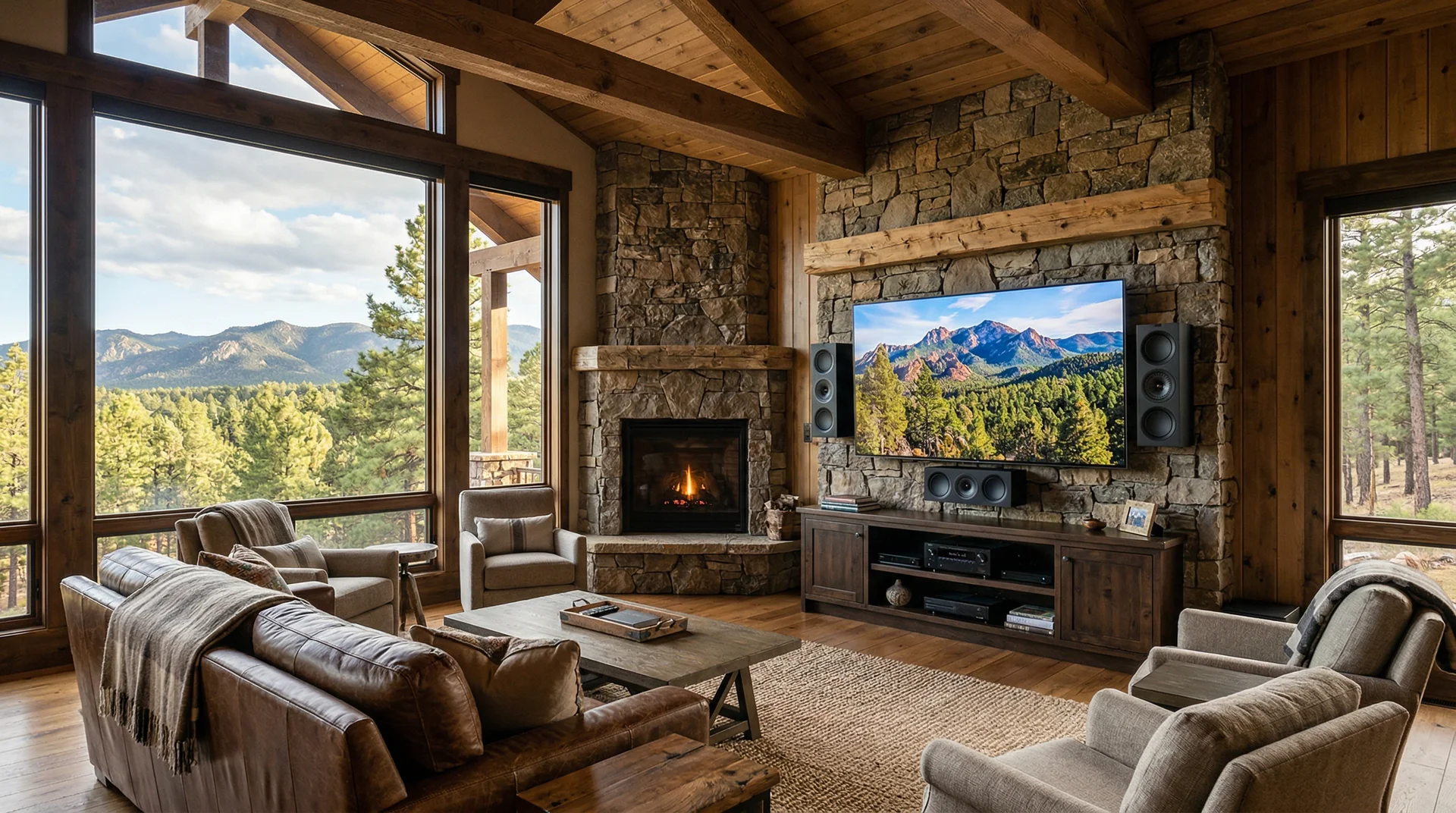
Prescott's ranch homes and open layouts make the media room vs. home theater decision unique. Here's how to choose the right setup for your space, your budget, and how you actually watch.
About 73% of residential AV projects now involve multi-use media rooms rather than dedicated theaters, according to CE Pro's 2024 State of the Industry report. That number keeps climbing. And it makes sense, especially in Prescott, where ranch-style homes and open great rooms outnumber purpose-built theater spaces by a wide margin.
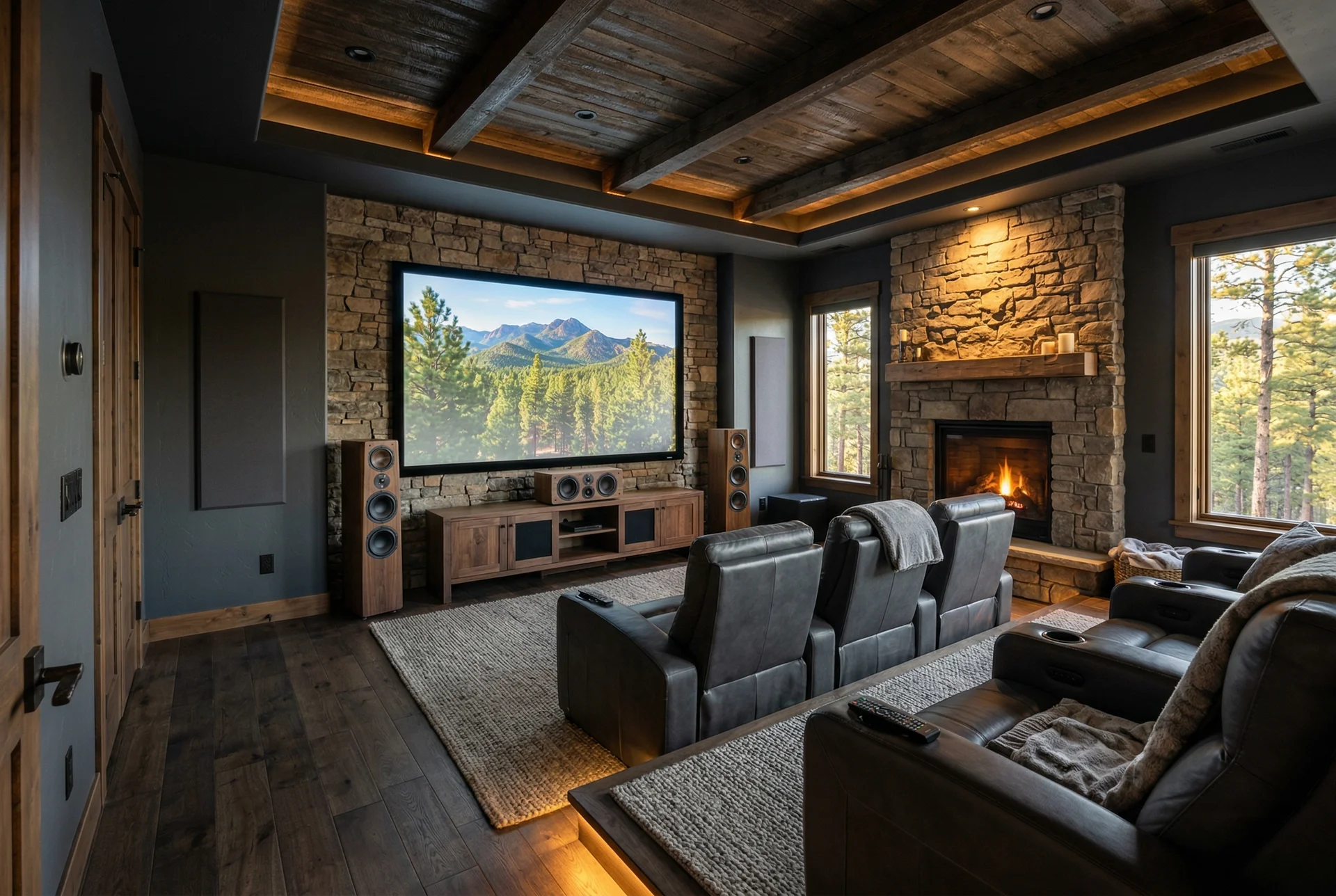
I'm Mike Vincent, and I design and build custom audio systems across Northern Arizona. This is one of the most common conversations I have with Prescott homeowners: do I build a dedicated theater, or do I make my living room sound incredible? The answer depends on your home's layout, your budget, and honestly, how you actually watch.
What's the Real Difference Between a Media Room and a Home Theater?
The distinction matters more than most people think. According to the Custom Electronic Design and Installation Association (CEDIA), a dedicated home theater averages 30% to 50% higher project costs than a comparable media room, largely due to construction and acoustic isolation. A home theater is a sealed, light-controlled room built for one purpose. A media room is a living space that happens to sound and look great.
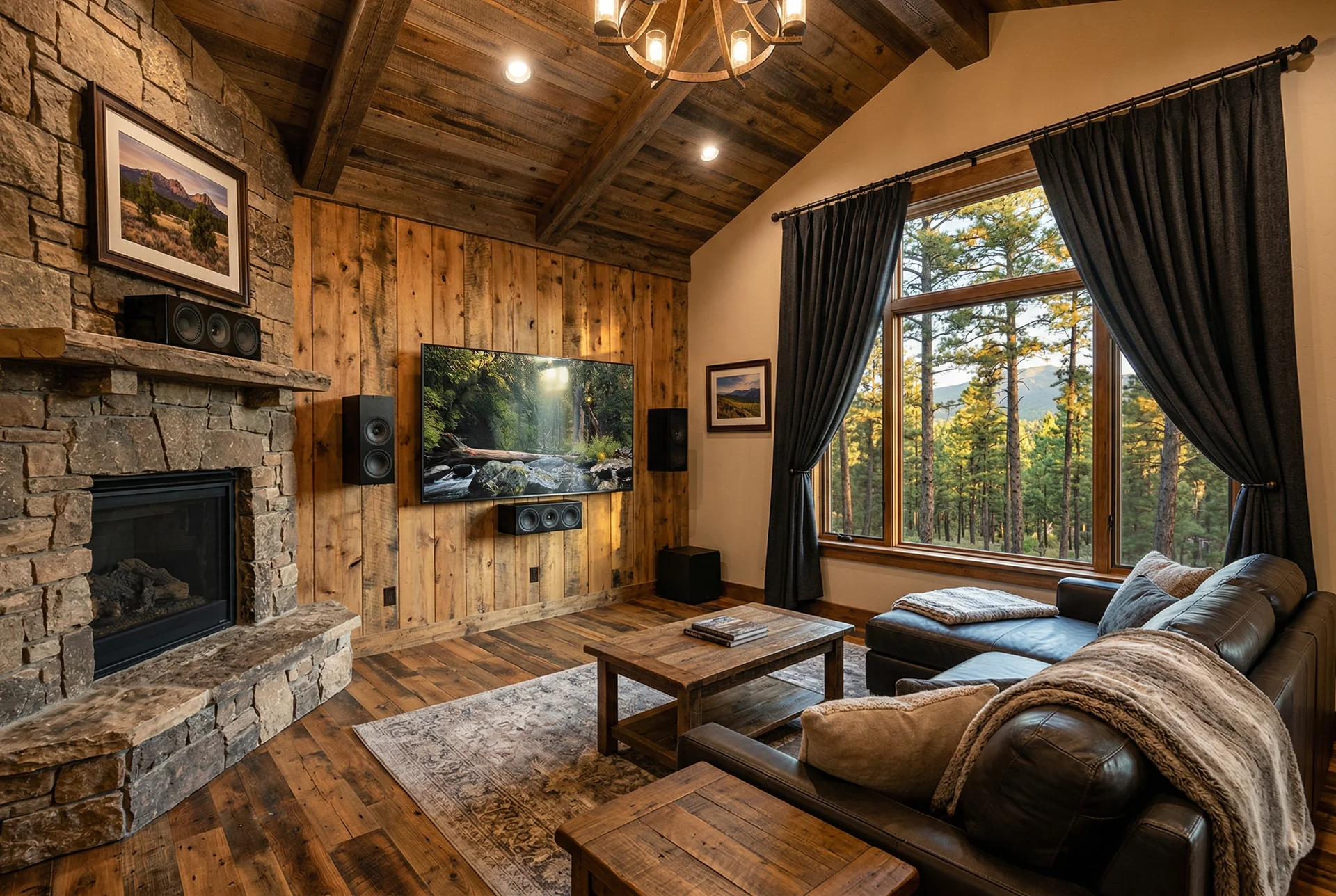
A dedicated theater gives you total control over light, sound reflections, and seating position. You're building a room around the experience. That means dark walls, acoustic treatment, a projection screen or large display, and seating placed at exact distances for optimal surround imaging.
A media room keeps the space flexible. You watch a movie Friday night, the kids play in there Saturday morning, and guests hang out during a Sunday football game. The speakers and display are part of the room's design, not the room's entire reason for existing.
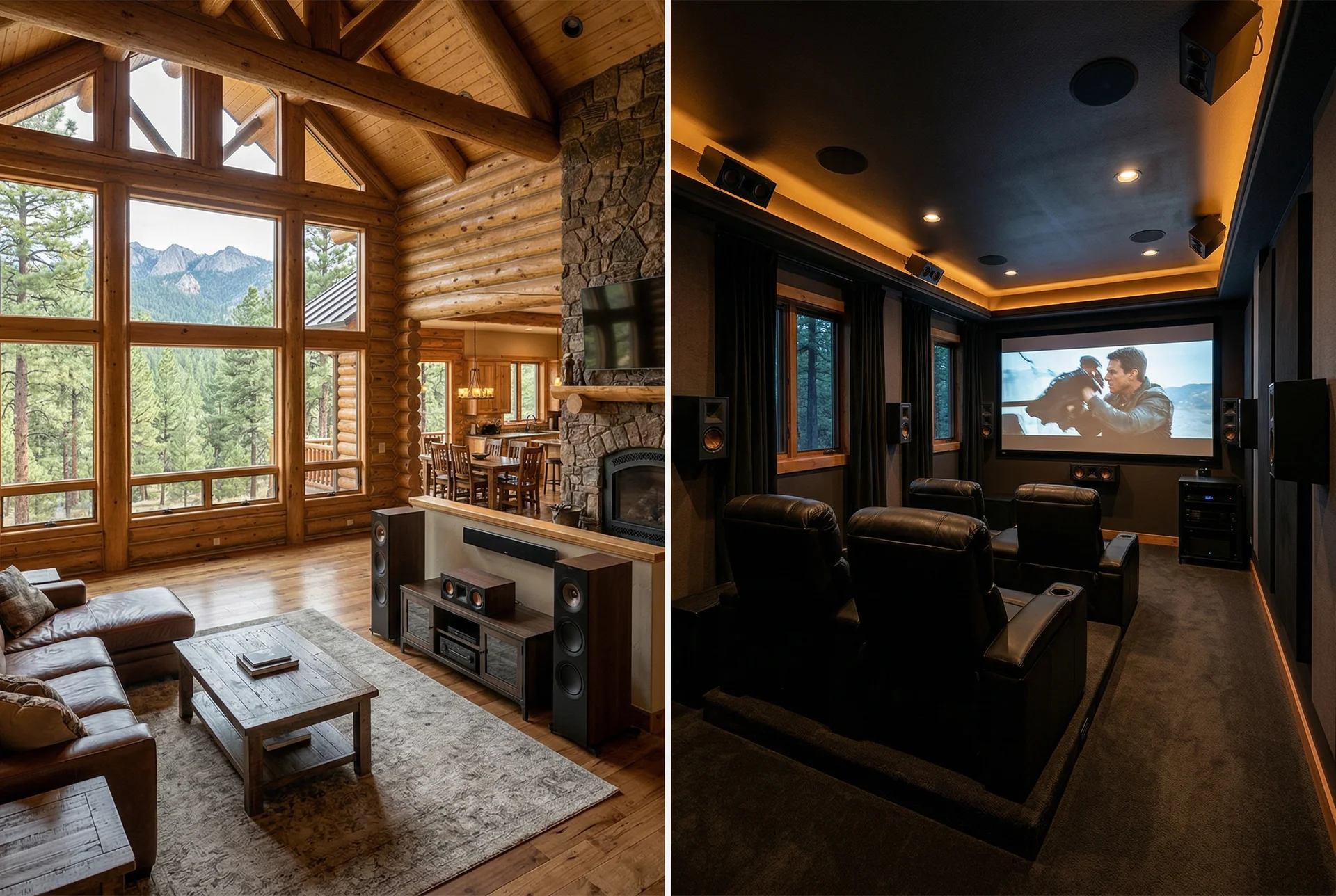
Neither is objectively better. But your home's bones should drive the decision, not a showroom demo you saw somewhere.
Why Prescott's Ranch Homes Change the Equation
Prescott's housing stock is different from the Valley. About 64% of homes in Yavapai County were built before 2000, according to U.S. Census Bureau American Community Survey data (2023). Most of those are single-story ranch layouts that were drawn up long before media rooms were on any architect's checklist.
That's not a problem. It's just a different starting point. Ranch homes typically give you long, open great rooms with the kitchen on one end and a fireplace or TV wall on the other. Ceilings are usually 8 to 9 feet, sometimes vaulted with exposed beams. Walls are often a mix of drywall and decorative stone.
In my experience, these layouts actually work well for media rooms. The open sightlines mean you can place tower speakers or on-wall speakers at ear height without blocking walkways. The challenge is managing sound bleed into the kitchen and hallway, which is solvable with speaker placement and calibration rather than construction.
Dedicated theater conversions in ranch homes are trickier. You're usually converting a guest bedroom or a garage bay, and that means construction: framing, insulation, electrical, maybe HVAC modifications. In older Prescott homes, you'll also want an electrician to verify the panel can handle the additional load.
How Does Prescott's Elevation Affect Light Control?
At 5,400 feet, Prescott gets about 277 sunny days per year according to BestPlaces climate data. The higher elevation also means more intense UV and a steeper sun angle than Phoenix or Scottsdale. That affects how you manage glare in a media room, especially one with west-facing windows.
This is where dedicated theaters have a built-in advantage: no windows. But if you're going the media room route, and most Prescott homeowners do, you need to think about window treatments seriously.
A Dual-Layer Approach for Four-Season Light
I recommend a dual-layer setup for Prescott media rooms. A solar sheer reduces daytime glare while keeping the view of the pines. A blackout roller behind it drops for evening movie sessions. This handles Prescott's four-season light changes, from low winter sun angles that cut straight across a room to the high summer sun that blasts through south-facing glass.
Motorized shades are worth the investment here. A single button press takes the room from bright afternoon to theater-dark in seconds, and you don't lose those mountain views permanently.
What Does Each Option Cost in Prescott?
Nationally, homeowners spend a median of $3,000 to $5,000 on a basic media room upgrade and $25,000 to $75,000 on a full dedicated theater, according to Fixr's 2025 home theater cost data. In Prescott, those numbers shift based on local labor rates and the specific challenges of older construction.
Media Room Budget Range
A quality media room setup in a Prescott ranch home typically runs $8,000 to $25,000. That covers a properly matched speaker system (tower or on-wall, center channel, surround speakers), a 65-inch or larger display, and professional calibration. The room itself stays as-is, so there's no construction cost.
If you add motorized window treatments and basic acoustic panels for a stone or hardwood-heavy room, budget another $2,000 to $5,000. Still well under the cost of converting a room to a dedicated theater.
Dedicated Theater Budget Range
A dedicated theater conversion in Prescott starts around $25,000 and climbs from there. The equipment might be similar to a media room, but you're adding construction: framing, insulation for sound isolation, drywall, paint, dedicated electrical circuits, and often an HVAC modification so the room doesn't overheat with the door closed.
Seating, a projection screen, and acoustic treatment add to that total. Most Prescott theater projects I've worked on land between $30,000 and $60,000 when everything is included.
When Does a Media Room Make More Sense?
For most Prescott homeowners, the media room is the practical choice. The National Association of Home Builders' 2024 "What Home Buyers Really Want" survey found that 82% of buyers rated a dedicated laundry room as essential or desirable, while only 32% said the same about a media or home theater room. People want flexible spaces.
Here's something I've noticed over years of doing this work: the homeowners who get the most daily use from their systems are almost always the media room clients. Dedicated theaters are incredible for movie night, but they often sit dark five or six days a week. A great-sounding living room gets used every single day.
A media room makes more sense when your home doesn't have a spare room to convert, when you want the system integrated into your main living space, or when your budget is better spent on quality equipment than on construction. Prescott's ranch layouts, with their open great rooms and natural gathering spaces, are built for this approach.
When Should You Go With a Dedicated Theater?
A dedicated theater makes sense when you have the space and the commitment. If your Prescott home has an unused guest suite, an oversized bonus room, or a garage bay you're willing to convert, a dedicated room will always outperform a shared space acoustically. Total light control and acoustic isolation are impossible to replicate in an open floor plan.
Go dedicated if you're a serious film viewer who cares about reference-level audio, if you want a projection setup with a 100-inch or larger screen, or if ambient noise from the rest of the house would bother you during quiet dialogue scenes. Some clients use their theater daily. It depends on your habits.
If you're building new construction in Prescott or doing a major renovation, planning a dedicated theater from the start saves significant money compared to retrofitting later. The wiring, framing, and HVAC are dramatically cheaper when the walls are still open.
How Do Open Floor Plans Handle Surround Sound?
This is the question I get most often from Prescott ranch home owners. Open great rooms feel like the worst-case scenario for surround sound, but they're actually manageable with the right approach. Speaker positioning, calibration, and choosing the right equipment matter far more than room shape.
In open layouts, I place the front soundstage, a center channel with flanking tower or on-wall speakers, against the primary viewing wall. Surround speakers go on-wall behind the seating area, angled inward. The key is keeping the surround speakers close to the listening position rather than trying to fill the entire open space. You're creating a focused bubble of sound, not flooding the whole floor plan.
Dealing With Hard Surfaces
Prescott ranch homes love stone accent walls and tile or hardwood floors. These surfaces reflect sound and can make dialogue muddy. A quality area rug under the seating area, a few strategic acoustic panels on the side walls, and proper speaker calibration solve most of this. You don't need to redecorate. You need someone who knows how to measure the room and tune the system to it.
Will it sound as perfect as a dedicated theater? No. Will it sound dramatically better than a soundbar or a pair of bookshelf speakers sitting on a shelf? By a factor that's hard to describe until you hear it.
What About Resale Value?
This is worth considering honestly. A well-integrated media room adds appeal without limiting how the next owner uses the space. A dedicated theater is more polarizing. Some buyers see it as a bonus. Others see a room they'd rather convert back to a bedroom or office.
In Prescott's market, where ranch homes dominate and spare bedrooms are at a premium, a media room upgrade tends to be the safer investment. The equipment can move with you if needed. Construction can't.
Frequently Asked Questions
What is the difference between a media room and a home theater?
A home theater is a dedicated, light-controlled room built for cinematic audio and video. A media room is a multi-purpose space, often a living room or great room, designed for everyday watching with quality sound and picture. Media rooms stay open to foot traffic and natural light. Home theaters isolate the experience.
How much does a media room cost compared to a home theater in Prescott?
A well-designed media room in Prescott typically runs $8,000 to $25,000, depending on speaker quality and display choice. A dedicated home theater with acoustic treatment, light control, and tiered seating starts around $25,000 and can reach $60,000 or more. The biggest cost difference is construction, not equipment.
Can I get good surround sound in an open floor plan ranch home?
Yes. Open floor plans need careful speaker placement and calibration, but a 5.1 or even 5.2 setup with on-wall or tower speakers can sound excellent in a Prescott ranch home's great room. The key is managing reflections from hard surfaces and placing speakers to focus the soundstage on the seating area.
Do Prescott homes need special window treatments for a media room?
Prescott's elevation at 5,400 feet means stronger UV intensity and four distinct seasons of changing light angles. Dual-layer window treatments, a sheer for daytime glare reduction and a blackout layer for movie nights, handle this well without permanent darkening.
How long does a media room or home theater project take in Prescott?
A media room setup with custom speakers typically takes 6 to 12 weeks from design to final calibration. A dedicated home theater with construction work can take longer depending on contractor availability and permit requirements in Yavapai County.
Making the Right Call for Your Prescott Home
The media room vs. home theater decision comes down to three things: your home's layout, your daily habits, and your budget. For most Prescott ranch homes with open great rooms and limited spare bedrooms, a thoughtfully designed media room delivers the best balance of performance and livability.
If you've got the space and the commitment for a dedicated room, the acoustic results are worth it. Either way, the system should be designed around your specific home, not pulled from a catalog.
I'd be happy to walk through your options. Reach out here and tell me a bit about your space. We'll figure out which direction makes the most sense for how you actually live.
Comments
Leave a Comment