
Prescott's 60-plus population is the majority, not the minority. Here's how I design home audio and theater systems for retirees who want exceptional sound without the complexity.
More than half of Prescott's population is over 60. That's not a rough estimate. The U.S. Census Bureau (2023) puts it at 50.7%, making Prescott one of the most concentrated retirement communities in Arizona. And these aren't folks settling for less. They're downsizing square footage and upgrading everything else, including how they listen to music and watch movies at home.
I'm Mike, and I build custom speaker systems in my Arizona workshop. A growing share of my clients are Prescott retirees who want audio that sounds incredible but doesn't require an engineering degree to operate. This article covers how I approach that: simple controls, hearing-friendly design, and systems that fit the way you actually live.
Why Do Prescott Retirees Want Better Home Audio?
Retirees spend more time at home than any other demographic, and they spend more money improving it. The Joint Center for Housing Studies at Harvard (2024) found that homeowners aged 65 and older now account for over one-third of all home improvement spending in the U.S. Audio and home entertainment upgrades are part of that trend. People want their homes to work better, not just look better.
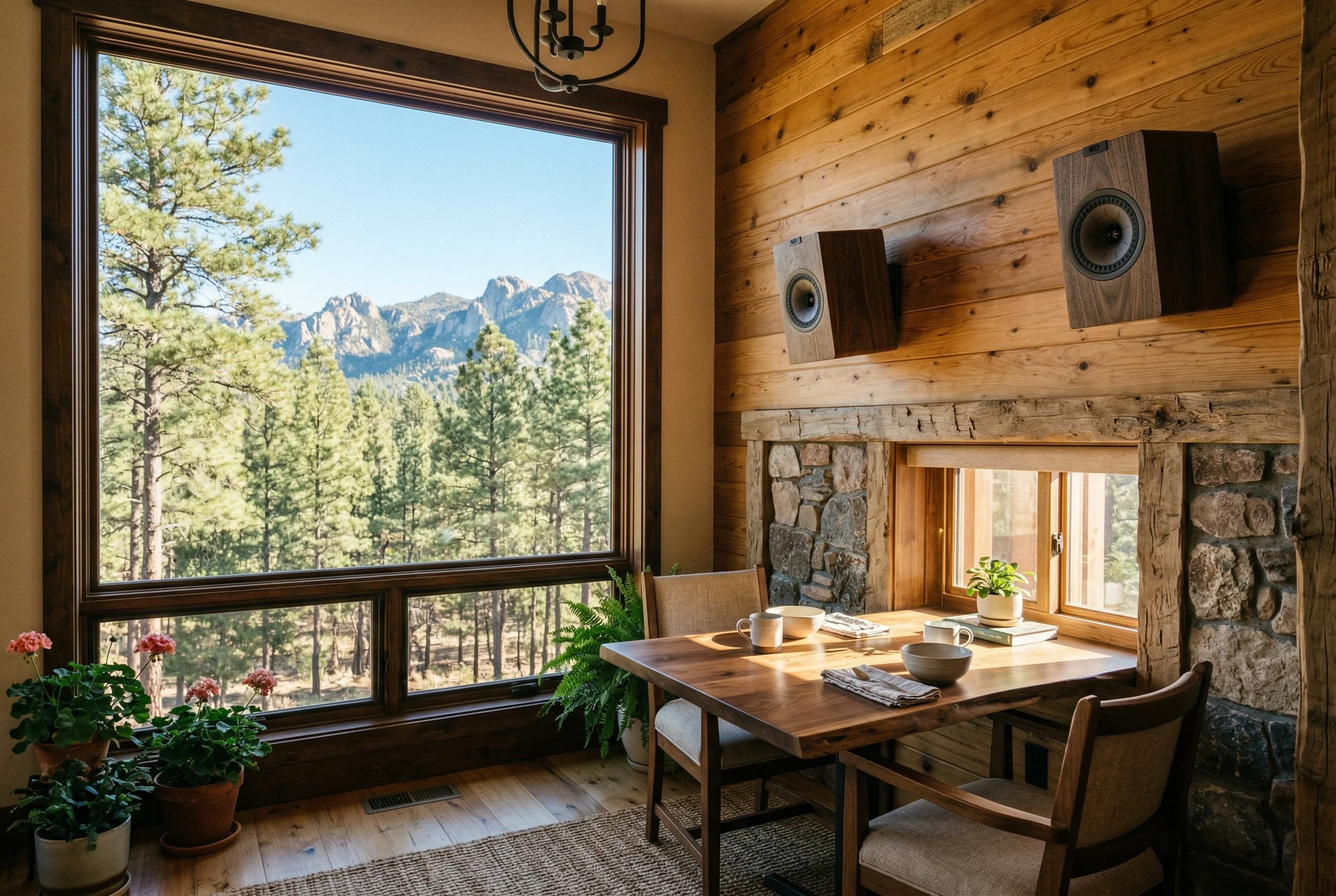
Prescott's active adult communities, places like Prescott Lakes, StoneRidge, and Talking Rock, attract people who made smart career decisions and now want a daily life that reflects it. Morning coffee with jazz in the kitchen. An afternoon movie where you can actually hear the dialogue. Background music on the patio while you watch the sunset over Granite Mountain. That's what a well-designed audio system delivers.
The common thread I see with retired clients isn't a lack of interest in technology. It's a lack of patience for bad technology. They've dealt with enough clunky interfaces in their careers. They want something that works every time, without fuss.
What Does "Simple Control" Actually Mean?
The AARP Tech Trends Survey (2024) reported that 79% of adults over 50 own a smartphone and use it daily. These aren't people who can't handle technology. They just don't want unnecessary complexity. Simple control means stripping away everything you don't need and making the rest intuitive.
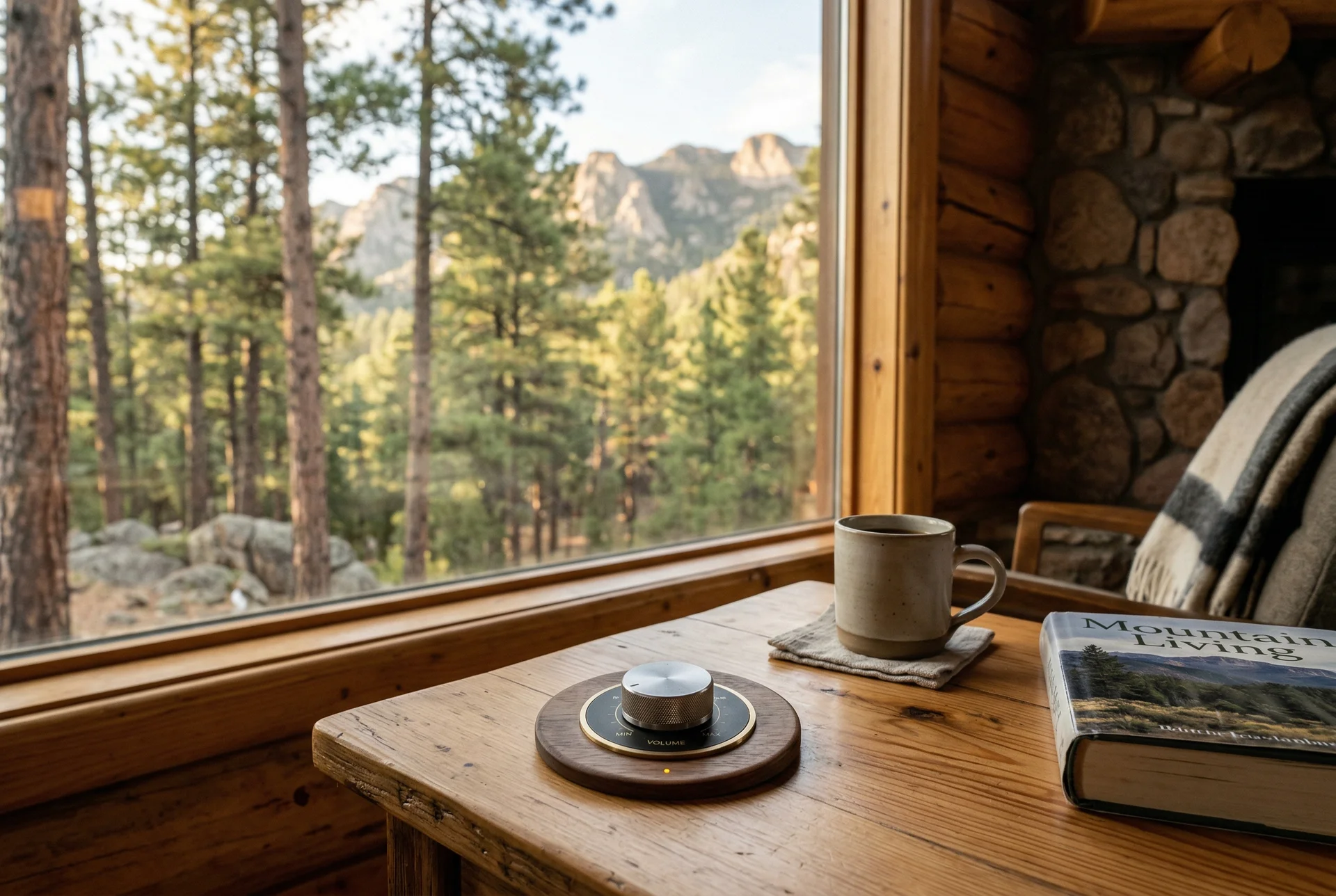
Here's what that looks like in practice. One remote or one tablet controls the entire system. Press "Music" and your favorite station plays. Press "TV" and the system switches to your show. Press "Off" and everything powers down. No input switching. No receiver menus. No separate remotes for separate devices.
I've found that the biggest frustration for retired clients isn't the audio quality, it's the moment something goes wrong and they can't get back to normal without calling someone. That's a design failure, not a user failure. I build systems where "getting back to normal" is one button press. If the system ever gets confused, there's a physical reset button that brings everything back to a known state in seconds.
Voice control is another option, and it's more popular with retirees than most people expect. A simple "play my morning playlist" or "turn on the living room TV" works well for people who'd rather speak than tap. I configure this through platforms you already know, not proprietary apps that disappear when a company folds.
How Does a Home Audio System Help with Hearing?
Hearing changes are real, and good system design accounts for them directly. The National Institute on Deafness and Other Communication Disorders (2024) reports that approximately one in three people between 65 and 74 has hearing loss, rising to nearly half for those over 75. A properly calibrated audio system can make a dramatic difference in everyday listening comfort.
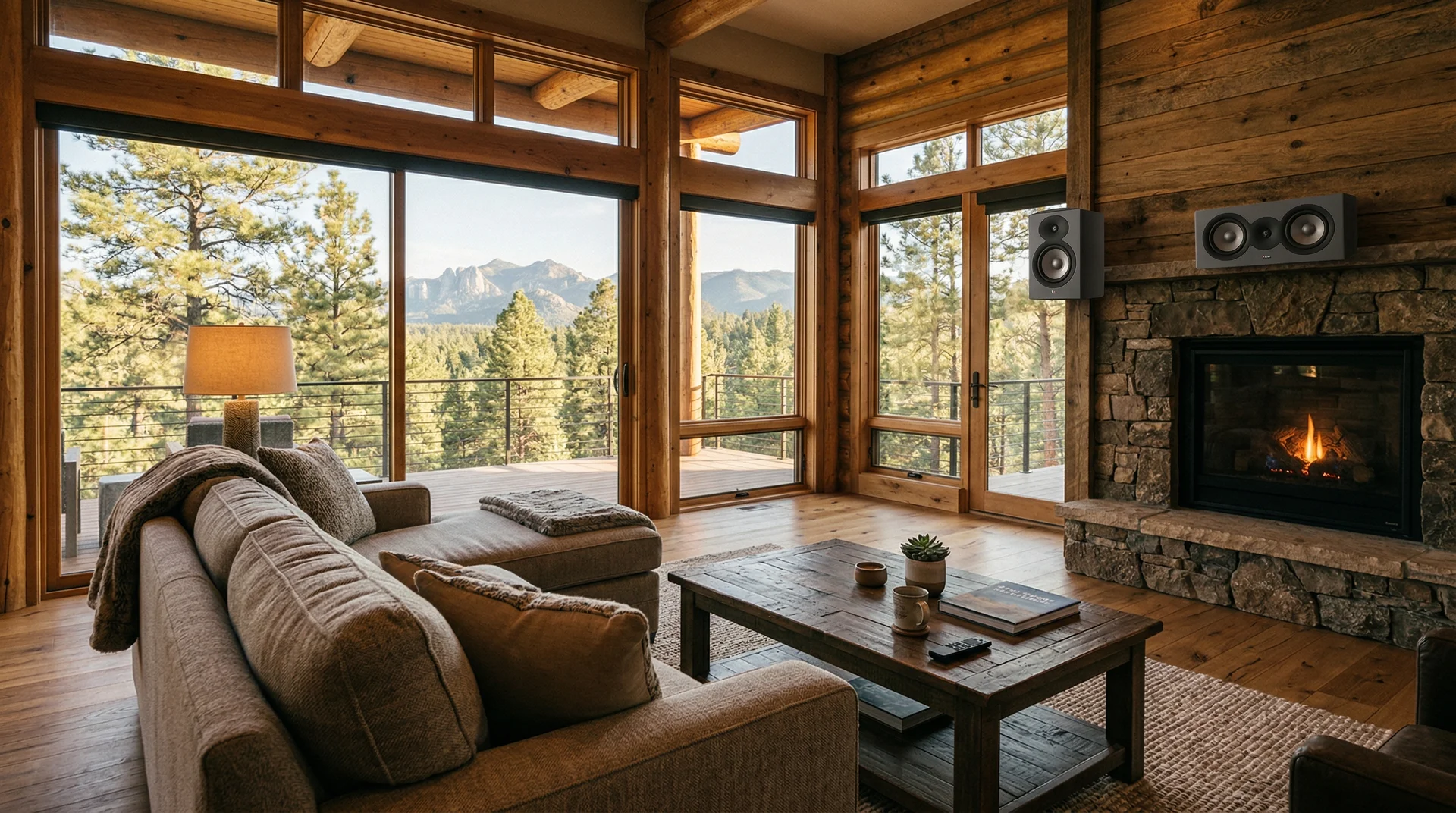
The center channel speaker is the most important piece. It handles roughly 70% of movie and TV dialogue. I build custom center channels sized to match the TV and position them directly below the screen on the mantle or media console. When dialogue comes from the same location as the picture, your brain processes it more naturally. It's easier to follow conversations in the show because the sound isn't fighting the image.
Most off-the-shelf systems spread dialogue across multiple speakers or bury it in a thin soundbar. That's fine if you're 30 with perfect hearing. For anyone dealing with age-related high-frequency loss, a dedicated center channel with warm midrange clarity changes the experience completely. I calibrate the center to sit slightly forward in the mix, a few decibels above the surrounds, so voices stay present without cranking the overall volume.
Zone-based volume control helps too. If one person prefers louder audio in the den while the other wants quiet background music in the reading room, independent zones handle that. No compromise needed. Everyone hears what they want, at the level they want.
What About Downsizing? Can You Get Great Sound in a Smaller Home?
Absolutely, and often it sounds better. Smaller rooms are acoustically easier to control than large open-plan spaces. According to the National Association of Realtors Generational Trends Report (2024), buyers aged 65 and older purchased homes with a median size of 1,900 square feet, down from over 2,100 in previous years. That's not a downgrade. That's focus.
In a 1,900-square-foot Prescott home, a thoughtful system might include custom on-wall or tower speakers in the main living area, a center channel for dialogue clarity, and two or three additional zones for kitchen, bedroom, and patio. That's it. No wasted speakers in rooms you don't use. No wiring for spaces that don't need it.
In my experience building systems for downsized homes, clients consistently tell me the sound is better than what they had in their previous, larger house. The reason is straightforward: fewer competing reflections, better speaker placement options relative to the listening position, and a system designed for the room it's actually in rather than a generic layout scaled to square footage.
How Does Whole-Home Background Music Work?
Whole-home audio is one of the most requested features from my Prescott retirement clients. The concept is simple: music follows you through the house without any effort. A Sonos Listening Index (2024) study found that people who listen to music at home report 25% higher satisfaction with their daily routine. For retirees spending most of their time at home, that adds up.
I set up zones, typically three to five in a Prescott home, that can play independently or together. Morning jazz in the kitchen while it's quiet in the bedroom. The same playlist running through the living room and patio for an evening gathering. Each zone gets its own volume control, accessible from a single app or wall panel with large, clear labels.
The speakers themselves are designed to disappear into the room. On-wall models in finishes that match your cabinetry or trim. Tower speakers that look like furniture, not equipment. I build these in my Arizona workshop specifically to fit the aesthetic of each client's home. What matters is that you hear the music, not see the system.
Will This System Last? What About Support?
This is the right question, and I respect that it's a priority. A quality audio system should last 15 to 20 years with proper design, and the speakers I build in my Arizona workshop are constructed to last even longer. Solid CNC-fabricated cabinets, premium drivers, and finishes that hold up over time. Every speaker ships with a birth certificate documenting its build details and specifications.
Support matters as much as the hardware. I don't sell a system and disappear. My warranty program covers the work, and I'm available for adjustments, recalibration, or questions after installation. If your hearing changes over time, I can recalibrate the system to match. If you add a room or change the furniture layout, I can adjust speaker positioning and tuning. The system grows with you.
You can also follow the build progress of your speakers through the online portfolio system, seeing each stage from raw cabinet fabrication through final assembly and testing. It's part of the experience, and clients tell me they enjoy watching their system come to life.
Getting Started
If you're in Prescott or the surrounding area and thinking about a home audio system that fits your life, not the other way around, I'd enjoy the conversation. Every project starts with an in-home consultation where I see the space, understand how you use it, and listen to what matters to you.
There's no pressure and no sales pitch. Just an honest assessment of what would work well in your home and what it would cost. Reach out here or call (928) 440-1950.
Frequently Asked Questions
How simple can a home audio system really be for someone who isn't tech-savvy?
Very simple. I design every system around a single remote or tablet interface. One button for music, one for TV, one for off. Voice control through familiar platforms is also an option. The goal is that you never have to think about the technology. You just enjoy the sound.
Can a home audio system help with hearing difficulty during TV dialogue?
Yes. A dedicated center channel speaker handles 70% or more of movie and TV dialogue. I calibrate it to sit slightly forward in the mix, so voices stay clear even at lower volumes. This eliminates the constant volume adjusting between dialogue and action scenes.
How long does it take to build and install a retirement-friendly audio system in Prescott?
Custom speaker builds take 6 to 12 weeks or more, depending on the design. Installation itself is usually completed in one to two days. I handle all the planning upfront so installation day is smooth, clean, and quick. You can follow the build progress through the online portfolio system.
What does a quality home audio system cost for a Prescott retiree?
Pricing varies based on room count and system complexity. A focused living room system with custom speakers starts at a different price point than a six-zone whole-home setup. I provide a custom quote after an in-home consultation so you know exactly what you're getting and what it costs. No surprises.
Comments
Leave a Comment