
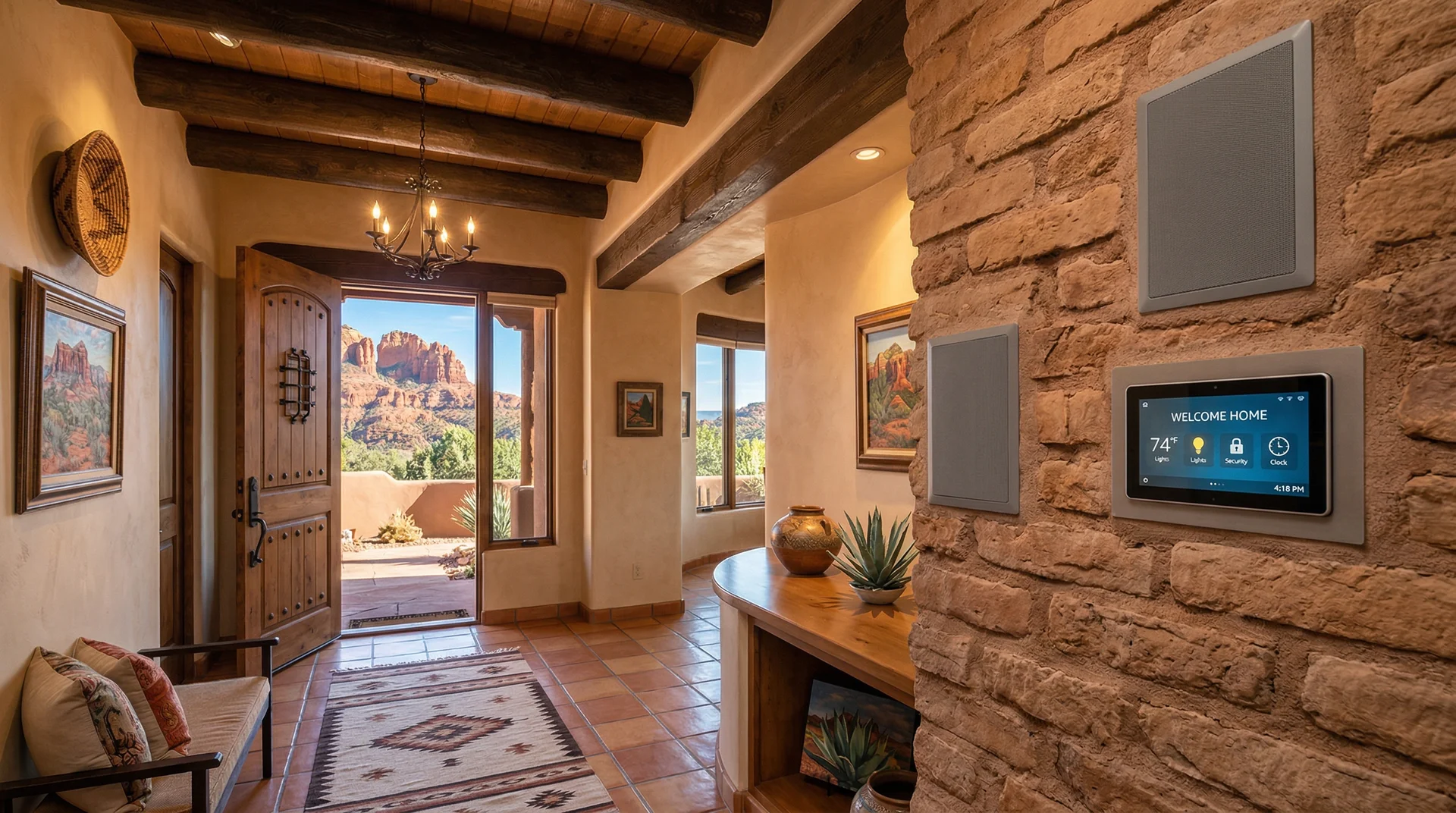
Sedona's seasonal residents need audio systems that wake up when they arrive and sleep when they leave. Here's how to design smart home audio that survives months of vacancy and greets you with music the moment you walk in.
About 37% of housing units in Sedona are classified as vacant or seasonal use, according to U.S. Census Bureau data (2022). That's more than a third of the homes in town sitting empty for months at a time. If you're one of those seasonal residents, you already know the routine: arrive in October, flip every switch in the house, remember which remote goes with which system, and spend your first afternoon troubleshooting instead of relaxing.
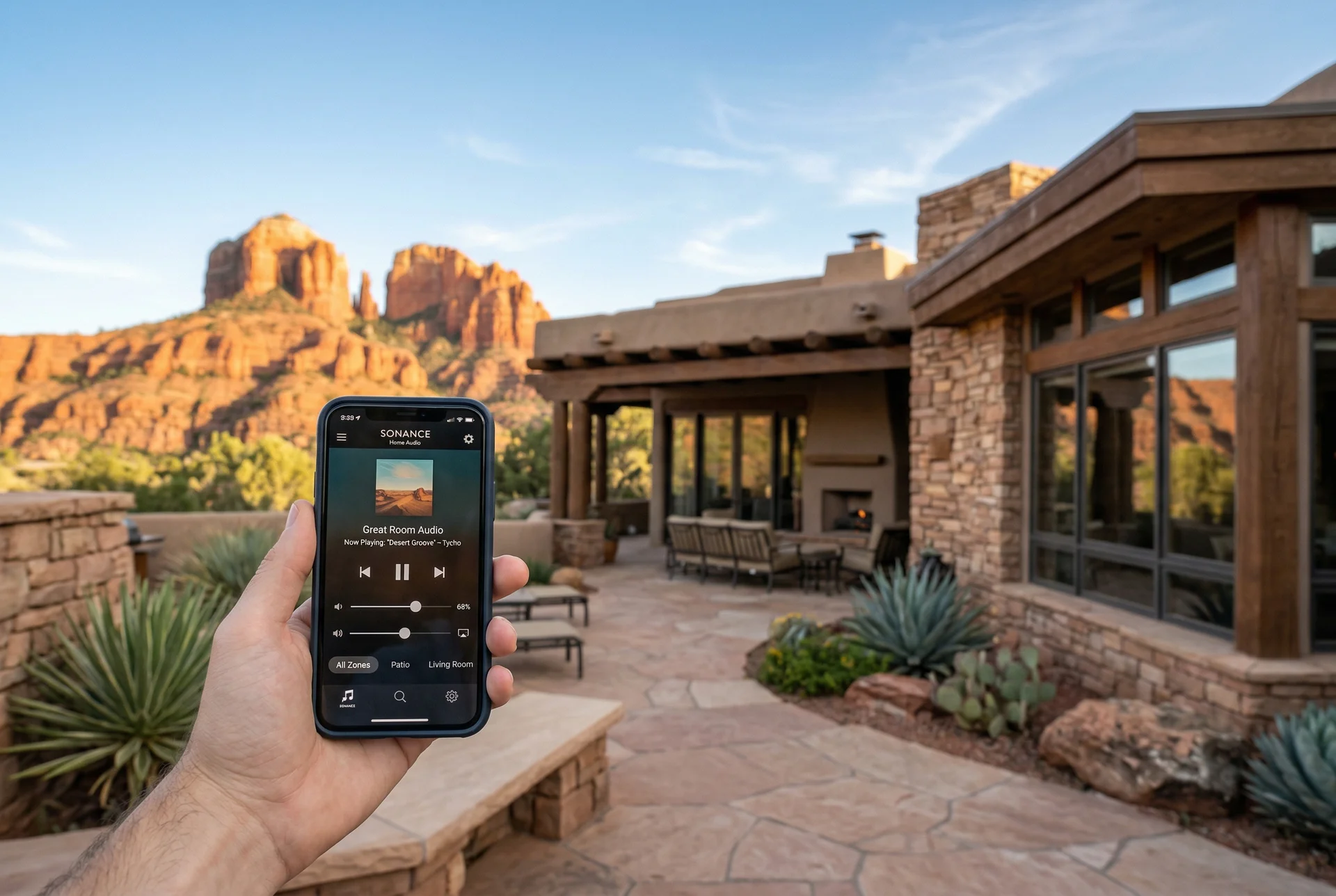
There's a better way. A smart home audio system designed for seasonal use does three things well: it sleeps while you're gone, it wakes up before you arrive, and it's simple enough that you don't need to relearn anything after months away. That's what I build for Sedona snowbirds.
Why Do Snowbirds Need a Different Audio Approach?
Arizona attracted over 300,000 seasonal residents during the 2019-2020 winter season, according to the University of Arizona Eller College economic impact study. Sedona's share of that population is significant. Seasonal homeowners face challenges that year-round residents never think about.
A permanent resident's audio system gets used daily. Controls stay familiar. Firmware updates happen in real time. Problems get noticed immediately. But when you lock the door in April and don't return until October, six months of software updates, expired app logins, and forgotten passwords stack up. The system you left working perfectly might greet you with a blank screen and a blinking router.
I've seen this happen enough times that I now design Sedona systems specifically for long-term vacancy. Every decision, from the control platform to the network hardware, accounts for months of inactivity.
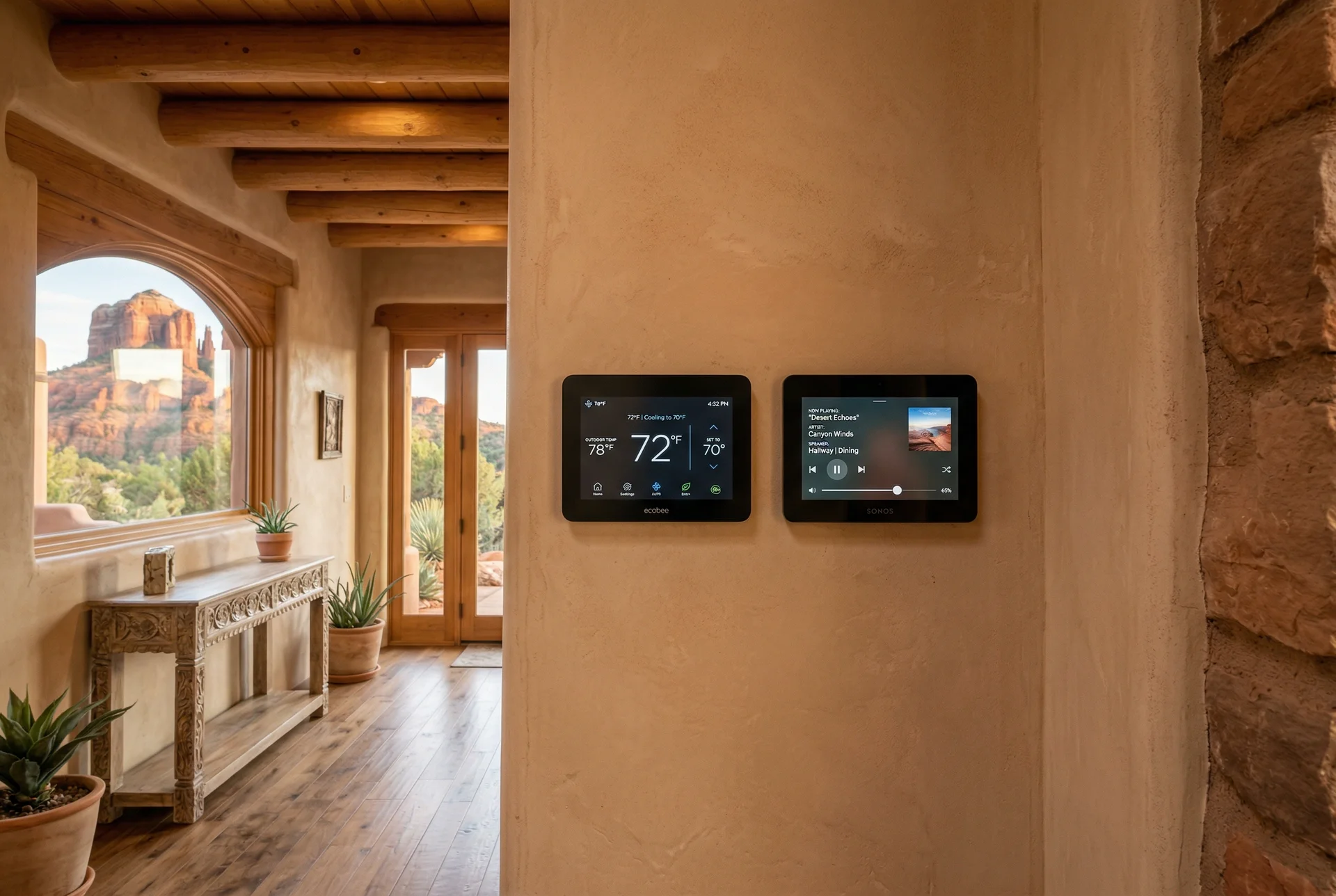
What Does a "Coming Home" System Actually Look Like?
The smart home market in the U.S. reached $54.8 billion in 2024, with remote monitoring and automation driving the fastest adoption among homeowners over 55 (Statista, 2024). That age group overlaps heavily with the snowbird demographic, and for good reason. The technology exists to make your arrival feel effortless.
Here's what I build for my seasonal clients in Sedona:
Pre-Arrival Automation
Three days before you arrive, the system begins waking up. Climate control brings the house to your preferred temperature. The audio system powers on and runs a self-check. Landscape lighting resumes its schedule. You can trigger all of this from your phone in Minnesota, or I can program it to a calendar so it happens automatically every year.
Walk-In-the-Door Music
When you open the front door, a sensor triggers your favorite playlist at a comfortable volume through the main living areas. No pulling out your phone. No opening an app. No searching for the right source. Just music, the moment you step inside. It's a small detail, but every snowbird client I've done this for says it's the feature that makes the house feel like home again instantly.
One-Touch Scenes
Instead of remembering which app controls which room, I program scene buttons: "Morning," "Dinner," "Patio," "Goodnight." One press. That's it. After months away, you shouldn't need a tutorial to use your own house.
How Does Remote Management Work When You're Out of State?
About 80% of smart home device owners use remote access features at least monthly, according to Parks Associates (2024). For snowbirds, remote access isn't a convenience. It's essential. You need to know your house is okay from 1,500 miles away.
I configure every seasonal system with a cloud-based control dashboard. From your phone, you can:
- Verify the audio system is online and healthy
- Check that the HVAC is maintaining minimum temperature
- Receive alerts if the network drops, power goes out, or a sensor trips
- Power on the system and start music before your caretaker arrives for a check-in
- Run firmware updates remotely so the system is current when you return
The network itself needs to be bulletproof. I install enterprise-grade routers with automatic reboot scheduling and, where clients want it, cellular failover. If your internet goes down in July, you'll know about it within minutes, not when you walk in the door in October.
What About Voice Control for Seasonal Use?
Voice assistants have become the most common smart home interface, with about 45% of U.S. smart speaker owners using voice to control other connected devices (Circana, formerly NPD Group, 2024). For snowbirds, voice control solves the biggest problem: you don't need to remember anything. You just talk.
"Play jazz in the living room." "Turn off the patio speakers." "Set the whole house to dinner mode." It works the same whether you've been home for three months or three minutes. I integrate voice control with the audio system so every zone, scene, and source responds to plain spoken commands. No fumbling with apps you haven't opened since spring.
How Do You Winterize an Audio System for Sedona's Cold Snaps?
Sedona sits at 4,350 feet and occasionally dips below freezing between December and February. Indoor electronics are fine as long as the house maintains temperature, but outdoor speakers and any equipment in unheated spaces need planning.
For indoor systems, I program the automation to hold the house at a minimum 55 degrees year-round, even during vacancy. That protects electronics, prevents pipe issues, and keeps humidity stable for wood furniture and speaker cabinets.
For outdoor zones, I specify speakers rated IP65 or higher. These handle freezing temps, monsoon rain, summer UV, and Sedona's red dust without degradation. The amplifiers powering outdoor zones stay inside the house in a ventilated equipment closet. When you leave for the season, the outdoor zones go dormant. The speakers sit passive and safe. No power running to them, no signal, nothing to fail.
Designing for Simplicity: Less Is More for Seasonal Homes
The biggest mistake I see in snowbird homes is overcomplication. Someone installed a system with three different apps, two remotes, and a control panel that requires a password nobody remembers. Complexity is the enemy of a home you only use half the year.
My design philosophy for seasonal systems is aggressive simplicity:
- One app for everything: audio, climate, lighting, security
- Physical scene buttons in high-traffic areas (no phone required)
- Voice control as the universal backup
- Zero passwords on daily-use interfaces
- Printed quick-start cards in a kitchen drawer for guests and caretakers
If your house sitter can't figure out the audio in 30 seconds, the system is too complicated. That's my benchmark.
Frequently Asked Questions
Can I control my Sedona audio system from out of state?
Yes. A properly configured smart home audio system with cloud-based control lets you access every zone, adjust volume, start playlists, and check system status from any smartphone or tablet. I set up remote dashboards so you can verify everything is working before you make the drive.
Will my audio system survive Sedona's winter cold snaps?
Indoor electronics handle Sedona's winter lows fine as long as the home's climate system maintains a minimum temperature. I program automation to keep indoor temps above 55 degrees even when you're away. Outdoor speakers rated IP65 or higher tolerate freezing temps, UV exposure, and monsoon moisture without damage.
How long does it take to install a whole-home audio system in Sedona?
Custom speaker builds take 6 to 12 weeks or more depending on size and finish. System design, wiring, installation, and calibration add additional time. I recommend starting the conversation at least three months before you plan to arrive for the season.
Do I need Wi-Fi running while I'm away for the system to work remotely?
Yes. Your internet connection and router need to stay active year-round for remote monitoring, system updates, and the ability to power things on before you arrive. I configure network equipment for reliability during extended absence, including automatic router reboots and cellular backup options.
Your Sedona Home Should Welcome You Back
You bought a home in Sedona for the red rocks, the sunsets, and the quiet. Not for troubleshooting a sound system every October. A smart home audio system built for seasonal use means the house is ready when you are. Music playing, temperature perfect, every zone responding to your voice or a single button press.
I design and build these systems from my workshop in the Arizona high desert, and I serve Sedona, the Village of Oak Creek, Cottonwood, and the entire Verde Valley. If you're a snowbird planning your next season, let's talk about what's possible.
Schedule a free consultation or visit the Sedona service area page to learn more about what I do in your neighborhood.
Comments
Leave a Comment