
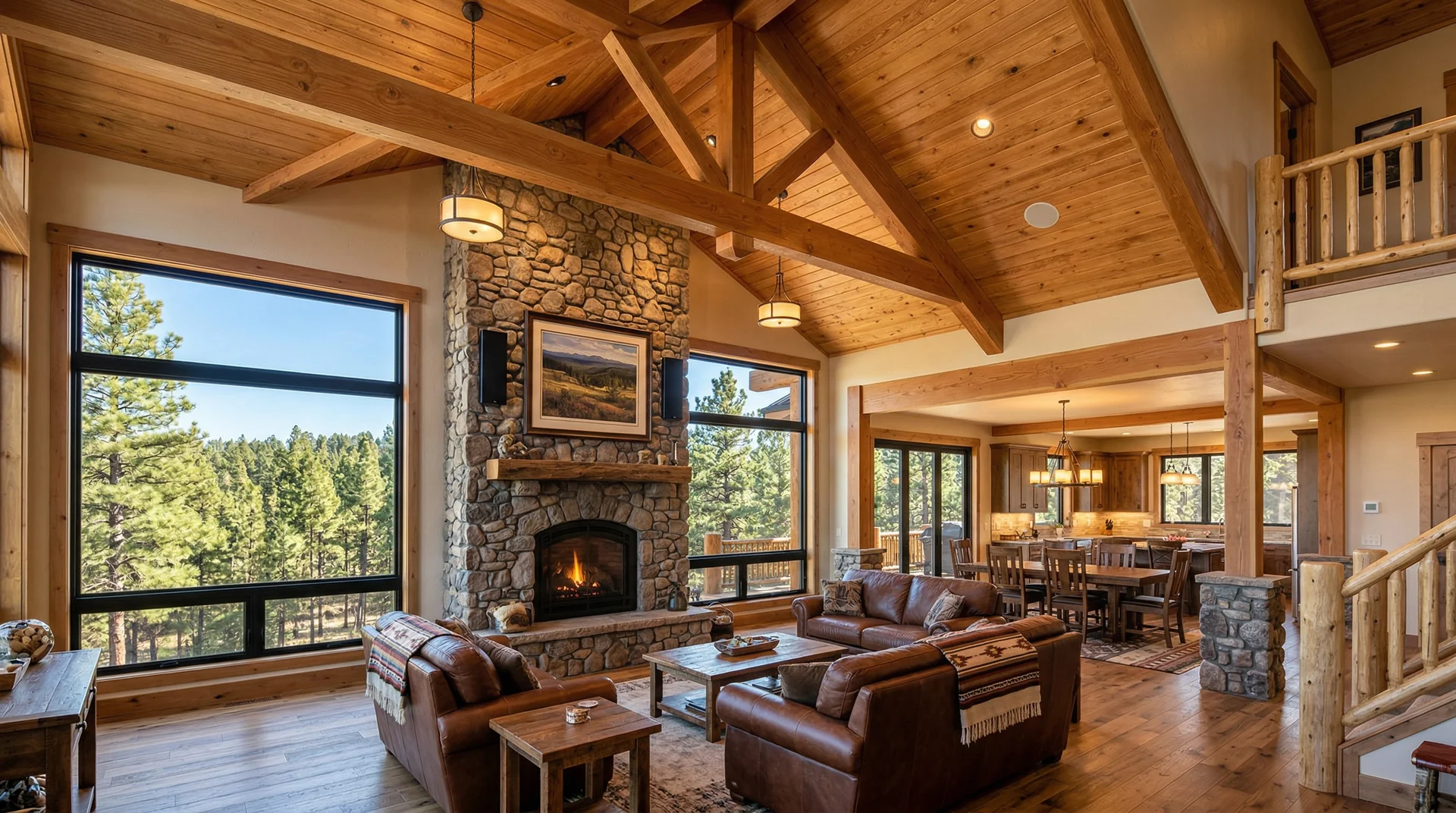
Prescott's four-season climate and mountain home layouts demand a different approach to whole-home audio. Here's how to design multi-room sound that works from deck season through fireplace season, with zoning strategies for open floor plans and vaulted ceilings.
The global whole-home audio market is projected to reach $14.1 billion by 2028, growing at a 9.3% compound annual rate (MarketsandMarkets, 2023). That growth isn't just happening in big metro areas. It's showing up in mountain communities like Prescott, where homeowners want music that follows them from room to room, season to season.
I build whole-home audio systems for homes across the Prescott area, and the challenges here are specific. Vaulted ceilings scatter sound. Open floor plans blur the line between zones. And four real seasons mean your listening habits shift from the deck in July to the fireplace in January. This article covers how I approach multi-room audio for mountain living, what makes Prescott homes different, and how to plan a system that works year-round.
Why Is Whole-Home Audio Growing in Prescott?
Prescott's population grew 15.6% between 2020 and 2024, reaching roughly 48,000 residents according to Census estimates (U.S. Census Bureau, 2024). A significant share of that growth is remote workers and retirees drawn to the mountain lifestyle. These are people who spend most of the day at home and want background music that sounds good without thinking about it.
The shift to remote work changed how people use their homes. When your office, gym, kitchen, and living room are all active throughout the day, a single Bluetooth speaker on the counter doesn't cut it. Distributed audio puts music where you are, at the volume you want, without competing with a conference call two rooms away.
Prescott's real estate market reflects this demand. New developments like Deep Well Ranch and Pronghorn Ranch are attracting buyers who build custom homes from scratch. That's the ideal time to plan audio, when the walls are still open and wiring is simple.
In my experience, about half the whole-home audio projects I take on in the Prescott area are new construction. The other half are retrofits for homeowners who moved in and realized their home needed better sound. Both are doable. But new construction is significantly easier and more cost-effective to wire.
What Makes Prescott Homes Challenging for Multi-Room Audio?
Mountain homes in Prescott present three acoustic challenges that most audio installers overlook. Vaulted ceilings, open floor plans, and mixed indoor-outdoor living all affect how sound travels. A system designed for a flat-ceiling suburban tract home won't perform the same way in a timber-frame house with 18-foot peaks.
Vaulted Ceilings and Open Floor Plans
High ceilings mean sound disperses upward instead of staying at ear level. That's why I use on-wall speakers positioned at seated listening height rather than relying on ceiling speakers to fill the room. On-wall placement keeps the sound directed where people actually sit, not bouncing off rafters.
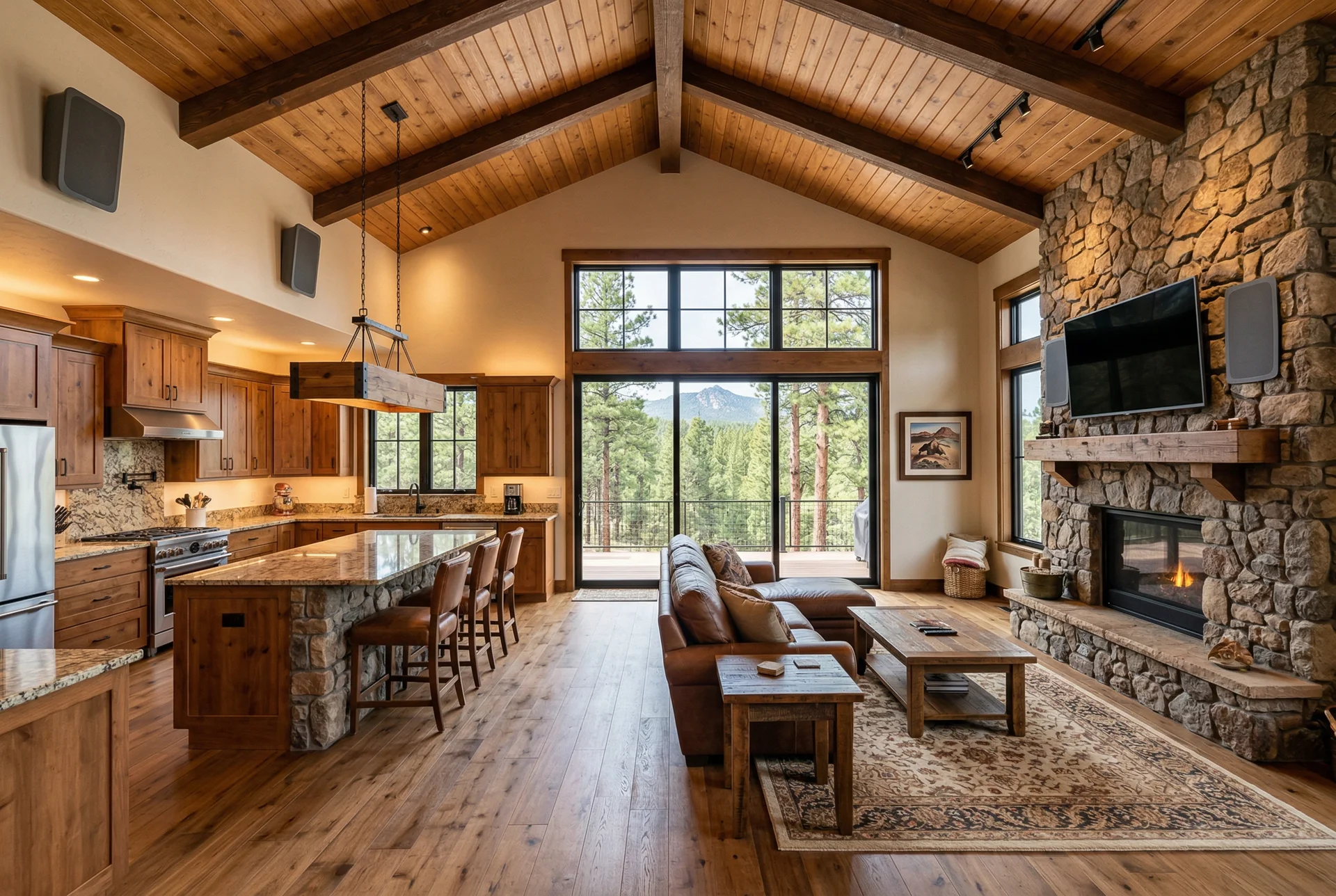
Open floor plans are the other challenge. When your kitchen, dining area, and living room flow into one continuous space, you need to decide: is that one big zone or three smaller ones? The answer depends on how you live. Some homeowners want unified music across the entire great room. Others want the kitchen on a podcast while the living room stays quiet.
Stone, Wood, and Glass
Prescott homes love natural materials. Stone fireplaces reflect sound harshly. Exposed timber absorbs certain frequencies. Large windows facing the Bradshaw Mountains create bright, reflective surfaces. I account for all of this during system design. Speaker placement, zone boundaries, and calibration settings all change based on your home's materials.
How Do You Zone a Mountain Home for Audio?
According to the Consumer Technology Association, 34% of U.S. broadband households own at least one smart speaker, and multi-room audio adoption continues climbing (CTA, 2024). But smart speakers and proper distributed audio are different animals. Real zoning means independent volume, source selection, and scheduling per room.
Here's how I typically zone a Prescott mountain home:
Zone 1: Great Room
The main living area, usually a combined kitchen, dining, and living room with vaulted ceilings. I use on-wall speakers placed at ear height on the perimeter walls. For larger spaces, two pairs give even coverage without dead spots. This is the zone that gets the most use and the most variety, from morning news to dinner playlists.
Zone 2: Primary Suite
The bedroom and bath area. Low-volume background music and podcasts dominate here. A compact pair of on-wall speakers handles it. The key is keeping this zone independent so you can play sleep sounds at night without affecting the rest of the house.
Zone 3: Home Office
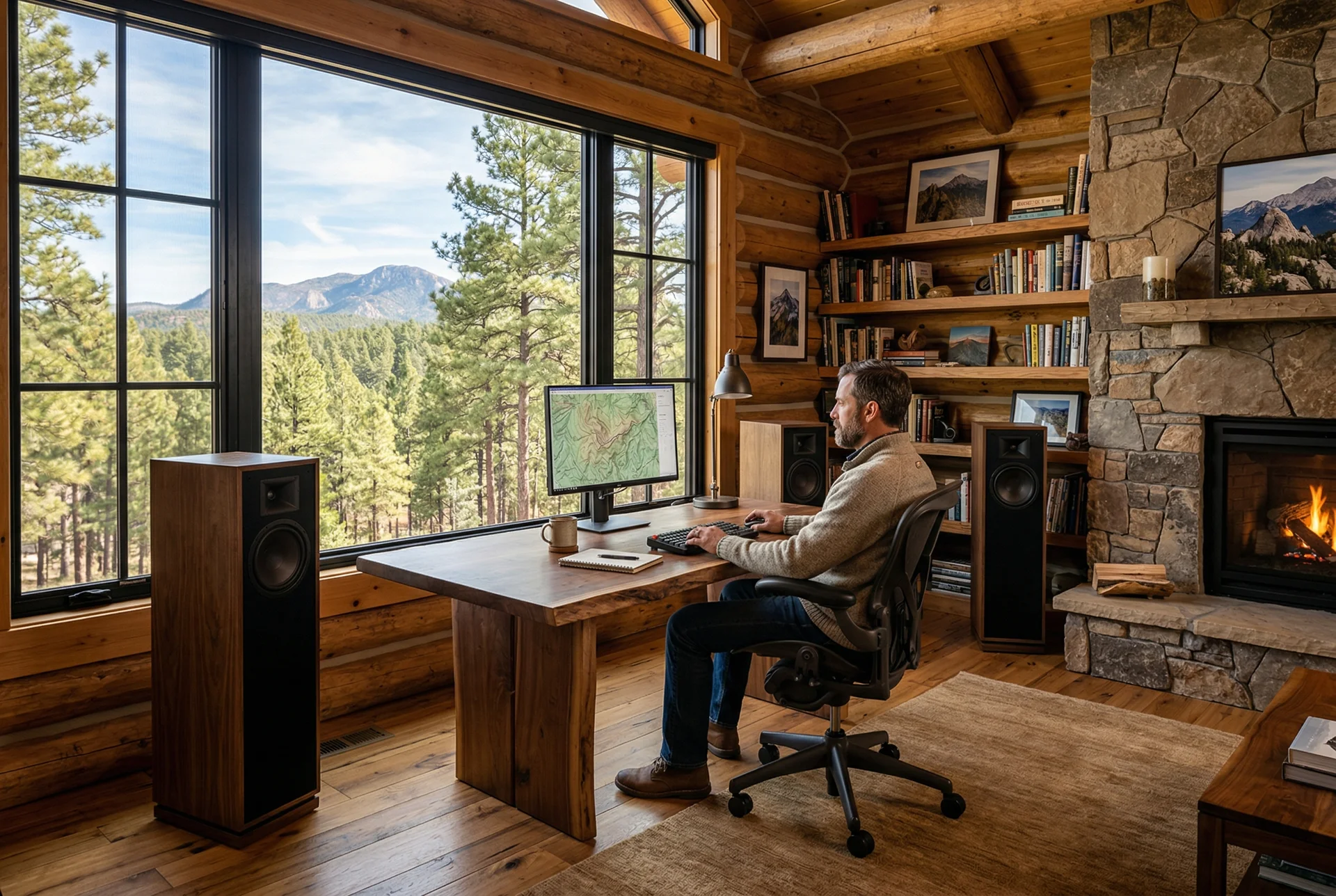
With remote work driving Prescott's growth, this zone matters more than it used to. I design office zones for both music and conference calls. That means speakers positioned for clear, balanced sound at desk level, not overhead. Volume control right at the desk is essential.
Zone 4: Covered Deck or Patio
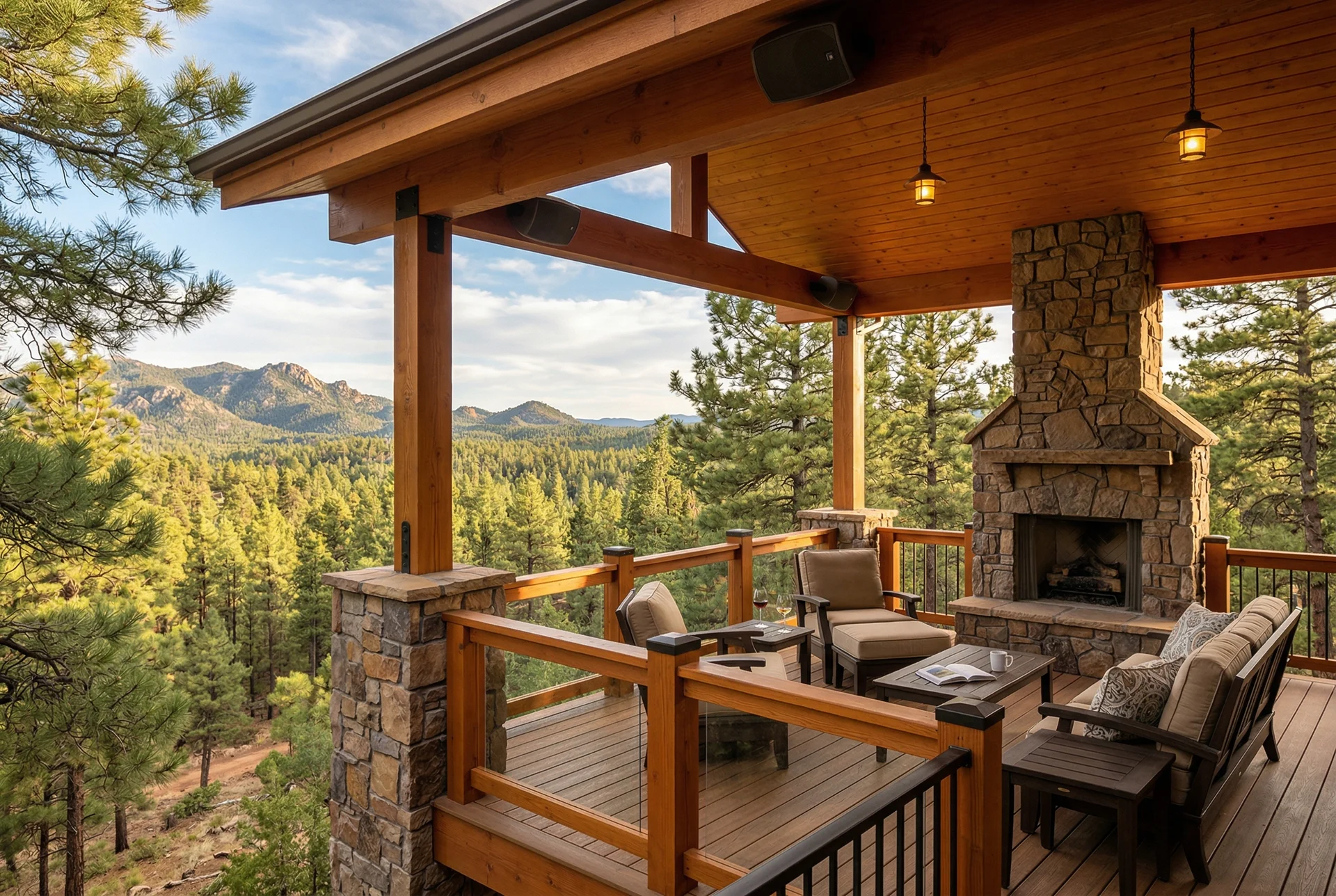
Prescott's outdoor season runs from April through October, and plenty of homeowners use their decks well into the fall. Weather-rated on-wall speakers mounted under the eaves handle rain, UV, and temperature swings. I tie the outdoor zone into the same control system as the indoor zones so music follows you through the back door.
Something I've noticed in Prescott that's different from the Valley: homeowners here actually use their outdoor audio year-round, just in different ways. Summer is background music for grilling. Fall is football on the patio. Winter is a quiet jazz playlist by the fire pit. The system has to sound good at every volume level, not just party mode.
How Does Four-Season Climate Affect Audio Design?
Unlike Phoenix, Prescott gets all four seasons, including freezing nights in winter and monsoon storms in July and August. The National Weather Service records an average of 98 days per year below freezing in Prescott (NWS, 2024). That means outdoor speakers need to survive real temperature extremes, not just Arizona heat.
I spec outdoor speakers rated for temperature ranges of -20F to 150F and IP65 or higher water resistance. Monsoon season dumps heavy rain fast, and morning frost is common from November through March. Cheap outdoor speakers crack and corrode within two years up here. The ones I install are built to handle the full cycle.
Indoor audio needs shift with the seasons too. In summer, the great room and deck zones run most of the day. In winter, the fireplace zone and primary suite get more use. A good control system lets you create seasonal presets so you're not reconfiguring zones every time the weather changes.
Should You Pre-Wire for Audio During New Construction?
Pre-wiring during construction costs a fraction of retrofitting later. The national average for structured wiring during new construction runs $2,000 to $6,000, according to home improvement cost data (Angi/HomeAdvisor, 2025). Retrofitting the same wiring into finished walls can cost two to four times as much, depending on access and materials.
If you're building in Deep Well Ranch, Pronghorn Ranch, or anywhere in the Prescott area, I strongly recommend bringing me in during the framing phase. That's when I can:
- Run speaker wire to every planned zone before drywall goes up
- Place conduit for future expansion (an extra zone or two costs almost nothing at this stage)
- Coordinate with your electrician on dedicated circuits for audio equipment
- Plan speaker mounting locations based on your actual floor plan, not a guess
I've coordinated with builders on dozens of new construction projects in the Prescott area. The ones where I'm involved at framing take about 40% less time to finish once the house is complete. No fishing wire through finished walls, no patching drywall, no compromises on speaker placement.
What About Retrofit Whole-Home Audio?
Not building new? Retrofit is absolutely possible. I've installed multi-room audio in Prescott homes built in the 1970s through the 2020s. The approach changes based on your home's construction, but the result is the same: music in every room you want, controlled from your phone or a wall panel.
For retrofit projects, I route wiring through attic spaces, crawlspaces, and existing utility chases whenever possible. On-wall speakers mean I'm not cutting into your walls for speaker cavities. The equipment rack, usually a small closet or utility space, connects everything centrally.
Retrofit timelines run 6 to 12 weeks or more, depending on the number of zones, your home's layout, and how accessible the wiring paths are. I'll tell you upfront what to expect during the consultation.
How Do I Control Multi-Room Audio Day to Day?
Americans now stream over 1 trillion songs per year across major platforms, with paid music streaming subscriptions surpassing 100 million in the U.S. alone (RIAA, 2025). The systems I install connect directly to these services. No workarounds, no Bluetooth pairing hassles.
Day-to-day control works through your phone, a dedicated app, voice assistants, or wall-mounted keypads. Most of my Prescott clients use a combination. The phone for quick adjustments, a keypad at the main entry, and voice control in the kitchen. I set up presets for common scenarios: "Morning" plays news in the kitchen at low volume, "Deck Party" brings the outdoor zone to life, "Goodnight" fades everything out.
The system also handles multiple sources simultaneously. That's the real difference between distributed audio and just having speakers. Your office can stream a work playlist while the kitchen plays a cooking podcast and the deck stays silent. No conflicts, no compromises.
What Should You Expect From the Process?
Every project starts with an in-home consultation. I walk through your home, talk about how you use each room, and identify the zones that make sense for your lifestyle. I don't push a standard package or a fixed number of speakers. What works for a 1,600 square foot cabin is different from a 4,000 square foot custom build in the Williamson Valley corridor.
After the consultation, I deliver a detailed proposal with zone layouts, speaker recommendations, and pricing. Once approved, the timeline is typically 6 to 12 weeks depending on complexity. New construction projects align with your builder's schedule. Retrofit projects are scheduled to minimize disruption to your daily life.
Final calibration is the step most installers skip. I tune every zone to your room's acoustics using measurement tools and my ears. The difference between a calibrated system and an uncalibrated one is the difference between background noise and actual music.
Frequently Asked Questions
How much does whole-home audio cost in Prescott AZ?
A well-designed multi-room audio system for a Prescott home typically ranges from $5,000 to $25,000 or more, depending on the number of zones, speaker quality, and whether it's new construction or retrofit. I provide custom quotes after an in-home consultation because every mountain home layout is different.
Can whole-home audio work with my existing streaming services?
Yes. Modern multi-room systems integrate with Spotify, Apple Music, Tidal, Amazon Music, and other major platforms. I design systems around how you actually listen, whether that's vinyl in the den, a podcast in the kitchen, or a playlist on the deck.
How long does it take to install whole-home audio in Prescott?
From design through final calibration, plan for 6 to 12 weeks or more. New construction pre-wire is faster once walls are open. Retrofit projects in existing Prescott homes take longer because we route wiring through finished spaces without cutting into walls.
Do I need whole-home audio if I already have smart speakers?
Smart speakers are convenient, but they can't match the sound quality, room calibration, or zone control of a dedicated distributed audio system. If you find yourself stacking Bluetooth speakers around the house, a proper multi-room system will sound dramatically better and be simpler to use day to day.
What about outdoor audio for my Prescott deck or patio?
Outdoor zones are a core part of whole-home audio in Prescott. I use weather-rated speakers designed to handle monsoon rain, summer UV, and freezing winter nights. Outdoor zones tie into the same system as your indoor rooms, so music follows you through the back door.
Ready to Talk About Whole-Home Audio?
If you're building, renovating, or just tired of carrying a Bluetooth speaker from room to room, I'd love to walk through what's possible in your Prescott home. Every project starts with a conversation about how you live and what you want to hear. No pressure, no generic packages, just a system designed around your home and your life.
Get in touch here to schedule a consultation. I serve Prescott, Prescott Valley, and communities throughout the Quad Cities area.
Comments
Leave a Comment