
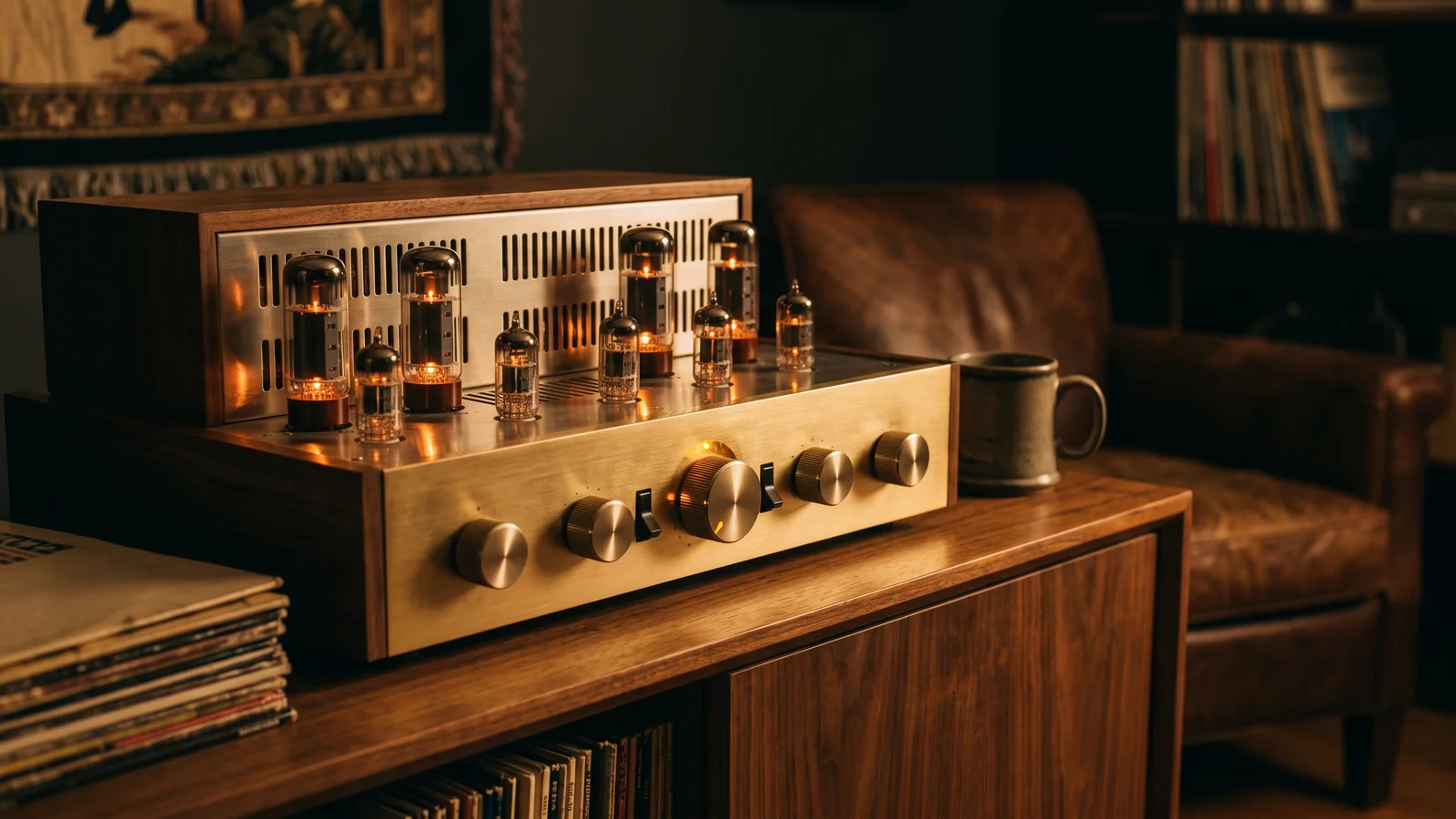
Two American tube-hi-fi giants built the best gear of their era, then both got bought, offshored, and hollowed into budget nameplates. Here's the full story.
Two names sat at the top of American tube hi-fi in its golden age. Fisher and H.H. Scott. If you walked into a serious record shop or a hi-fi salon in 1961, these were the boxes on the wall you saved up for. Warm, heavy, beautifully finished, and built to outlast the person who bought them.
Then time did what time does. Both companies got sold. Both names drifted onto cheap gear that shared nothing with the originals but the letters on the front. Today most people couldn't tell you either firm existed. I build speakers for a living, and I've had this vintage gear on my bench, so I take the forgetting a little personally. Let me pair these two stories the right way, because they died the same death.
Key Takeaways
- H.H. Scott, Inc. was founded in 1947 in Cambridge, Massachusetts by engineer Hermon Hosmer Scott (1909-1975), who held more than 100 patents and invented the dynamic (Dynaural) noise suppressor.
- Fisher Radio, founded in 1945 in New York by Avery Fisher, was the "Rolls-Royce" of tube hi-fi; its 500 and 500-C receivers are among the most collected tube gear ever made.
- H.H. Scott halted production in October 1972 and hit an involuntary bankruptcy that November; the brand was bought by Emerson consumer electronics in 1985.
- Fisher was sold to Emerson Electric (the St. Louis industrial firm, a different Emerson) in 1969, then to Sanyo in 1975, and folded into Panasonic in 2011.
- The original tube gear is genuinely excellent and actively collected and restored. The badges got cheap. The vintage machines did not.
Who was H.H. Scott, the engineer behind the noise suppressor?
Hermon Hosmer Scott (1909-1975) was an MIT graduate who held more than 100 patents and founded H.H. Scott, Inc. in 1947 in Cambridge, Massachusetts, according to Wikipedia's biography of him. A short-lived predecessor, Technological Instrument Corporation, ran from 1946 to 1947 before the company took his own name. This was an engineer's company from day one.
First, a correction that matters, because the internet gets it wrong constantly. Hermon Hosmer Scott is not E.H. Scott. Ernest Humphrey Scott built prewar luxury radios in Chicago. Different man, different company, different city, different era. When people talk about the Dynaural noise suppressor and the great tube integrateds, they mean Hermon, the Massachusetts engineer. Keep them separate and the whole story clicks into place.
The Dynaural noise suppressor and the General Radio years
Before he ran his own shop, Scott spent 1931 to 1946 as a development and executive engineer at General Radio, where he built his reputation, per his biographical record on Wikipedia. His signature invention was the dynamic noise suppressor, marketed as Dynaural, a circuit that cut record surface noise and hiss without gutting the music. For the shellac-and-early-vinyl era, that was a real gift.
Here's what I respect about that. Scott didn't come at audio from marketing or industrial design. He came at it as a measurement and circuits guy who happened to care about how music sounded. The company relocated from Cambridge to Maynard, Massachusetts in 1957, as the Maynard Historical Society records in its history of the firm. Maynard is where the classic gear got built.
What made H.H. Scott's tube gear worth chasing?
Scott's peak tube era ran through the early 1960s, anchored by the Model 299 integrated stereo amplifier introduced in 1960, with the later 299C rated at 80 watts, as HiFi Engine's manual library documents. The 299 is still one of the most sought-after tube integrateds in the hobby. It does the one thing that matters: it makes music sound like music.
Then came a genuine first. The Model 350 of 1961 was the first FM stereo multiplex tuner sold in the United States, as The Absolute Sound noted in its retrospective on the company. Think about that timing. FM stereo broadcasting had barely been approved, and Scott already had the tuner on shelves. That's what an engineer-led company looks like when it's firing on all cylinders.
The kit era: the LK-72
Scott also met listeners where their wallets were. The LK-72 and later LK-72B of 1964 were 80-watt stereo tube integrated amplifiers sold in kit form, so a patient hobbyist could build a first-rate amp at home for less, as The Absolute Sound recounts. You bought the parts and the instructions, you brought the soldering iron and the evenings.
I love this chapter because it tells you what the company valued. A kit amp isn't a cost-cutting gimmick. It's a bet that a regular person, given honest parts and clear directions, can build something excellent. That respect for the end user is exactly the spirit that gets stripped out when a nameplate changes hands. Hold that thought.
Why was Fisher called the Rolls-Royce of tube hi-fi?
Fisher Radio, founded in 1945 in New York City by Avery Fisher, earned a reputation as the "Rolls-Royce" of tube hi-fi across its golden-age run, and its 500-series receivers are the anchor of that legend, as Wikipedia's Fisher Electronics entry records. The gear backed up the reputation with real power, real build, and that warm, room-filling tube sound collectors still hunt.
The Fisher 500 was the company's first receiver, a mono AM/FM unit with two EL37 output tubes and a brass-plated faceplate that still looks like money, per the Fisher Electronics history. The later stereo 500-C, running 7591A output tubes, became one of the most iconic tube receivers ever built, as Stereophile has covered in its historical writing on the model. The tube tuners are prized too. The FM-1000 and FMR-1 still turn heads, as Sound & Vision has noted in its vintage Fisher coverage.
I'm keeping Avery Fisher the man brief here on purpose. He was a book designer and amateur violinist with a musician's ear, and his full story deserves its own telling. For now, know this: like so many golden-age founders, he chased the sound of a live orchestra and hired engineers who could deliver it.
How did both companies fall from the top?
Both firms died the same way, and the timeline is brutal. H.H. Scott halted production in October 1972 and was hit with an involuntary bankruptcy that November, as the Maynard Historical Society documents. A stubborn myth says the buyer was EAD, Electro Audio Dynamics. It wasn't, and EAD's own president publicly refuted that in 1975, as chronicled in Maynard's local history record.
The real buyer, in January 1973, was SYMA International of Brussels, Scott's European licensee, per the same Maynard history. Production shifted from Maynard to Woburn, Massachusetts around 1975 to 1976. Then the badge changed hands again: the Scott brand was bought by Emerson in 1985 and survives today only as a licensed budget nameplate, though the current specifics are loosely documented, as corroborated on HandWiki.
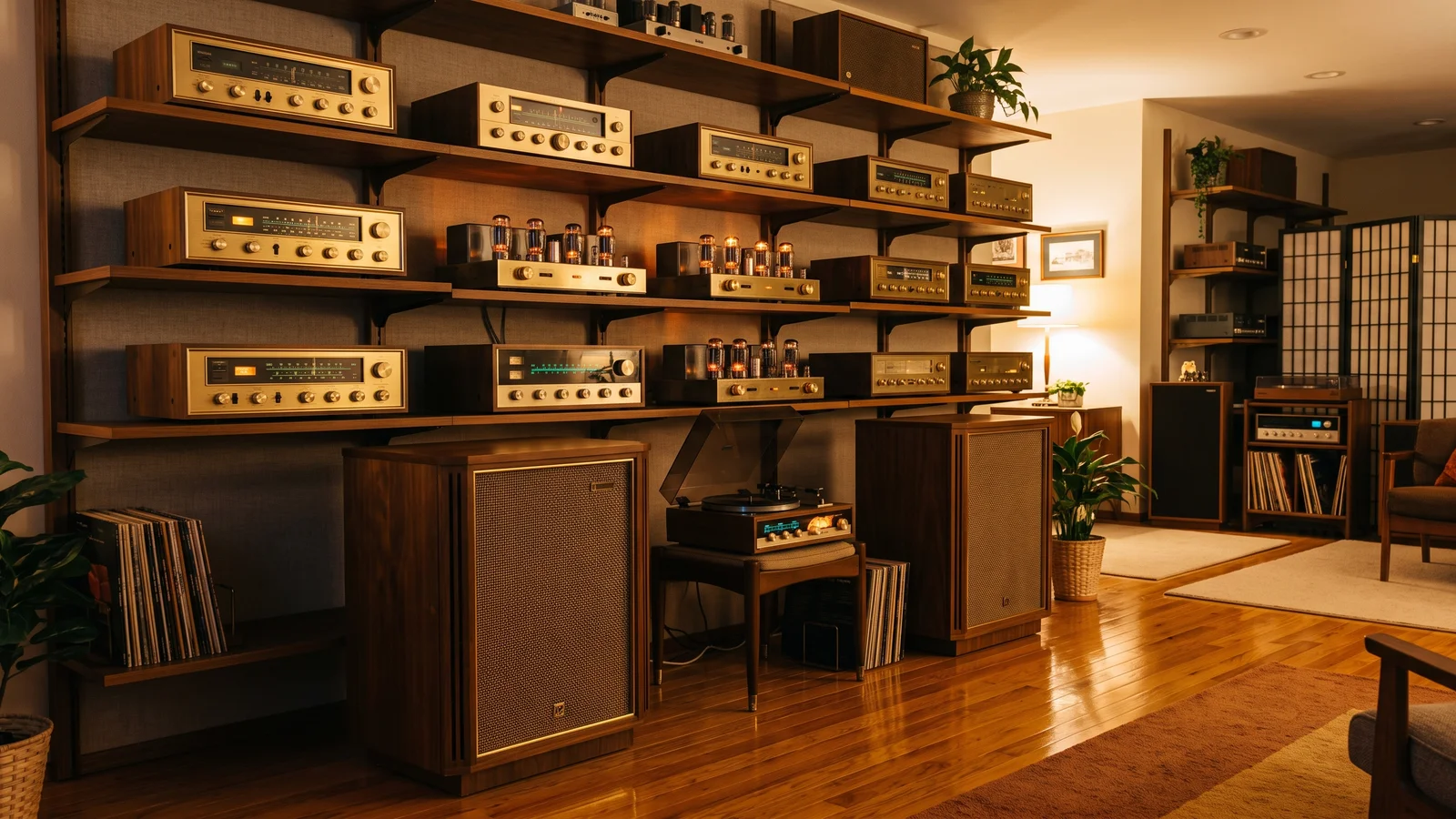
Now the part people get tangled, so read it slowly. There are two different Emersons here. Fisher was sold to Emerson Electric, the big St. Louis industrial company, in 1969 for a reported figure somewhere between $31 and $37 million in stock, then passed to Sanyo in 1975, and finally folded into Panasonic when Panasonic absorbed Sanyo in 2011, per Wikipedia. The H.H. Scott brand, by contrast, was bought in 1985 by Emerson consumer electronics, a completely different entity. Same word on the paperwork, different buyer entirely.
There's a name for what happened next to both badges, and the writer Cory Doctorow gave it to us: enshittification. Two engineer-led companies built the finest tube gear of their era, got bought by conglomerates, saw their production offshored, and were hollowed into budget nameplates trading on borrowed prestige. The letters on the front panel stayed. The people and the standards behind them were long gone.
Are H.H. Scott and Fisher receivers still worth owning?
Yes, and this is the fair part of the story: the original tube gear is genuinely excellent and actively collected and restored, decades after both companies died, as The Absolute Sound and Sound & Vision both attest in their vintage coverage. A well-serviced Scott 299 or Fisher 500-C still sounds wonderful and holds real value. These machines were built to be repaired, not replaced.
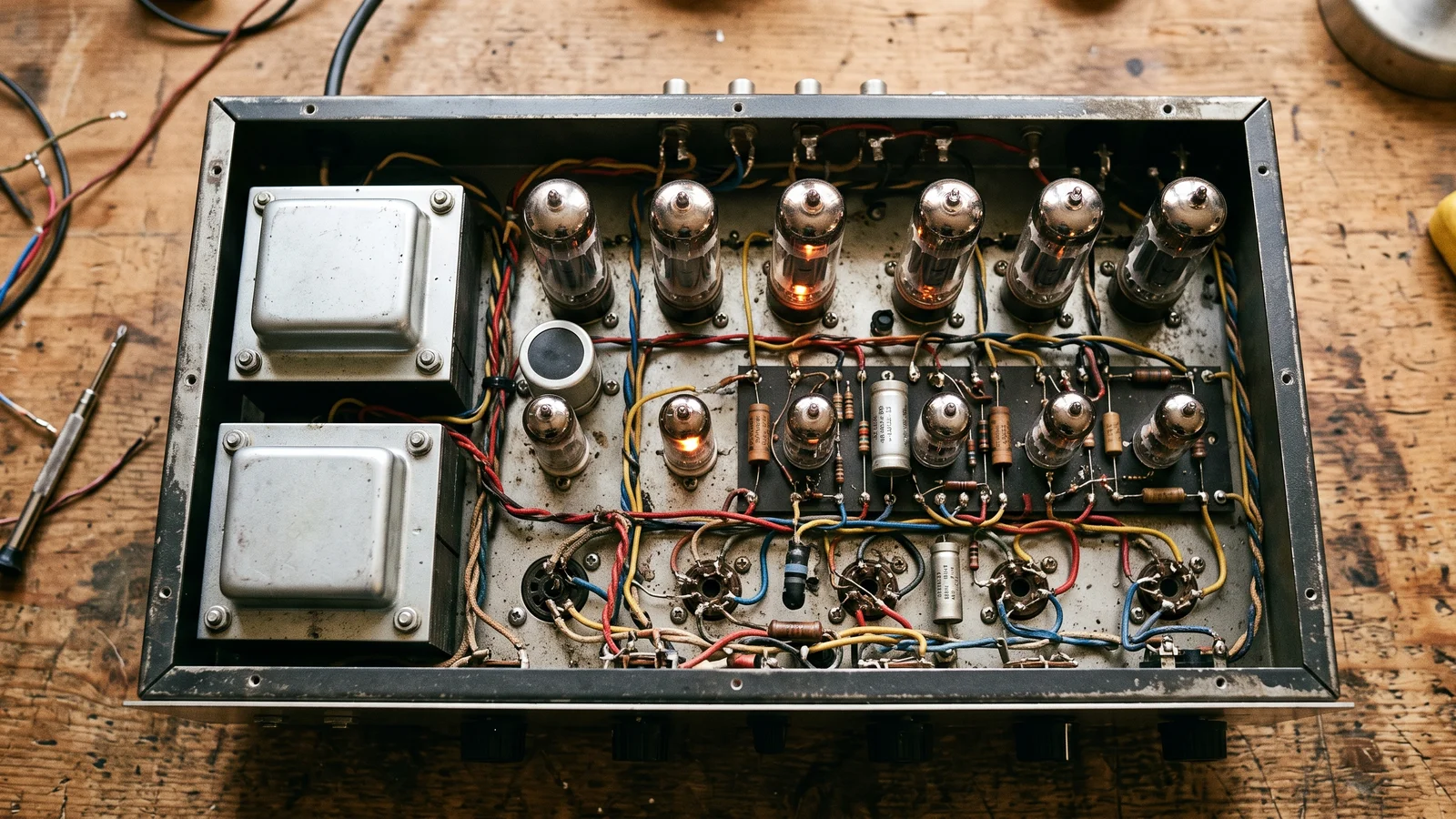
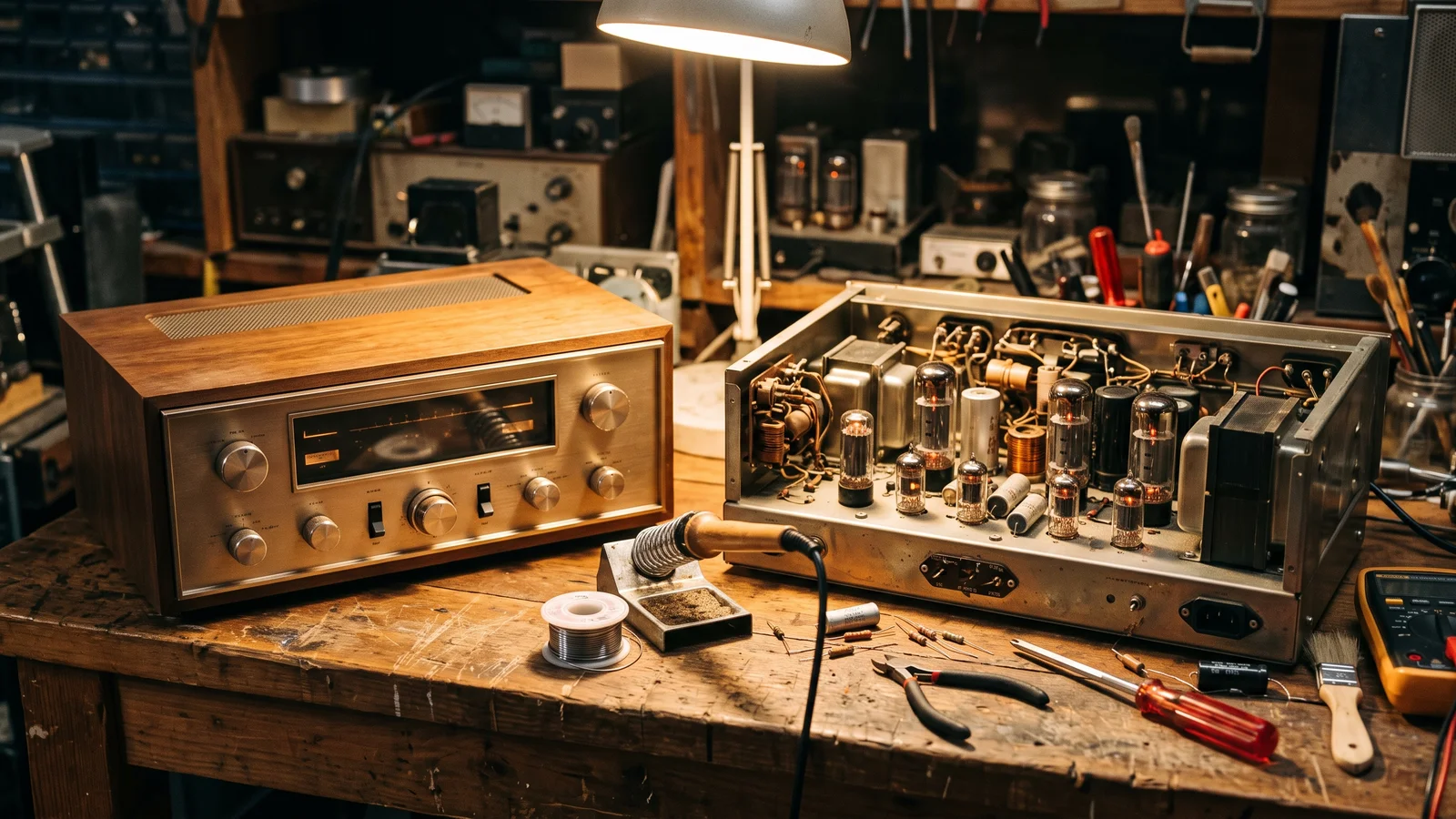
I've had golden-age gear like this on the bench, and the difference from a modern throwaway is obvious the second you lift the lid. Heavy transformers. Generous parts. Point-to-point wiring you can actually trace and fix. Recap it, replace the tired tubes, clean the switches, and it comes back to life. That's not nostalgia talking. That's what durable quality looks like when it's built by people who expected their work to outlive them.
That's exactly why I still build the way I do. At our Arizona workshop I hand-build custom loudspeakers meant to be serviced and enjoyed for decades, not badge-engineered and discarded. The lesson of Fisher and H.H. Scott isn't that great American audio is dead. It's that great audio lives in the work and the standard behind it, never in the name on the front. Buy the standard. The letters are just paint.
Frequently Asked Questions
Who was H.H. Scott?
Hermon Hosmer Scott (1909-1975) was an MIT graduate and engineer who founded H.H. Scott, Inc. in 1947 in Cambridge, Massachusetts, per Wikipedia. He held more than 100 patents and invented the dynamic noise suppressor, marketed as Dynaural. He is not E.H. Scott, the Chicago luxury-radio maker.
What happened to Fisher and H.H. Scott?
Both were sold and hollowed out. Fisher went to Emerson Electric in 1969, then Sanyo in 1975, and folded into Panasonic by 2011, per Wikipedia. H.H. Scott halted production in 1972, went bankrupt, was bought by SYMA International in 1973, and its brand was bought by Emerson consumer electronics in 1985.
Are H.H. Scott receivers good?
Yes, the vintage tube gear is excellent and actively collected. Models like the Model 299 integrated amplifier and the Model 350, the first US FM stereo multiplex tuner, remain sought after, per The Absolute Sound. Well-serviced units sound wonderful and were built to be repaired for decades.
Who owns the Scott brand now?
The H.H. Scott brand was bought by Emerson consumer electronics in 1985 and survives only as a licensed budget nameplate, though current specifics are loosely documented, as corroborated on HandWiki. This Emerson is a different entity from the Emerson Electric that bought Fisher in 1969.
What was the Fisher 500?
The Fisher 500 was Fisher Radio's first receiver, a mono AM/FM unit with two EL37 output tubes and a brass-plated faceplate, per Wikipedia. The later stereo 500-C, using 7591A output tubes, became one of the most iconic tube receivers ever made, as Stereophile has documented.
Sources
- Wikipedia, "Hermon Hosmer Scott": https://en.wikipedia.org/wiki/Hermon_Hosmer_Scott
- Wikipedia, "H.H. Scott, Inc.": https://en.wikipedia.org/wiki/H.H._Scott,_Inc.
- Wikipedia, "Fisher Electronics": https://en.wikipedia.org/wiki/Fisher_Electronics
- Maynard Historical Society, "History of the H.H. Scott Company": https://collection.maynardhistory.org/items/show/10462
- Maynard Life Outdoors, local history of H.H. Scott: http://www.maynardlifeoutdoors.com/2020/07/hh-scott-inc-maynard-hi-fi-company.html
- The Absolute Sound, "Focus on H.H. Scott": https://www.theabsolutesound.com/articles/focus-on-h-h-scott/
- HiFi Engine, H.H. Scott 299 manual and specifications: https://www.hifiengine.com/manual_library/h-h-scott/299.shtml
- Stereophile, Fisher 500-C historical coverage: https://www.stereophile.com/content/fisher-500-c-receiver
- Sound & Vision, vintage Fisher coverage: https://www.soundandvision.com/content/vintage-fisher
- HandWiki, "Engineering:H. H. Scott, Inc." (Woburn / Emerson 1985 corroboration): https://handwiki.org/wiki/Engineering:H._H._Scott,_Inc.
- AURAL HiFi, "History of Fisher Radio" (use cautiously; conflates E.H. and H.H. Scott): https://auralhifi.com/pages/fisher
Mike Vincent is the founder of Mike Knows Audio Video and WubWub Audio, where he designs and hand-builds custom loudspeakers and home theaters in Arizona, the old way, for about fifteen clients a year. He has a real soft spot for engineer-led shops that built gear meant to be serviced and kept for decades; if you want a speaker built to that standard and signed off by the same hands that made it, start with our custom loudspeakers.
Comments
Leave a Comment