
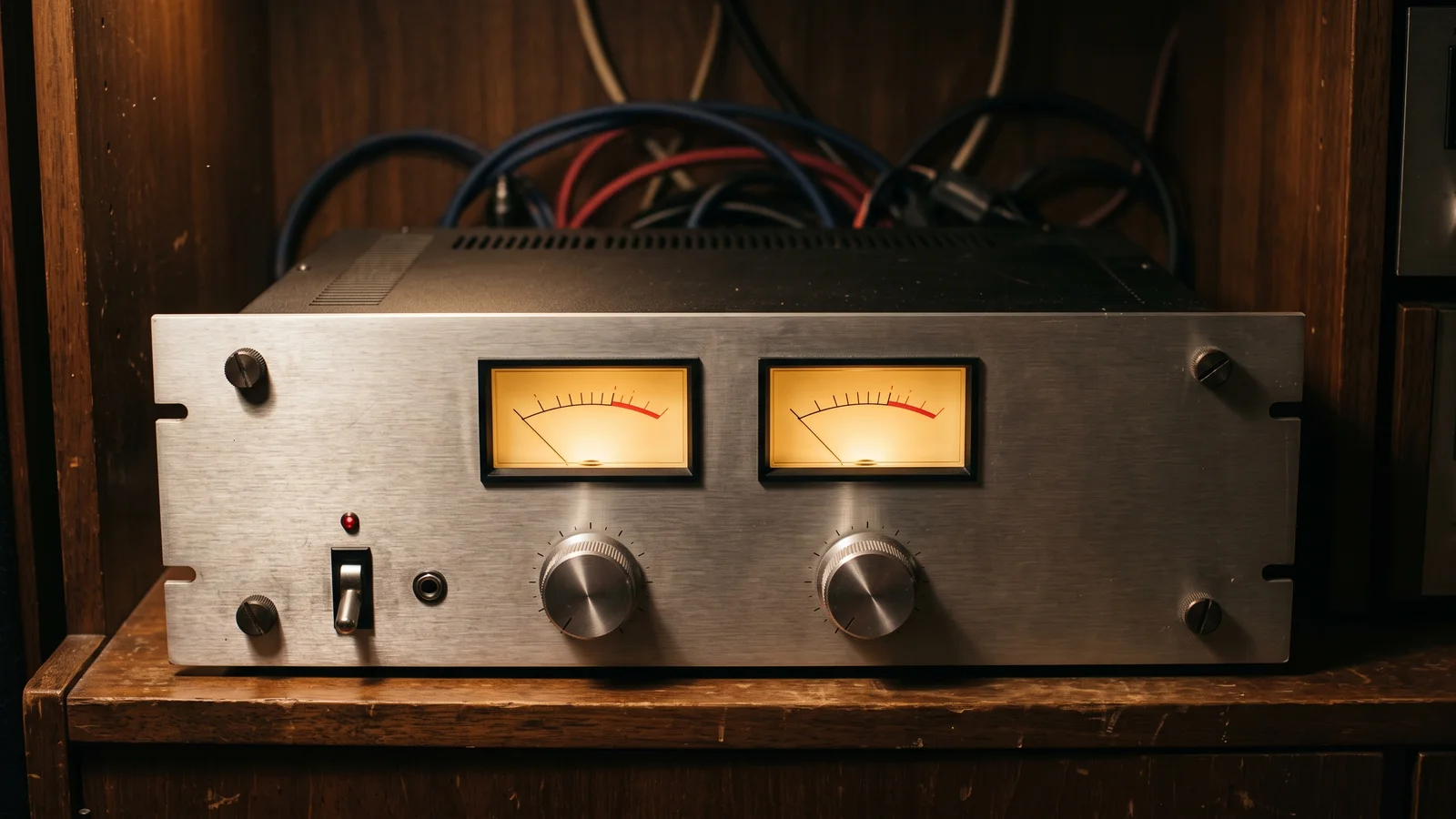
350 watts a channel for $749, a dollar a watt, and a nickname earned in smoke. The Phase Linear 700 story, the amp that launched Bob Carver and the power wars.
Picture 1972. Most respectable high-end amplifiers made well under 100 watts per channel, and the ones that pushed harder cost a fortune. Then a small Washington company shipped a silver-faced brute that made 350 watts a channel for $749, roughly a dollar a watt, and dared you to turn it up. That was the Phase Linear 700, and it rewrote what "powerful" meant in a home hi-fi.
I love this amp for reasons that have nothing to do with restraint. It was loud, it was cheap for what it did, and early units had a habit of catching fire. Let me tell you the story of Phase Linear the company, the amps that powered a generation of rock speakers, and the tangled corporate afterlife of a name that once meant raw American muscle.
Key Takeaways
- Phase Linear was founded in 1970 by Bob Carver and Steve Johnston, and its Phase Linear 700 amplifier made about 350 watts per channel for $749, the most powerful consumer amp of its day (The Absolute Sound).
- Early units earned the nickname "Flame Linear" because Carver deliberately left out protection circuitry, so a fault could dump the full DC rail into your speakers.
- Phase Linear effectively created the high-power consumer-amplifier category and launched Bob Carver's career before he founded Carver Corporation in 1979.
- The name passed through Jensen, Recoton, Audiovox, and VOXX International, and now sits largely dormant. VOXX was acquired by Gentex in April 2025 (audioXpress).
- Vintage Phase Linear amps stay coveted 50-plus years on, with a healthy cottage industry rebuilding them and adding modern protection boards.
Who founded Phase Linear, and why did it matter?
Phase Linear was founded in 1970 by Bob Carver and Steve Johnston, and within a couple of years it had done something no other consumer brand had managed: it made brute power affordable (Wikipedia). Before Phase Linear, high wattage lived in professional and studio gear. After it, big power became something you could buy for your living room.
Here's why that landed so hard. In the early 1970s, most high-end home amps topped out somewhere under 100 to 150 watts per channel, and the pro-grade Crown DC-300 sat near the ceiling at around 150 watts (ProSoundWeb). Carver walked in and more than doubled that number at a price ordinary music fans could stretch to. The industry noticed, and the wattage race was on.
Carver was the engineering brain, and Phase Linear was the launchpad for everything he did later. He left before the decade ended and founded Carver Corporation in 1979, then Sunfire after that (Wikipedia). The full Carver saga, the 1985 null-test bet and the light little amplifiers that followed, is its own story. This one belongs to the company and the amps.
What was the Phase Linear 700 amplifier?
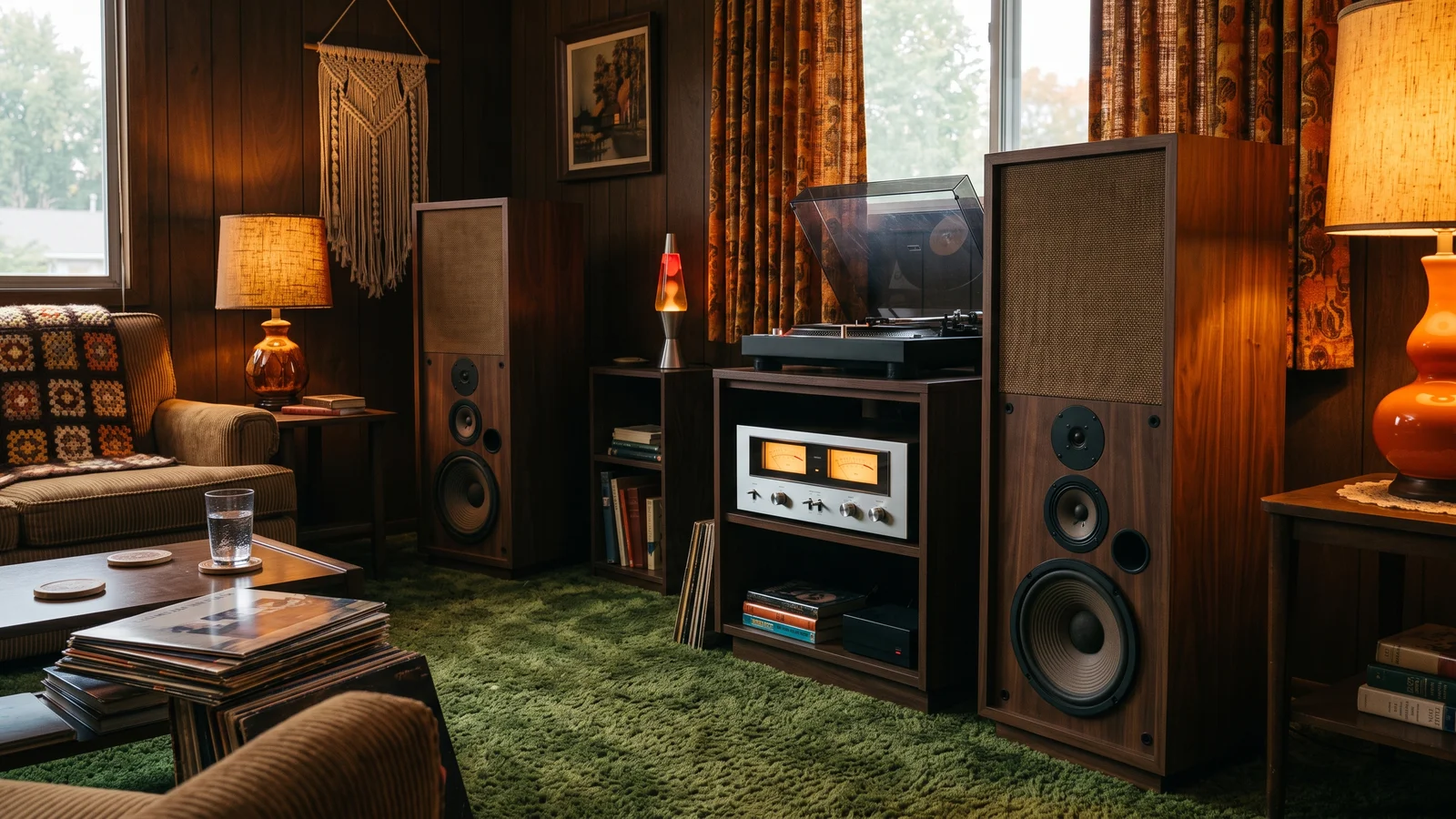
The Phase Linear 700 was a stereo power amplifier that delivered about 350 watts per channel, weighed roughly 45 pounds, and listed for $749 when it arrived in the early 1970s, sources split on whether that was 1971 or 1972 (The Absolute Sound). At that price it worked out to slightly over a dollar a watt, an unheard-of figure for the power on tap.
The look matched the ambition. You got a wide brushed-aluminum faceplate and two big analog VU meters that swung with the music, the visual signature of serious power in that era (Hi-Fi Hall of Fame). Those meters weren't just decoration. On a 350-watt amp driving big, thirsty speakers, watching the needles pin was half the fun and a genuine warning about what you were feeding your drivers.
The 700 also carried Carver's "Energy Limiter" protection, his approach to keeping all that voltage from wrecking the amp under stress (Hi-Fi Hall of Fame). It wasn't the only Phase Linear, either. The Phase Linear 400 offered 200 watts per channel, measured comfortably past 270 watts into 8 ohms, for just under $500 around 1972 (Vintage Technology Archive).
At the top of the range sat the D-500, a 1978 monster rated at 505 watts per channel into 8 ohms, weighing around 70 pounds and listing for $1,395.95 (HiFi Engine). Carver had not finished designing it when he left the company, so staff engineers completed the job. Even in his absence, Phase Linear kept chasing the biggest number on the shelf.
Why did they call it "Flame Linear"?
Because the early amps sometimes caught fire, and I mean that literally. Enthusiasts nicknamed Phase Linear "Flame Linear," and also "Blaze Linear," because Carver deliberately left protection circuitry out of some early designs to keep the signal path as pure as possible (Vintage Technology Archive). Pure sound, right up until something went wrong.
Here's the failure mode, and it's spectacular. When the front end latched up, there was nothing standing between your speakers and the full plus-or-minus 100-volt DC supply rail. That much DC across a voice coil is a death sentence for the driver. Push the amps hard and long, and the passive cooling could also run past its thermal limit. The results, per the enthusiast accounts that named the thing, occasionally included smoke, flames, and cooked speakers.
I'll be honest, this is exactly the kind of gloriously reckless engineering I can't help admiring. Carver made a bet: listeners would rather have a cleaner signal and accept the risk than pad the circuit with safety nets that colored the sound. Later units and the 700's Energy Limiter walked that back toward sanity. But the nickname stuck, and 50 years on, "Flame Linear" is a badge of honor among collectors rather than an insult.
How did Phase Linear power rock and roll?
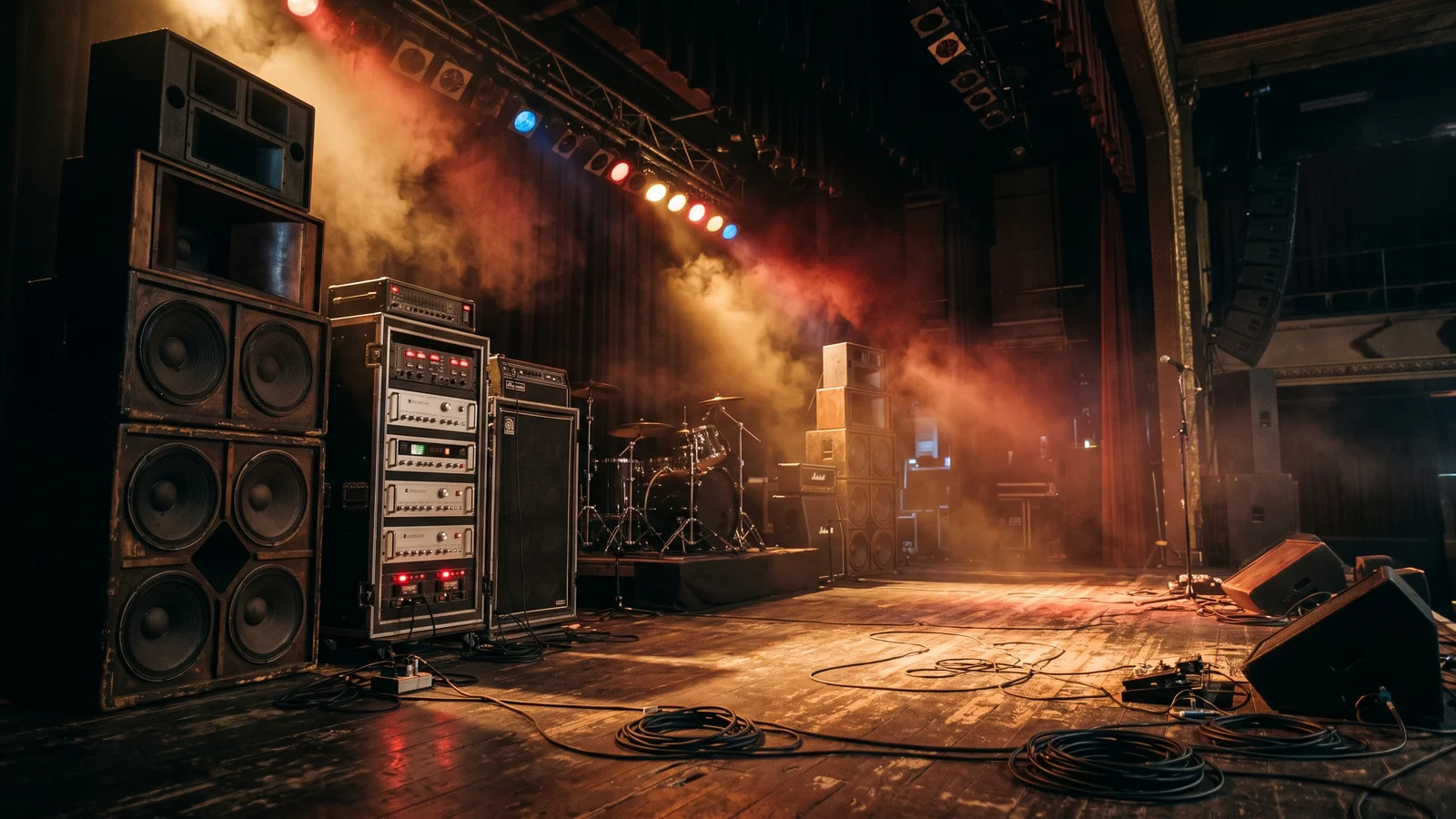
Phase Linear amps thrived because rock got loud, and loud needs headroom. The whole point of the brand was surplus power, the kind that drives big, inefficient speakers hard without folding up, and that made these amps a natural fit for the high-volume, high-energy music of the 1970s (ProSoundWeb). More watts meant cleaner peaks, and cleaner peaks meant you could actually feel the kick drum.
There's a real engineering reason big power matters that has nothing to do with playing loud all the time. Music is mostly quiet with sudden violent transients, and an amp that runs out of headroom clips those transients into distortion. A 350-watt amplifier cruising at a few watts has enormous reserve for the moment the snare hits. That reserve is why so many musicians and studios reached for Phase Linear when a smaller amp would have technically "worked."
Whether or not you loved the sound, and plenty of purists sniffed at it, the Phase Linear 700 amplifier changed the reference point. Once one company proved you could sell 350 affordable watts to regular people, every competitor had to answer with more power of its own. Phase Linear didn't just build a hot-rod amp. It moved the whole industry toward high wattage, and that shift outlasted the company by decades.
What happened to the Phase Linear brand?
Bob Carver left in the late 1970s to start Carver Corporation, and from there the Phase Linear name began a long, undignified journey through corporate hands (Wikipedia). The brand reportedly passed to Pioneer first, though that step is thinly and inconsistently dated, then was sold to International Jensen in 1982 alongside the AR and Advent names (Encyclopedia.com).
From Jensen, the trail runs through the bargain bin of audio consolidation. Recoton picked up the Jensen group, including Phase Linear, in 1996, then went bankrupt. In 2003, Audiovox won the assets out of Recoton's bankruptcy for roughly $40 million plus assumed debt, hauling in Jensen, AR, and Advent along with Phase Linear (TWICE). Audiovox rebranded itself VOXX International in 2012, and Phase Linear survived mainly as a car-audio nameplate before going largely dormant.
This is the part I find quietly grim. The word for it is enshittification, a name that once meant "the most powerful, most exciting amplifier money could buy" reduced to a dormant badge passed between holding companies, the label outliving the mission that made it worth anything. VOXX itself was acquired by Gentex Corporation in April 2025, another line item folded into a bigger balance sheet (audioXpress). The amps still make 350 watts. Nobody who owns the trademark today built a single one of them.
Are vintage Phase Linear amps still worth restoring?
Absolutely, and the market agrees. Fifty-plus years after launch, the Phase Linear 700 is a genuinely collectible amplifier, still praised for its power and period charm by the outlets that document hi-fi history (Hi-Fi Hall of Fame). These are not museum pieces gathering dust. People run them, chase clean originals, and pay real money for tidy examples.
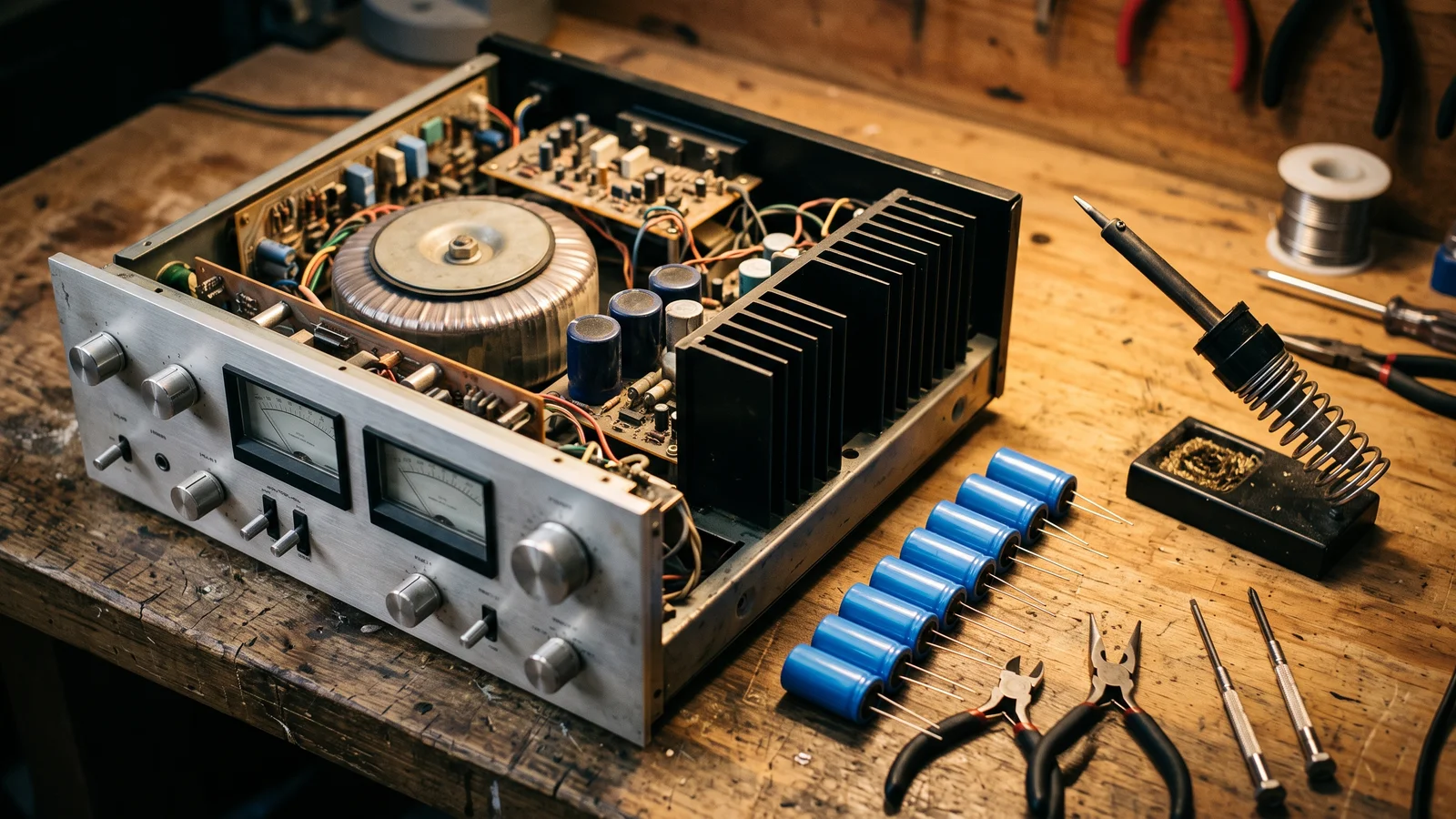
There's a whole cottage industry built around keeping them alive, and it exists precisely because of the Flame Linear reputation. Restorers rebuild the power supplies, replace aging capacitors, and, most tellingly, retrofit modern protection boards, the exact safety circuitry Carver left out. Add that missing layer and you get the sound and the muscle without the smoke. It's the best of both eras, an old brute with a modern seatbelt.
I have a soft spot for anyone doing that work, because it's the same instinct that runs our shop. The gear these restorers save was built with conviction by people who cared, and that conviction is worth preserving even when the corporate owner has long since stopped caring. A great amplifier, like a great pair of speakers, deserves to be understood and maintained, not just traded.
Frequently Asked Questions
What happened to Phase Linear?
Phase Linear faded as a serious hi-fi brand after Bob Carver left in the late 1970s. The name passed through Pioneer (reportedly), then International Jensen in 1982, Recoton in 1996, and Audiovox in 2003 out of Recoton's bankruptcy. It survived mainly as a car-audio nameplate and is now largely dormant.
Who founded Phase Linear?
Phase Linear was founded in 1970 by Bob Carver and Steve Johnston in Washington state. Carver was the engineering force behind its landmark amplifiers, including the 350-watt Phase Linear 700. He left in the late 1970s to start Carver Corporation in 1979, launching a second act built on the same big-power ideas.
What was the Phase Linear 700?
The Phase Linear 700 was a stereo power amplifier that made about 350 watts per channel for $749 in the early 1970s, widely called the most powerful consumer amp of its day. It weighed roughly 45 pounds, wore a brushed-aluminum faceplate with dual VU meters, and worked out to just over a dollar a watt.
Who owns Phase Linear now?
The Phase Linear trademark ended up with VOXX International, the company formerly called Audiovox, which acquired the assets out of Recoton's 2003 bankruptcy. VOXX was acquired by Gentex Corporation in April 2025. As a hi-fi brand, Phase Linear is now largely dormant, its most recent life spent as a car-audio nameplate.
How much power did the Phase Linear 700 make?
The Phase Linear 700 was rated at about 350 watts per channel, roughly double the pro-grade Crown DC-300's 150 watts and far beyond the sub-100-watt output of most home amps of its era. Its bigger sibling, the 1978 D-500, pushed even harder at 505 watts per channel into 8 ohms.
Sources
- Wikipedia - "Phase Linear": https://en.wikipedia.org/wiki/Phase_Linear
- Wikipedia - "Bob Carver": https://en.wikipedia.org/wiki/Bob_Carver
- The Absolute Sound - "TAS Legacy: Phase Linear 700": https://www.theabsolutesound.com/articles/tas-legacy-phase-linear-700/
- Hi-Fi Hall of Fame - "Phase Linear 700": https://hifihalloffame.com/equipment/phase-linear-700/
- Hi-Fi Hall of Fame - "Bob Carver": https://hifihalloffame.com/people/bob-carver/
- TWICE - "Audiovox Wins Recoton Bid" (2003): https://www.twice.com/product/audiovox-wins-recoton-audio-bid
- ProSoundWeb - "History Files: The Crown DC300 Amplifier Leads The Solid-State Revolution": https://www.prosoundweb.com/history-files-the-crown-dc300-amplifier-leads-the-solid-state-revolution/
- Vintage Technology Archive - "Phase Linear 400": https://vintagetechnologyarchive.com/audio/phase-linear/400/
- HiFi Engine - "Phase Linear 500 (D-500) Specifications": https://www.hifiengine.com/manual_library/phase-linear/500.shtml
- audioXpress - "Gentex Completes Acquisition of VOXX International" (2025): https://audioxpress.com/news/gentex-closes-acquisition-of-voxx-international-corporation
- Encyclopedia.com - "Audiovox Corporation": https://www.encyclopedia.com/books/politics-and-business-magazines/audiovox-corporation
Mike Vincent is the founder of Mike Knows Audio Video and WubWub Audio, where he designs and hand-builds custom loudspeakers and home theaters in Arizona, the old way, for about fifteen clients a year. At our Arizona workshop the gear is built and stood behind by the same people, not a nameplate traded through bankruptcy courts. If that's the kind of relationship you want with your audio, start with our hand-built custom speakers.
Comments
Leave a Comment