
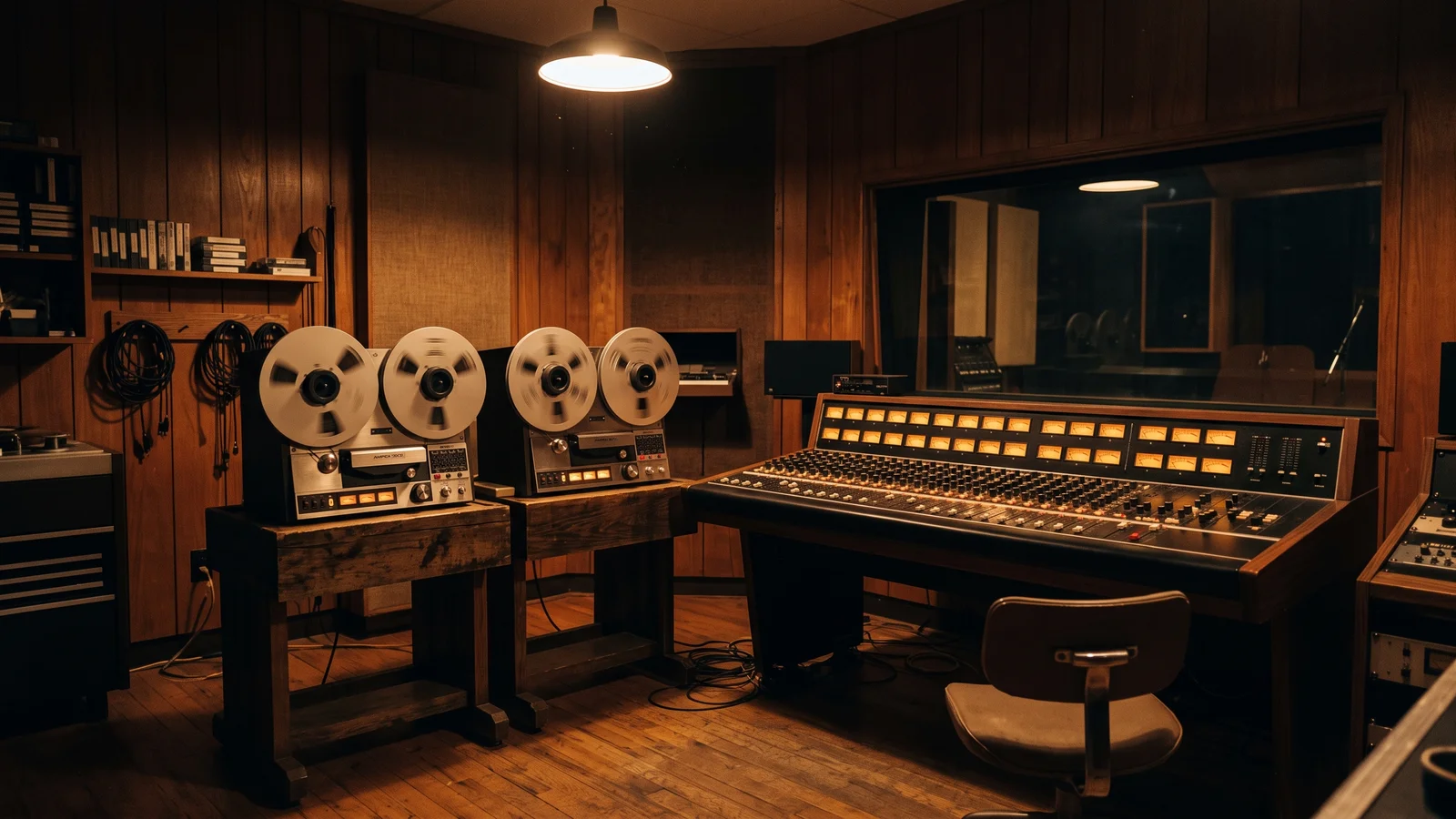
How one engineer's obsession with tape hiss became the sound of nearly every cinema and living room on earth.
For the first fifty years of recorded sound, the enemy wasn't cheap needles or bad speakers. It was hiss. That steady "shhhhh" sitting behind every quiet passage on tape, loud enough to ruin a whisper in a movie or the fade-out of a ballad. Everybody in the business just lived with it. One man decided not to.
His name was Ray Dolby, and the company he built turned noise reduction into the invisible standard behind nearly every film and living-room system on earth. I've had a lot of gear on my bench over the years with that little double-D logo stamped on it, and here's the wild part: most people have never heard the name of the guy who made all that possible. Let's fix that.
Key Takeaways
- Ray Dolby (1933–2013) helped build the first practical videotape recorder at Ampex in the 1950s, before he had even finished his engineering degree.
- He founded Dolby Laboratories in London in 1965 with a staff of four; the first product shipped in 1966.
- Dolby A killed tape hiss in the studio, and Dolby B made the home cassette actually worth listening to.
- Star Wars in 1977 pushed theaters worldwide to adopt Dolby Stereo, and Dolby Digital arrived on Batman Returns in 1992.
- Dolby licenses its technology instead of selling boxes, and a dual-class share structure from the 2005 IPO kept the company independent.
- Ray Dolby died in 2013 worth roughly $2.4 billion, holding more than 50 patents and two Academy Awards.
Who was Ray Dolby, the man behind the logo?
Ray Milton Dolby was born January 18, 1933, in Portland, Oregon, and grew up in the San Francisco Bay Area, according to Dolby's own company history. By his early twenties he was already doing serious engineering at Ampex, the company that would soon change television forever. He wasn't a suit who bought a great idea. He was the guy who had them.
Dolby was a tinkerer with a physicist's patience. He liked hard problems, the kind that make most people quit. There's a line of his I keep coming back to, because it describes every good build I've ever done: "To be an inventor, you have to be willing to live with uncertainty, to work in darkness and grope towards an answer," as Dolby recounted. That's not corporate poetry. That's a guy who spent years staring at a problem nobody else could crack.
The Ampex years and the machine that changed TV
Between 1949 and 1957, Dolby worked at Ampex and led the electronic design of the first practical videotape recorder, per the IEEE's engineering-history archive. He contributed to the Quadruplex VTR prototype unveiled in April 1956, the machine that finally let TV networks record a broadcast and rebroadcast it later. Before that, live television was mostly, well, live. He did this in his early twenties, still a Stanford student. Let that sink in.
Cambridge, India, and the idea that became a company
Dolby earned his BSEE from Stanford in 1957, then took a Marshall Scholarship to Cambridge, where he completed a PhD in physics at Pembroke College in 1961 (Dolby). His thesis covered long-wavelength X-ray microanalysis, and in his final year he consulted for the UK Atomic Energy Authority. Then he did something unexpected. From 1963 to 1965 he served as a UNESCO technical adviser in India, and it was there, of all places, that he worked out the ideas that became noise reduction, the IEEE notes. He founded Dolby Laboratories in London in 1965 with a staff of four, and the first product shipped in 1966.
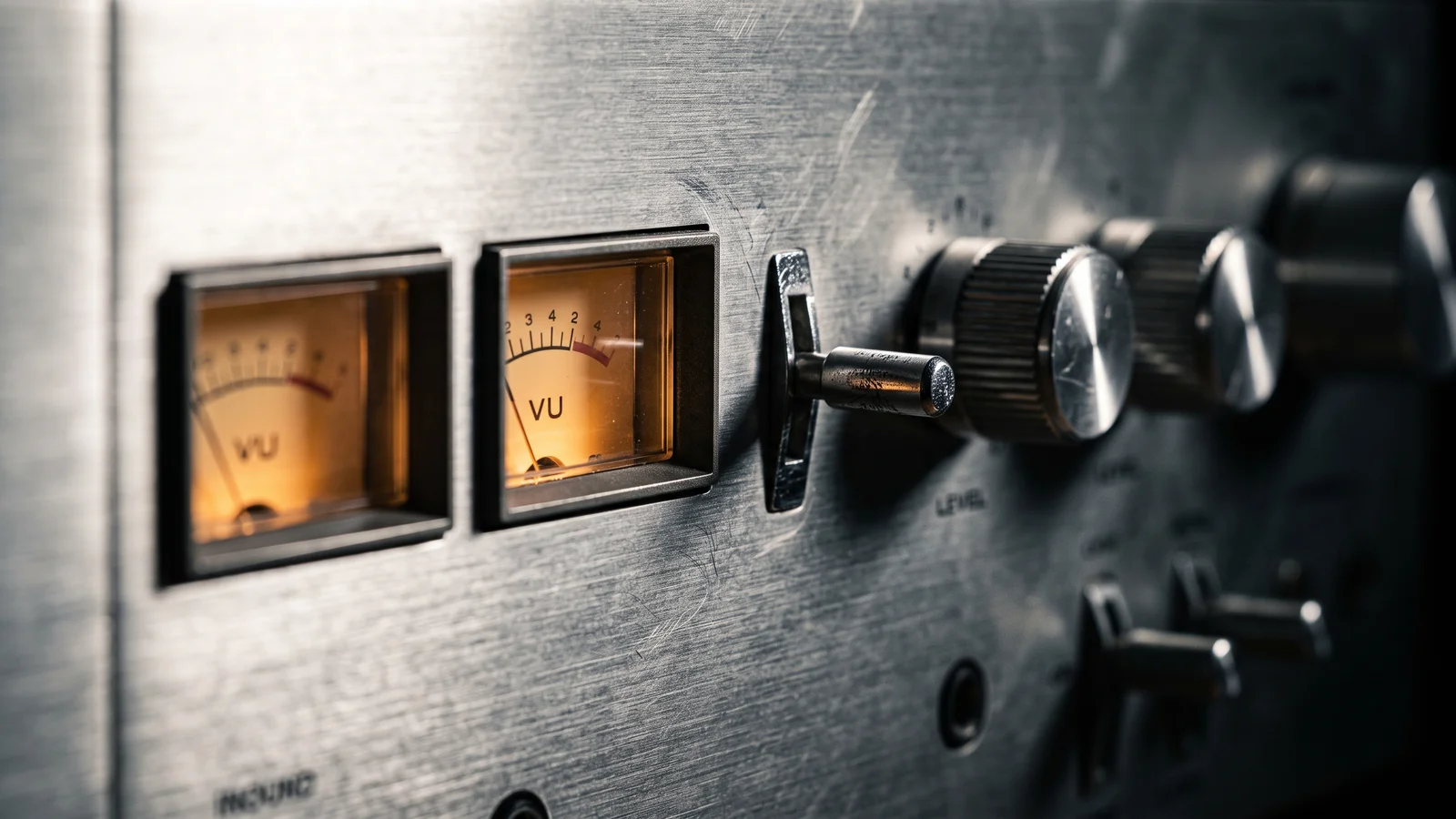
How did Dolby actually beat tape hiss?
Dolby's first product, Dolby A, launched in 1966 and used multi-band companding to knock tape hiss out of professional recordings, as the Smithsonian's National Museum of American History documents. The trick was elegant: boost quiet sounds before recording, then turn them back down on playback, and the hiss gets pushed down with them. Studios like Decca, EMI, and Abbey Road adopted it fast.
Here's why that mattered so much. Analog tape has a noise floor baked in. Every generation of copying makes it worse. Before Dolby A, engineers fought hiss by recording hot and hoping. After Dolby A, they could keep the quiet parts quiet without losing the music underneath. I've restored old tape decks that still had Dolby cards in them, and the difference with the system engaged is not subtle. It's the sound of the hiss just... leaving.
From the studio to the living room: Dolby B, C, and S
Dolby B arrived in 1968 as a simpler, single-band version made for the home, and it changed the cassette forever (Smithsonian). It was created partly at the urging of Henry Kloss of KLH, one of the great "great sound for regular people" guys in this whole story. Before Dolby B, prerecorded cassettes were a hissy mess. After it, they were genuinely hi-fi. That's the reason your parents' tape collection didn't sound like frying bacon.
Dolby kept refining. Dolby C followed around 1980, offering more noise reduction than B for home decks, and Dolby S came later, roughly 1989 to 1990, both charted in Dolby's own chronology of the company. Both pushed the humble cassette further than anyone expected a little strip of tape to go. By then, though, Dolby had already jumped to a much bigger screen.
How did Dolby take over the movie theater?
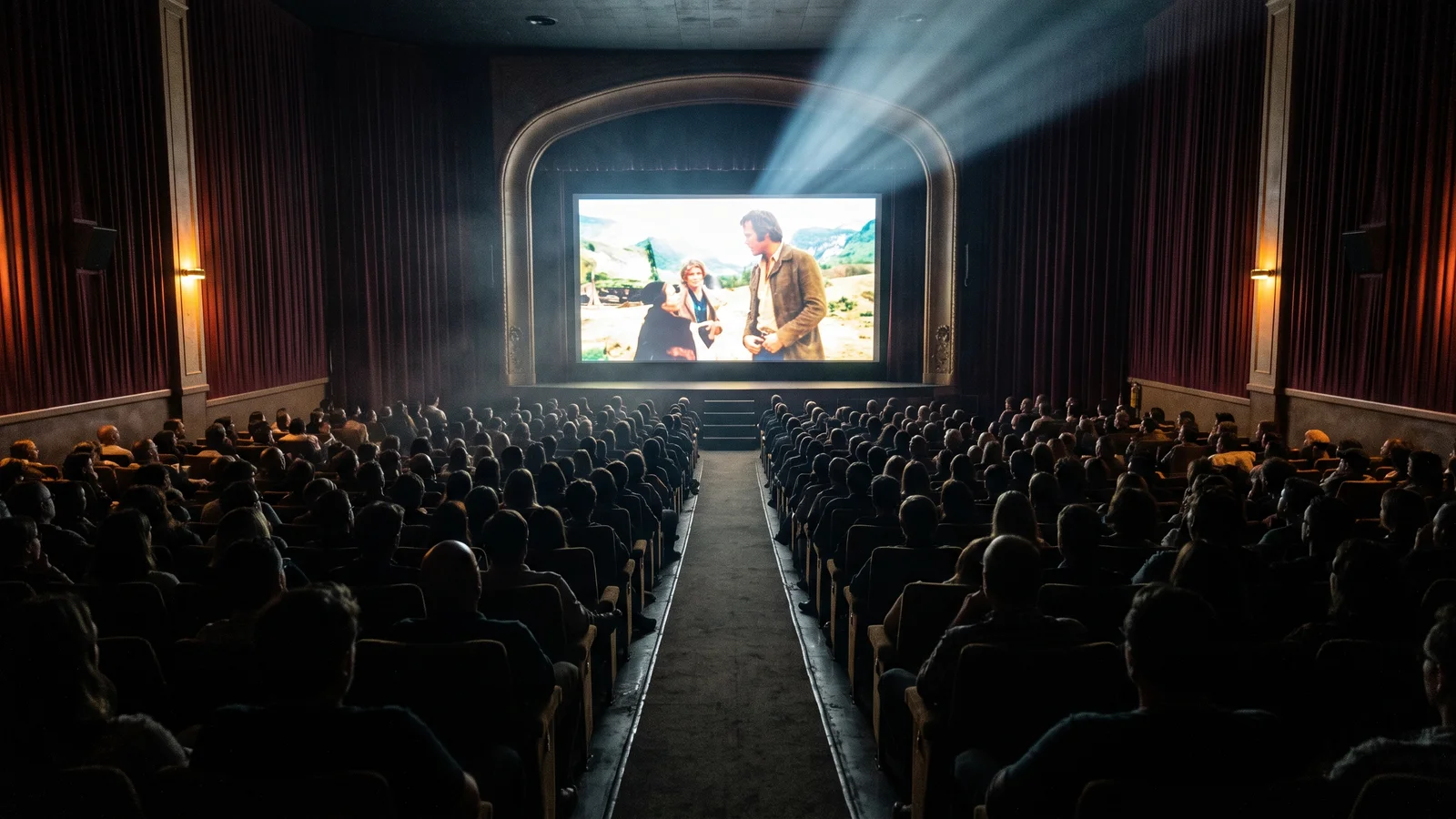
Dolby moved into cinema in the mid-1970s with Dolby Stereo, a system that matrixed four channels (left, center, right, and surround) onto a single optical track on the film, as documented in the format's technical history. The first 35mm feature with a Dolby Stereo optical soundtrack was A Star Is Born in 1976. It sounded better and it fit on existing prints, which is exactly the kind of practical engineering that wins.
Then came the movie that changed everything. Star Wars opened May 25, 1977, and while it wasn't the first Dolby Stereo film, its massive success drove theaters around the world to install the format, Variety reported in its history of George Lucas and Dolby. Suddenly "presented in Dolby Stereo" was a reason to buy a ticket. That's the moment the little double-D became a mark of quality in the lobby, not just in the projection booth.
Surround comes home, then gets smarter
Dolby brought the cinema experience into the house with Dolby Surround in 1982, letting home systems pull that matrixed surround channel off VHS tapes and broadcasts (Dolby chronology). In 1986 the company introduced Dolby SR, or spectral recording, a professional format that squeezed even more clean dynamic range out of analog film and tape, per the format's technical record.
Then in 1987 came Dolby Pro Logic, and this one's a big deal for anyone who's ever set up a receiver. Pro Logic added a steered, discrete center channel, which meant movie dialog finally locked to the screen instead of drifting around the room (Dolby chronology). If you've ever wondered why the center channel is the most important speaker in a home theater, this is the lineage. Get dialog right, and everything else falls into place — which is also why we spend so much time on proper home-theater calibration once a room is built.
The digital leap: Dolby Digital 5.1
The real jump was Dolby Digital, also called AC-3, which delivered the first discrete digital 5.1 soundtrack: five full channels plus a dedicated low-frequency channel, each one truly separate. It debuted on Batman Returns in June 1992 and went on to become the standard for DVD and digital broadcast (Variety). Discrete beats matrixed every time. No more steering, no more channels bleeding into each other. Each speaker got its own real signal.
One bit of nuance worth getting right, because the internet muddles it constantly. Batman Returns was the first Dolby Digital film in 1992, but it was not the first film with any digital soundtrack. That honor goes to Dick Tracy in 1990, which used Kodak's CDS system, a different format entirely, as the format record shows. So if a trivia night ever pits the two against each other, now you know: first digital format, Dick Tracy; first Dolby Digital, Batman Returns.
What is Dolby Atmos, and how did sound go 3D?
Dolby introduced Atmos for cinemas in 2012, and it broke from everything before it. Instead of assigning sound to a fixed number of channels, Atmos treats sounds as objects placed in three-dimensional space, including overhead, then renders them to whatever speaker layout a given room actually has. It debuted on Pixar's Brave in June 2012 at the Dolby Theatre, according to Variety.
That's a genuine shift in thinking. Older formats said "put this sound in the surround channel." Atmos says "put this sound here, in the air, twelve feet up and to the left," and lets the system figure out which speakers make that happen. But first, Dolby had to solve the quality problem at home.
TrueHD and the road to lossless
In 2005 Dolby rolled out two important home formats, both unveiled at CEDIA on September 9. Dolby Digital Plus extended things to 7.1 channels with better efficiency, and Dolby TrueHD delivered lossless audio, meaning bit-for-bit studio-master quality, built for Blu-ray and HD DVD, as the codec's technical record documents. TrueHD is the quiet hero here. It's the container that would later carry Atmos into the living room without throwing away a single bit of the mix.
Atmos comes home
Dolby Atmos for the home arrived in September 2014, adding height information through ceiling or upward-firing speakers so the sound actually has a roof to it (Dolby chronology). This is where the family tree that started with hiss reduction lands right in your media room.
Now, I build these rooms for a living, so let me be straight with you. Atmos at home is fantastic when it's done with restraint and butchered when it's overdone. You don't need a ceiling that looks like a planetarium. In our Arizona workshop we cap the overhead count and place speakers where the geometry actually calls for them, because more holes in the ceiling is not the same as better sound. If you're curious how we approach putting Atmos into a real room without wrecking the acoustics, here's how we handle a proper Atmos installation.
Why did Dolby never get bought and gutted?
Here's the part that makes Dolby the good guy in this whole series. Dolby never sold boxes as its core business. It licensed its technology to the chipmakers and electronics companies who did the manufacturing, while Dolby handled the R&D and certification, a model laid out in the company's 2004 IPO filing with the SEC. That model produced durable, high-margin royalties with no factories to run and no capital risk. Asset-light, engineering-heavy, and almost impossible to raid.
Think about what that structure protects. A company that sells physical gear is always one bad quarter away from a private-equity firm buying it, firing the engineers, and offshoring the soul. I've watched it happen to brand after brand in this series. But you can't easily gut a company whose only real asset is the brains of its inventors and a wall of patents. The R&D is the product.
The dual-class shield
Ray Dolby retained near-total ownership through family trusts right up until 2005 (SEC S-1). When Dolby finally went public that year on the NYSE under ticker DLB, Ray contributed all of his personal intellectual property into the company, and the IPO used a dual-class share structure. Class A shares got one vote each; the family's Class B shares got ten votes each. Ray held about 98.2% of that Class B stock, which gave him roughly 85% of the voting power, the company's later SEC filings show.
That wasn't an accident. It was a deliberate wall, built to keep control in Dolby hands and make a conglomerate takeover essentially impossible, as an analysis in the Northwestern Journal of Technology and Intellectual Property put it. Public shareholders could invest, but they couldn't seize the wheel. The company stayed engineering-led, and it's still independent and publicly traded today. In a series full of great names swallowed by spreadsheets, Dolby is the one that built a moat and kept the founders in charge. That's not luck. That's design.
What is Ray Dolby's legacy?
When Ray Dolby died on September 12, 2013, in San Francisco of acute leukemia at age 80, Forbes estimated his net worth at roughly $2.4 billion, ranking him #641 on its 2013 billionaires list. He left behind more than 50 U.S. patents, the first filed in 1969 (Dolby). But the honors tell the story better than the money does.
Dolby won two Academy Awards, an Emmy in 1989, a Technical Grammy in 1995, and the U.S. National Medal of Technology in 1997, presented by President Clinton (Dolby). Britain gave him an honorary OBE in 1986, and the IEEE awarded him its Edison Medal in 2010 (IEEE). He's in the National Inventors Hall of Fame, and he was inducted into the Television Hall of Fame in 2014. Not bad for a guy who started by hating a hissing noise.
The philanthropist and the building with his name
Dolby gave serious money back to the institutions that shaped him. He donated £35 million to Pembroke College and £85 million to Cambridge's Cavendish Laboratory, funding the Ray Dolby Centre that opened in 2024, as the BBC reported. The kid who groped toward answers in the dark ended up paying for the rooms where the next generation would do the same.
And then there's the marquee. The former Kodak Theatre in Hollywood was renamed the Dolby Theatre on May 1, 2012, under a 20-year naming deal struck after Kodak's bankruptcy, CNN reported at the time. It has hosted the Academy Awards since 2002 and seats about 3,400 people. So every year, when the Oscars hand out the little gold statues, they do it in a building named for the man who made movies sound the way they do. There's a poetry to that. The war on noise ended with his name over the door of the most famous room in the movie business.
I'll say this as a builder who owes the guy a lot. Ray Dolby did it the way I wish more companies had. He stayed obsessed with the actual problem, he kept the engineers in charge, and he built something that outlived him without selling its soul. This whole history series is mostly about great names that got hollowed out. Dolby is the proof it didn't have to go that way.
Frequently Asked Questions
What's the difference between Dolby Digital and Dolby Atmos?
Dolby Digital is channel-based: it sends sound to a fixed set of speakers, like a 5.1 setup with five speakers and a sub. Dolby Atmos is object-based, placing sounds as objects in 3D space including overhead, then rendering them to whatever speaker layout your room actually has (Variety). Atmos adds height; Digital does not.
Who was Ray Dolby?
Ray Dolby (1933–2013) was an American engineer who founded Dolby Laboratories in London in 1965 (Dolby). Before that, he helped build the first practical videotape recorder at Ampex in the 1950s while still a Stanford student (IEEE). He invented noise reduction, held 50-plus patents, and died worth about $2.4 billion.
What was the first Dolby noise-reduction product?
Dolby A, launched in 1966, was the first product (Smithsonian). It used multi-band companding to remove tape hiss from professional studio recordings, and it was quickly adopted by Decca, EMI, and Abbey Road. The consumer version, Dolby B, followed in 1968 and made the home cassette genuinely worth listening to.
What was the first Dolby Digital film?
Batman Returns, released in June 1992, was the first film with a Dolby Digital soundtrack (Variety). It delivered discrete 5.1 audio and helped make Dolby Digital the standard for DVD and digital broadcast. Note that Dick Tracy (1990) was the first film with any digital soundtrack, using Kodak's separate CDS system.
How did Star Wars help Dolby?
Star Wars, released May 25, 1977, was not the first Dolby Stereo film, but its enormous success drove theaters worldwide to install the format (Variety). Dolby Stereo matrixed four channels onto a single optical track that fit existing prints. After Star Wars, "presented in Dolby Stereo" became a real selling point at the box office.
Is Dolby still an independent company?
Yes. Dolby went public in 2005 on the NYSE as DLB, and Ray Dolby structured a dual-class share system that kept voting control with the family (SEC). Ray held roughly 85% of the voting power through high-vote Class B shares. The company remains independent and engineering-led today.
Why is the Oscars venue called the Dolby Theatre?
The former Kodak Theatre in Hollywood was renamed the Dolby Theatre on May 1, 2012, under a 20-year naming agreement made after Kodak filed for bankruptcy (CNN). The venue has hosted the Academy Awards since 2002 and seats about 3,400. It carries the name of the man whose technology shaped how movies sound.
What is Dolby TrueHD?
Dolby TrueHD is a lossless audio format unveiled at CEDIA in September 2005 for Blu-ray and HD DVD (Dolby TrueHD technical record). Lossless means it reproduces the studio master bit for bit, with nothing thrown away. TrueHD later became the container that carries Dolby Atmos into home theaters, delivering both full quality and object-based height.
Sources
- Dolby Laboratories — "Ray Dolby" (official biography): https://www.dolby.com/about/leadership/ray-dolby/
- IEEE Engineering & Technology History Wiki — "Ray Dolby": https://ethw.org/Ray_Dolby
- Smithsonian National Museum of American History — "Dolby's Noise Reduction System": https://americanhistory.si.edu/explore/exhibitions/americas-listening/online/dolby-noise-reduction
- "A Chronology of Dolby Laboratories 1965–1998" (Dolby company chronology, PDF): https://projectionniste.net/docs/A%20Chronology%20of%20Dolby%20Laboratories%201965%20-%201998.pdf
- Variety — "How George Lucas' Ideas Blazed Trails for Dolby Sound": https://variety.com/2020/artisans/awards/george-lucas-dolby-sound-star-wars-1203487459/
- Wikipedia — "Dolby Stereo": https://en.wikipedia.org/wiki/Dolby_Stereo
- Wikipedia — "Dolby SR": https://en.wikipedia.org/wiki/Dolby_SR
- Wikipedia — "Dolby Digital": https://en.wikipedia.org/wiki/Dolby_Digital
- Wikipedia — "Dolby TrueHD": https://en.wikipedia.org/wiki/Dolby_TrueHD
- U.S. Securities and Exchange Commission — Dolby Laboratories Form S-1 (2004): https://www.sec.gov/Archives/edgar/data/0001308547/000119312504200308/ds1.htm
- U.S. Securities and Exchange Commission — Dolby Laboratories Form 10-K (FY2008): https://www.sec.gov/Archives/edgar/data/0001308547/000119312508240308/d10k.htm
- Northwestern Journal of Technology and Intellectual Property — Dolby IP-licensing model analysis: https://scholarlycommons.law.northwestern.edu/cgi/viewcontent.cgi?article=1018&context=njtip
- Forbes — "Billionaire Sound Pioneer Ray Dolby Dies, Age 80": https://www.forbes.com/sites/christopherhelman/2013/09/13/billionaire-sound-pioneer-ray-dolby-dies-age-80/
- CNN — "Oscars home gets new name: Dolby Theatre": https://www.cnn.com/2012/05/01/showbiz/oscars-dolby-theatre/index.html
- BBC — "Oscars venue renamed Dolby Theatre": https://www.bbc.com/news/entertainment-arts-17920876
Mike Vincent is the founder of Mike Knows Audio Video and WubWub Audio, where he designs and hand-builds custom loudspeakers and home theaters in Arizona, the old way, for about fifteen clients a year. He spends a fair amount of time explaining why the center channel matters and why your ceiling doesn't need a dozen speakers; if you want a room built around the sound instead of the spec sheet, start with our custom home theater systems.
Comments
Leave a Comment