
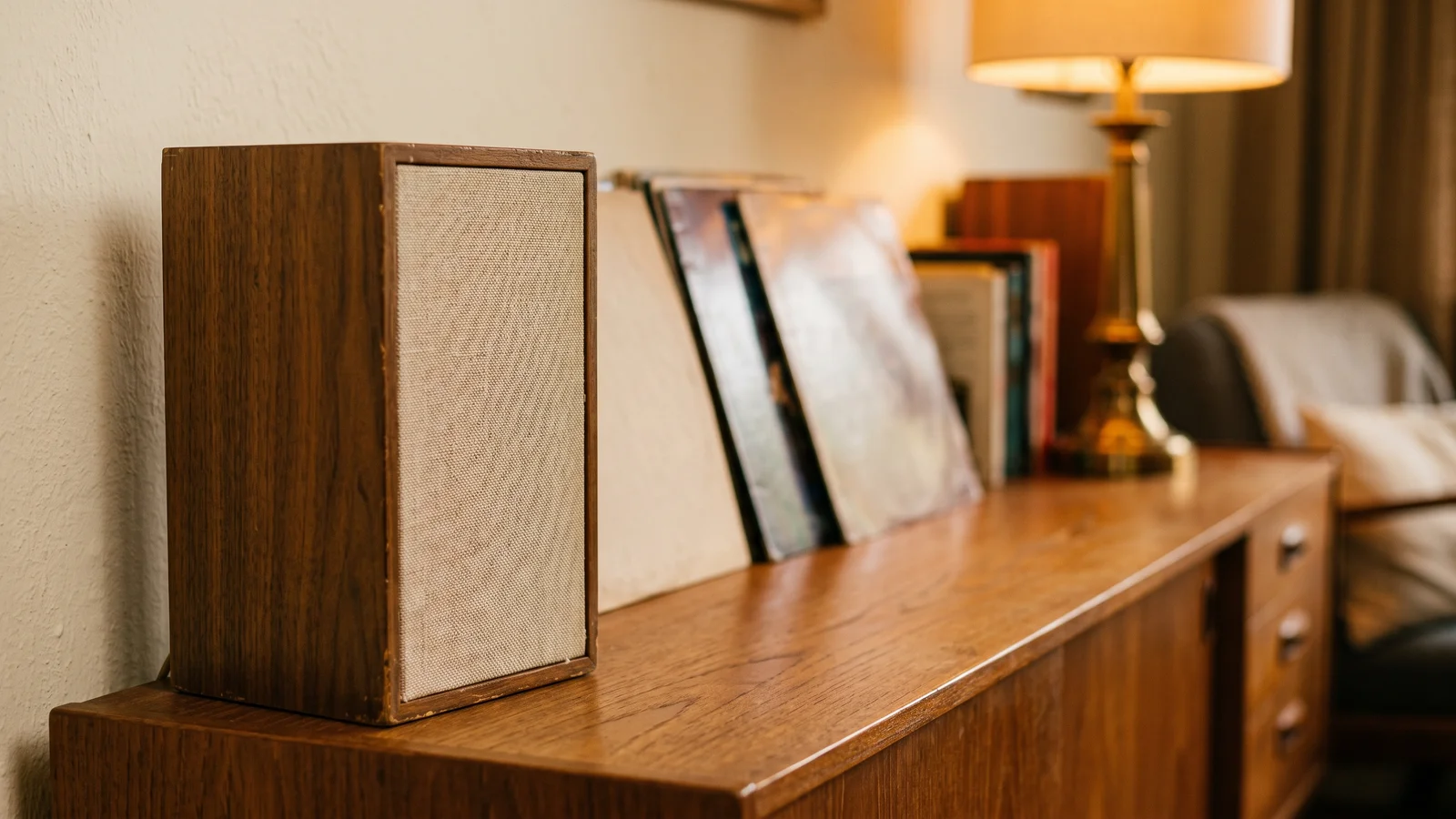
For one stretch in the 1960s, a small Cambridge company sold roughly a third of every speaker in America. Then it got bought, resold, and hollowed to a nameplate. This is the story of Acoustic Research.
There's a number I keep coming back to when people ask about the golden age of American speakers. One-third. For a stretch in the mid-1960s, a single company in Cambridge, Massachusetts sold roughly a third of every loudspeaker bought in the United States. One company. Not a conglomerate with a dozen factories. A founder-run engineering house that started in a loft.
That company was Acoustic Research, and most people under fifty have never heard of it. The ideas it shipped are still in the speaker on your shelf and the turntable in your rack. The name is still for sale, too, stuck on budget Bluetooth gear. But the company that earned the name is long gone. This is how that happens.
Key Takeaways
- Acoustic Research was incorporated in 1954 in Cambridge, Massachusetts by Edgar Villchur, after every established maker refused to license his invention.
- Its AR-3 (1958) introduced the first commercially available dome midrange and dome tweeter; an AR-3 now lives in the Smithsonian.
- AR held roughly 32% of the US speaker market by 1966, as reported by Stereo Review, the highest share any speaker maker has ever held.
- Villchur sold AR to Teledyne in 1967; the brand later passed through Jensen, Recoton, and Audiovox, which paid about $40 million in 2003.
- Today "Acoustic Research" is a VOXX-owned budget and Bluetooth nameplate, not a continuation of the original company.
What happened to Acoustic Research?
Acoustic Research is effectively gone. The company Edgar Villchur incorporated in Cambridge, Massachusetts in 1954 once held roughly 32% of the US loudspeaker market by 1966, as reported by Stereo Review and recounted in later histories, but the original engineering firm is defunct. The name survives only as a VOXX-owned budget nameplate.
The full arc is short and brutal. AR invented its way to the top of the industry in about a decade, then Villchur sold it in 1967 and walked away. From there the name changed hands again and again, each owner a little further from the loft in Cambridge. The engineering that made AR matter stayed brilliant. The company holding the trademark stopped being the company that did the engineering. Those are two different things, and telling them apart is the whole point of this piece.
I'll say the fair part up front. AR's technical legacy is genuine and enormous. The dome tweeter, the sealed-box woofer, the spring-suspended turntable: those are still standard ideas in gear you can buy right now. The tragedy here isn't about the sound. It's about the boardroom.
Why did Acoustic Research exist at all?
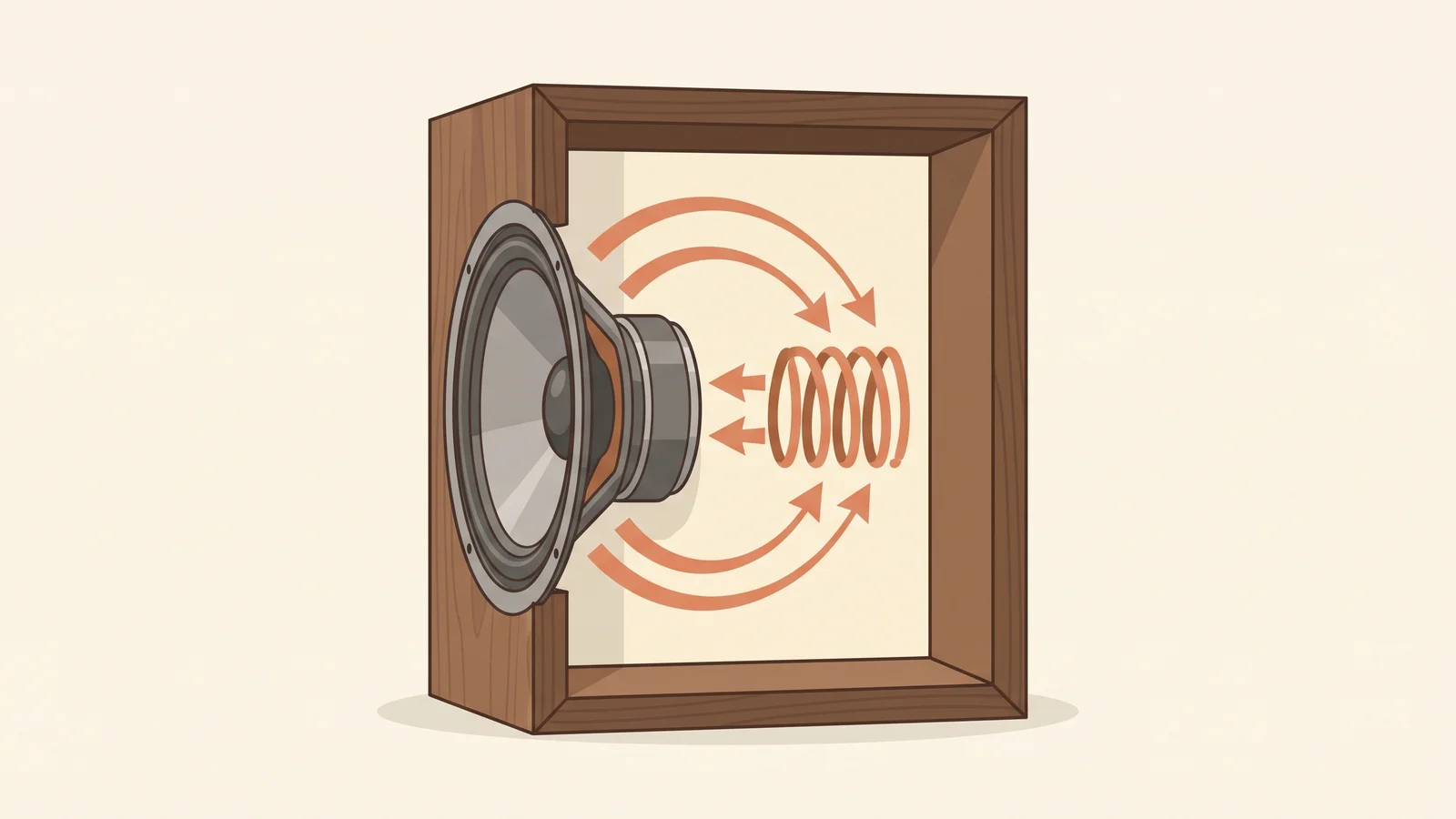
Acoustic Research existed because the rest of the industry said no. Edgar Villchur invented the acoustic-suspension loudspeaker, patented as U.S. Patent 2,775,309, and first tried to license the design to established makers. Every one of them turned him down, according to his biographers. So in 1954 he built the company himself.
That rejection is the origin story. Before AR, deep bass meant a big box, because the woofer relied on the room and the cabinet to control its motion. Villchur's trick was to seal a small enclosure and let the trapped air itself act as the spring behind the cone, as the acoustic-suspension principle is described. Small box, low distortion, real bass. It sounds obvious now. In 1954 it sounded impossible, which is why nobody would license it.
Villchur didn't do it alone. His student, Henry Kloss, supplied the loft space, the cabinet-making operation, and the capital that got AR off the ground. That partnership matters, and both men get their own full stories in this series: Villchur's own arc runs alongside Kloss's. Kloss and his partners left in 1957 to found KLH, licensing the same acoustic-suspension principle out into the wider industry, where it went on to shape a generation of influential speakers. AR kept the patent. Kloss kept moving. Both changed audio permanently.
What was the AR-3, and why did it change everything?
The AR-3, introduced in 1958, is the product that earns the phrase "changed everything." It paired Villchur's sealed-box bass with the first commercially available dome midrange and dome tweeter, as Sound & Vision documents, and an AR-3 now sits in the Smithsonian's collection. Dome drivers are still standard on serious speakers today.
Back up two products, though, because the AR-3 didn't come from nowhere. The AR-1 of 1954, at around $185, was the first speaker to commercialize acoustic suspension, and it proved a small box could do real low end. The AR-2 followed in 1957 at roughly $87 and earned a Consumer Reports "Best Buy," which put AR sound in reach of ordinary buyers, per the company's product record. Cheap, honest, and it measured well. That combination was rare then and it's rare now.
The AR-3 was the summit of that run. A dome radiates sound more evenly across a wide angle than the horns and cones most rivals used, so the AR-3 threw a broad, stable soundstage that made competitors sound boxy. Later refinements like the AR-2ax and the AR-3a arrived in the mid-1960s and tightened the formula further. I'll keep those dates soft on purpose, because sources disagree on exact ship years, and I'd rather be right than precise. What isn't in dispute is the influence. Open a modern bookshelf speaker and you're looking at Villchur's grandchildren.
Could anyone actually tell the speakers from a live quartet?
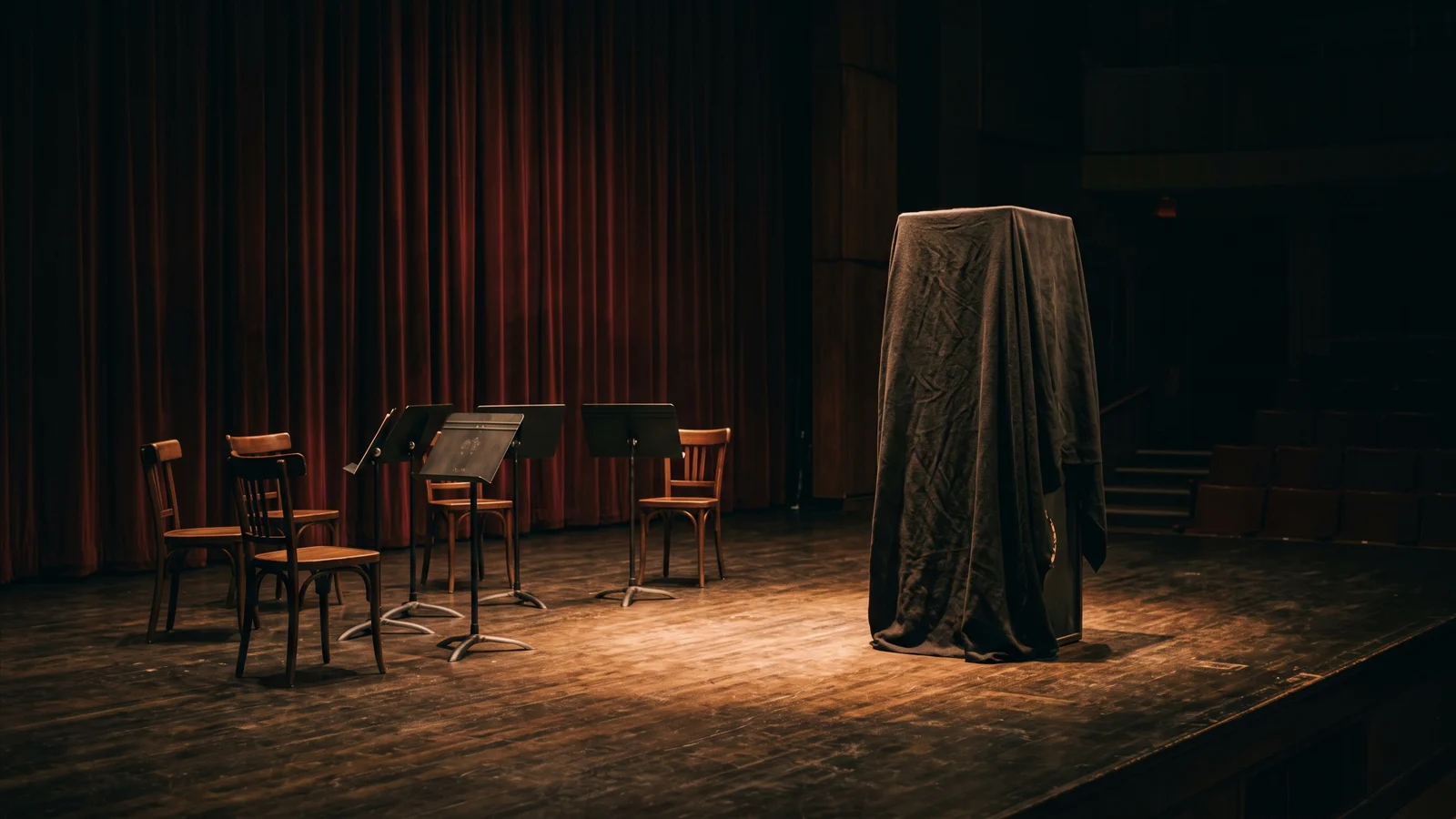
Here's how AR settled the argument: it put its speakers on stage against live musicians. In the early 1960s the company ran more than 75 concert demonstrations pairing a live string quartet against the same music played through AR-3s, and audiences reportedly couldn't reliably tell which was which, as period accounts and later histories record. That's about as bold as marketing gets.
The demos toured real concert halls, with the Fine Arts Quartet playing a passage live, then a recording of that same passage coming through hidden AR-3s while the players sat silent. Listeners were asked to spot the switch. Many couldn't. Now, I'd take any "indistinguishable from live" claim with a grain of salt, because room acoustics and recording quality do a lot of quiet work in a demo like that. But the fact that AR would even attempt it, night after night, in front of critical listeners, tells you how much faith the company had in the gear. You don't stage that fight unless you're pretty sure you'll win.
How did Acoustic Research get so big?
By 1966 Acoustic Research controlled roughly one-third of the entire US speaker market, about 32%, as reported by Stereo Review and cited in later histories. No speaker maker before or since has held that big a slice. That figure is reported, not independently audited, so treat it as the era's best estimate rather than a certified number. Either way, it's staggering.
AR got there by widening out from speakers into whole systems. The AR-XA turntable of 1961, at around $58, brought a spring-suspended subchassis to the mass market, isolating the platter and arm from footsteps and vibration, as The Absolute Sound recounts. That single design idea echoed for decades. The AR-XA is widely credited as the direct design ancestor of the Linn LP12, whose own design history traces back to it, and the LP12 is still in production today.
So picture the mid-1960s AR catalog: a "Best Buy" speaker, a reference speaker in a museum, and a turntable that reinvented the category. Honest gear, fairly priced, sold on demonstrable merit rather than hype. That's how you take a third of a market. It's also, as it turns out, a much easier position to build than to keep.
Who owns Acoustic Research now?
Acoustic Research today is a nameplate, not a company. Villchur sold AR to the conglomerate Teledyne in June 1967, per his obituary, and after a long chain of owners, Audiovox bought the audio brands out of Recoton's 2003 bankruptcy for about $40 million, according to TWICE. Audiovox later became VOXX International.
Follow the chain and you watch a company turn into a logo. When Villchur sold to Teledyne, he signed a non-compete and moved into hearing-aid research, work later honored in tributes to him. Teledyne ran AR for two decades, then sold it to International Jensen in the late 1980s, around 1989, though sources vary on the exact date. Jensen's audio brands went to Recoton in 1996. Recoton filed Chapter 11 in April 2003, and Audiovox scooped up AR, Jensen, and Advent together for roughly $40 million plus assumed debt. Audiovox became VOXX International, which owns the AR name to this day.
Here's where the name lives now. VOXX sells "Acoustic Research" as budget and Bluetooth gear, including outlet-style wireless speakers, as its own product releases show. The name has also turned up on unrelated licensed products over the years, like a portable hi-res music player, which Stereophile reviewed under the AR badge. None of that traces back to a factory in Cambridge or an engineer bench-testing against a string quartet. There's no design lineage left. There's a trademark.
Let me be careful and fair here, because this is where lazy takes go wrong. AR's engineering legacy is real, and it's everywhere. The critique isn't that domes or sealed boxes stopped working. They didn't. The point is what happened to the company. A founder-run Cambridge engineering house that once beat live musicians in a fair fight got bought, resold, and eventually bankrupted down to a badge on Bluetooth gear with no factory and no design team behind the name. That slow hollowing of a great name into a cheap sticker is what writer Cory Doctorow calls enshittification, and audio brands are textbook cases.
That's the opposite of what we do. We build every speaker by hand in our Arizona workshop and ship each one with a birth certificate signed by the person whose name is on the shop. No licensing office. No holding company. AR proved its speakers against a live quartet because it could stand behind them. Fifty years later, that's still the only standard I care about.
Frequently Asked Questions
What happened to Acoustic Research?
The original Acoustic Research is defunct. Founded in 1954 by Edgar Villchur, it once held about 32% of the US speaker market, then Villchur sold it to Teledyne in 1967. The brand later passed through Jensen, Recoton, and Audiovox. Today it survives only as a VOXX-owned budget and Bluetooth nameplate.
Who invented the acoustic-suspension speaker?
Edgar Villchur invented the acoustic-suspension loudspeaker, patented as U.S. Patent 2,775,309. It uses the trapped air in a small sealed cabinet as a spring to control the woofer, producing low-distortion deep bass from a compact box. Every established maker refused to license it, so Villchur founded Acoustic Research in 1954 to build it himself.
Who owns the AR brand now?
VOXX International owns the Acoustic Research name today. After Villchur sold to Teledyne in 1967, the brand moved to International Jensen around 1989, then Recoton in 1996. When Recoton went bankrupt in 2003, Audiovox bought the audio brands for about $40 million. Audiovox later renamed itself VOXX International.
What was the AR-3?
The AR-3, introduced in 1958, was Acoustic Research's landmark speaker and the product most credited with changing the industry. It combined Villchur's sealed-box acoustic-suspension bass with the first commercially available dome midrange and dome tweeter. An AR-3 is held in the Smithsonian's collection, and dome drivers remain standard on serious speakers today.
Why was Acoustic Research important?
Acoustic Research made accurate, affordable sound mainstream. Its acoustic-suspension design gave real bass from small boxes, its dome drivers set a new standard for even dispersion, and its AR-XA turntable influenced decades of designs, including the Linn LP12. By 1966 it held roughly a third of the US speaker market, the highest share ever recorded.
Sources
- Wikipedia, "Acoustic Research": https://en.wikipedia.org/wiki/Acoustic_Research
- Wikipedia, "Edgar Villchur": https://en.wikipedia.org/wiki/Edgar_Villchur
- Wikipedia, "Acoustic suspension": https://en.wikipedia.org/wiki/Acoustic_suspension
- Wikipedia, "Voxx International": https://en.wikipedia.org/wiki/Voxx_International
- Sound & Vision, "Acoustic Research AR-3 Loudspeaker": https://www.soundandvision.com/content/acoustic-research-ar-3-loudspeaker
- Stereophile, "Acoustic Research 303 Loudspeaker": https://www.stereophile.com/content/acoustic-research-303-loudspeaker
- Stereophile, "Acoustic Research AR-M2 Portable Music Player": https://www.stereophile.com/content/acoustic-research-ar-m2-portable-music-player
- The Absolute Sound, "Acoustic Research AR-XA Turntable": https://www.theabsolutesound.com/articles/acoustic-research-ar-xa-turntable
- Wikipedia, "Linn Sondek LP12" (AR-XA design lineage): https://en.wikipedia.org/wiki/Linn_Sondek_LP12
- TWICE, "Audiovox Wins Recoton Audio Bid" (2003): https://www.twice.com/news/audiovox-wins-recoton-audio-bid-36868
- Hearing Health Matters, "Edgar Villchur ... Dies at 94" obituary (2011): https://hearinghealthmatters.org/hearing-news-watch/2011/edgar-villchur-audio-inventor-who-changed-the-hearing-care-field-dies-at-94/
- The Hearing Review, "Hearing Aid and Audio Innovator Edgar M. Villchur Dies at 94": https://hearingreview.com/hearing-products/accessories/components/hearing-aid-and-audio-innovator-edgar-m-villchur-dies-at-94
- KLH Audio, "History" (influential acoustic-suspension speakers): https://klhaudio.com/pages/history
- PR Newswire (VOXX / Acoustic Research), "Acoustic Research Introduces Bluetooth Outlet Speaker": https://www.prnewswire.com/news-releases/acoustic-research-introduces-bluetooth-outlet-speaker-238921681.html
- AURAL HiFi, "The History of Acoustic Research": https://www.auralhifi.com/blogs/news/the-history-of-acoustic-research
Mike Vincent is the founder of Mike Knows Audio Video and WubWub Audio, where he designs and hand-builds custom loudspeakers and home theaters in Arizona, the old way, for about fifteen clients a year. He has enormous respect for the engineers who once put their speakers on a stage against a live quartet; if you want that kind of prove-it-by-listening speaker, built by hand and signed off in person, start with our custom loudspeakers.
Comments
Leave a Comment