
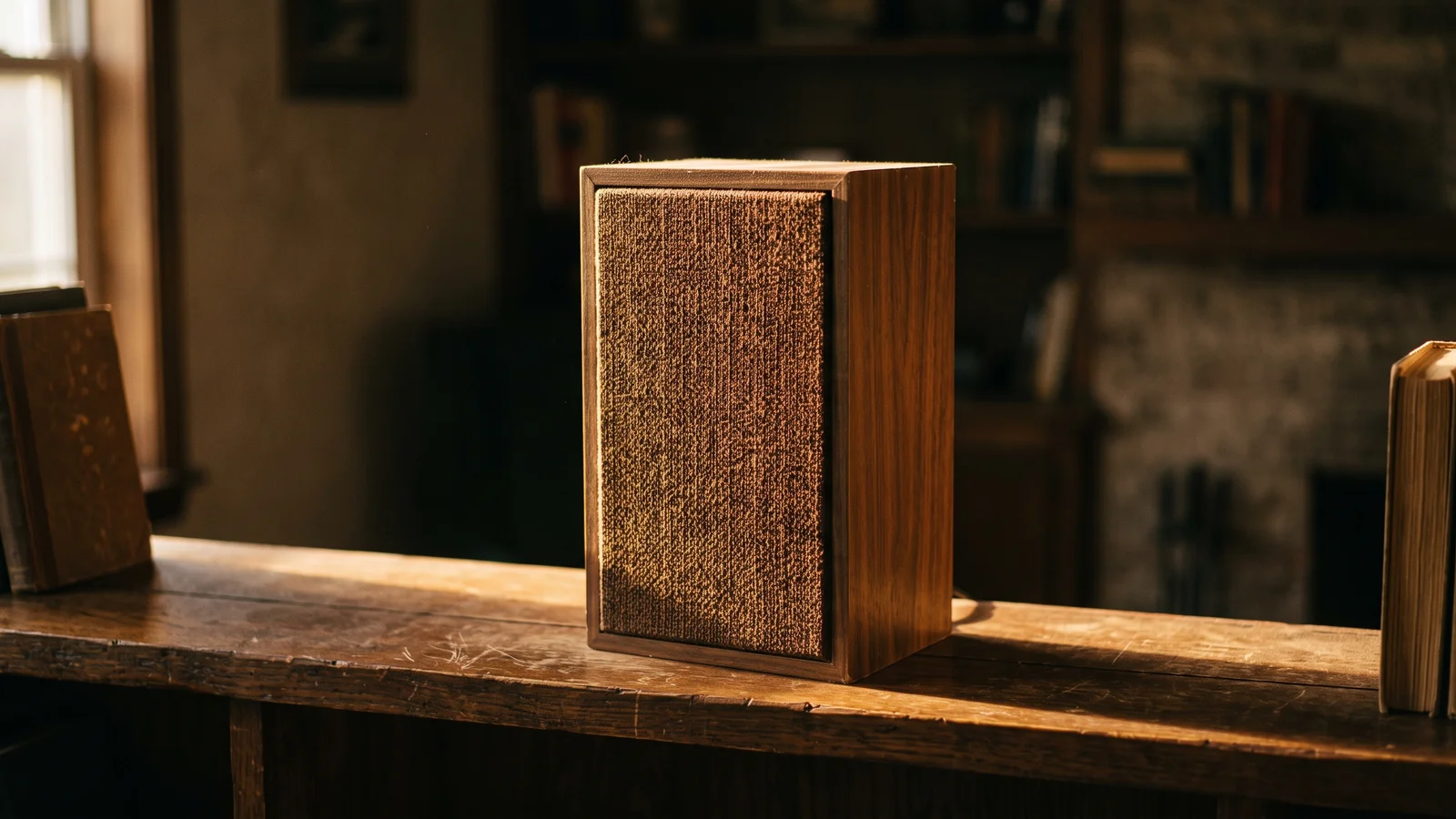
A respected American speaker brand wasn't offshored or slowly diluted. It was simply acquired, then switched off in silence. This is the Boston Acoustics story.
Most brands that die give you a warning. There's a fire sale, a factory move overseas, a couple of embarrassing years where the products get cheaper and you can hear it. Boston Acoustics didn't get any of that. One year the speakers were on dealer shelves, well-reviewed and selling. The next year the shipments just stopped, and nobody said a word.
That's the part that sticks with me. I build speakers for a living, so I've watched a lot of good American brands get bought and hollowed out. This one's different. Boston Acoustics wasn't ruined. It was switched off. A respected Massachusetts company got acquired, shuffled between conglomerates, and quietly euthanized once it stopped being useful to whoever owned it that year. No obituary. Just silence. Let me walk you through how the cleanest tragedy in American audio actually happened.
Key Takeaways
- Boston Acoustics was founded in 1979 in Lynnfield, Massachusetts, by Andy Kotsatos and Frank Reed, both former Advent Corporation people.
- It earned a reputation as one of America's best value-per-dollar speaker brands of the 1980s and 1990s, from the A-series to the premium Lynnfield reference line.
- D&M Holdings acquired the company in June 2005 for about $76 million, at $17.50 a share.
- Around June 2018, after D&M rolled into Sound United, dealer shipments quietly halted with no press release, according to trade and enthusiast reporting.
- Today Boston Acoustics is a dormant nameplate, passed to Masimo in 2022 and then to Samsung's Harman in September 2025, with no active engineering or production.
Who founded Boston Acoustics, and what did they stand for?
Boston Acoustics was founded in 1979 in Lynnfield, Massachusetts, by Andy Kotsatos and Frank Reed, two former Advent Corporation employees who set out to build high-value American speakers, according to the company's history record. Kotsatos was the speaker designer. Reed ran sales and marketing. Their founding ethos was blunt: quality matters more than a low price.
That Advent lineage is the whole key to understanding this brand. Kotsatos had worked on the original Advent Loudspeaker under Henry Kloss, the man who made great sound affordable for regular Americans, as company histories document. So when he started Boston Acoustics, he wasn't chasing exotic price tags. He was chasing honest performance you could actually afford. That's a Massachusetts hi-fi tradition, and he carried it forward.
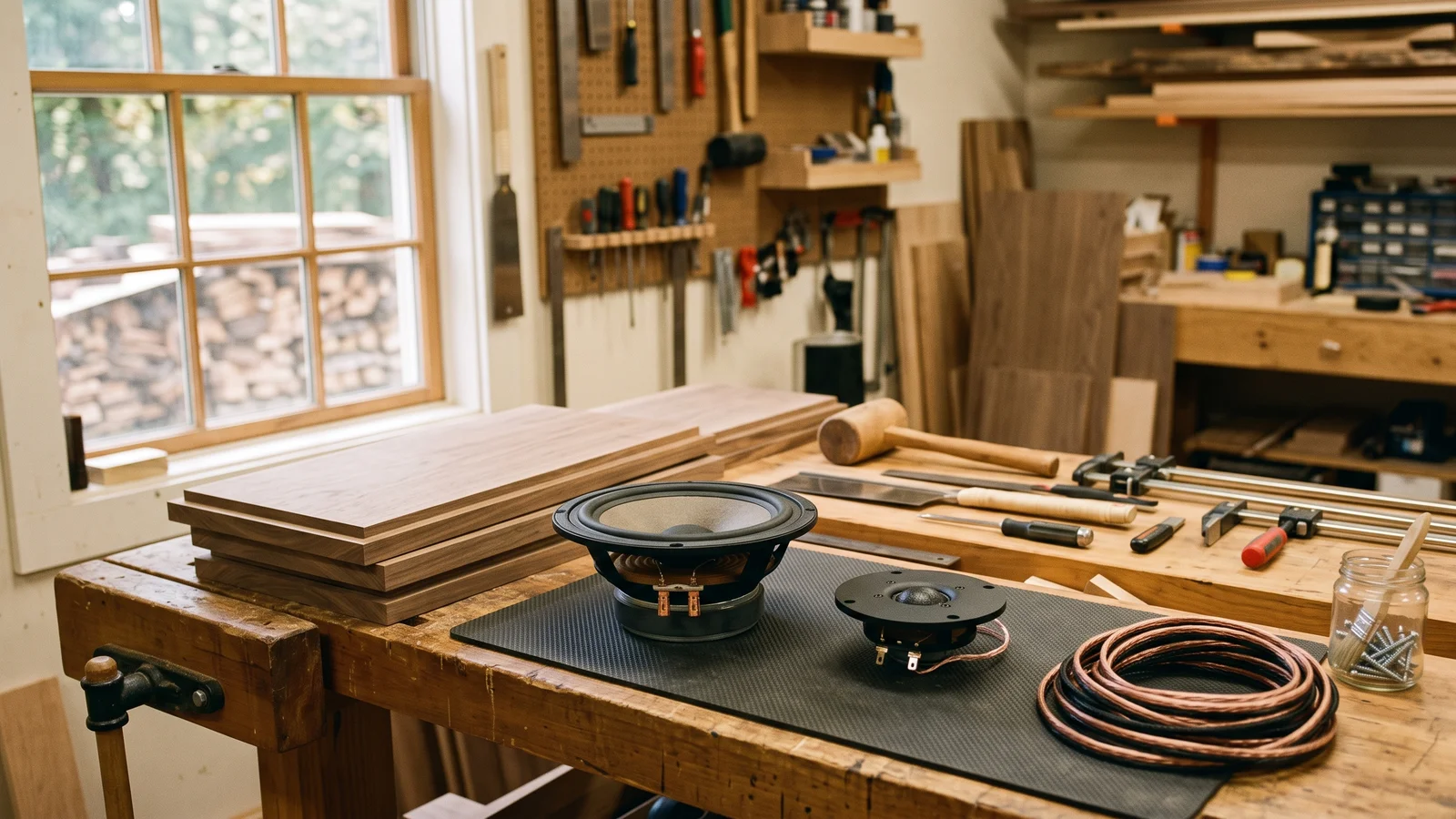
Here's what I respect about that starting point. Anybody can build a great speaker if money is no object. Building a great speaker that a working family can buy is harder, and it's the more useful skill. The founders reportedly ran the shop on the idea that value came first, per company-history accounts. That's a philosophy, not a marketing line, and you could hear it in the products for the next twenty-five years.
What made Boston Acoustics speakers so good?
Boston Acoustics built its name on value-per-dollar bookshelf and tower speakers, and its A-series became a benchmark that budget-audio buyers and reviewers pointed to for years, as enthusiast and press histories record. The A40, the A60 and A70, the A150: these were the speakers people recommended when a friend had real ears but a normal budget.
The range went deeper than the affordable stuff, too. There was the CR bookshelf series for compact rooms, and above it sat the premium Lynnfield line, named for the company's hometown, along with the VR and VR-M reference models, as brand histories note. Those reference speakers were the company flexing, showing it could compete on outright sound quality and not just price. I've heard a fair number of these over the years. The house sound was clean, balanced, and honest, never hyped.
Boston Acoustics didn't stop at home speakers, either. It entered car audio in 1983 and built a genuine following there with its Pro, Z, and SPZ lines, and starting in 1997 it landed a big PC-speaker OEM deal, bundling speakers with computers from makers such as Gateway, as the company history documents. You may not have known you owned Boston Acoustics, but a lot of people did. The brand ended up in cars, on desks, and in living rooms all at once. Not many speaker companies pull that off.
How did Boston Acoustics grow into a household name?
Boston Acoustics grew fast enough to go public, holding its IPO on NASDAQ in 1986, only seven years after two ex-Advent guys started it, as company histories record. By the late 1990s it was a full-line audio company with home, car, and computer speakers, and it moved its headquarters from Lynnfield to Peabody in 1995, then later to Woburn.
The Gateway-era OEM business is worth pausing on, because it tells you how the industry was shifting. Bundling speakers with mass-market PCs meant huge volume at thin margins, per company-history accounts. That's a very different business from selling a $400 pair of A-series bookshelves to an enthusiast through a dealer. Volume looks great on a spreadsheet. It also quietly changes what a company is, and it makes the brand attractive to buyers who care more about distribution and shelf space than about the sound.
And that, in the end, is what made Boston Acoustics a target. By the mid-2000s it was a respected name with strong dealer relationships and real shelf presence. To an audiophile, that's a legacy. To a holding company, that's an asset to be acquired. The next chapter is where a good brand's reputation becomes the very thing that gets it bought and, later, put down.
What happened to Boston Acoustics?
Boston Acoustics stayed independent from 1979 until June 2005, when D&M Holdings, the parent of Denon and Marantz, agreed to acquire it for $17.50 per share, valuing the deal at roughly $76 million, as trade press reported at the time and reflected in the company's SEC filings, per the EDGAR record. That's the moment the workbench became a line item.
For a while, not much visibly changed. D&M kept the brand alive, and Boston Acoustics went on making good speakers, as industry coverage of the deal noted. Then the ownership music kept playing. In 2017, D&M was rolled into Sound United, the audio group that also owned Polk Audio and Definitive Technology, as Sound United's corporate history records. And that's where the arithmetic turned against Boston Acoustics.
Think about what Sound United now had on the shelf: Polk, Definitive Technology, and Boston Acoustics, three American speaker brands all fishing in overlapping waters. When you own three brands that compete with each other, one of them is redundant. According to trade and enthusiast reporting, around June 2018 Sound United quietly stopped shipping Boston Acoustics product to dealers, as later discussed in community forums such as Polk Audio's own boards. There was no discontinuation announcement. No farewell. The speakers just stopped arriving, and the brand went dark. The absence of any official statement is, honestly, the loudest part of the whole story.
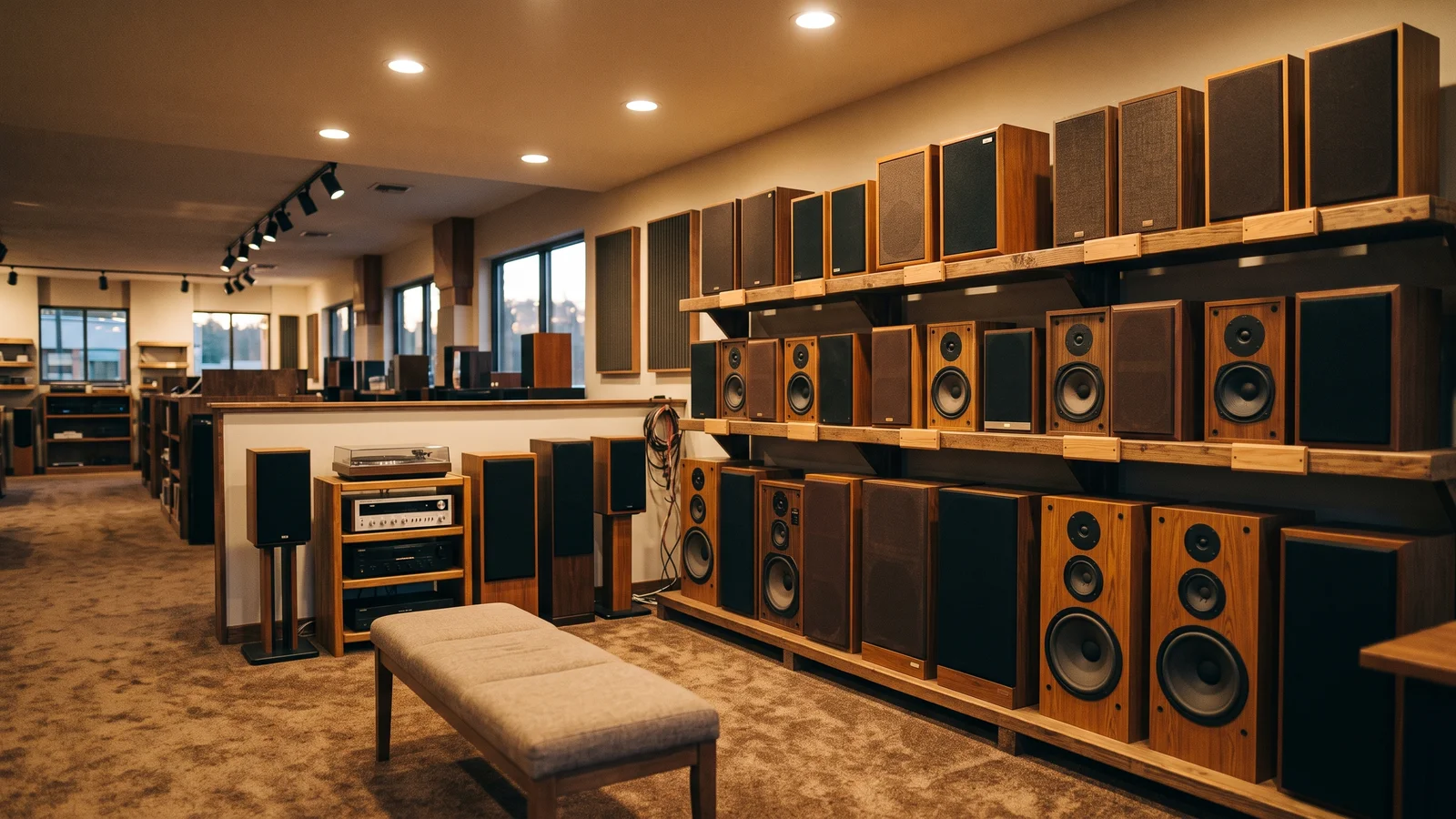
Who owns Boston Acoustics now, and are the speakers still made?
Boston Acoustics today is a dormant nameplate with no active engineering or production, and it has since been sold twice more as a dead asset: to the medical-device maker Masimo, which bought Sound United in 2022 for about $1.03 billion, and then to Samsung's Harman, which completed its purchase on September 23, 2025, for roughly $350 million, as Harman confirmed in its official announcement. Boston Acoustics was named in the transferred portfolio. Nobody bought it to revive it.
That ownership chain reads like a punchline nobody meant to write. A New England speaker company founded by two Advent alumni ends up owned by a pulse-oximetry company, as trade press reported when Masimo made the buy, and is then flipped to a Korean electronics giant, as Forbes covered the Harman deal and What Hi-Fi reported on Masimo's exit from consumer audio. Through all of it, the brand made nothing new. The last real products were the A25 bookshelf and the A360 towers, and by most accounts those were good speakers right to the end.
Now let me be fair, because this matters. This isn't the usual story where a brand gets offshored and the products slowly turn to junk while the name keeps selling. Boston Acoustics made honest speakers up to the very last models. The tragedy isn't declining quality. The tragedy is that a company can be good, respected, and still simply switched off because it competes with a sibling brand on the same conglomerate's balance sheet. Buy the name for its shelf space and dealer relationships, then extinguish it once it's inconvenient. Acquire, then euthanize. The writer Cory Doctorow has a name for the broader pattern where platforms and brands get squeezed for value until nothing worthwhile is left: enshittification. Boston Acoustics is the version where they skip the squeezing and go straight to the off switch.
Here's why some of us still build the old way, and it's not nostalgia. A brand that lives on a holding company's ledger can be sold, merged, and shut down by people who never heard it play. That can't happen to a workbench. We build custom speakers by hand in our Arizona workshop, a small batch a year, each pair signed off by the person whose name is on the shop and shipped with a birth certificate. You can't acquire that and switch it off, because it isn't a portfolio asset. It's a person's craft. That's the whole difference, and Boston Acoustics is why it's worth saying out loud.
Frequently Asked Questions
What happened to Boston Acoustics?
Boston Acoustics was acquired by D&M Holdings in 2005, then rolled into Sound United in 2017. Around June 2018, according to trade and enthusiast reporting, Sound United quietly stopped shipping the speakers to dealers with no press release or discontinuation announcement. The brand went dormant and has made no new products since.
Who owns Boston Acoustics now?
Boston Acoustics is owned by Samsung's Harman division, which completed its purchase of Sound United on September 23, 2025, for about $350 million. The brand had previously belonged to D&M Holdings from 2005, then Sound United from 2017, then the medical-device maker Masimo, which bought Sound United in 2022 for roughly $1.03 billion.
When did Boston Acoustics shut down?
There is no official shutdown date, and that absence is part of the story. Trade and enthusiast reporting indicates Sound United quietly halted dealer shipments around June 2018, with no press release or formal discontinuation. The company was never publicly wound down. It simply stopped shipping product and became a dormant nameplate.
Are Boston Acoustics speakers still made?
No. Boston Acoustics is a dormant nameplate with no active engineering or production, and there have been no new products since around 2018. The final models were the A25 bookshelf and A360 tower speakers, which by most accounts were good speakers to the end. Existing units still trade on the used market.
Who founded Boston Acoustics?
Boston Acoustics was founded in 1979 in Lynnfield, Massachusetts, by Andy Kotsatos, the speaker designer, and Frank Reed, who ran sales and marketing. Both were former Advent Corporation employees, and Kotsatos had worked on the original Advent Loudspeaker. Their founding ethos was that quality mattered more than a low price.
Sources
- Wikipedia, "Boston Acoustics": https://en.wikipedia.org/wiki/Boston_Acoustics
- Encyclopedia.com, "Boston Acoustics, Inc." (company history): https://www.encyclopedia.com/books/politics-and-business-magazines/boston-acoustics-inc
- FundingUniverse, "Boston Acoustics, Inc. History": http://www.fundinguniverse.com/company-histories/boston-acoustics-inc-history/
- U.S. Securities and Exchange Commission, EDGAR filings for Boston Acoustics: https://www.sec.gov/cgi-bin/browse-edgar?action=getcompany&company=boston+acoustics&type=8-K&dateb=&owner=include&count=40
- Audioholics, "D&M Holdings Acquires Boston Acoustics": https://www.audioholics.com/news/dm-holdings-acquires-boston-acoustics
- Sound & Vision, "D&M to Acquire Boston Acoustics": https://www.soundandvision.com/content/dm-acquire-boston-acoustics
- Stereophile, "Sound United Finds a New Home: HARMAN": https://www.stereophile.com/content/sound-united-finds-new-home-harman
- Polk Audio community forums (enthusiast discussion of the quiet shutdown): https://forum.polkaudio.com/discussion/182985/rip-boston-acoustics
- HARMAN, "HARMAN Completes Sound United Acquisition": https://news.harman.com/releases/harman-completes-sound-united-acquisition-to-expand-premium-audio-leadership
- Masimo Investor Relations, "Masimo to Sell Consumer Audio Business to HARMAN International": https://investor.masimo.com/news/news-details/2025/Masimo-to-Sell-Consumer-Audio-Business-to-HARMAN-International/default.aspx
- Strata-gee, "Masimo Completes Sale of Sound United to Harman": https://www.strata-gee.com/masimo-completes-sale-of-sound-united-to-harman/
- Forbes, coverage of Harman's purchase of the Masimo consumer-audio brands: https://www.forbes.com/sites/marksparrow/2025/09/23/harman-seals-the-deal-and-buys-up-denon-marantz-bower--wilkins-polk-and-more/
- What Hi-Fi, "Harman is buying Bowers & Wilkins, Marantz and Denon as Masimo sells its consumer audio business": https://www.whathifi.com/hi-fi/harman-is-buying-bowers-and-wilkins-marantz-denon-and-others-as-masimo-sells-its-consumer-audio-business
- U.S. Securities and Exchange Commission, Masimo Form 8-K exhibit (2022, Sound United acquisition): https://www.sec.gov/Archives/edgar/data/937556/000093755622000024/masi-20220215xex991.htm
Mike Vincent is the founder of Mike Knows Audio Video and WubWub Audio, where he designs and hand-builds custom loudspeakers and home theaters in Arizona, the old way, for about fifteen clients a year. He has a hard time forgiving conglomerates that switch off a good American brand without so much as a goodbye; if you want a speaker that answers to a person and not a portfolio, start with our custom loudspeakers.
Comments
Leave a Comment