
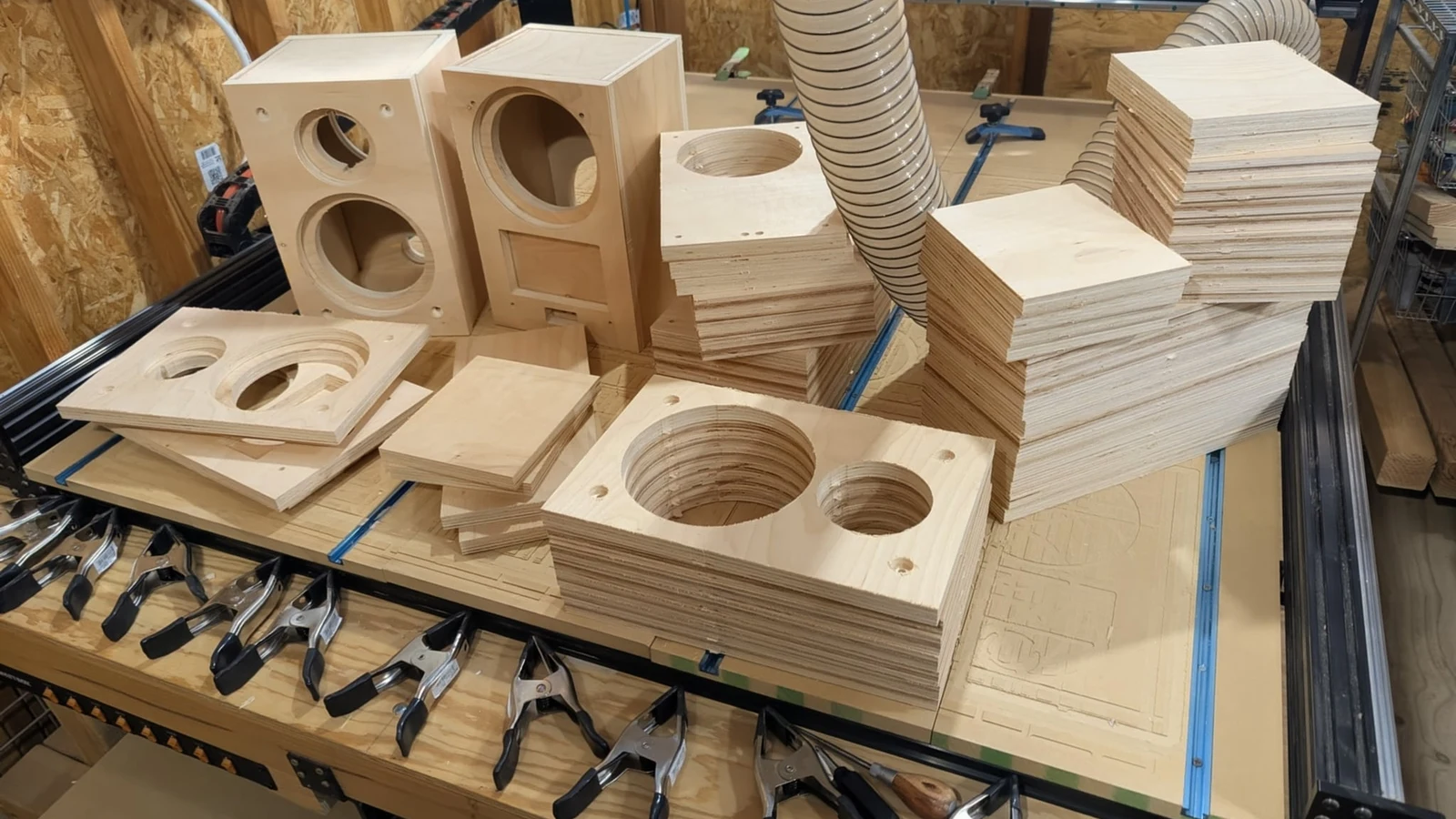
The industry got bought, offshored, and turned into logos. We do it the old way on purpose: hand-built, Made in the USA, for about fifteen clients a year.
This whole series has been one long autopsy. Fifty stories about brilliant little audio companies that got bought, gutted, offshored, and hollowed into logos. You've read the receipts by now: the founders pushed out, the "Made in" label quietly swapped, the sound sold off like a used car. So here's the fair question to turn back on me. If the old way was so great, why did almost everybody abandon it? The honest answer is that they didn't have to. We build speakers by hand in our Arizona workshop, Made in the USA, for about fifteen clients a year. On purpose. Here's why we never joined the parade.
Key Takeaways
- We hand-build custom loudspeakers to order in our Arizona workshop, Made in the USA, for roughly 15 clients a year on purpose.
- "Made in USA" is a legal claim: the FTC requires a product be "all or virtually all" made in the United States (FTC).
- Small-batch means the person who designs and voices your speaker is the same person accountable for it.
- Every speaker ships signed and numbered with a birth certificate and a 10-year warranty; clients follow the build in real time through our online portfolio.
- Build timeline runs 6 to 12 weeks or more, depending on size and complexity.
Why build speakers by hand when machines are faster?
Because the fast way is exactly what turned a golden age into a graveyard of nameplates. We build roughly fifteen client systems a year, by hand, and that number is a decision, not a limitation. When you scale a speaker company for volume, the sound becomes a cost center. When you keep it small, the sound stays the whole point.
I've had a lot of vintage gear on my bench over the years, and you can feel the difference between something a person cared about and something a spreadsheet approved. The old stuff was overbuilt. Heavier cabinets than the price justified. Better crossover parts than anyone would ever see. That care is the first thing that gets value-engineered out when a brand goes corporate, because a customer can't spot it in a showroom. So we do the opposite. We put the care exactly where you can't see it, and trust that your ears will.
There's nothing romantic about it, honestly. Building by hand is slower, it's harder, and it doesn't scale. That's the feature. A machine can stamp out a thousand identical boxes an hour. It can't listen to a driver and decide it's not quite right. When the industry chose the machine, it chose the thousand boxes. We'd rather have the ear.
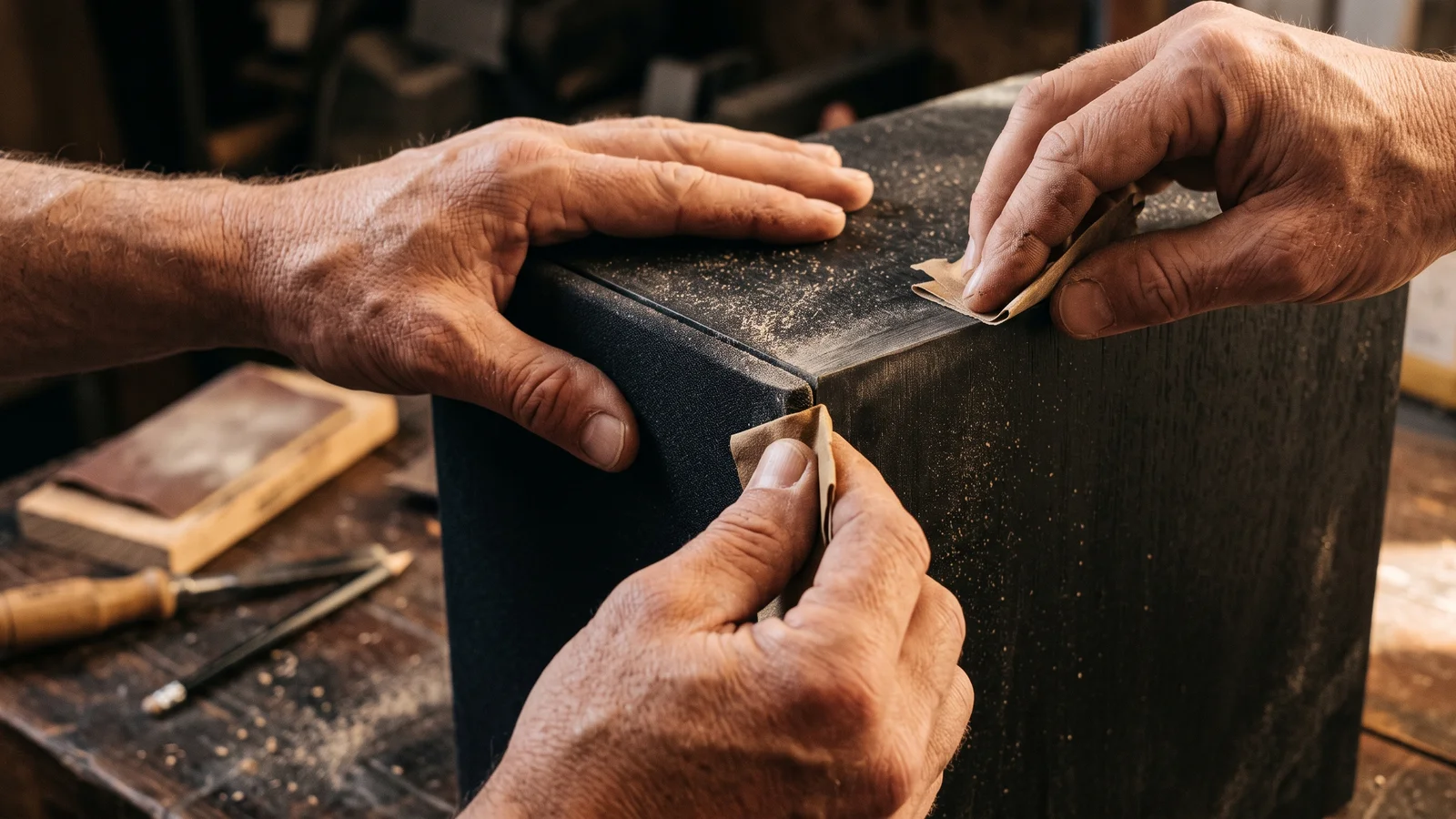
What does "Made in the USA" actually mean?
It means something specific, legally. The Federal Trade Commission requires that a product labeled "Made in USA" be "all or virtually all" made in the United States, with all significant parts and processing domestic (FTC). In July 2021 the FTC finalized a rule letting it fine companies that lie about it. So the phrase isn't marketing garnish. It's a standard.
That distinction matters more than it sounds. A lot of "designed in America" gear is assembled from overseas parts on an overseas line, then wrapped in a red-white-and-blue box. The label technically dodges the rule. What you're buying is a font and a flag. When we say Made in the USA, we mean the cabinet, the assembly, the finishing, and the voicing all happen here, in our Arizona workshop, in the high desert. Not a marketing office in one country and a contract factory in another.
Here's the part the industry hopes you forget. When you separate the people who design a speaker from the people who build it, something gets lost in the handoff. A border. A spreadsheet. A translation. The fans always notice, and they're rarely wrong. Keeping design and build under one roof isn't a patriotic pose. It's the only structure that reliably protects a sound from the accountants.
What did the golden-age founders actually get right?
They got the incentive right. Henry Kloss spent his career chasing great sound normal people could afford, founding company after company on that single idea (Wikipedia). David Hafler sold Dynaco amplifier kits so honest and so cheap that audiophiles are still restoring them sixty years later (Wikipedia). Neither man was optimizing a quarter. They were building things they'd want to own.
Read back through this series and you'll notice the pattern under all the great ones. The founders signed their work. Sometimes literally, on a chassis or a label. Saul Marantz built the first Audio Consolette at his kitchen table before his Model 7 preamp sold more than 130,000 units. Paul Klipsch started in a shed in Hope, Arkansas. Edgar Villchur and Henry Kloss changed the whole shape of a loudspeaker out of a loft. None of them were huge. That was the secret, not a handicap.
What died wasn't the knowledge. We still know how to build a great speaker. What died was the ownership structure that let the person who cared stay in charge. Private equity didn't forget how to make good sound. It decided good sound wasn't worth the margin. The golden age wasn't magic. It was just companies that hadn't been eaten yet.
How does a hand-built WubWub speaker actually come together?
Slowly, and in a straight line from ear to bench. A build runs 6 to 12 weeks or more, depending on size and complexity, because voicing a speaker by hand can't be rushed to hit a ship date. That timeline isn't a backlog. It's the actual work: design, cabinet, drivers, crossover, finish, and listening, done in order and done once.
We build on-wall and tower speakers, never in-wall. That's a real engineering position, not a preference. A speaker built into your drywall inherits the cavity behind it, and you can't tune a cavity you didn't build. A proper cabinet is part of the instrument. The center channel lives under the TV or on the mantle where dialog belongs, we cap ceiling speakers at four, and our subwoofers are sealed for tight, honest low end instead of the boomy one-note thump ported boxes chase. These aren't limitations. They're the difference between a system that measures well and one that sounds right in your actual room.
If you're weighing a full custom loudspeaker build against a complete home theater system, the process is the same either way. We design for your room, build it here, and voice it before it ever leaves the bench. Every client follows the whole thing in real time through our online portfolio, photo by photo, without ever needing to visit. Mike keeps the workshop private, and the portfolio does the showing.
Why only about fifteen clients a year?
Because accountability doesn't scale, and we refuse to fake it. Fifteen client systems a year is small on purpose. It's the largest number where the person who designs and voices your speaker is still the person who answers for it. Push past that and you need a factory, a middle layer, and a QC department to catch what care used to catch for free.
Think about what "small-batch" really buys you. There's no assembly line where your speaker is unit number 40,000 of an identical run. There's no drift, where the drivers get a little cheaper each fiscal year and nobody tells the loyal buyer. Every pair gets built and listened to individually. When something isn't right, it doesn't ship, because there's no quota breathing down anyone's neck. That's a luxury volume manufacturing gave up decades ago, and it's the whole reason the sound survives here.
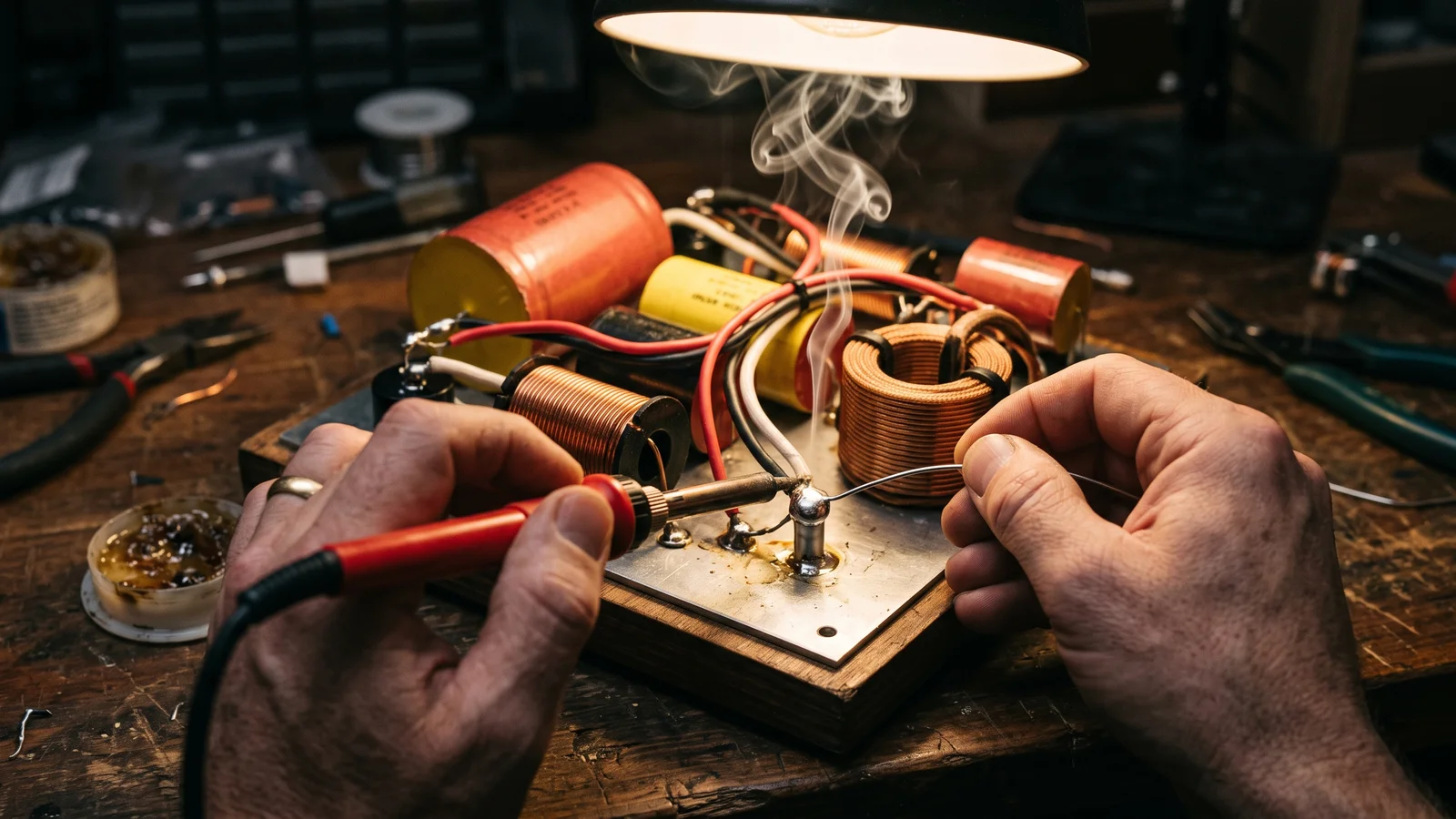
I'll be blunt about the tradeoff, since it's my name on this. Staying small means we turn work away, and it means we'll never be the cheap option. What it also means is that nobody upstairs can ever quietly swap your drivers to save forty cents a pair. There's no upstairs. That's the deal, and after watching this industry for years, I think it's the only deal worth making.
Why does a signed birth certificate matter?
Because a signature is accountability you can hold in your hand. Every speaker we ship comes signed and numbered with a birth certificate, and it carries a 10-year warranty. That document isn't a gift-shop touch. It's the founder's name attached to a specific object, the same way the golden-age builders signed their chassis. It says a person stands behind this, and here's the person.
That's the whole thesis of this series in one piece of paper. When a brand becomes a corporate asset, the signature is the first thing to go, because no accountant wants their name on a cost-reduced part. A logo can't be embarrassed. A person can. A 10-year warranty from a company that builds fifteen systems a year is a very different promise than a warranty from a nameplate that might get sold twice before it expires. We've watched brands change owners in three years flat. Ours isn't going anywhere.
So when people ask what you're really paying for with a handmade speaker, this is the honest answer. You're paying for a named human being to remain responsible for the sound, for as long as you own it. The badge doesn't do the selling here. The build does, and it's built the old way on purpose, by someone who signs it.
Frequently Asked Questions
Are WubWub speakers really made in the USA?
Yes. We hand-build every speaker to order in our Arizona workshop, in the high desert, with domestic assembly, finishing, and voicing. That matches the FTC standard that "Made in USA" means a product is "all or virtually all" made in the United States (FTC), not designed here and assembled overseas.
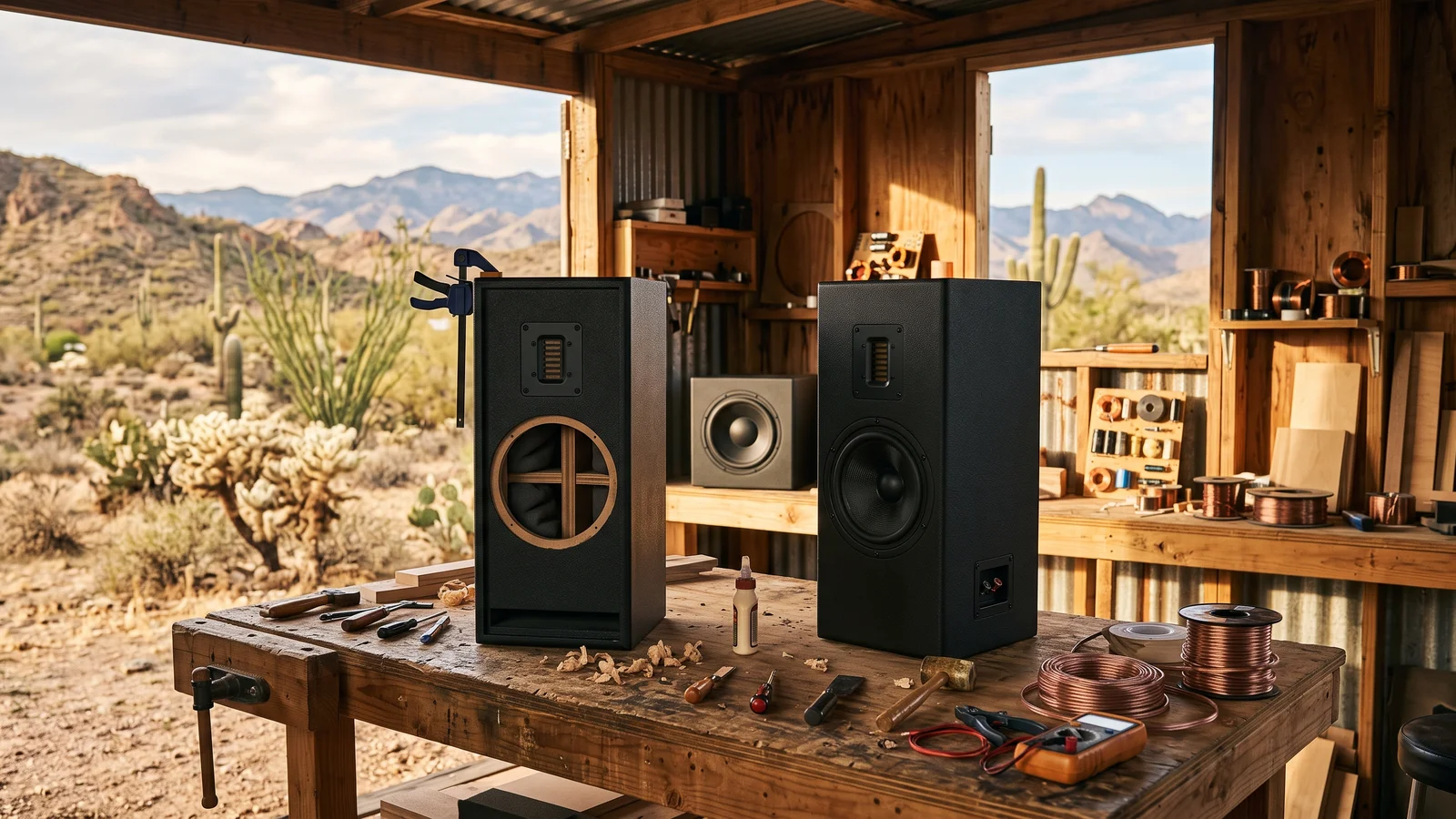
How long does a custom speaker build take?
Plan on 6 to 12 weeks or more, depending on the size and complexity of the system. Voicing a hand-built speaker can't be rushed to hit a ship date, so the timeline reflects real work: design, cabinet, drivers, crossover, finish, and listening. You follow every step in real time through our online portfolio.
Why don't you build in-wall speakers?
Because a cabinet is part of the instrument, and a wall cavity isn't one you can tune. We build on-wall and tower speakers only, place the center channel under the TV or on the mantle, cap ceiling speakers at four, and use sealed subwoofers for tight, accurate low end. It's an engineering choice about sound quality, not a limitation.
Can I visit the workshop to see my speakers being built?
No, and that's by design. Mike keeps the workshop private, so there are no visits. Instead, every client follows their build in real time through our online portfolio, photo by photo, from raw cabinet to final voicing. You see more of the process this way than a single visit would ever show you.
What comes with each speaker?
Every speaker ships signed and numbered with a birth certificate and a 10-year warranty. The birth certificate is a named human being's signature on a specific object, the same way golden-age builders signed their work. It's accountability you can hold, backed by a decade of real service from a shop that builds about fifteen systems a year.
Sources
- Federal Trade Commission - "Complying with the Made in USA Standard": https://www.ftc.gov/business-guidance/resources/complying-made-usa-standard
- Federal Trade Commission - "Made in USA Labeling Rule" (16 CFR Part 323, final rule, 2021): https://www.ftc.gov/legal-library/browse/federal-register-notices/16-cfr-part-323-made-usa-labeling-rule
- Cory Doctorow - "The 'Enshittification' of TikTok" (Pluralistic), Jan 21, 2023: https://pluralistic.net/2023/01/21/potemkin-ai/
- American Dialect Society - 2023 Word of the Year is "enshittification": https://americandialect.org/2023-word-of-the-year-is-enshittification/
- Wikipedia - "Henry Kloss": https://en.wikipedia.org/wiki/Henry_Kloss
- Wikipedia - "David Hafler": https://en.wikipedia.org/wiki/David_Hafler
- "How Private Equity Ate the Audio Industry: The Enshittification of Hi-Fi" (this series, The Golden Age of Audio)
- "Saul Marantz: The Graphic Artist Who Built the World's Best Amplifier at His Kitchen Table" (this series, The Golden Age of Audio)
Mike Vincent is the founder of Mike Knows Audio Video and WubWub Audio, where he designs and hand-builds custom loudspeakers and home theaters in Arizona, the old way, for about fifteen clients a year. He spent this whole series watching great names become line items, which is exactly why he keeps the entire build under one roof, in America, signed by the person who's accountable for the sound.
Comments
Leave a Comment