
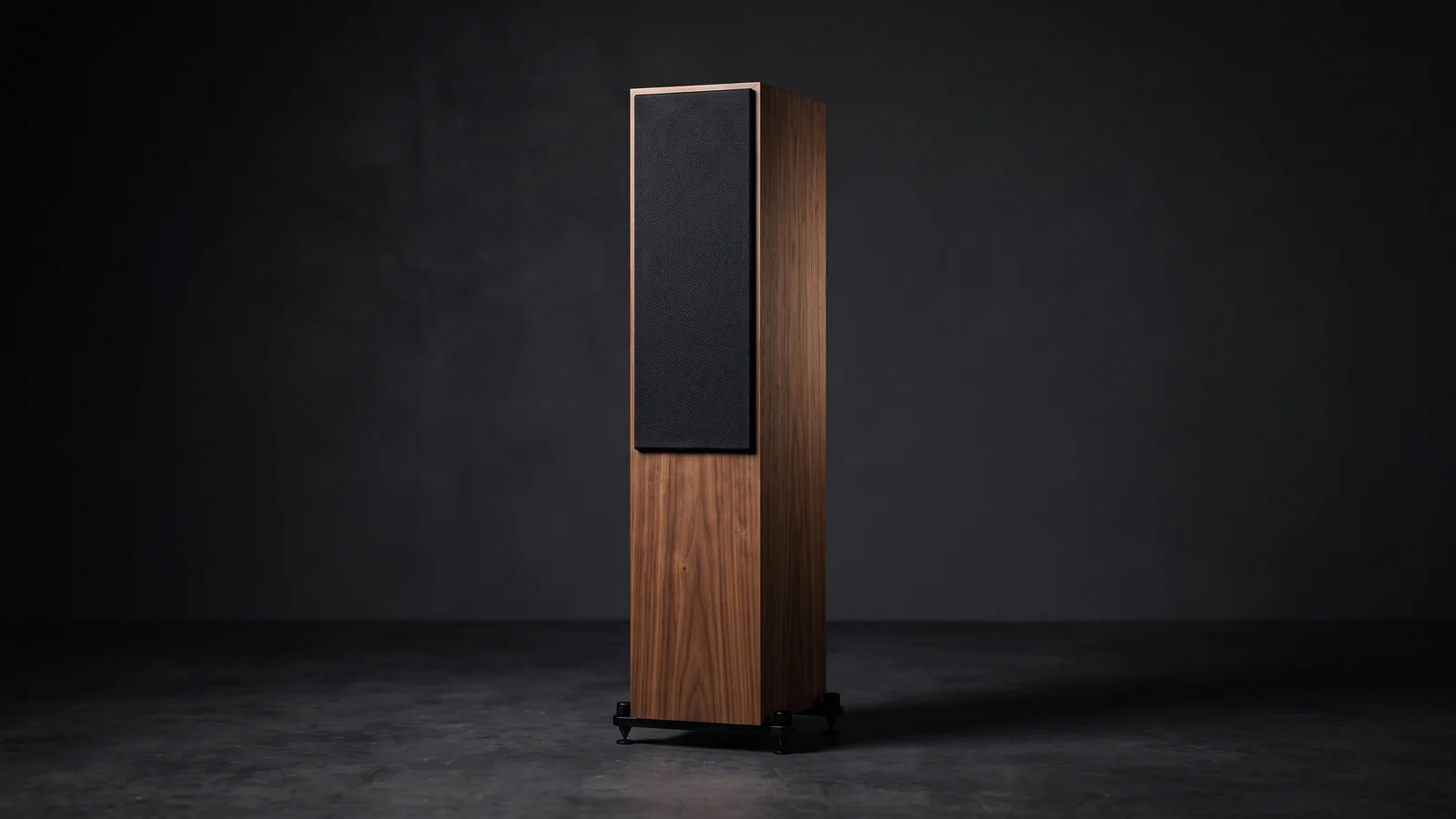
A NASA astrophysicist built cult-favorite American speakers for two decades, then a conglomerate bought the name. Here's the a/d/s/ story.
Ask ten audiophiles to name the great American speaker brands and you'll hear AR, JBL, Klipsch, maybe Advent. You almost never hear a/d/s/. That's the crime I want to fix today.
For about twenty years, a small company in Massachusetts built some of the most quietly brilliant loudspeakers this country ever produced, then almost nobody remembered. The engineering was obsessive. The cabinets looked like they'd wandered in from a German design museum. And the man behind it all was a NASA astrophysicist who'd rather solve a dispersion problem than sell you a story. I've had a pair of these on the bench. Let me tell you what got lost.
Key Takeaways
- a/d/s/ stands for Analog & Digital Systems, founded in 1972 in Wilmington, Massachusetts.
- Founder Godehard Günther was a German-born astrophysicist recruited by Wernher von Braun to NASA before he turned to acoustics.
- The L-series monitors, especially the roughly 75-pound L1290 tower, are cult classics prized for flat, wide-dispersion sound.
- a/d/s/ built the first true high-end car-audio system in 1979, the P100 PowerPlate and 300i speakers.
- After the founder left, the brand was bought by a conglomerate around 2000-2001, its line thinned and its manufacturing offshored.
What does a/d/s/ stand for, and where did it begin?
a/d/s/ stands for Analog & Digital Systems, Inc., founded in 1972 in Wilmington, Massachusetts by German-born physicist Godehard Günther, who died October 16, 2014 at age 75, according to Sound & Vision's obituary. Those lowercase letters and slashes weren't a typo. They were a deliberate design signature.
The early speakers leaned on Braun drivers, with import and assembly running out of Cambridge, Massachusetts around 1974, before a/d/s/ began manufacturing its own units, per TWICE's tribute to Günther. Günther loved Braun gear so much he'd imported his own, then went and secured US distribution for the brand. If you know Braun's Dieter-Rams-era design language, all clean geometry and zero decoration, you already know what an a/d/s/ cabinet looks like. That restraint is the design DNA a/d/s/ inherited from Braun's minimalist Rams era.
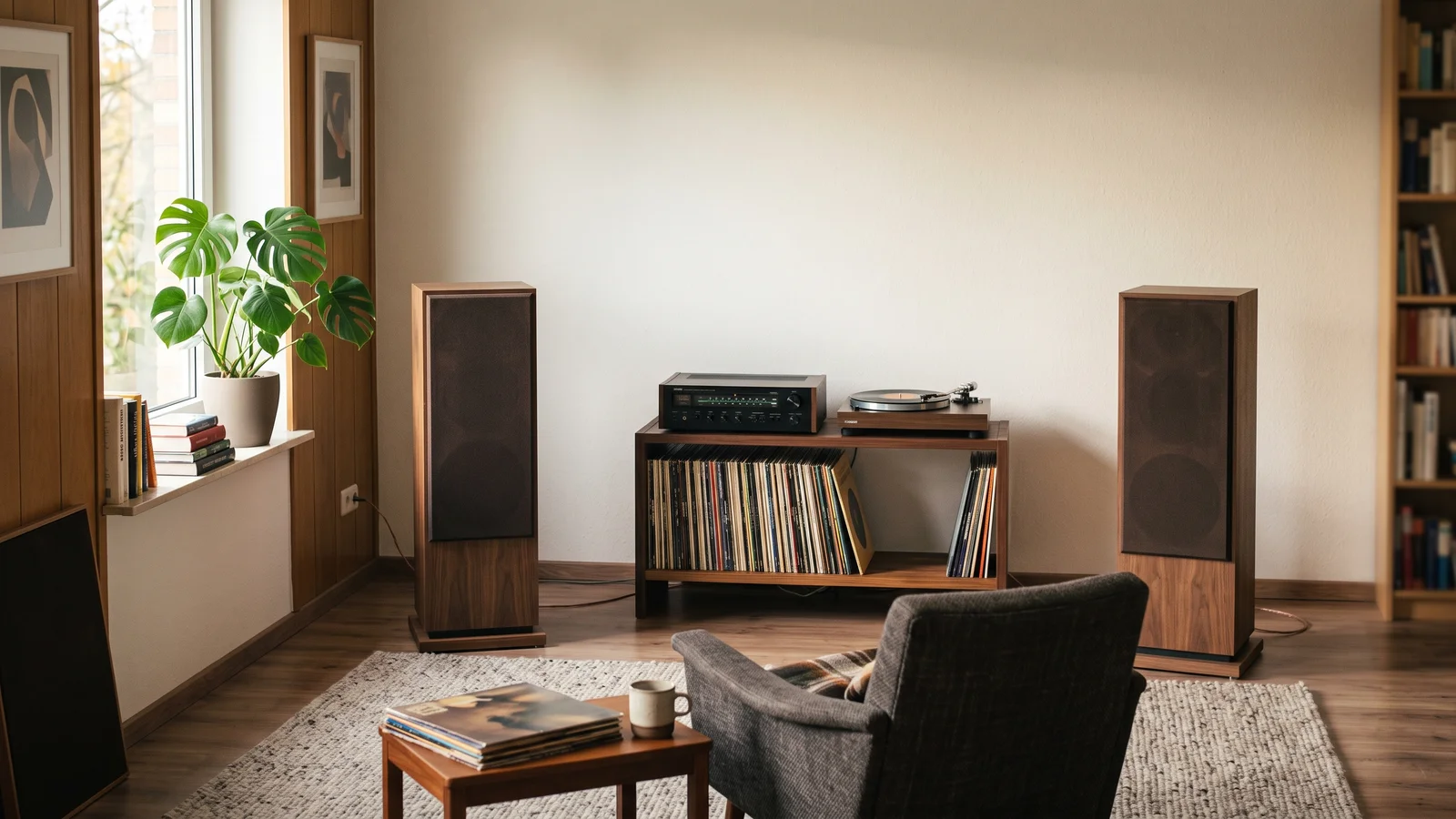
To be clear about one bit of lore: enthusiasts often say a/d/s/ bought Braun's hi-fi division from Gillette in 1981. I can't confirm that from a solid source, so treat it as unverified enthusiast history, not fact. The design lineage is real. The corporate purchase story is fuzzy.
Who was Godehard Günther?
Godehard A. Günther, born April 9, 1939 in Bochum, Germany, was a working astrophysicist before he ever built a speaker, recruited by rocket pioneer Wernher von Braun in 1969 to NASA's Marshall Space Flight Center in Huntsville, as TWICE reported. This was not a hobbyist tinkering in a garage.
His résumé reads like a novelist invented it. Undergraduate physics at Göttingen, a PhD in astrophysics at Heidelberg, and a National Academy of Sciences Fellowship in 1968, per Sound & Vision. He was also an accomplished pianist. He left NASA in 1972, the same year he founded a/d/s/, because acoustics had grabbed him harder than orbital mechanics ever did.
Here's what I love about that background. A man trained to measure starlight is exactly the kind of man who obsesses over whether a tweeter's off-axis response holds up at 45 degrees. Günther didn't guess. He measured, and the speakers show it. When he sold a/d/s/ years later, he wasn't done: in 1998 he founded a new company, Soundmatters, to keep chasing small-speaker fidelity, Sound & Vision notes. (For the record, that's Soundmatters, not Sunfire. Different founder entirely.)
What made the a/d/s/ L-series so good?
The L-series monitors were a/d/s/'s flagship line, and the L1290, introduced in 1984, is the one to know: a three-way column with dual 8.3-inch woofers in separate sealed enclosures, weighing roughly 75 pounds each and priced near $649, praised in a period lab review for its "unusually flat and smooth response," as documented at Hi-Fi Classic. That's opinion from the review, but it matches what I hear.
Look at how that speaker is built. A 2-inch soft-dome midrange, a 0.75-inch ferrofluid-cooled soft-dome tweeter, response spanning roughly 40 to 27,000 Hz, and about 90 dB sensitivity, per the same Hi-Fi Classic review. Putting each woofer in its own sealed box is a purist move. It controls the bass instead of chasing loud cheap output from a shared cabinet. As a guy who builds sealed enclosures for a living, I nodded when I first read the spec sheet.
The whole L-series, the L710, L810, L1090, L1290, and L1590, followed the same philosophy. Understated looks, wide dispersion, honest tonality, no fireworks. Which is exactly why they never got famous. Speakers that don't shout for attention rarely do. They became a collector's secret instead, the pair the quiet guy at the audio club swears by. That's the lost-treasure hook in one sentence.
Was a/d/s/ really the first high-end car audio?
By most accounts, yes. The 1979 a/d/s/ P100 PowerPlate amplifier paired with 300i plate speakers is widely cited as the first true high-end car-audio system, ranked among the most influential car-audio products ever made, according to bestcaraudio.com's list of the top 100. Before this, your car stereo was an afterthought. a/d/s/ treated the cabin like a listening room.
The momentum carried into the 1980s. The PowerPlate amps grew into the P40, P80, and P120, and the PQ-series became early premium mobile audio, per bestcaraudio.com. Günther's team basically invented a category, then watched a dozen brands you have heard of build fortunes in the space they opened. Sound familiar? It's a recurring theme with pioneers. The people who plant the tree rarely eat the fruit.
What happened to a/d/s/ speakers?
The founder-engineer era ended when the brand became a corporate asset. Günther departed around 1993, and by roughly 2000-2001 the Viper car-security conglomerate Directed Electronics owned a/d/s/, narrowed the line, and moved production to Asia, as enthusiast histories of the brand record. Dates vary between sources, so hedge them, but the trajectory is not in dispute.
The in-between years were a scramble. a/d/s/ merged with the Canadian high-end maker Museatex to become ADS Technologies, then acquired Orion Industries in 1994 to grow its car-audio manufacturing, per collector accounts. I'll flag that these ownership details lean on hobbyist pages rather than the two obituaries, so take the fine print as enthusiast history. But the ending is well attested: the name survived, the soul did not.
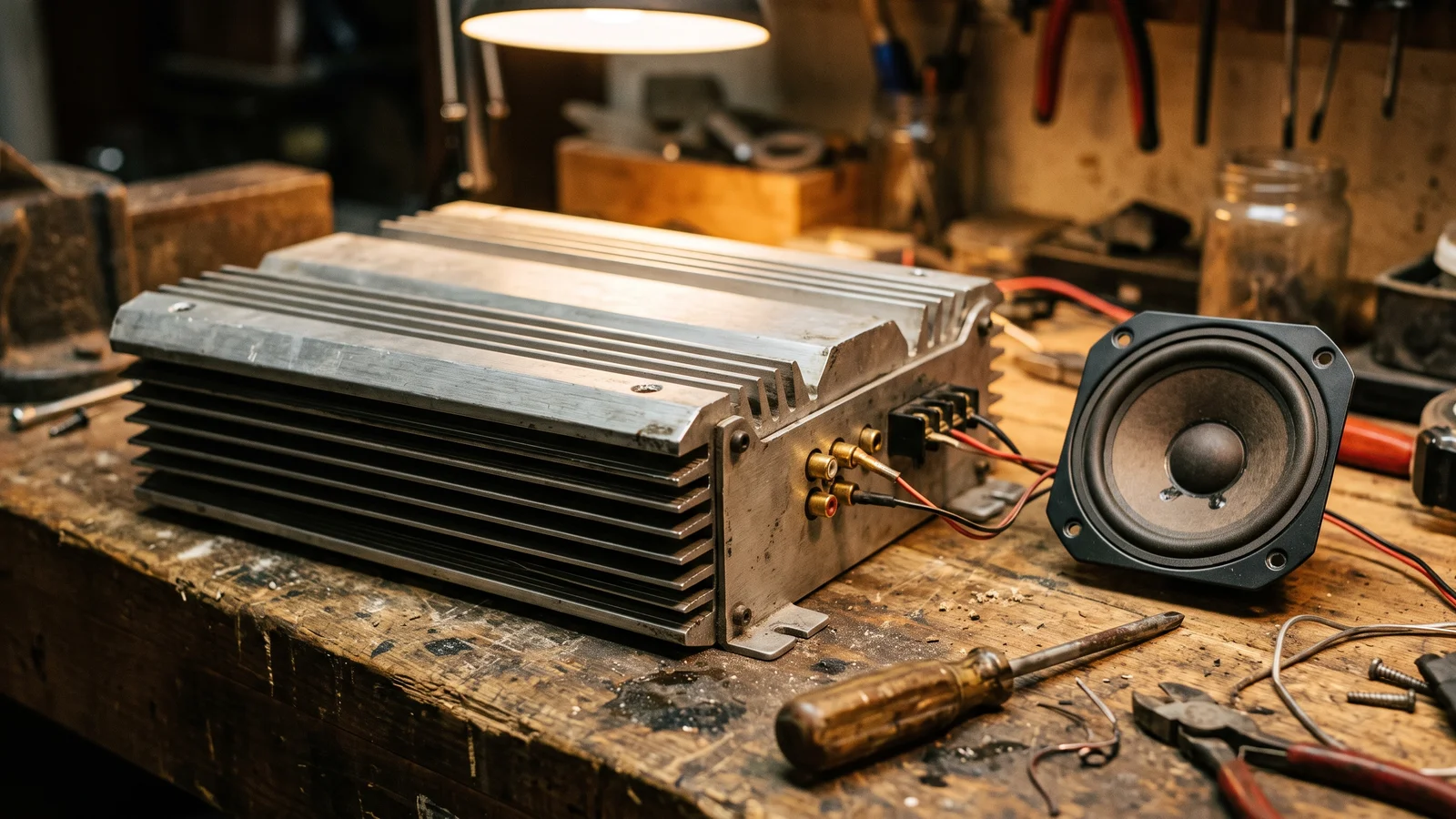
There's a word for that pattern, and I only get to use it once, so here it is: enshittification. A conglomerate keeps the respected name, thins the line, and offshores the manufacturing that defined the quality in the first place, a term coined by writer Cory Doctorow. The engineering didn't survive the spreadsheet. a/d/s/ went from a NASA physicist's obsession to a largely dormant car-audio nameplate.
Now let me be fair, because the full story deserves it. a/d/s/ didn't die only because a conglomerate bought it. The US audiophile-speaker business consolidated brutally in the 1990s, and plenty of well-run, independent brands didn't survive that decade either. The market got harder, retail changed, and margins evaporated. Getting bought was one exit among several bad ones. What stings isn't just that a/d/s/ ended. It's that a brand this good ended with so few people noticing.
Why the founder-at-the-bench model still matters
Here's the throughline from a/d/s/ to now. When the person who builds and voices the product runs the company, the obsessive engineering gets protected instead of stripped for margin. Günther protected it for two decades. The moment a balance sheet took over, the protection stopped. That's not cynicism. It's just what happens when the last engineer leaves the room.
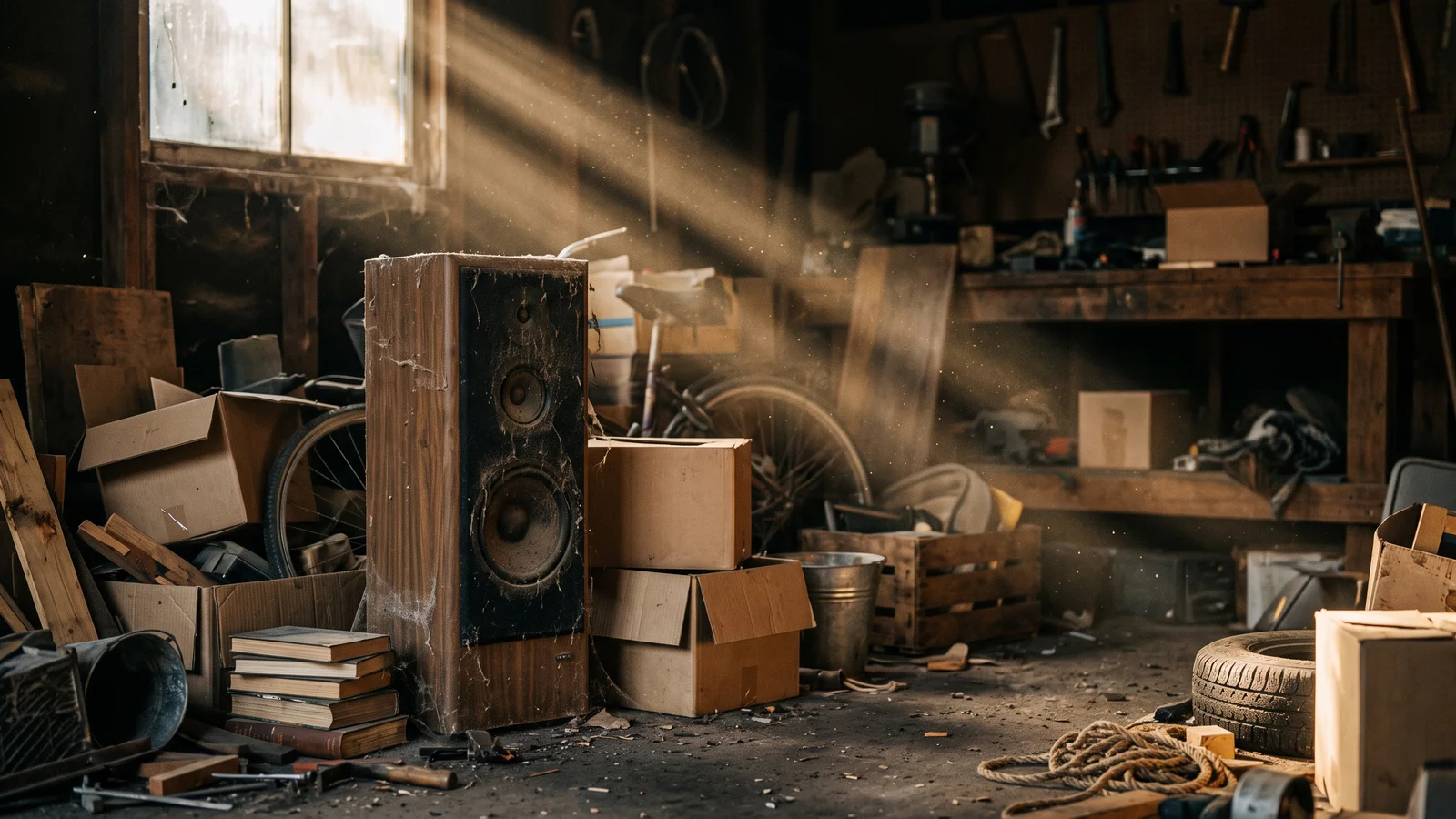
It's why small, owner-run builders still build to order, slowly, by hand. When I'm the one at the bench, nobody upstream can vote to swap a good driver for a cheaper one to hit a quarterly number. We build custom loudspeakers the deliberate way on purpose. a/d/s/ is the cautionary tale that keeps me honest. If you ever find a clean pair of L1290s in someone's garage, buy them. You've found treasure.
Frequently Asked Questions
What does a/d/s/ stand for?
a/d/s/ stands for Analog & Digital Systems, Inc., a loudspeaker company founded in 1972 in Wilmington, Massachusetts (Sound & Vision). The lowercase letters and slashes were a deliberate design signature, reflecting the minimalist Braun-inspired styling the brand carried across both its home and car-audio products.
Who founded a/d/s/?
a/d/s/ was founded by Godehard A. Günther, a German-born astrophysicist recruited to NASA's Marshall Space Flight Center by Wernher von Braun before he turned to acoustics in 1972 (TWICE). He earned a physics degree at Göttingen and a PhD at Heidelberg, and later founded Soundmatters in 1998. He died in 2014.
Are a/d/s/ speakers good?
Yes, and they remain a cult favorite among collectors. The L-series monitors, especially the L1290, earned praise for "unusually flat and smooth response" and wide dispersion in period lab reviews (Hi-Fi Classic). They were understated, superbly engineered speakers that never got the mainstream fame of AR, JBL, or Klipsch.
What happened to a/d/s/ speakers?
Founder Godehard Günther left around 1993. The company merged with Museatex, acquired Orion Industries, and by about 2000-2001 was owned by Directed Electronics, which narrowed the line and moved production to Asia (Directed Electronics). The name became a largely dormant car-audio nameplate afterward.
Was a/d/s/ connected to Braun?
Yes, closely. Founder Godehard Günther imported Braun hi-fi and secured its US distribution, and early a/d/s/ speakers used Braun drivers around 1974 (TWICE). The brand inherited its clean, minimalist look from Braun's Dieter Rams design era, though Rams did not personally design a/d/s/ cabinets.
Sources
- Sound & Vision — "RIP Godehard Guenther": https://www.soundandvision.com/content/rip-godehard-guenther
- TWICE — "Hi-Fi Pioneer Godehard Guenther Passes Away": https://www.twice.com/product/hi-fi-pioneer-godehard-guenther-passes-away
- Hi-Fi Classic — "ADS L1290" review: https://www.hifi-classic.net/review/ads-l1290-393.html
- bestcaraudio.com — "The Top 100 Most Influential Car Audio Products of All Time": https://www.bestcaraudio.com/top-100-most-influential-car-audio-products-of-all-time/
- Braun Audio — brand history and design inspiration: https://www.braun-audio.com/en-GLOBAL/worldfirsts
- Dezeen — Dieter Rams design coverage: https://www.dezeen.com/tag/dieter-rams/
- AURAL HiFi — a/d/s/ brand history (enthusiast source): https://auralhifi.com/pages/ads
- Silverchroma — a/d/s/ collector reference (enthusiast source): https://silverchroma.wordpress.com/2013/09/04/ads-speakers-a-euphoric-experience/
- Wikipedia — "Marshall Space Flight Center": https://en.wikipedia.org/wiki/Marshall_Space_Flight_Center
- Wikipedia — "Directed Electronics": https://en.wikipedia.org/wiki/Directed_Electronics
- Wikipedia — "Enshittification": https://en.wikipedia.org/wiki/Enshittification
- Wikipedia — "Wernher von Braun": https://en.wikipedia.org/wiki/Wernher_von_Braun
Mike Vincent is the founder of Mike Knows Audio Video and WubWub Audio, where he designs and hand-builds custom loudspeakers and home theaters in Arizona, the old way, for about fifteen clients a year. He builds sealed, on-wall, and tower speakers the way a/d/s/ once did, so if that kind of obsessive engineering appeals to you, take a look at our custom loudspeakers.
Comments
Leave a Comment