
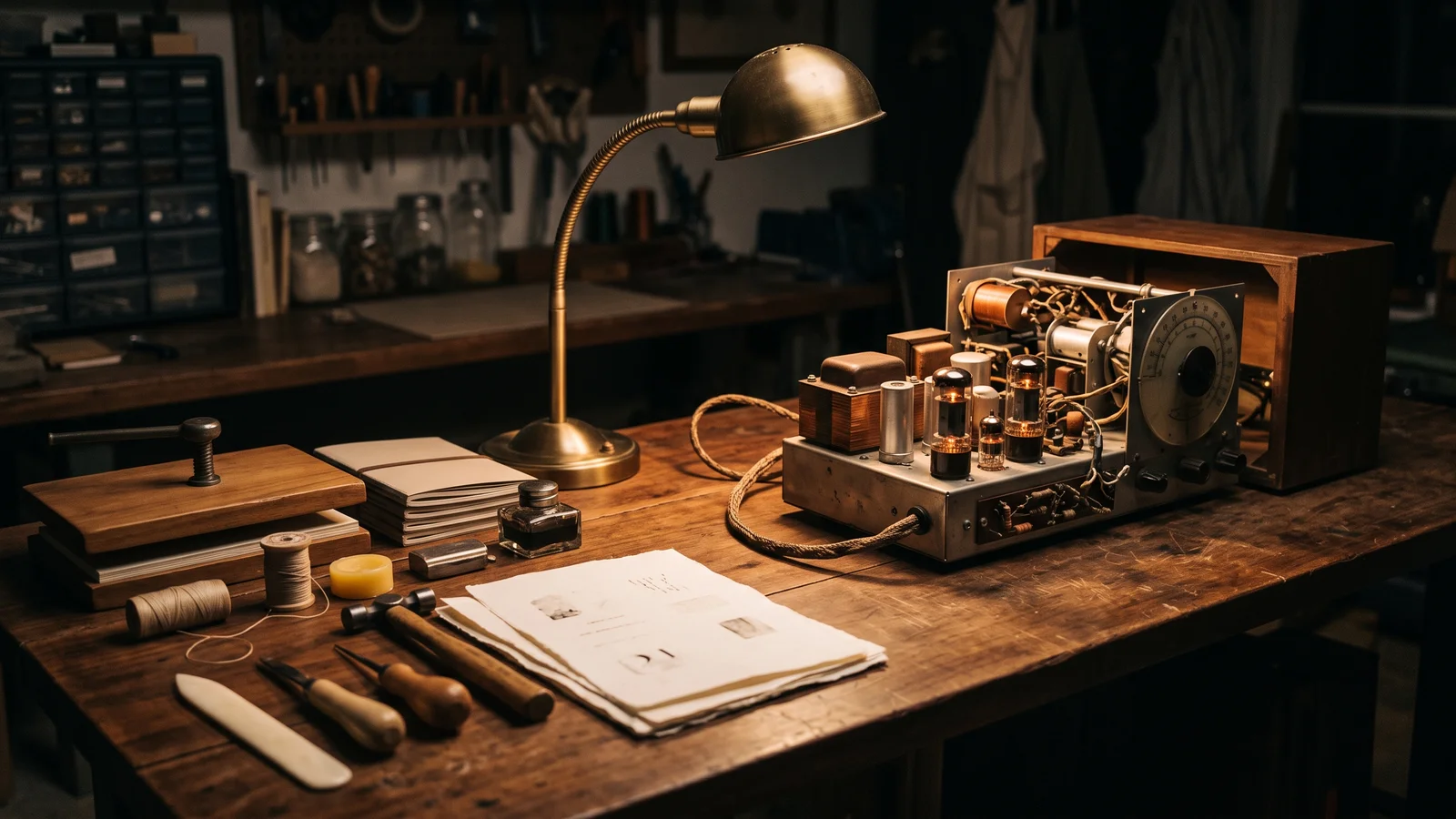
A book designer and amateur violinist who wanted a radio that sounded like a live orchestra. This is the story of Avery Fisher and Fisher Radio.
Say "Fisher" to most people under fifty and you get a blank look, or maybe a memory of a cheap boombox from a discount store. That's a shame, because for about thirty years the name meant something closer to the opposite. Fisher was the good stuff. The reference. The gear serious listeners saved up for.
Behind it was a man almost nobody pictures right. Avery Fisher wasn't a lab-coat engineer who fell into music. He was a book designer and a lifelong amateur violinist who fell into engineering because no radio on the market could give him what he heard in a concert hall. I hand-build audio for a living, so a designer with a musician's ear chasing that sound is exactly my kind of origin story. Let me tell it straight.
Key Takeaways
- Avery Fisher (1906-1994) was a New York book and graphic designer and amateur violinist, not a career engineer, who moved into audio because he wanted a radio that sounded like a live orchestra.
- His first company, Philharmonic Radio (1937), built a hi-fi radio-phonograph now in the Smithsonian's permanent collection, accessioned in 1960 as the first commercially manufactured hi-fi radio-phonograph.
- Fisher Radio Corporation (1945) is widely credited among the first firms to sell separate hi-fi components, and its 500-series receivers earned the "Rolls-Royce of audio" reputation.
- Fisher sold to Emerson Electric in 1969 for a reported $31 million (some accounts say roughly $37 million in stock); the name later passed to Sanyo, then folded into Panasonic by 2011.
- Avery Fisher Hall at Lincoln Center, named for his 1973 gift, was renamed David Geffen Hall in 2015. His name came off both the amplifiers and the concert hall.
Who was Avery Fisher, the man behind the name?
Avery Robert Fisher was born March 4, 1906, in Brooklyn to a Russian-Jewish immigrant family, earned a science degree from New York University in 1929, and worked for roughly a decade as a book and graphic designer before he ever sold audio gear, according to the Encyclopedia.com biography. He was also a serious amateur violinist. That combination, designer plus musician, explains everything that followed.
Here's the part I love. Fisher started around 1933 at the publisher Dodd, Mead, and did award-winning book design, as the Linda Hall Library recounts in its profile of him. So the man who ended up shaping how millions of Americans heard music spent his early career worrying about margins, type, and paper stock. He had a designer's eye and a player's ear, and neither one could stand a radio that turned an orchestra to mush.
The designer who wanted a radio that sounded live
Fisher owned a 1692 Stradivarius and played it, which tells you how well he knew what real instruments sound like in a real room, per Wikipedia's biography of Avery Fisher. When you know that sound cold, bad playback isn't a minor annoyance. It's an insult. That standard, the live orchestra as the target, became his whole engineering philosophy.
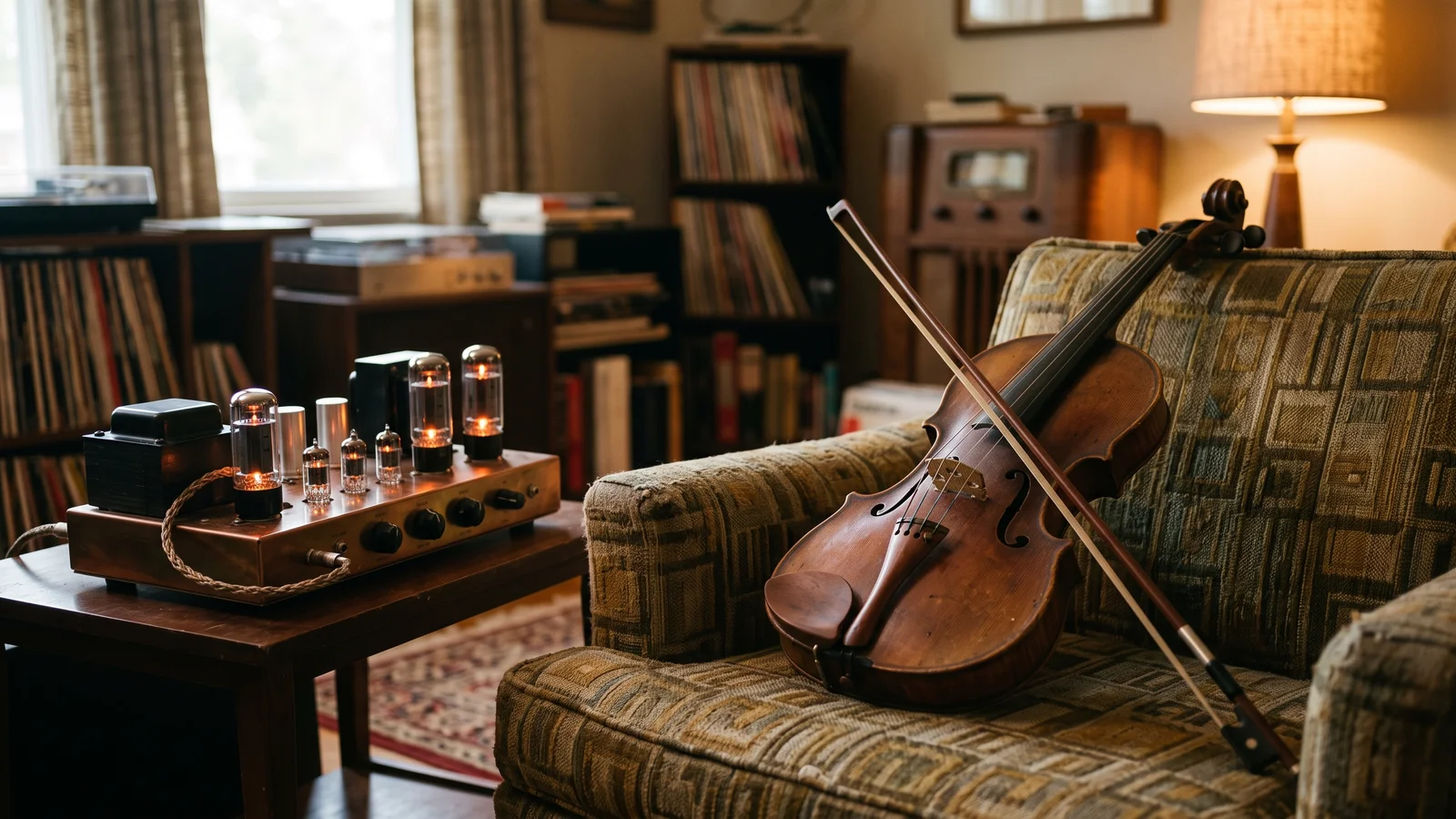
By the early 1940s he had left publishing behind for audio entirely, the Institute of Electrical and Electronics Engineers notes in its ETHW biography. Fisher died February 26, 1994, in New Milford, Connecticut, at 87, from complications of a stroke, as Wikipedia's biography records. Between those bookends sits one of the most consequential runs in American audio.
People treat "he wasn't an engineer" like a knock. It's the opposite. Two of the biggest names in golden-age hi-fi, Fisher and Saul Marantz, both came from design and music, not from the lab. The ear set the bar. The engineering had to rise to meet it, not the other way around.
What was Fisher's first company, and why is it in the Smithsonian?
Fisher's first company was Philharmonic Radio, founded in 1937 with engineer Victor Brociner, and one of its 1937 radio-phonographs sits in the Smithsonian's permanent collection, accessioned in 1960 as the first commercially manufactured high-fidelity radio-phonograph, per the National Museum of American History. That's about as solid as an audio "first" ever gets. It's in a museum.
Most people conflate Philharmonic Radio with Fisher Radio. Don't. They were two separate companies. Philharmonic came first, and it's where Fisher proved the idea that a mass-produced set could actually chase high fidelity, as the Encyclopedia.com biography lays out. He sold Philharmonic around 1945 and started over with a clean sheet.
Fisher Radio and the birth of separate components
That clean sheet was Fisher Radio Corporation, founded in 1945 in New York City and marketed simply as "The Fisher," according to the Wikipedia entry on Fisher Electronics. This is the company that made the name legendary. And its big conceptual bet was one we take for granted now: sell the pieces separately.
Fisher is widely credited among the first companies to offer standalone hi-fi components, letting a listener buy a tuner, an amplifier, and a preamp as separate boxes instead of one all-in-one console, as the Fisher Electronics history on Wikipedia notes. Think about what that unlocked. You could upgrade one piece at a time. You could mix and match. The whole modern idea of a "system" you build up over years starts here.
That mattered for sound, not just convenience. Separate boxes let each stage do one job well, and it let a serious listener spend where it counted. It's the same logic we still use when we build a room around real, matched pieces instead of a single sealed appliance. A good home theater system is a chain of honest components, and Fisher helped teach America to think that way.
What made Fisher Radio "the Rolls-Royce of audio"?
In its 1940s-to-1960s golden era, Fisher was routinely ranked with Marantz, McIntosh, H.H. Scott, and Harman/Kardon as one of the "Rolls-Royce" names of American audio, and its 500-series receivers were the anchor of that reputation, as the IEEE's ETHW biography records. The gear earned it. These were beautifully built, great-sounding machines that people kept for decades.
The hits came fast. Fisher claimed the first transistorized amplifier offered for sale in 1956, per the ETHW biography. Then the anchor product: the Fisher 500 arrived in 1957 as a high-fidelity FM/AM receiver, followed by the 600 in 1959, as the Wikipedia entry details. I always say "claimed" on the firsts, because in this era every company was racing and the record is genuinely contested. The 500, though, is not contested. It sold, and it mattered.
The tube receivers collectors still chase
Ask any vintage-gear hound and the same models come up. The Fisher 800-B of the early 1960s is regularly called one of the great tube receivers ever made, as Sound & Vision has written in its coverage of vintage Fisher. The 500-B and 500-C are collector favorites for the same reasons: real power, real build quality, and that warm, room-filling tube sound.
Then Fisher pivoted to the future. The 400T of 1963 to 1964 was the company's first all-transistor stereo receiver, per the Wikipedia entry. That move from tubes to transistors is a whole story on its own, and Fisher was early to it. Being early is a double-edged thing, but it kept the name at the front of the pack right through the 1960s.
I've had golden-age receivers of this vintage on the bench, and the thing that stands out every time is how honestly they were built. Heavy transformers, generous parts, chassis you could stand on. Period pricing gets reported all over the map depending on the source and the year, so I won't pin a single dollar figure on any one model. What I can tell you is what's inside them. Nobody was shaving pennies yet. That comes later, and it's a different story.
How did the Fisher name fall from Rolls-Royce to discount shelf?
The fall started with a sale: Fisher went to Emerson Electric in a deal completed February 22, 1969, reported at around $31 million, though some accounts put it at roughly $37 million in stock, as the Wikipedia history records. I'm not going to pretend to reconcile those two figures. Both numbers show up in the record, so both go in. Either way, the founder cashed out and the name became a corporate asset.
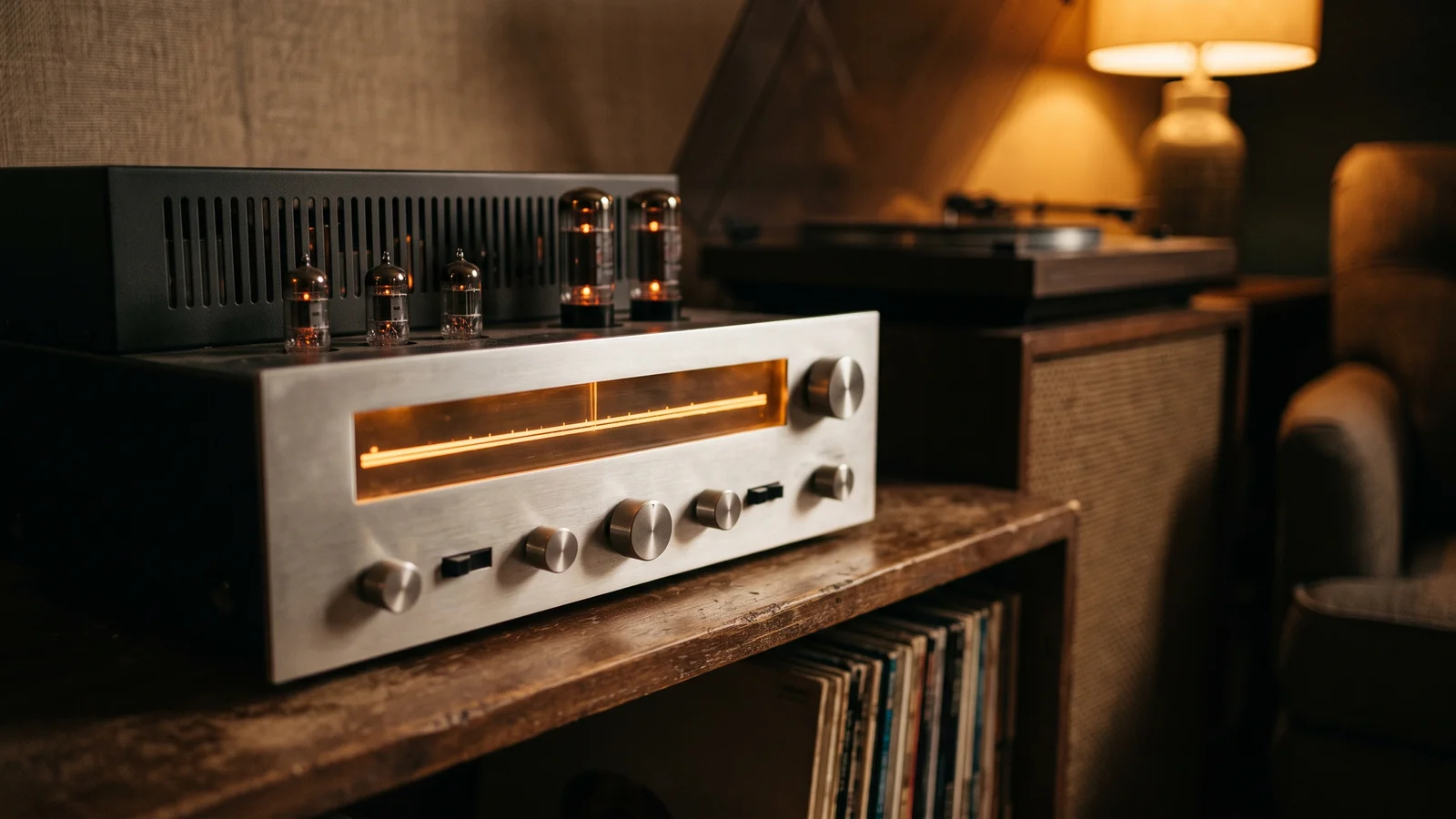
From there it's a familiar slide. Emerson sold Fisher to Sanyo Electric of Japan in 1975, per the Encyclopedia.com biography. (You'll see 1977 in some hobbyist forums; the better sources say 1975.) Through the 1980s the "Fisher" badge drifted onto budget consumer electronics. By 2000 the lineup was rebranded as Sanyo, and when Panasonic acquired Sanyo in 2011, Fisher was folded in and effectively retired, as the Fisher Electronics history documents.
There's a word for that arc, and the writer Cory Doctorow gave it to us: enshittification, the slow hollowing-out of something good once the people who made it care are replaced by the people who own it. Fisher is a textbook case. A name that once meant a hand-tuned tube receiver ended up stamped on throwaway gear, then quietly erased. The badge stayed. The standard behind it left the building years earlier.
Notice what didn't change on that slide: the logo. The whole trick of a bought-out nameplate is that the letters stay identical while everything behind them gets cheaper. A name is only a promise if the same hands and the same standards keep backing it. Once those walk out, the word on the front panel is just paint.
Is Avery Fisher Hall still called that?
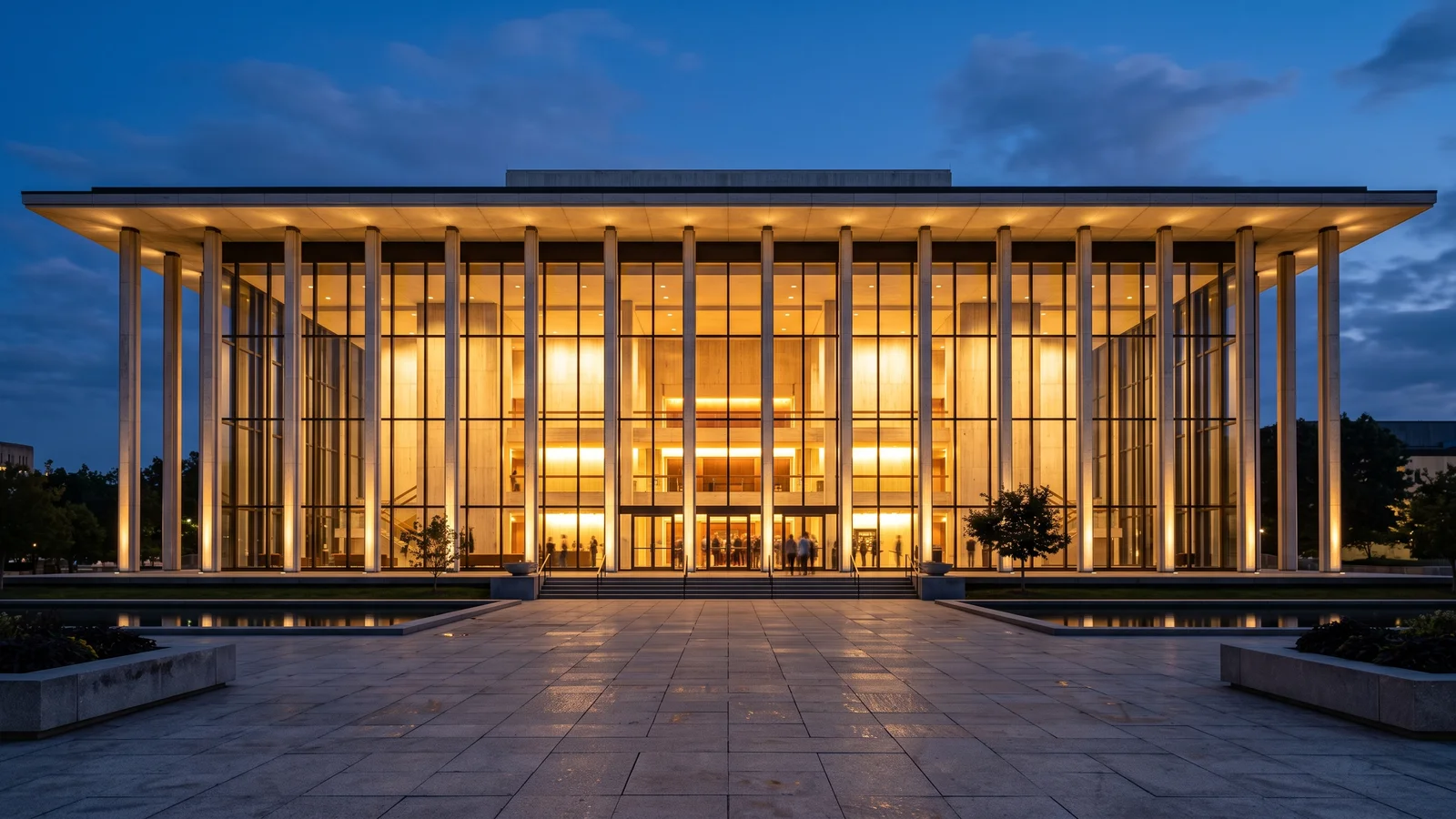
No. The Lincoln Center venue named Avery Fisher Hall in 1973, after Fisher's $10.5 million gift, was renamed David Geffen Hall in 2015 following a $100 million donation from Geffen, as NPR reported. To make that legally possible, Fisher's own children agreed to release the family name, a deal announced in November 2014, as Playbill covered.
Here's the gut-punch symmetry. Fisher's children accepted about $15 million to let the name come off the hall, as The NonProfit Times reported. So within roughly two decades of his death, the Fisher name was gone from the amplifiers and gone from the concert hall he paid to put it on. The man spent a fortune to carve his name into something permanent, and permanent turned out to have a price.
I don't tell that story to be grim. I tell it because it makes the point better than I ever could. You can put your name on the best amplifiers in America and on a hall at Lincoln Center, and a couple of decades later both can belong to someone else. The name isn't the thing. The work is the thing, and the standard behind the work.
Frequently Asked Questions
Who was Avery Fisher?
Avery Fisher (1906-1994) was a New York book and graphic designer and amateur violinist who became a hi-fi pioneer, according to Encyclopedia.com. He founded Philharmonic Radio in 1937 and Fisher Radio Corporation in 1945, building gear he wanted to sound like a live orchestra. He later gave millions to Lincoln Center.
What was Fisher Radio?
Fisher Radio Corporation, founded in 1945 in New York and marketed as "The Fisher," is widely credited among the first companies to sell separate hi-fi components, per Wikipedia. Its 500-series tube receivers earned Fisher a "Rolls-Royce of audio" reputation through the 1950s and 1960s, alongside Marantz, McIntosh, and H.H. Scott.
Is Avery Fisher Hall still called that?
No. Avery Fisher Hall at Lincoln Center, named in 1973 for Fisher's $10.5 million gift, was renamed David Geffen Hall in 2015 after a $100 million Geffen donation, as NPR reported. Fisher's children accepted about $15 million to release the family name from the venue.
Who owns the Fisher brand now?
The Fisher audio brand passed from Emerson Electric to Sanyo Electric of Japan in 1975, was rebranded as Sanyo by 2000, and was folded into Panasonic when Panasonic acquired Sanyo in 2011, per the Fisher Electronics history. The name is effectively retired today and no longer marks high-fidelity gear.
What happened to Fisher Radio?
Avery Fisher sold Fisher Radio to Emerson Electric in 1969 for a reported $31 million, with some accounts citing roughly $37 million in stock, as Wikipedia records. Under later owners the name drifted from premium components to budget consumer electronics through the 1980s, then disappeared as a hi-fi brand entirely.
Sources
- Encyclopedia.com, "Fisher, Avery Robert": https://www.encyclopedia.com/humanities/encyclopedias-almanacs-transcripts-and-maps/fisher-avery-robert
- Linda Hall Library, "Scientist of the Day: Avery Fisher": https://www.lindahall.org/about/news/scientist-of-the-day/avery-fisher/
- Wikipedia, "Fisher Electronics": https://en.wikipedia.org/wiki/Fisher_Electronics
- Wikipedia, "Avery Fisher": https://en.wikipedia.org/wiki/Avery_Fisher
- Wikipedia, "David Geffen Hall": https://en.wikipedia.org/wiki/David_Geffen_Hall
- Smithsonian National Museum of American History, Philharmonic Radio radio-phonograph object record: https://americanhistory.si.edu/collections/object/nmah_687887
- Sound & Vision, "Vintage Fisher" coverage: https://www.soundandvision.com/content/vintage-fisher
- IEEE / Engineering and Technology History Wiki (ETHW), "Avery Fisher": https://ethw.org/Avery_Fisher
- The Tampa Bay Times, "Avery Fisher, 87, electronics innovator" (1994 obituary): https://www.tampabay.com/archive/1994/02/27/avery-fisher-87-electronics-innovator/
- NPR, "Lincoln Center Venue Renamed For David Geffen": https://www.npr.org/2015/03/07/391435838/lincoln-center-venue-renamed-for-david-geffen
- Playbill, "Avery Fisher Hall Renamed for Music Mogul David Geffen After $100M Gift": https://playbill.com/article/avery-fisher-hall-renamed-for-music-mogul-david-geffen-after-100m-gift-com-364198
- The NonProfit Times, "Avery Fisher Hall Renaming Shows Fleeting Fame And Naming Rights": https://thenonprofittimes.com/npt_articles/avery-fisher-hall-renaming-shows-fleeting-fame-naming-rights/
Mike Vincent is the founder of Mike Knows Audio Video and WubWub Audio, where he designs and hand-builds custom loudspeakers and home theaters in Arizona, the old way, for about fifteen clients a year. He has a real soft spot for designers with a musician's ear who wanted playback to sound like the real thing; if you want a speaker built to that standard and signed off by the same hands that made it, start with our custom loudspeakers.
Comments
Leave a Comment