
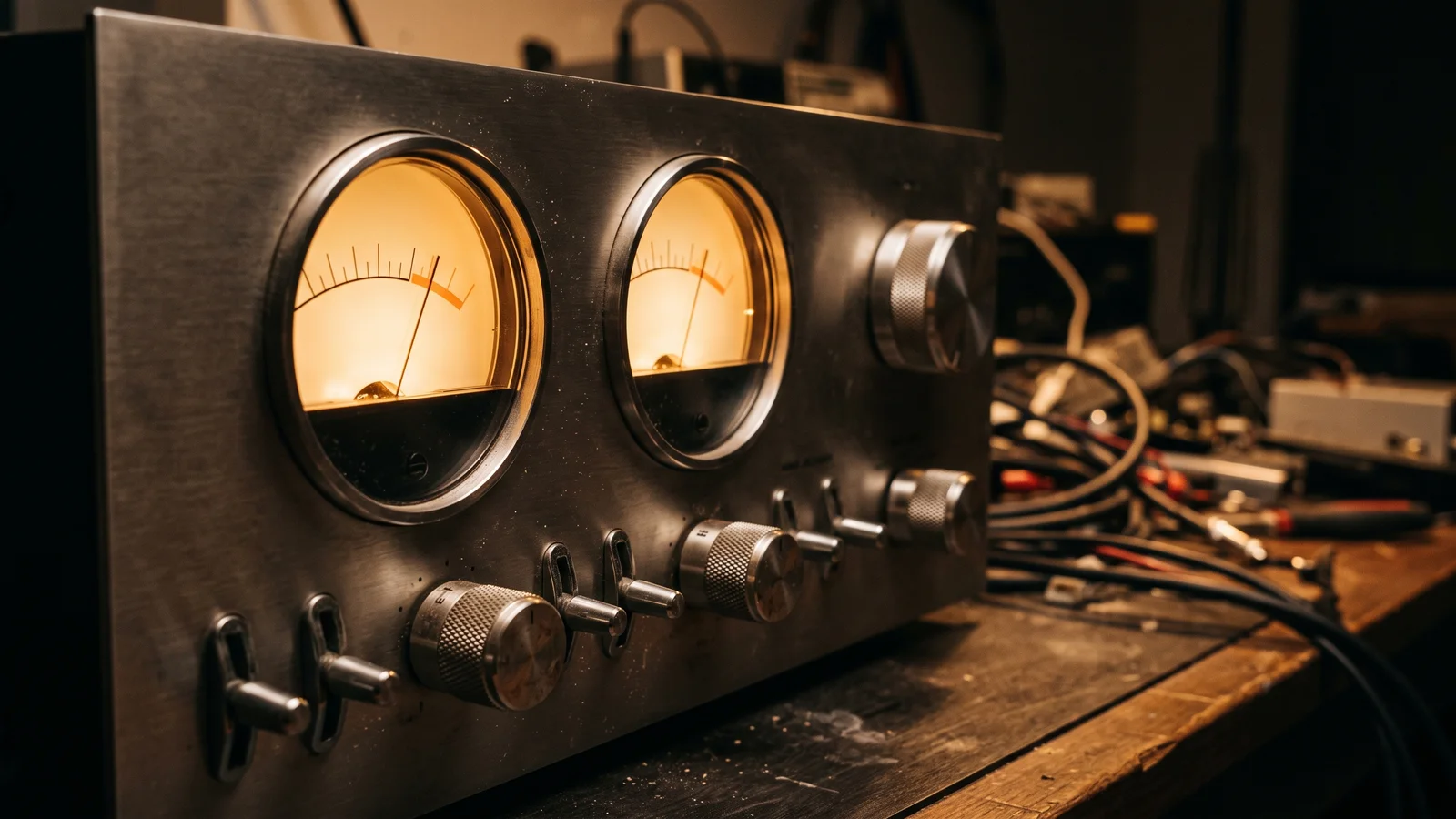
The physicist who bet he could make a $400 amp sound like a $6,000 one, then proved it in 48 hours. The Bob Carver story, from Phase Linear to tube amps at 79.
Some engineers chase accuracy. Bob Carver chased the impossible, and then he bet money he could pull it off. In 1985 he wagered that a $400 amplifier of his own design could sound identical to a revered high-end reference costing many times more, and he did it in a hotel-room sprint using a null test. He won, more or less, and audio has argued about it ever since.
I love this guy. Not because I agree with every claim he ever made, but because he thought like a builder who refuses to accept "that's just how it's done." Carver treated amplifier design as a physics problem to be out-engineered, not a price tier to be respected. Let me walk you through the mad-scientist career of the man behind the Phase Linear 700, the Magnetic Field amplifier, and the Sunfire subwoofer.
Key Takeaways
- Bob Carver, born in 1943 in Washington state (widely reported), is the physicist and showman behind Phase Linear, Carver Corporation, and Sunfire.
- His Phase Linear 700 delivered around 350 watts per channel at roughly $749 in the early 1970s, widely called the most powerful consumer amp of its day (The Absolute Sound).
- The 1985 Carver Challenge pitted his roughly $400 amp against a reference costing thousands, judged by a null test at Stereophile (Stereophile).
- His Magnetic Field amplifier (U.S. Patent 4,218,660) used a fast tracking power supply to make big power from a small, light chassis.
- The Sunfire True Subwoofer packed roughly 2,700 watts and an 11-inch cube that played down near 18 Hz (Sound & Vision).
- Carver never really quit, coming out of retirement around 2022 to hand-build tube amps in his late 70s.
Who is Bob Carver?
Robert W. "Bob" Carver, born in 1943 in Washington state (widely reported), is the trained physicist behind three landmark audio companies and one of the most powerful consumer amplifiers ever sold, the 350-watt Phase Linear 700 (The Absolute Sound). Sound & Vision calls him a "rebel audiophile," and the label fits.
Here's what makes him tick. Carver has a garage-tinkerer's instinct wrapped around real physics training, and by most accounts he was building early amplifiers in an Edmonds, Washington garage in the late 1960s (Sound & Vision). That combination, rigorous theory plus a willingness to just try the crazy thing on the bench, shows up in every product he ever made.
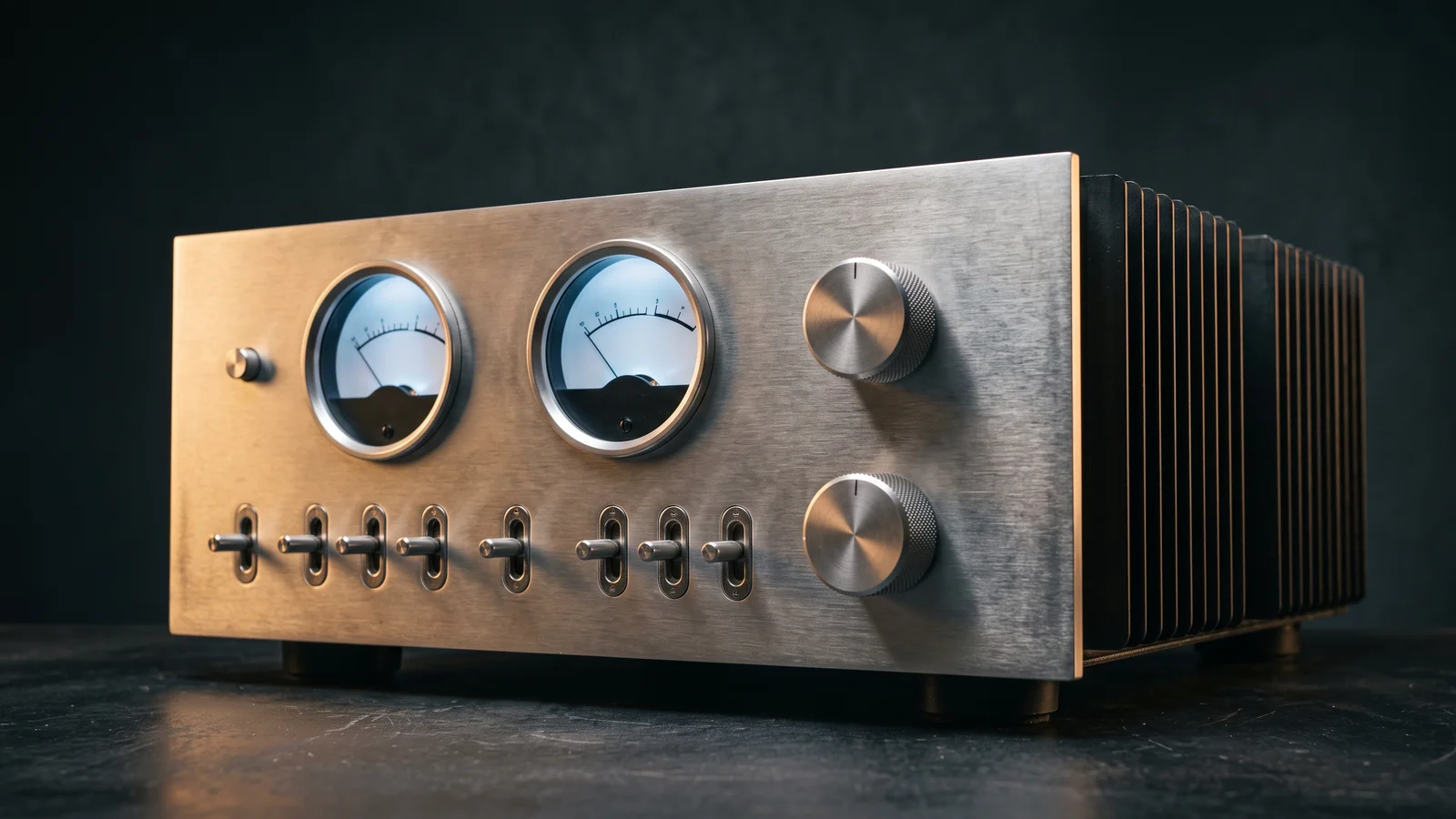
The showmanship is part of the package. Sound & Vision has described him as a provocateur, a man happy to poke the high-end establishment and back the poke with a demonstration (Sound & Vision). I'd call that framing fair rather than flattering. Plenty of engineers can design a good amp. Very few will stake their reputation on a public test and invite the whole industry to watch.
What was Phase Linear, and how did Bob Carver start the power wars?
Carver co-founded Phase Linear in 1970 with Steve Johnston, and the company's Phase Linear 700 delivered roughly 350 watts per channel for about $749, making it widely reported as the most powerful consumer amplifier of its era (Wikipedia). For context, the respected Crown DC-300 of the day put out around 150 watts per channel. Carver essentially doubled the ceiling and kicked off a wattage race that became one of the defining chapters in the history of home audio.
The 700 was not a one-off. The Phase Linear 400 offered 200 watts per channel for around $500, and in 1978 the D-500 pushed to roughly 505 watts per channel (The Absolute Sound). Musicians and rock bands loved these amps because they had the headroom to drive big, inefficient speakers loud without folding up. The nickname "Flame Linear" that followed some early units tells you the ambition ran a little ahead of the reliability at first.
Carver left Phase Linear in 1979 (Wikipedia). What happened to the name afterward is genuinely messy. The brand changed hands and is associated with Jensen around 1982 per Wikipedia, though other accounts point elsewhere, and it faded by the early 1980s (Wikipedia). I won't pretend the ownership trail is clean, because the sources disagree. That tangled brand story deserves its own piece.
What is a Magnetic Field amplifier?
The Magnetic Field amplifier is Carver's signature power-supply invention, covered by U.S. Patent 4,218,660, and its trick was delivering large power from a physically small, light chassis (Wikipedia). Despite the name, it isn't some coil gimmick. It's a fast switching and tracking power supply that only draws heavy current when the music actually demands it.
Let me explain why that matters, because it's clever engineering. A traditional big amp needs a massive, heavy transformer and a bank of capacitors sized for worst-case peaks, so it sits there hot and hungry even at idle. Carver's approach let the power supply track the signal, ramping up on transients and backing off between them. The payoff was a full-size amount of power inside a chassis you could actually lift.
Carver founded Carver Corporation in 1979, right after Phase Linear, and the Magnetic Field concept became a company cornerstone (Wikipedia). This is the through-line in his whole career. He kept asking why a given result required a given amount of mass, cost, or brute force, then went looking for a smarter path. That instinct is exactly the mindset we bring to the hand-built custom loudspeakers we make in our Arizona workshop, first principles over received wisdom.
What was the Carver Challenge?
The Carver Challenge was a 1985 demonstration in which Carver bet he could tune an inexpensive amplifier to sound indistinguishable from a revered high-end reference, verified by a null test, done in roughly 48 hours at Stereophile's New Mexico offices (Stereophile). By his own account and Stereophile's, the reference was the Conrad-Johnson Premier Five, priced in excess of $6,000 a pair, and his amp was the M-1.0t at around $400.
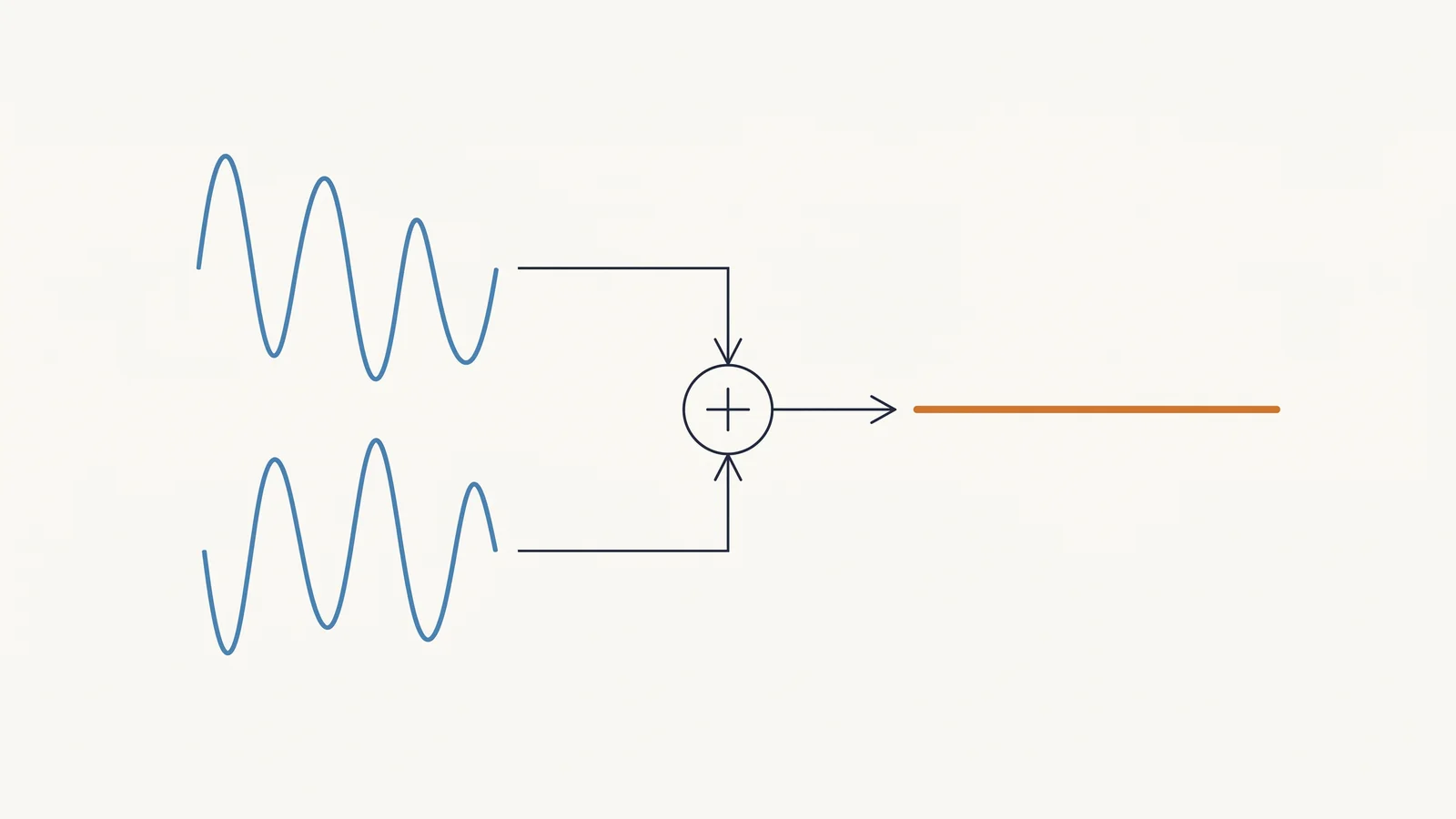
Here's how the null test works, because it's the heart of the story. You feed both amplifiers the same signal, invert one output by 180 degrees, and sum the two together. Whatever's left over, the residual "null," is the audible difference between them. If two amps are truly identical, the leftover is silence. Carver kept adjusting his amp's transfer characteristics, tweaking its electrical behavior until that null very nearly vanished (Stereophile). He essentially reverse-engineered the reference's "sound" into a cheap chassis.
I want to be honest about the details, because they matter and the sources aren't unanimous. The model names and prices are reported differently across accounts, and some cite a Conrad-Johnson Premier Four or other figures rather than the Premier Five and the M-1.0t. I'm citing the Premier Five and M-1.0t version while acknowledging the discrepancy. What isn't in dispute is the reaction. The Challenge lit up the letters pages for months, with plenty of readers and reviewers pushing back hard on what a null test really proves (Stereophile). That argument is the point. Carver forced the industry to defend its assumptions out loud.
What is the Sunfire True Subwoofer?
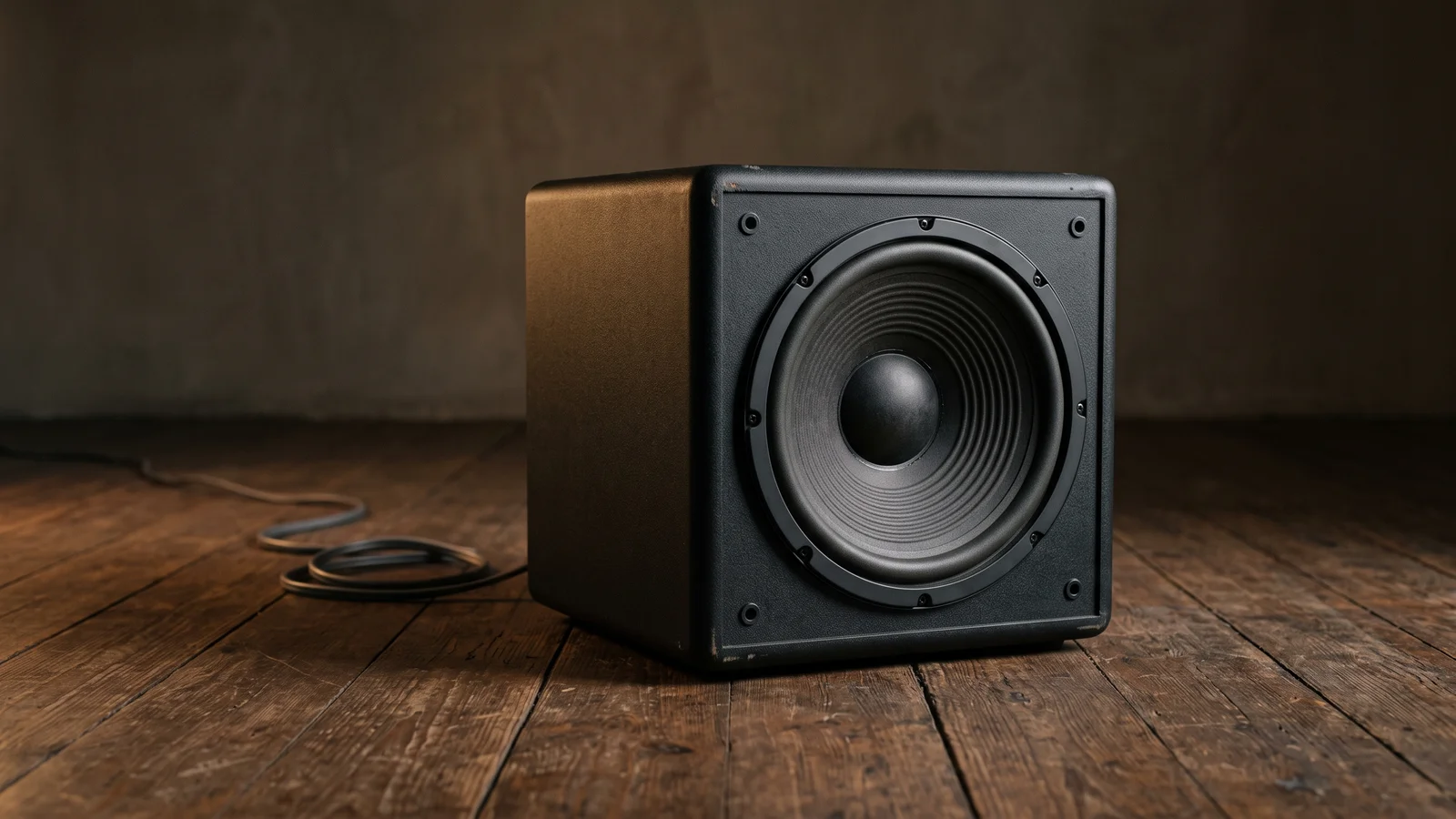
The Sunfire True Subwoofer, launched around 1994 to 1995, crammed roughly a 2,700-watt built-in amplifier into an 11-inch cube and played flat down near 18 Hz (Sound & Vision). It paired an active driver with a passive radiator and leaned on Carver's patented Tracking Downconverter power supply to make all that power fit in a box you could tuck behind a chair.
Carver founded Sunfire in 1994, and this little cube became its calling card (Wikipedia). At the time, deep bass meant a big box, full stop. Physics says moving enough air for 18 Hz takes either lots of cone area or lots of excursion, and Carver bet everything on the second path. The driver had a wild amount of travel, and the onboard amp had the muscle to control it. People genuinely didn't believe the spec sheet until they heard it.
Was it my kind of subwoofer? Honestly, no. I build sealed subs for tight, accurate low end, and a small-cube, high-excursion design chases a different goal. But I respect the sheer audacity of the engineering, and that's a distinction worth keeping. You can admire a design's cleverness without copying its approach. The room, the driver, and the amp all have to agree, which is the same conversation we have when we plan a complete home theater installation.
Is Bob Carver still making amps?
Carver has kept inventing well past the age most people retire, coming out of retirement around February 2022 to hand-build boutique tube amplifiers in his late 70s (Sound & Vision). His later chapters read as a string of comebacks rather than one tidy company. The Carver name bounced between owners over the decades, but the man himself never really stopped building.
The 2010s and 2020s are a tangle, and I'll flag that plainly because sources conflict on exact dates. There was Bob Carver LLC around 2011, then work under Jade Design around 2013 before the two sides parted ways, followed by more Bob Carver-branded tube-amp ventures (Sound & Vision). Somewhere in there sits the cost-no-object Carver Silver Seven tube monoblock from 1988, a genuine statement piece that Stereophile reviewed in its "t" form (Stereophile). I'll keep the Silver Seven's exact figures qualitative here, because the numbers get quoted inconsistently.
Notice what's missing from this story. There's no sold-out tragedy, no beloved shop hollowed out by a spreadsheet. The nameplate churned through owners, sure, but Carver the engineer just kept following his curiosity onto the next bench. That's the American-ingenuity version of an audio career, and it's the version I find most worth telling. The same against-the-grain, build-what-shouldn't-be-possible instinct is exactly what keeps a small shop like ours designing custom speakers by hand, for about fifteen clients a year, instead of chasing whatever's easy. To be clear, we've no affiliation with Carver. We just share the stubbornness.
Frequently Asked Questions
Who is Bob Carver?
Bob Carver, born in 1943 in Washington state (widely reported), is an American physicist and audio designer who co-founded Phase Linear in 1970, then founded Carver Corporation and Sunfire (Wikipedia). He's known for the Phase Linear 700, the Magnetic Field amplifier, and the 1985 Carver Challenge.
What was the Carver Challenge?
The Carver Challenge was a 1985 demonstration at Stereophile where Carver tuned a roughly $400 amplifier to sound like a reference costing thousands, verified by a null test (Stereophile). A null test inverts one amp's output, sums it with the other, and measures the leftover difference. He nearly erased it in 48 hours.
What is a Magnetic Field amplifier?
A Magnetic Field amplifier is Carver's power-supply design, covered by U.S. Patent 4,218,660, that delivers large power from a small, light chassis (Wikipedia). Despite the name, it's not a coil trick. It's a fast tracking power supply that draws heavy current only when the music actually demands it.
What was Phase Linear?
Phase Linear was the amplifier company Carver co-founded in 1970 with Steve Johnston, famous for the roughly 350-watt Phase Linear 700 (Wikipedia). Carver left in 1979, and the brand later changed hands and faded by the early 1980s. Sources disagree on exactly who acquired the name.
Is Bob Carver still making amps?
Yes, in a boutique way. Carver came out of retirement around February 2022 to hand-build tube amplifiers in his late 70s (Sound & Vision). His recent years read as a string of small Bob Carver-branded ventures rather than one continuous company, with dates that vary across sources.
Sources
- Wikipedia - "Bob Carver": https://en.wikipedia.org/wiki/Bob_Carver
- Wikipedia - "Phase Linear": https://en.wikipedia.org/wiki/Phase_Linear
- Wikipedia - "Carver Corporation": https://en.wikipedia.org/wiki/Carver_Corporation
- Stereophile - "The Carver Challenge" (J. Gordon Holt): https://www.stereophile.com/content/carver-challenge
- Stereophile - "The Carver Challenge: Responses": https://www.stereophile.com/content/carver-challenge-letters
- Stereophile - "Bob Carver Interview": https://www.stereophile.com/content/bob-carver-interview
- Stereophile - "Carver Silver Seven-t Monoblock Amplifier": https://www.stereophile.com/content/carver-silver-seven-t-monoblock-amplifier
- The Absolute Sound - "TAS Legacy: Phase Linear 700": https://www.theabsolutesound.com/articles/tas-legacy-phase-linear-700/
- Sound & Vision - "Bob Carver: Rebel Audiophile": https://www.soundandvision.com/content/bob-carver-rebel-audiophile
- Sound & Vision - "Dropping In on Bob Carver": https://www.soundandvision.com/content/dropping-bob-carver
- Bob Carver Corp (official) - "About / The Carver Challenge": https://www.bobcarvercorp.com/about-us
Mike Vincent is the founder of Mike Knows Audio Video and WubWub Audio, where he designs and hand-builds custom loudspeakers and home theaters in Arizona, the old way, for about fifteen clients a year. He has a soft spot for engineers who refuse to accept that big power has to mean a big price; if that sounds like your kind of thinking, start with our hand-built custom speakers.
Comments
Leave a Comment