
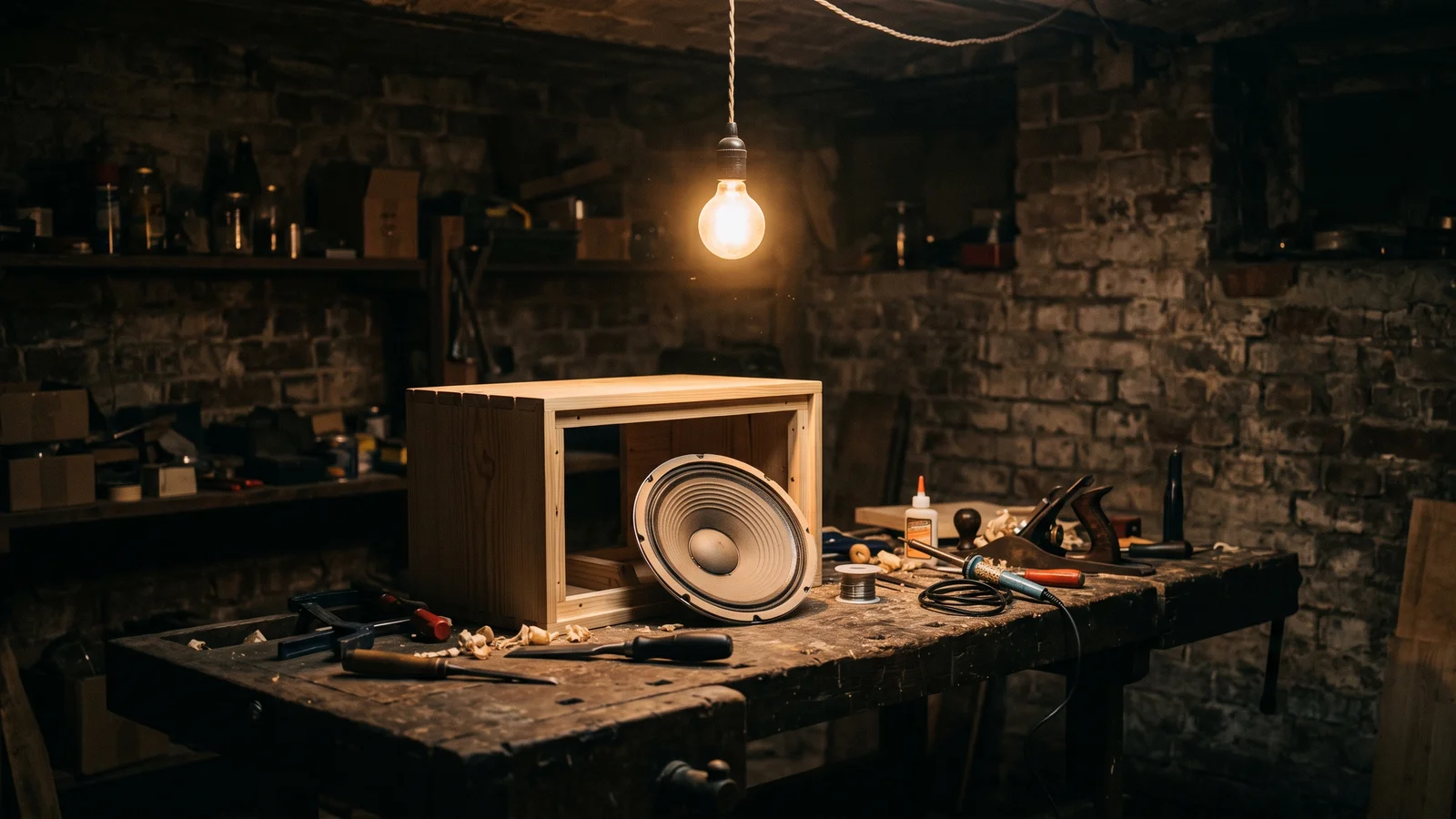
A near-bankrupt textile director built his first loudspeaker in his cellar, wrote 21 plain-English books, and staged concerts to prove hi-fi could fool your ears.
Say "Wharfedale" out loud and most people picture a bookshelf speaker on a showroom shelf. Fair enough. But the name belongs to a valley in West Yorkshire, and the company belongs to a man who built his first loudspeaker in the cellar of his house because he'd nearly gone broke doing something else entirely.
Gilbert Arthur Briggs was a textile-export director, not an engineer. He was plain-spoken, funny in that dry Yorkshire way, and completely obsessed with making music sound right. Over about thirty years he built a speaker company, wrote a shelf of books that turned ordinary listeners into informed buyers, and put live musicians on a stage next to his gear to prove a point. I hand-build speakers for a living, so this one's personal. Let me tell it right.
Key Takeaways
- Gilbert Briggs (1890–1978) founded Wharfedale in 1932 and built his first loudspeaker in the cellar of his home in Ilkley, in the Wharfe valley.
- He came to audio late, after his Bradford textile-export firm was nearly wiped out in the Depression.
- Widely called "the father of hi-fi," he wrote roughly 21 plain-English books between 1948 and 1967 that sold well over a quarter-million copies.
- His live-versus-recorded concerts, using Quad electronics and Wharfedale speakers, packed London's Royal Festival Hall in 1954.
- He sold Wharfedale to the Rank Organisation in 1958 and retired in 1965; the brand is now owned by the China-based International Audio Group.
Who was Gilbert Briggs, the man behind Wharfedale?
Gilbert Arthur Briggs was born December 29, 1890, in Clayton, Bradford, and he's widely remembered as "the father of hi-fi," an accolade earned less by any single invention than by his gift for explaining sound to ordinary people, as his biographical record notes. He wrote under the byline "G. A. Briggs." He died January 9, 1978, at 87.
His start was hard. Briggs lost his father when he was nine and spent time in an orphans' school, according to accounts of his early life. He climbed anyway, becoming a director of a Bradford textile-export firm. Then the Depression came and nearly wiped the business out. That collapse is what pushed a middle-aged businessman toward loudspeakers in the first place.
Here's what I love about the man. He wasn't a lab-coat engineer chasing a theory. He was a listener with a good ear and a practical head, the kind who'd rather show you than lecture you. His writing is full of Yorkshire humor and blunt clarity, as readers of his books have long observed. That plainness turned out to be his superpower.
I've read a fair bit of vintage audio writing across the years, and most of it either talks down to you or drowns you in math. Briggs did neither. He'd explain a crossover the way you'd explain a fishing knot, patiently, with a joke tucked in, assuming you were smart enough to keep up. That tone is rarer than good engineering, and it's why his books still read well seventy years on.
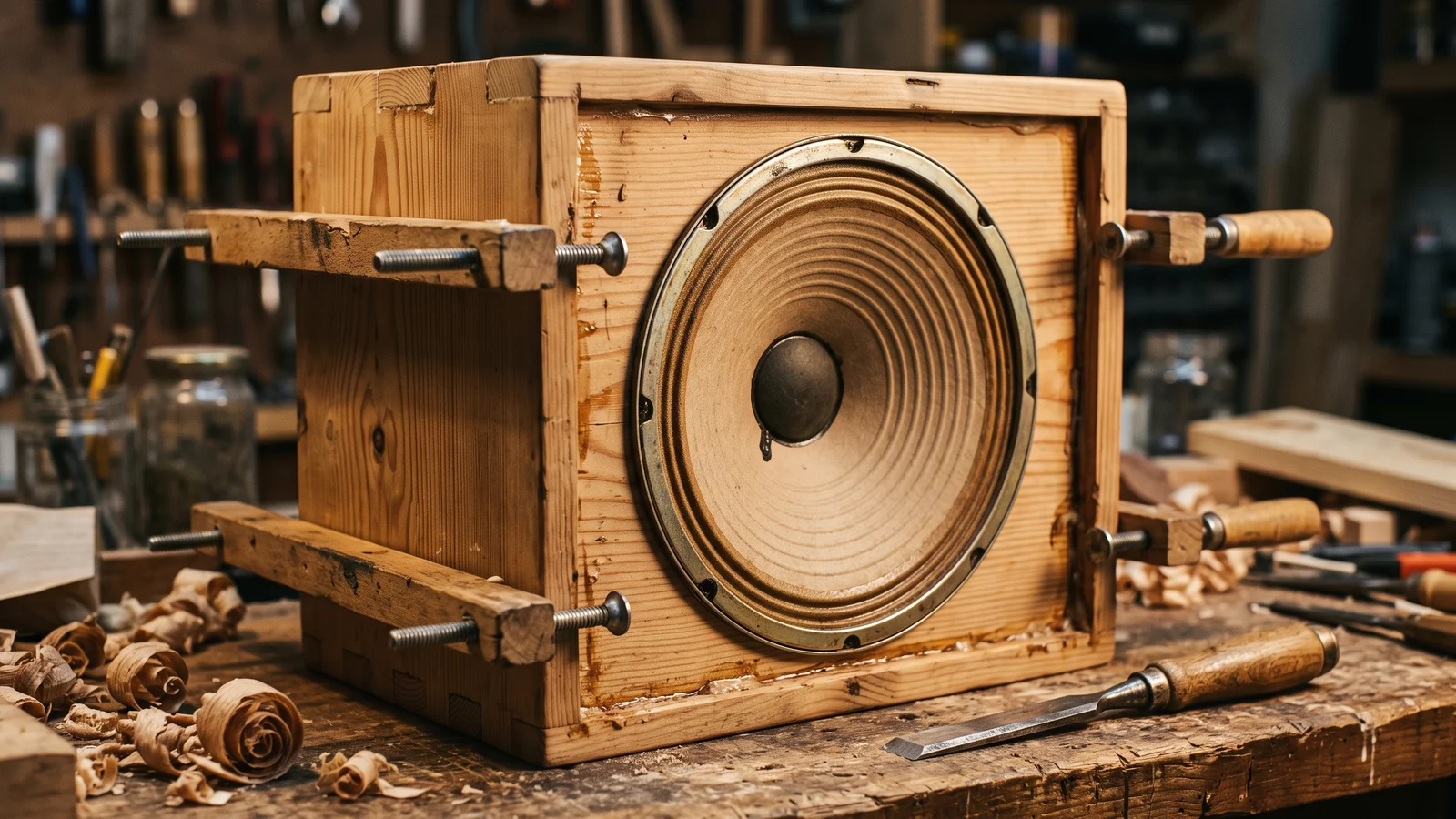
He also came to it as an outsider, which I think mattered more than people give it credit for. An engineer defends his training. A businessman who nearly lost everything asks the only question that counts: does this actually sound better, and can I prove it to a customer? That mindset runs straight through everything Briggs did next, from the cabinets to the books to the concerts.
How did a near-bankrupt businessman start building speakers in his cellar?
Briggs founded Wharfedale Wireless Works in 1932 and built his first loudspeaker in the cellar of his home in Ilkley, taking the brand name from the surrounding Wharfe valley, per the company's founding record. By the outbreak of WWII the operation had grown to roughly 9,000 units a year. Not bad for a man who started with a soldering iron and a stubborn ear.
The path ran cellar in Ilkley, then a factory near Bradford from 1933, then a company later based in Idle. His wife Doris helped run the young operation, as Wharfedale's own history recounts. One thing I want to be clear about, because you'll see conflicting locations online: those aren't contradictions, they're stages. The thing grew, so it moved.
When you build the first ones yourself, you learn the product in your hands. Briggs did exactly that, and it shows in how he wrote about drivers later. He knew what a cone actually does because he'd cut, glued, and cursed at enough of them. That's the same reason we still build custom speakers by hand: the knowledge lives in your fingers, not a spec sheet.
What did Gilbert Briggs actually build?
On the product side, Briggs is credited with one of the first two-way loudspeakers, around 1945, and with early use of ceramic magnets, and by the 1970s the Bradford plant was turning out roughly 800,000 drive units a year, according to Wharfedale company histories). From a cellar to nearly a million drivers annually. That's a lot of paper cones.
Wharfedale's signature engineering trick was the sand-filled cabinet, marked "SFB," with sand packed between an inner and an outer shell to kill resonance, as the brand's heritage notes describe. The story I like best: American buyers were sometimes shipped sand from England to fill the cabinets. Whether that was strictly necessary or just good theater, it tells you Briggs understood that a speaker's box matters as much as its driver.
I'll keep the product tour short on purpose, because the man is the story here and the gear deserves its own piece someday. But that instinct, treat the cabinet as part of the instrument, is exactly right. A resonant box smears everything you feed it. Briggs knew it in 1945. Plenty of modern brands still forget it.
Why did Gilbert Briggs write 21 books about sound?
Briggs wrote roughly 21 books on audio between 1948 and 1967, and they sold well over a quarter-million copies, an astonishing run for technical writing, as his author record documents. The first, "Loudspeakers: The Why and How of Good Reproduction" from 1948, reportedly sold out in five months. People were hungry to understand what they were buying.
That first title, usually just called "Loudspeakers," did something no ad campaign could. It explained cones, crossovers, and cabinets in plain English, and scans of his audio books survive online. Briggs wrote for the layman and the enthusiast at the same time, which is genuinely hard to pull off. The result was a generation of listeners who could tell marketing from measurement.
The list runs deep: "Sound Reproduction," "Amplifiers," a "Cabinet Handbook," the charming "Pianos, Pianists and Sonics" from 1951, and "A to Z in Audio" around 1960, several of which are catalogued in library records. Here's my honest read, and I'll call it interpretation, not fact: those books were as important as any speaker he ever shipped. He didn't just sell hi-fi. He taught people how to hear it.
The books were a demand-creation engine disguised as education. An informed buyer who understands cabinet resonance and crossover points will pay for quality, because now they can hear the difference. Briggs built his own market by refusing to talk down to it.
What were the live-versus-recorded concerts?
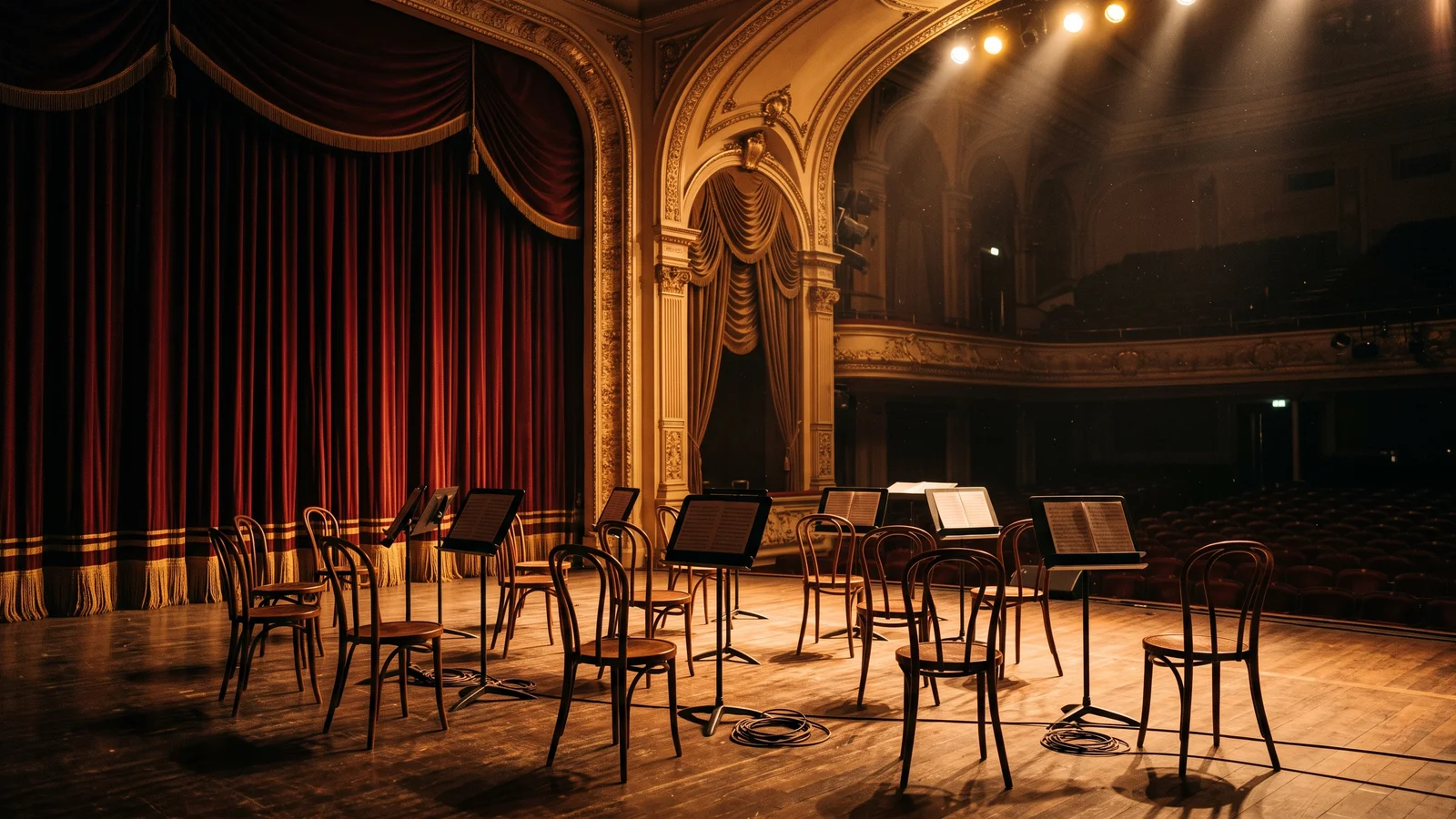
Briggs's most famous stunt was a series of live-versus-recorded demonstrations, where real musicians played a passage and the same passage was then replayed through Wharfedale speakers and Quad electronics, often behind a curtain, and the London show at the Royal Festival Hall in 1954 sold out in four days, as audio historians record. The idea was simple and brave: let the audience judge.
The electronics came from Peter Walker, the founder of Quad and a close friend of Briggs, as company histories note. That partnership mattered. Briggs supplied the loudspeakers, Walker supplied the amplification, and together they were confident enough to invite people to try to catch them out. Would you put your gear up against a live cello and let a full hall decide? That takes some nerve.

The run started in Bradford in 1954, moved to the Royal Festival Hall that same year, and later reached Carnegie Hall in New York, generally dated to 1955, per accounts of the demonstration tours. There were roughly ten demonstrations between 1954 and 1957, with the wider recital run continuing to about 1959. I hedge the Carnegie year on purpose, since it isn't cleanly nailed down in the strongest sources. What isn't in doubt is the audacity of the whole enterprise.
Think about the marketing genius buried in that stunt. Briggs wasn't running an ad or quoting a distortion figure nobody could hear. He was staging proof, in public, with the safety net removed. If the speakers had sounded like speakers instead of the real thing, a hall full of paying skeptics would have known instantly. He bet the brand's reputation on the gear every single night, and won often enough to fill Carnegie Hall.
That's the kind of confidence you can only have when you've built the thing yourself and know exactly what it does. It's also why the concerts belong in the story more than any spec sheet. Briggs understood that hi-fi is finally about one question: can you tell the difference? He spent the back half of the 1950s answering it in front of witnesses.
Who owns Wharfedale now, and what happened to the name?
Briggs sold Wharfedale to the Rank Organisation in 1958, stayed on running day-to-day operations, and retired in 1965 at age 75, as company records show). You'll see the sale dated to 1959 in some references and the retirement to 1964 in others. I'm leading with the better-sourced 1958 and 1965 and noting the wobble rather than pretending it's settled.
The name kept traveling after Briggs let go. Through the early 1990s Wharfedale sat under Verity Group PLC, went through a management buyout in 1996, and in late 1997 was acquired by the International Audio Group, the China-based company founded in 1991 by twin brothers Michael and Bernard Chang, according to IAG's corporate history. IAG also owns Quad, Leak, Mission, Castle, Audiolab, and Luxman. Manufacturing shifted to Ji'an, in Jiangxi province, while design and R&D stayed in the UK at Huntingdon, as the group's brand pages describe.
So here's the arc, and I won't soften it. A Yorkshireman hand-building drivers in his cellar became a badge stamped on mass-produced units an ocean away. That slow slide from a maker's name into a holding company's asset is what the writer Cory Doctorow calls enshittification, and audio nameplates are textbook cases.
Now let me be fair, because lazy takes go wrong right here. Wharfedale still exists, still ships genuinely well-reviewed speakers, and reviewers who've spent real time with them say so, as Stereophile's coverage reflects. More than that, the brand has brought some heritage models back to British manufacture: the Dovedale in 2023, the Super Linton in 2024, and the Aston in 2025, under acoustic director Peter Comeau, with restoration and heritage context documented by longtime hi-fi writers. Credit where it's due. Somebody there still cares about the valley the name came from.
But a name and the person who set the standard are two different things. That's exactly why some of us still do it the old way. Briggs built his first speakers himself because he cared how they sounded, not how cheaply they'd ship. We build custom speakers by hand in our Arizona workshop, one small batch a year, each one signed off and shipped with a birth certificate by the person who designed it. That's a speaker made by a maker, not a heritage logo on a shared production line.
Frequently Asked Questions
Who founded Wharfedale?
Wharfedale was founded by Gilbert Arthur Briggs in 1932, according to the company's founding record. Briggs, a former Bradford textile-export director, built his first loudspeaker in the cellar of his home in Ilkley and named the company after the surrounding Wharfe valley in West Yorkshire. His wife Doris helped run the early business.
Who was Gilbert Briggs?
Gilbert Briggs (1890–1978) was a Yorkshire businessman turned loudspeaker maker who founded Wharfedale in 1932 and is widely called "the father of hi-fi," per his biographical record. Plain-spoken and self-taught, he wrote roughly 21 audio books, built early two-way speakers, and staged famous live-versus-recorded concert demonstrations.
What were the live-versus-recorded concerts?
They were public demonstrations where live musicians played a passage, then the same passage was replayed through Wharfedale speakers and Quad electronics, often behind a curtain, for the audience to judge, as historians record. The 1954 Royal Festival Hall show sold out in four days; roughly ten demonstrations ran between 1954 and 1957.
Who owns Wharfedale now?
Wharfedale is owned by the International Audio Group, a China-based company founded in 1991 that acquired the brand in late 1997, according to corporate histories. IAG also owns Quad, Leak, Mission, Castle, Audiolab, and Luxman. Manufacturing runs from Ji'an, China, while design and R&D stay in the UK at Huntingdon.
What did Gilbert Briggs write?
Briggs wrote roughly 21 books on audio between 1948 and 1967, selling well over a quarter-million copies, per his author record. His first, "Loudspeakers" (1948), reportedly sold out in five months. Others include "Sound Reproduction," "Amplifiers," "Pianos, Pianists and Sonics" (1951), and "A to Z in Audio."
Sources
- Wikipedia, "Gilbert Briggs": https://en.wikipedia.org/wiki/Gilbert_Briggs
- Wikipedia, "Wharfedale (company)": https://en.wikipedia.org/wiki/Wharfedale_(company)
- Wikipedia, "International Audio Group": https://en.wikipedia.org/wiki/International_Audio_Group
- Grace's Guide, "Wharfedale Wireless Works": https://www.gracesguide.co.uk/Wharfedale_Wireless_Works
- Wharfedale, official history page: https://www.wharfedale.co.uk/pages/history
- International Audio Group, Wharfedale brand page: https://iaggroup.com/iag-brands/
- International Audio Group, company history: https://iaggroup.com/company-history/
- Open Library, Gilbert Arthur Briggs author record: https://openlibrary.org/search?author=Gilbert+Arthur+Briggs
- Open Library, "Pianos, Pianists and Sonics": https://openlibrary.org/search?q=Pianos+Pianists+and+Sonics
- WorldRadioHistory, G. A. Briggs "A to Z in Audio" (1961) scan: https://www.worldradiohistory.com/BOOKSHELF-ARH/Technology/Gernsback/Gernsback-A-to-Z-Audio-Briggs-1961.pdf
- Stereophile, "Wharfedale Linton Heritage loudspeaker": https://www.stereophile.com/content/wharfedale-linton-heritage-loudspeaker
- Ken Kessler, hi-fi heritage writing and Wharfedale coverage: https://www.kenkessler.com/
Mike Vincent is the founder of Mike Knows Audio Video and WubWub Audio, where he designs and hand-builds custom loudspeakers and home theaters in Arizona, the old way, for about fifteen clients a year. He has a real soft spot for plain-spoken craftsmen who cared more about how a speaker sounds than how cheaply it ships; if you want a speaker built with that kind of care and signed off by hand, start with our custom loudspeakers.
Comments
Leave a Comment