

The man who wore 'BULLSHIT' as a badge, filed patents into his 90s, and built a corner horn still made 80 years later. The Paul Klipsch story.
Some engineers earn a patent. Paul Klipsch earned a following. In 1946, working out of a rented tin shed behind a dry cleaner in Hope, Arkansas, he built a corner horn speaker and named it the Klipschorn. That same speaker is still made in that same town today, roughly 80 years later, which makes it the longest continuously produced loudspeaker in history (per Klipsch's own milestones).
I've spent a lot of years around horns, so I'll say it plainly: Klipsch was one of us. A stubborn, funny, wildly opinionated craftsman who trusted physics over fashion and said exactly what he thought, usually at full volume. He filed patents into his 90s, wore the word "BULLSHIT" as a badge, and built speakers loud enough to argue with. Let me tell you about him.
Key Takeaways
- Paul Klipsch (1904-2002) founded Klipsch & Associates in 1946 in a rented tin shed in Hope, Arkansas, and hand-built every speaker himself until his first employee arrived in 1948.
- The Klipschorn, his corner-loaded horn, has been in continuous production since 1946, the longest run of any loudspeaker ever made (Klipsch).
- Horn loading gives it about 105 dB sensitivity (1W/1m), which is the whole reason behind his famous line about wanting "a really good five-watt amplifier."
- He held more than 20 patents across acoustics, geophysics, and ballistics, and presented his last technical paper at age 96.
- He handed out yellow "BULLSHIT" lapel buttons to call out marketing hype and titled his technical newsletters "Dope from Hope."
- Heritage speakers are still hand-built in Hope; the Reference line is made in China, and Klipsch now sits inside an automotive conglomerate after VOXX was acquired by Gentex in 2025.
Who was Paul Klipsch?
Paul Wilbur Klipsch (1904-2002) was an American engineer who founded Klipsch & Associates in 1946 and spent the rest of his life building horn loudspeakers (Encyclopedia of Arkansas). He earned an electrical-engineering degree in 1926 and eventually held more than 20 patents across three separate fields, still filing well into old age.
He was born March 9, 1904, in Elkhart, Indiana, where his father taught mechanical engineering at Purdue. His dad died when Paul was 12, and the family moved to Silver City, New Mexico, before Paul landed in El Paso, Texas. He took his BSEE from New Mexico A&M (now New Mexico State) in 1926, played cornet in the band, and shot on the rifle team (ETHW). Later he added an advanced engineering degree from Stanford in 1934.
From electric locomotives to oil fields to a tin shed
Klipsch took the long way to loudspeakers, and the detours mattered. He started at General Electric in Schenectady in the late 1920s, designing radios GE sold to RCA. From 1928 to 1931 he was in Chile keeping electric locomotives running. Back in the States, he spent 1934 to 1941 in Houston as a geophysicist doing oil-field and geophysical exploration, the kind of work that teaches you how sound and vibration actually behave in the real world (Encyclopedia of Arkansas).
World War II put him in Hope. He served as an Army officer at the Southwestern Proving Ground there from 1941 to 1945, testing ordnance. He got his loudspeaker patent in 1945, registered Klipsch & Associates in 1946, and hand-built every single speaker himself in that tin shed until he hired his first employee in 1948 (Klipsch). One man, one shed, one very good idea.
A family of speakers from one small town
Klipsch didn't stop at the flagship. Over the next quarter-century he built out what collectors now call the Heritage line: the Klipschorn in 1946, the Heresy in 1957, the Cornwall in 1959, the La Scala in 1963, and the Belle Klipsch in 1971, named for his first wife, Eva Belle (Klipsch milestones). The Heresy, by the way, is often called the world's first commercial center-channel speaker, which is a bigger deal than it sounds if you've ever set up a home theater.
What is a Klipschorn, and why does it still matter?
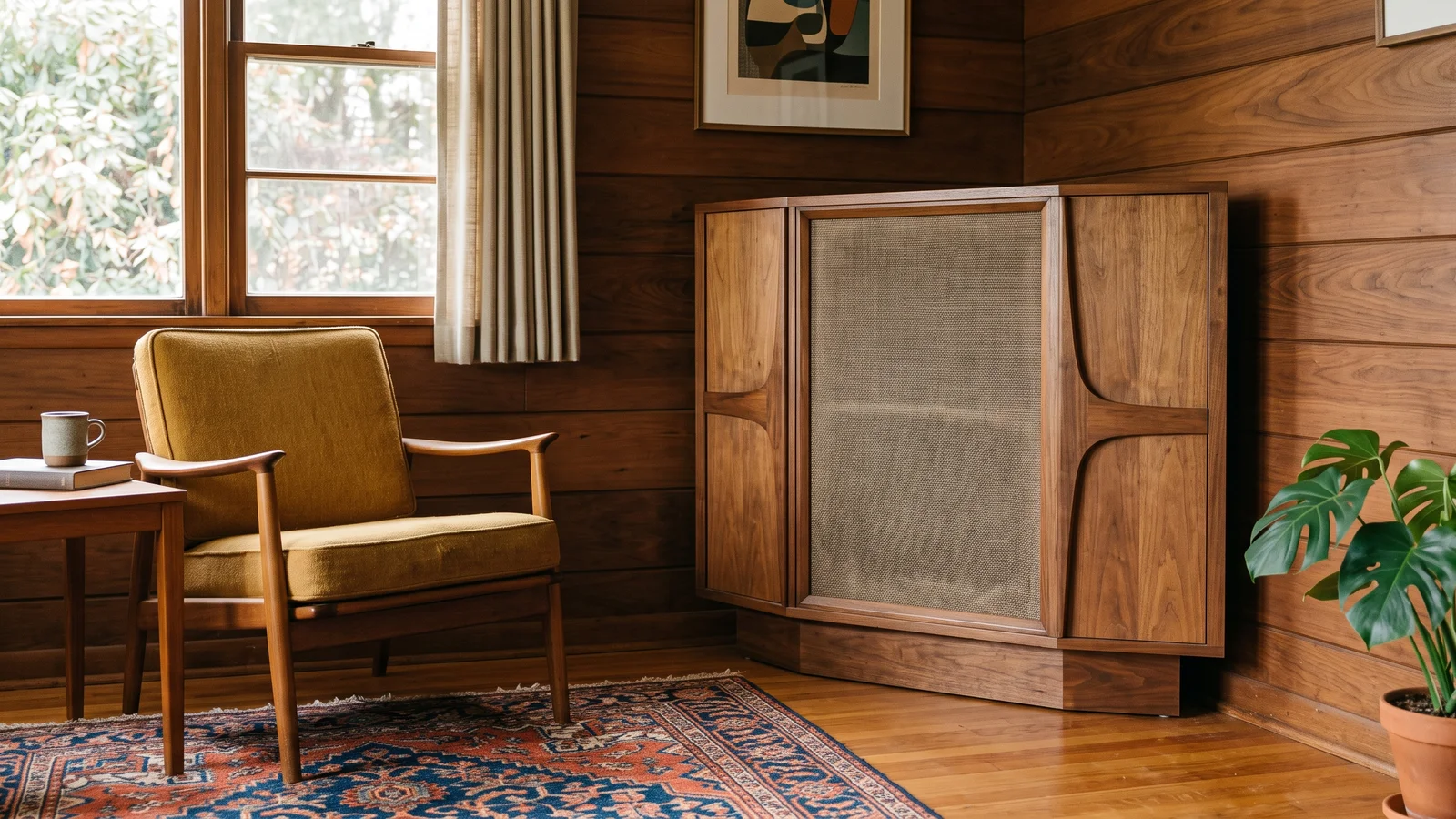
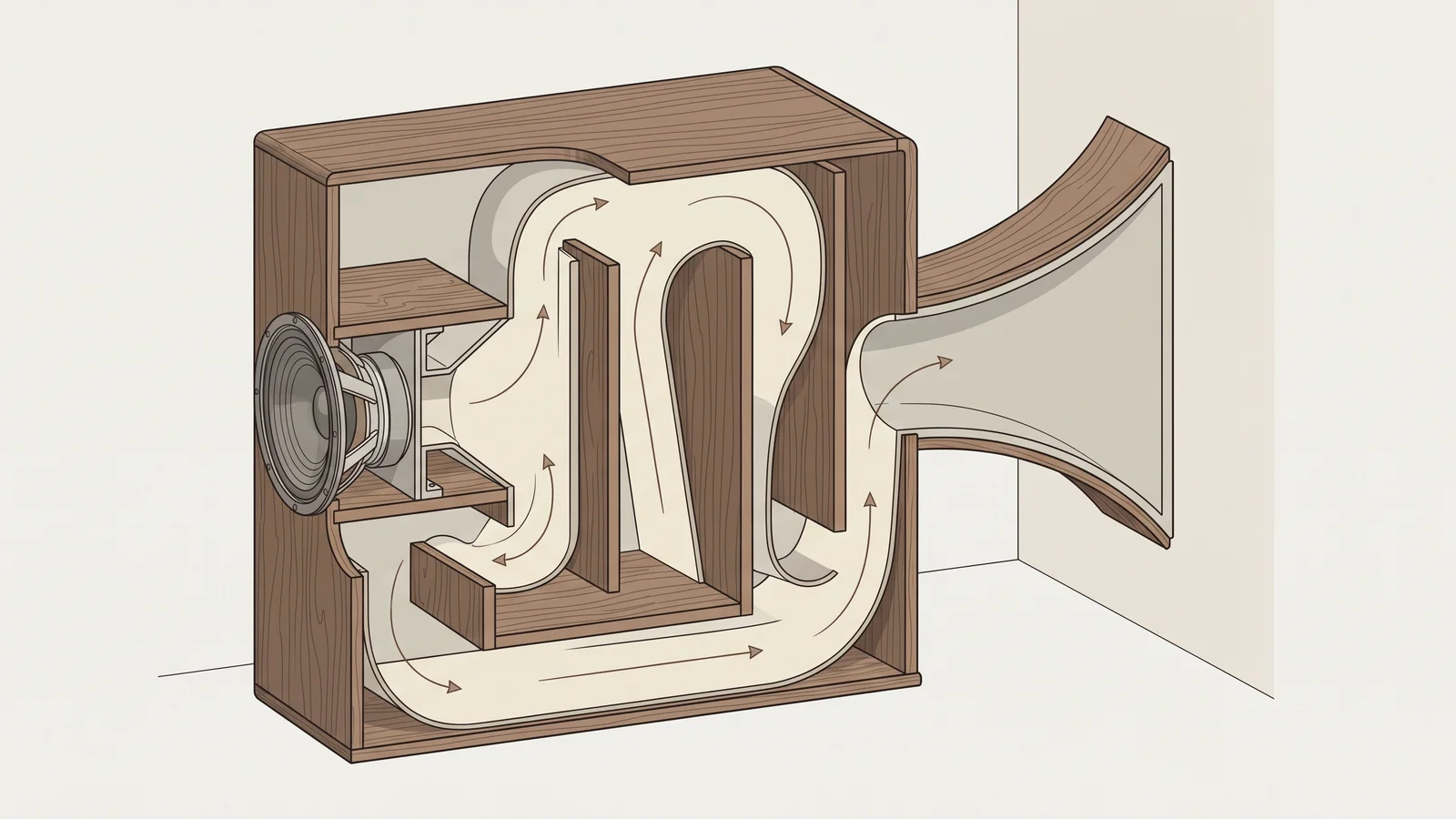
The Klipschorn is a corner-placed, fully horn-loaded folded-horn speaker that Klipsch patented in 1945 and put into production in 1946 (Gear Patrol). It's been built continuously ever since, roughly 80 years, which makes it the longest continuously produced loudspeaker on earth (Klipsch). Its trick is that it uses your room.
Here's the idea. A bass horn needs to be enormous to work all the way down, and nobody wants a speaker the size of a canoe in the living room. So Klipsch folded the horn back on itself inside the cabinet and designed it to sit in a 90-degree room corner. The two walls become an extension of the horn's mouth, letting the room finish the job the cabinet can't (Gear Patrol). It started as a two-way and moved to a three-way design in the early 1950s.
That corner-and-room thinking is exactly the kind of thing we obsess over when we plan a home theater installation, because a speaker never plays in a vacuum. Klipsch understood in 1946 what a lot of the industry still forgets: the room is part of the instrument.
Why does the Klipschorn need so few watts?
The Klipschorn is rated at about 105 dB sensitivity at one watt, one meter (per Klipsch's specs), which is roughly 14 to 20 dB louder per watt than an ordinary speaker. That single number is the whole reason behind Klipsch's most-quoted line: "What this country needs is a really good five-watt amplifier."
Why so loud on so little? A horn is an acoustic transformer, basically a megaphone bolted to a driver. It matches the tiny, high-pressure movements of the cone to the big, low-pressure air of the room far more efficiently than a bare cone can. More of your amplifier's watts turn into actual sound instead of heat. When a speaker is that sensitive, five clean watts genuinely go a long way, and a small, high-quality amp beats a big, mediocre one.
Klipsch also had zero patience for the industry's obsession with shrinking everything. "They make miniature tubes and miniature loudspeakers," he liked to point out, "but they have yet to come up with a miniature 32-foot wavelength" (Klipsch Museum). Low bass is physically big. You can't cheat it. That same high-efficiency, physics-first thinking still shapes the hand-built custom loudspeakers I make, because a design that respects the physics ages a lot better than one that fights it.
What made Paul Klipsch such a character?
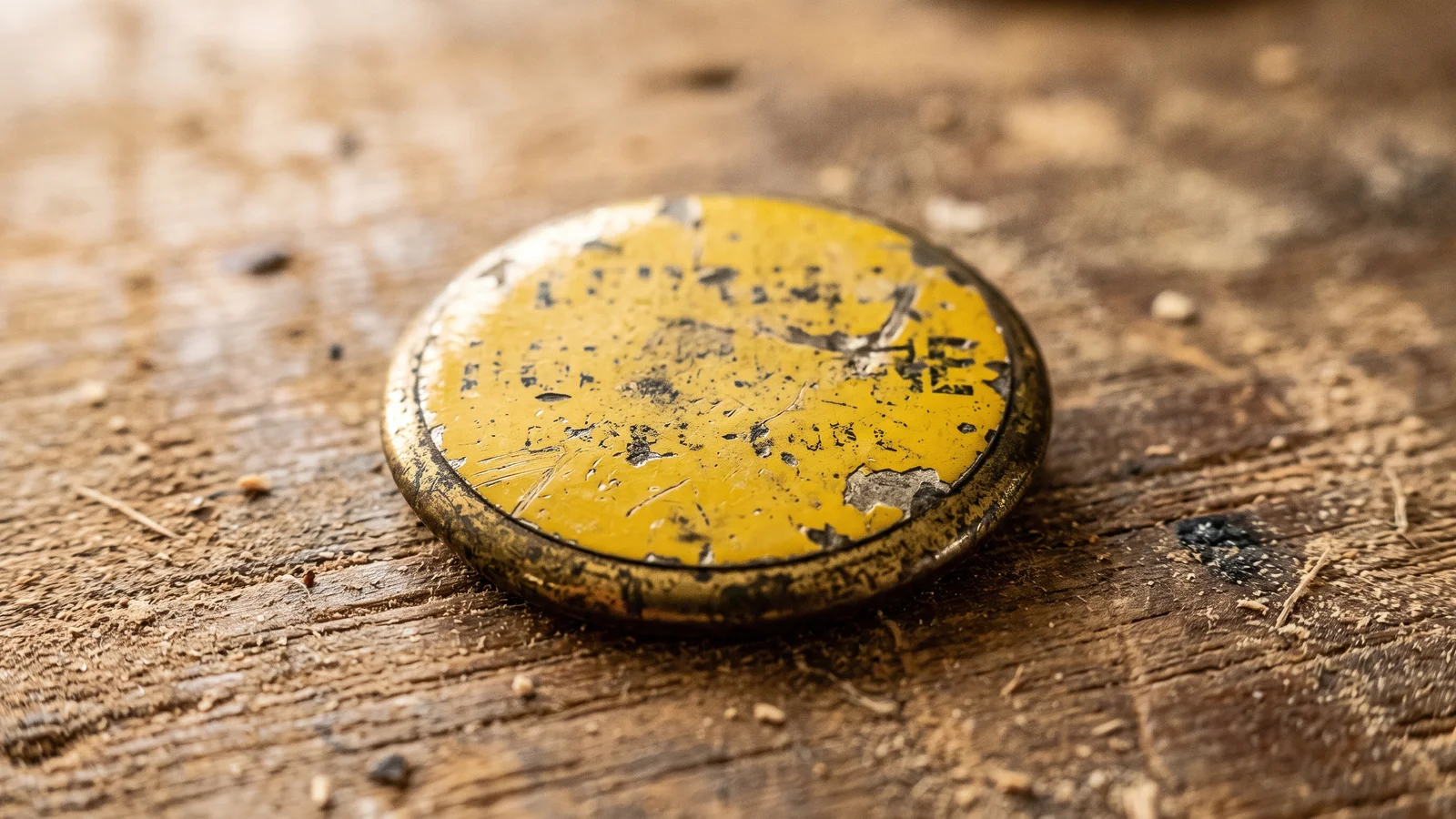
Sometime in the 1960s, Paul Klipsch started handing out yellow enamel lapel buttons printed with a single word: BULLSHIT (Red Bull Music Academy). The story goes he threw down a magazine carrying an especially inflated speaker ad, yelled the word, then had the buttons made and pressed one on anyone peddling audio hype at trade shows and IEEE conferences. The man had opinions.
He backed the attitude with substance. His technical newsletters were cheerfully titled "Dope from Hope," and he wrote them for engineers, not marketers. Off the bench he was a competitive marksman, a cornet player, a licensed pilot, and a 33rd-degree Mason. He once described himself as an "overcompensated disappointed musician," which might be the most honest self-diagnosis any speaker designer has ever offered (Encyclopedia of Arkansas).
My favorite Klipsch line is the one that doubles as a design philosophy: "There is no such thing as 'high fidelity.' Either you've got fidelity or you've got infidelity" (Klipsch Museum). No marketing tier, no premium badge. Either the speaker tells the truth or it doesn't. He also nailed why people like him do this at all: "Audio was a hobby and then a profession, but I still consider myself an amateur, in that an amateur is one who practices his art for love."
How was Paul Klipsch honored, and when did he die?
The Audio Engineering Society awarded Paul Klipsch its Silver Medal in 1978, citing both his loudspeaker design and his work on distortion measurement (ETHW). More recognition followed: the Audio Hall of Fame in 1983, an honorary doctorate from New Mexico State in 1981, and the Engineering and Science Hall of Fame in 1997 (Engineering & Science Hall of Fame).
The patents tell you how his brain worked. He filed more than 20 of them between 1940 and 1983, split across three fields: about 12 in acoustics, 8 in geophysics, and 3 in ballistics (ETHW). Sound, the earth, and things that go bang. He never really stopped, either. He presented his last paper to the Audio Engineering Society in 2000, at age 96.
Paul Klipsch died in Hope, Arkansas, on May 5, 2002, at age 98 (Stereophile). He was inducted into the Consumer Electronics Hall of Fame in 2004, two years after his death. Not bad for a guy who started with one shed and a horn nobody had asked for.
What happened to Klipsch after Paul Klipsch died?
Paul Klipsch had no direct heir, so in 1989 he sold the company to his second cousin, Fred Klipsch, who moved corporate operations to Indianapolis while Heritage manufacturing stayed put in Hope (Encyclopedia of Arkansas). From there the name kept changing hands. In 2011, Audiovox (later VOXX International) acquired the Klipsch Group for roughly $166 million, closing the deal on March 1 (Audiovox).
Then it got stranger. In April 2025, VOXX itself was acquired by Gentex, an automotive parts company best known for auto-dimming rearview mirrors (Gentex). So the corner horn Paul Klipsch built in a tin shed now lives inside a car-mirror conglomerate. The industry has a word for a beloved thing slowly hollowed out after the suits take over, and it's enshittification. Klipsch is a milder case than most, but the split-brand tell is right there: the Reference line and most modern models are made in China, while the Heritage classics stay hand-assembled in Hope, from real wood, "never with robotics" (Klipsch USA Engineered).
Here's the part that gets me, as a builder. The Klipschorn, the La Scala, and the Cornwall are still hand-built in the same small Arkansas town, roughly 80 years on. That thread, the hand-built, made-in-America thread, is worth keeping alive. In our Arizona workshop we still build every loudspeaker by hand, for about fifteen clients a year, because a speaker made the way Paul made his is still worth making. If that sounds like your kind of thing, it's the whole idea behind our hand-built custom speakers.
Frequently Asked Questions
Who was Paul Klipsch?
Paul Klipsch (1904-2002) was an American engineer who founded Klipsch & Associates in Hope, Arkansas, in 1946 (Encyclopedia of Arkansas). He invented the corner-loaded Klipschorn, held more than 20 patents across acoustics, geophysics, and ballistics, and became famous for handing out yellow "BULLSHIT" buttons to call out inflated audio marketing.
What is a Klipschorn?
The Klipschorn is a corner-placed, fully horn-loaded folded-horn loudspeaker that Klipsch patented in 1945 and shipped in 1946 (Gear Patrol). It folds a large bass horn inside the cabinet and uses the room's corner walls to extend the horn's mouth. It is the longest continuously produced loudspeaker in history.
Is Klipsch still made in America?
Partly. The Heritage line, including the Klipschorn, La Scala, and Cornwall, is still hand-assembled in Hope, Arkansas, "never with robotics" (Klipsch USA Engineered). The Reference line and most other models are made in China. Klipsch is now owned by VOXX, which Gentex acquired in April 2025 (Gentex).
When did Paul Klipsch die?
Paul Klipsch died in Hope, Arkansas, on May 5, 2002, at age 98 (Stereophile). He worked nearly to the end, presenting his last technical paper to the Audio Engineering Society in 2000 at age 96. He was inducted into the Consumer Electronics Hall of Fame posthumously in 2004.
Why is the Klipschorn so efficient?
Horn loading. A horn acts as an acoustic transformer that couples the driver to the room far better than a bare cone, turning more amplifier power into sound (Gear Patrol). The Klipschorn is rated at about 105 dB sensitivity at one watt, which is why Klipsch famously said the country needed "a really good five-watt amplifier."
Sources
- Klipsch - "The Founder: Paul W. Klipsch": https://www.klipsch.com/founder
- Klipsch - "Klipsch Milestones": https://www.klipsch.com/klipsch-milestones
- Klipsch - "USA Engineered": https://www.klipsch.com/usa-engineered
- Encyclopedia of Arkansas - "Paul Wilbur Klipsch": https://encyclopediaofarkansas.net/entries/paul-wilbur-klipsch-15125/
- Engineering & Science Hall of Fame - "Paul W. Klipsch": https://eshalloffame.org/inductee/paul-w-klipsch/
- IEEE Engineering & Technology History Wiki (ETHW) - "Paul W. Klipsch": https://ethw.org/Paul_W._Klipsch
- Klipsch Museum of Audio History - "Biography": https://www.klipschmuseum.org/biography
- Stereophile - "Paul W. Klipsch, 1904-2002" (obituary): https://www.stereophile.com/news/11338/index.html
- Red Bull Music Academy Daily - "Klipsch: No Bullshit": https://daily.redbullmusicacademy.com/2016/11/klipsch-feature/
- Gear Patrol - "The History of the Klipschorn": https://www.gearpatrol.com/audio/klipsch-klipschorn-history/
- Wikipedia - "Paul Wilbur Klipsch": https://en.wikipedia.org/wiki/Paul_Wilbur_Klipsch
- PR Newswire (Audiovox) - "Audiovox Announces Definitive Agreement to Acquire Klipsch": https://www.prnewswire.com/news-releases/audiovox-announces-definitive-agreement-to-acquire-klipsch-115219889.html
- PR Newswire (Gentex) - "Gentex Corporation Closes on its Acquisition of VOXX International Corporation": https://www.prnewswire.com/news-releases/gentex-corporation-closes-on-its-acquisition-of-voxx-international-corporation-302416948.html
Mike Vincent is the founder of Mike Knows Audio Video and WubWub Audio, where he designs and hand-builds custom loudspeakers and home theaters in Arizona, the old way, for about fifteen clients a year. He has a soft spot for high-efficiency horns and anyone stubborn enough to build them by hand; if you want a speaker made the way Paul Klipsch would have respected, start with our hand-built custom speakers.
Comments
Leave a Comment