
Quad was a 1970s music format war so glorious and so botched it took itself out. Then its DNA quietly ended up in every surround system you own. Here's the story.
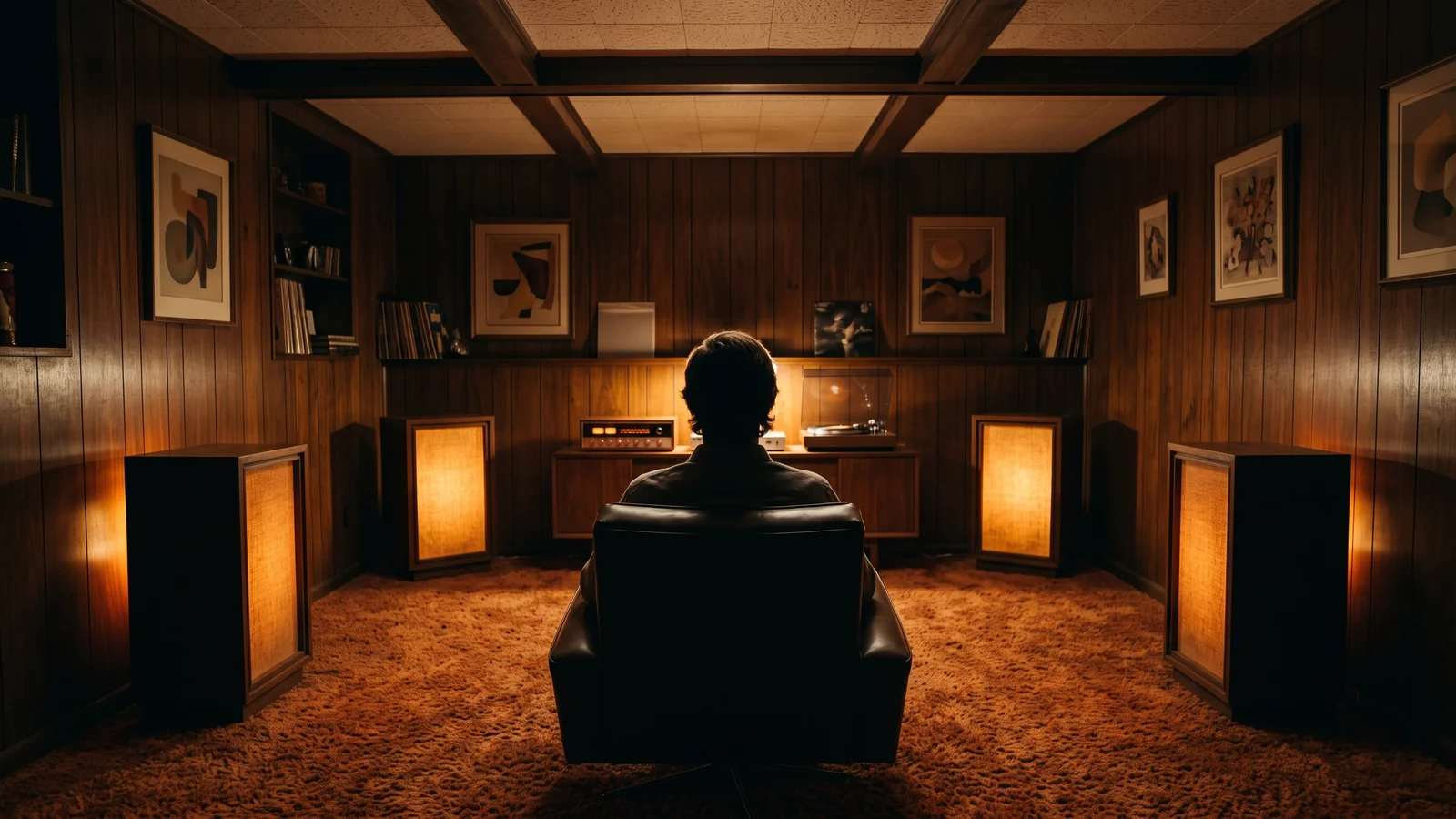
Picture a suburban den in 1973. Shag carpet, wood paneling, a big receiver glowing orange, and four speakers, one in each corner of the room. The guy in the recliner is grinning like a kid because the drums are behind his head and the strings are off to his left. That was quadraphonic sound, and for about five years it was going to be the future of recorded music.
It wasn't. Quad arrived around 1971 and was effectively dead by 1976, per Wikipedia's account of the format. The record industry launched at least three incompatible systems, confused everyone who tried to buy in, and then watched the whole thing collapse in an oil crisis. It's one of my favorite disasters in all of audio. Here's the twist, though. Quad lost the battle and quietly won the war. Its fingerprints are on every surround system you own. So let's go around the room.
Key Takeaways
- Quadraphonic sound put four channels in the four corners of a room and counts as the earliest consumer surround product, per Wikipedia. It peaked from 1971 to 1976.
- It died in a format war: SQ and QS were lossy matrix systems, CD-4 was true discrete, and none of them worked with each other.
- CD-4 sounded best but wore records out fast and needed a special stylus. Matrix sounded barely better than stereo to many ears.
- The 1973 oil crisis and a deep recession gutted hi-fi spending and vinyl quality, and quad never recovered.
- Quad's matrix math survived into Dolby Stereo, Dolby Surround, and Pro Logic. Modern 5.1 and Atmos are the discrete surround CD-4 was reaching for.
What was quadraphonic sound?
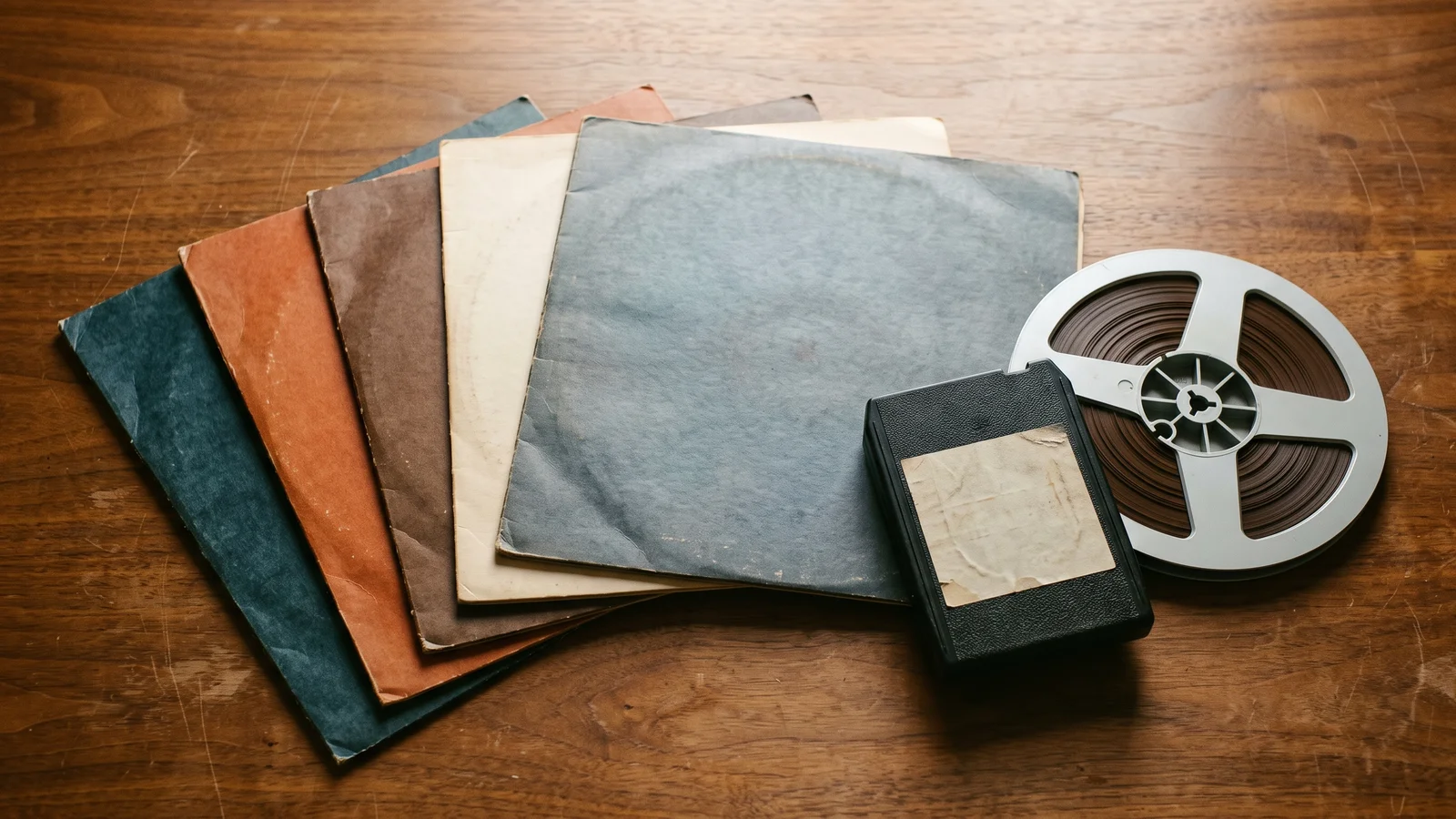
Quadraphonic sound put four channels of audio around the listener, one speaker in each corner of the room, and it counts as the earliest consumer product in surround sound, per Wikipedia. It peaked between 1971 and 1976, delivered across three different media: LP records, 8-track tape, and reel-to-reel. The LP was the main battleground.
The tape formats actually came first and worked better. Open-reel quad, sold as "Q4," showed up around 1969 and carried four genuine, separate channels, so it was true discrete sound with no trickery, per Wikipedia's history of quadraphonic open-reel tape. The quadraphonic 8-track, branded "Quad-8" or "Q8," arrived in 1970 and gave a lot of people their first taste of music wrapping all the way around them.
But tape was never where the money was. The record album was the format of the decade, and cracking four channels onto a vinyl LP became the industry's obsession. That's where the fight broke out, and that's where quad earned its reputation as a beautiful mess. Two rival camps had completely different ideas about how to pull it off, and neither would blink.
The marketing was pure early-1970s optimism. Ads promised you'd sit inside the concert, with the band around you and the room breathing. Labels rushed to remix their catalogs in quad, and a few of those mixes, from Pink Floyd to Santana, are still hunted by collectors today. For a moment it really did feel like the next inevitable step after stereo, the same way stereo had felt inevitable after mono. The problem was never the dream. It was the plumbing underneath it.
What started the quadraphonic format war?
The war started because two camps disagreed on how to fit four channels onto a two-channel record. The matrix camp went first, folding four channels down into the two stereo grooves and decoding them back out, a "4-2-4" scheme, per Wikipedia. CBS launched its SQ system in 1971, and Sansui launched a rival matrix called QS the very same year.
SQ, short for Stereo Quadraphonic, came out of CBS and Columbia. It built on Peter Scheiber's pioneering matrix work, engineered into product form by Benjamin Bauer, using a 90-degree phase shift to hide the rear channels in the groove. Early decoders managed only about 3 dB of front-to-back separation. Later "full logic" decoders pushed that toward 20 dB, but they did it by actively steering the sound, which could make the soundfield pump and sway as the music moved. Columbia, Epic, Stax, CTI, and Vanguard all pressed SQ titles.
QS, Sansui's "Regular Matrix," also traced back to Scheiber's phase-matrix ideas and shipped in 1971 too. It was a gentler, more symmetrical matrix that many listeners found pleasant, if never dramatically separated. ABC, Dunhill, Pye, and Ovation went the QS route. Neither matrix was truly four separate channels, and audiophiles noticed.
There was a quieter ancestor behind all of it. In 1969 Dynaco introduced Dynaquad, a dead-simple passive matrix built on the Hafler circuit, wiring a pair of rear speakers across the difference signal between left and right, per Wikipedia. No decoder box, no license, no fuss. That humble hookup matters more than it looks, and we'll come back to it.
How was CD-4 different from SQ and QS?
CD-4 refused to fold anything. Short for Compatible Discrete 4, it cut four genuine, separate channels into the groove, a true "4-4-4" system marketed by JVC and RCA starting in May 1972, per Wikipedia. It pulled that off with a clever and fragile trick: an ultrasonic carrier riding high above the music, out where your ears can't reach.
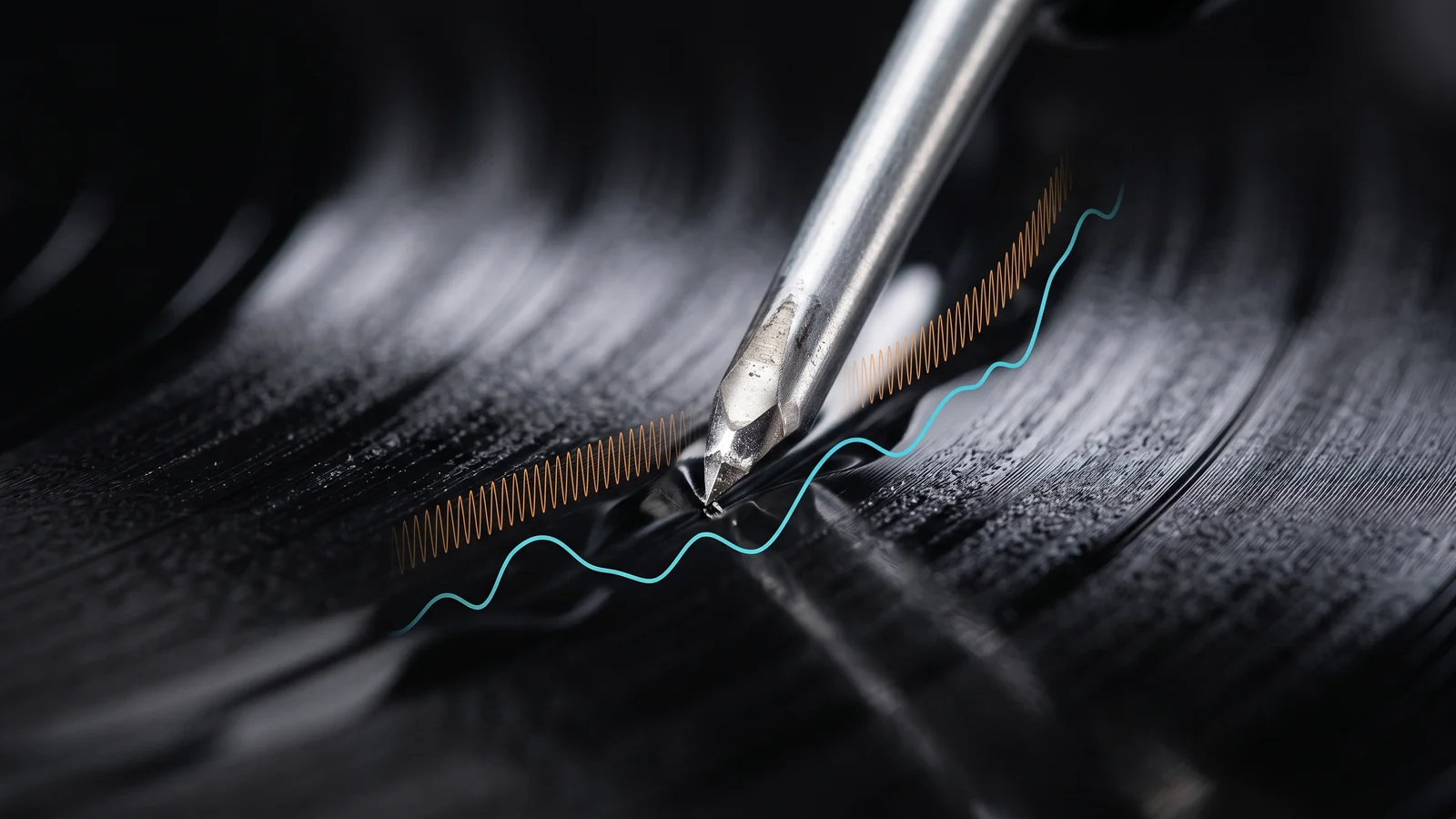
Here's the engineering, because it's wonderful. The front-left-minus-back-left and front-right-minus-back-right difference signals were stacked on an FM-modulated subcarrier centered around 30 kHz, above the normal audio band, a scheme documented in the AES literature on the CD-4 demodulator. Your regular stereo cartridge only read the audible part, so a CD-4 disc played fine in mono or stereo. To hear all four channels you needed a special demodulator, a wide-band cartridge, and a Shibata line-contact stylus able to trace that ultrasonic wiggle.
When it worked, CD-4 had the best channel separation of the three formats, hands down. RCA, Warner, Elektra, and Atlantic all pressed Quadradiscs. On paper it was the winner. In practice it was carrying a time bomb, and the war would be decided by which system the average buyer could actually live with.
| System | Encoding | Rear-channel separation | Extra gear / decoder needed | Stereo-compatible |
|---|---|---|---|---|
| SQ (CBS/Columbia, 1971) | Matrix (4-2-4) | ~3 dB basic; up to ~20 dB with full-logic decoders | SQ decoder | Yes |
| QS (Sansui, 1971) | Matrix (4-2-4, "Regular Matrix") | Modest; gentler, more symmetrical than SQ | QS decoder | Yes |
| CD-4 (JVC/RCA, 1972) | Discrete (4-4-4) | Full separation, best of the three | Demodulator + wide-band cartridge + Shibata stylus | Yes |
Why did quadraphonic sound fail?
Quad failed because nobody agreed on a standard, and the customer paid for the chaos. Three incompatible systems, SQ, QS, and CD-4, plus a scatter of also-rans, meant your records, your decoder, and even your stylus all had to match, per Wikipedia. Then the 1973 oil crisis and the recession that followed gutted the spending that quad depended on.
Walk into a hi-fi shop in 1974 and the problem hits you fast. Competing logos everywhere. A rack of SQ albums useless on a CD-4 rig. To go quad you bought two more speakers, a decoder, and for CD-4 a special cartridge and stylus on top. That's a lot of money and homework for a format that half the reviewers said sounded, in the matrix versions, barely better than good stereo.
CD-4 had a nastier secret. That fragile ultrasonic carrier and the fine Shibata stylus that traced it wore out quickly, so a Quadradisc could sound glorious for its first dozen plays and then degrade as the high-frequency information literally scrubbed away, as documented by the vinyl engineers at pspatialaudio.com. A demo that dazzled in the store didn't hold up on the shelf at home.
Then the economy did the rest. The 1973 oil crisis sent petroleum prices soaring, and vinyl is a petroleum product, per Wikipedia's history of the crisis. The 1973 to 1975 recession squeezed hi-fi budgets while pressing-plant quality dropped, and cheaper, noisier vinyl hurt the fragile CD-4 discs most of all. Add thin catalogs, and by 1976 the whole experiment was winding down, with the last Quad-8 tapes trailing out around 1978.
I've got a soft spot for how the industry described it later. Stereophile called it "the forever half-life of quadraphonics," and Paul McGowan of PS Audio has argued, as his own opinion, that quad was simply an idea that arrived before the technology and the market were ready for it. Both feel about right to me. Great idea, wrong decade, no referee.
How did quadraphonic sound quietly win?
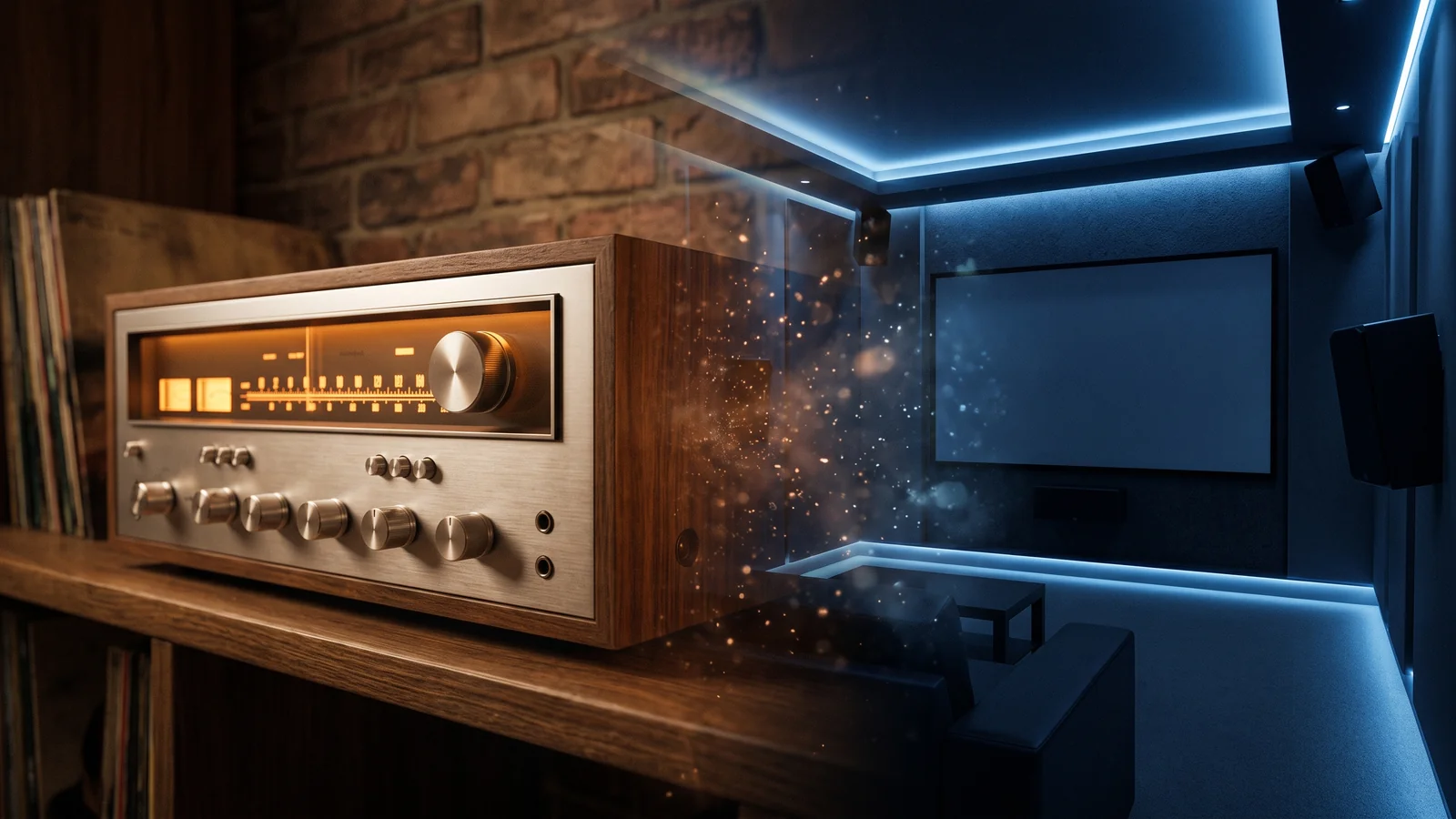
Here's the redemption arc, and it's a good one. Quad's matrix math never died. It went to the movies. Dolby used the Tate Directional Enhancement System, an advanced SQ decoder, inside its theater processors until about 1986, when it rolled that experience into Pro Logic, as Sound On Sound traces in its history of surround. The core idea, wrapping the listener in sound, is now simply how audio works.
Follow the thread and it's unbroken. Matrix surround led to Dolby Stereo, then Dolby Surround for the home, then Dolby Pro Logic. Pro Logic II steers four channels out of two using active logic "just like the SQ and QS systems before it," and here's the kicker: you can still drop a vintage SQ or QS quad LP onto a turntable and decode it through a Pro Logic II receiver today, per Wikipedia's account of Dolby Pro Logic. The 1971 records still work. The decoder just has a different badge now.
The discrete dream came true as well. CD-4 reached for reliable, fully separate multichannel sound and couldn't quite hold it on vinyl. Digital finally delivered it. Every 5.1, 7.1, and Dolby Atmos system is the clean, discrete surround CD-4 was chasing, minus the worn-out stylus. And the cheapest ancestor of all, the humble Hafler hookup behind Dynaco's Dynaquad, still lives on as the simplest form of matrix surround you can wire yourself.
There's a lesson in here that the industry keeps relearning. Quad had the concept exactly right and the execution scattered across three feuding standards, so the good idea drowned in the format war before it could mature. The pioneers weren't wrong about surrounding the listener. They were early, and they were divided. When the same idea came back with one agreed standard and reliable delivery, it stuck for good. Most listeners today have never heard the word quadraphonic, yet they sit inside its idea every movie night.
So the format that "failed" actually seeded the entire surround-sound industry. That four-corner idea from the shag-carpet den is the whole point of a modern home theater installation in Arizona: put the listener in the middle of the sound and let the room disappear. Quad just showed up fifty years early, without a rulebook.
Frequently Asked Questions
What is quadraphonic sound?
Quadraphonic sound, also called quad or 4.0, is a four-channel audio format that places one speaker in each corner of the room to surround the listener. Introduced around 1971 on LPs, 8-track, and reel-to-reel tape, it's considered the earliest consumer surround-sound product and the direct ancestor of modern 5.1 and Atmos systems.
Why did quadraphonic sound fail?
Quad failed mainly because of a format war. The industry launched three incompatible systems, SQ, QS, and CD-4, that didn't work together, which confused buyers and split thin catalogs. It also cost extra for speakers, decoders, and special styli, and the 1973 oil crisis and recession gutted hi-fi spending. It was effectively dead by 1976.
What was the difference between SQ and CD-4?
SQ was a matrix system that folded four channels into two stereo grooves and decoded them back, giving modest rear separation of roughly 3 to 20 dB. CD-4 was a true discrete system that cut four separate channels using an ultrasonic carrier above the audio band. CD-4 sounded best but needed a special stylus and wore out fast.
Is quadraphonic the same as surround sound?
Quadraphonic is an early ancestor of surround sound, not the same thing. Quad used four channels with no dedicated center or subwoofer. Modern surround like 5.1 adds a center channel and a low-frequency effects channel. But quad's matrix decoding evolved directly into Dolby Surround and Pro Logic, so today's surround is quad's descendant.
Can you still play quadraphonic records?
Yes. Any quad LP plays fine in normal stereo on any turntable. To hear all four channels from SQ or QS matrix records, you can decode them through a modern Dolby Pro Logic II receiver. CD-4 discrete records need a vintage CD-4 demodulator and a compatible stylus, which are collector items today but still findable.
Sources
- Wikipedia — "Quadraphonic sound": https://en.wikipedia.org/wiki/Quadraphonic_sound
- Wikipedia — "Stereo Quadraphonic": https://en.wikipedia.org/wiki/Stereo_Quadraphonic
- Wikipedia — "Compatible Discrete 4": https://en.wikipedia.org/wiki/Compatible_Discrete_4
- Wikipedia — "Dynaquad": https://en.wikipedia.org/wiki/Dynaquad
- Wikipedia — "Dolby Pro Logic": https://en.wikipedia.org/wiki/Dolby_Pro_Logic
- Wikipedia — "Quadraphonic open reel tape": https://en.wikipedia.org/wiki/Quadraphonic_open_reel_tape
- Wikipedia — "1973 oil crisis": https://en.wikipedia.org/wiki/1973_oil_crisis
- Richard Brice — "A New Decoder for CD-4 (Quadradisc) Phonograph Records," Audio Engineering Society E-Library (2019): https://www.aes.org/e-lib/browse.cfm?elib=20544
- pspatialaudio.com — "The wear of CD-4 quadraphonic records": https://www.pspatialaudio.com/CD-4%20wear.htm
- Stereophile — "The Forever Half-Life of Quadraphonics": https://www.stereophile.com/content/forever-half-life-quadraphonics
- Sound On Sound — "Surround Sound Explained: Part 2": https://www.soundonsound.com/techniques/surround-sound-explained-part-2
- PS Audio — Paul McGowan, "Quadraphonic sound" (opinion): https://www.psaudio.com/blogs/ask-paul/quadraphonic-sound
- zStereo — "The Quadraphonic Story": https://www.zstereo.com/the-quadraphonic-story
Mike Vincent is the founder of Mike Knows Audio Video and WubWub Audio, where he designs and hand-builds custom loudspeakers and home theaters in Arizona, the old way, for about fifteen clients a year. He still thinks quad had the right idea about putting you inside the music, which is why every home theater he builds starts with the room, not the spec sheet.
Comments
Leave a Comment