
One restless founder started three of America's best-known speaker brands, then walked away and built another every time a company grew up and got sold.
Most people who start a great company spend the rest of their life guarding it. Sandy Gross did the opposite. He started one, helped it grow up, then walked away and built another from nothing. Then he did it a third time. Polk Audio, Definitive Technology, and GoldenEar Technology all trace back to the same restless guy who apparently would rather draw up a new tower speaker than manage the one he already had.
That instinct is rare, and honestly, I get it. When you love designing and building the thing more than you love owning the balance sheet, the shine wears off the moment a company turns into a spreadsheet. Gross had a front-row seat to what happens after you sell, three separate times, and kept starting over anyway. Let me walk you through the arc.
Key Takeaways
- Sandy Gross co-founded three major American loudspeaker brands, Polk Audio, Definitive Technology, and GoldenEar, across a career trade press measured at more than 50 years.
- He is a Johns Hopkins graduate, a former pro slot-car racer, and a self-described "crazed audiophile" who calls himself a serial entrepreneur.
- Definitive Technology (1990) made its name on bipolar towers, and the 1995 BP2000 put a powered 15-inch subwoofer inside each tower.
- GoldenEar (2010) built its identity on the Triton towers and the High-Velocity Folded Ribbon (HVFR) tweeter, an Air-Motion-Transformer design descended from Oskar Heil's 1970s work.
- Polk and Definitive drifted through corporate owners to Samsung's Harman in 2025; GoldenEar now belongs to audiophile-run PML, parent of Paradigm and Anthem.
Who is Sandy Gross, and why does one man have three speaker companies?
Sandy Gross is the only person to co-found three well-known American loudspeaker companies, Polk Audio, Definitive Technology, and GoldenEar, across a run that trade publication Strata-gee pegged at more than 50 years in the audio business (Strata-gee, 2020). He calls himself a serial entrepreneur. The trade press calls him something else entirely.
Strata-gee has described Gross as arguably the best speaker marketer the industry has ever produced, and that reputation is well earned (Strata-gee, 2020). But the marketing came from a genuine obsession, not a playbook. Gross graduated from Johns Hopkins in 1972, where he started in engineering, switched to social and behavioral science, and picked up a minor in creative writing (Forbes, 2014). In his younger years he raced slot cars professionally, which tells you something about the wiring.
Mostly, though, he was a listener. Gross described himself as a "crazed audiophile" whose college rig paired Tannoy speakers with Marantz electronics (Forbes, 2014). That's the tell. Every company he touched aimed at the same target: real high-end sound at a price a normal enthusiast could actually reach. He kept chasing that idea long after most founders would have retired on the first win.
How did Polk Audio launch Sandy Gross's career?
Polk Audio began in 1972 in Baltimore, founded by Matthew Polk, George Klopfer, and Sandy Gross, three men who had met at Johns Hopkins and set out to build affordable high-performance speakers (Wikipedia: Polk Audio). The Monitor 7 arrived in 1974 and put the young company on the map. Gross ran the marketing side, and he was very good at it.
Polk's signature technical trick came later with the SDA line, short for Stereo Dimensional Array, a design meant to cancel the inter-channel crosstalk that reaches each ear from the wrong speaker (Wikipedia: Polk Audio). That's a story worth its own article, so I'll keep Polk to its role here: the origin chapter, the place Gross learned how to turn clever engineering into speakers people actually bought. It's where the pattern started.
What made Definitive Technology's towers different?
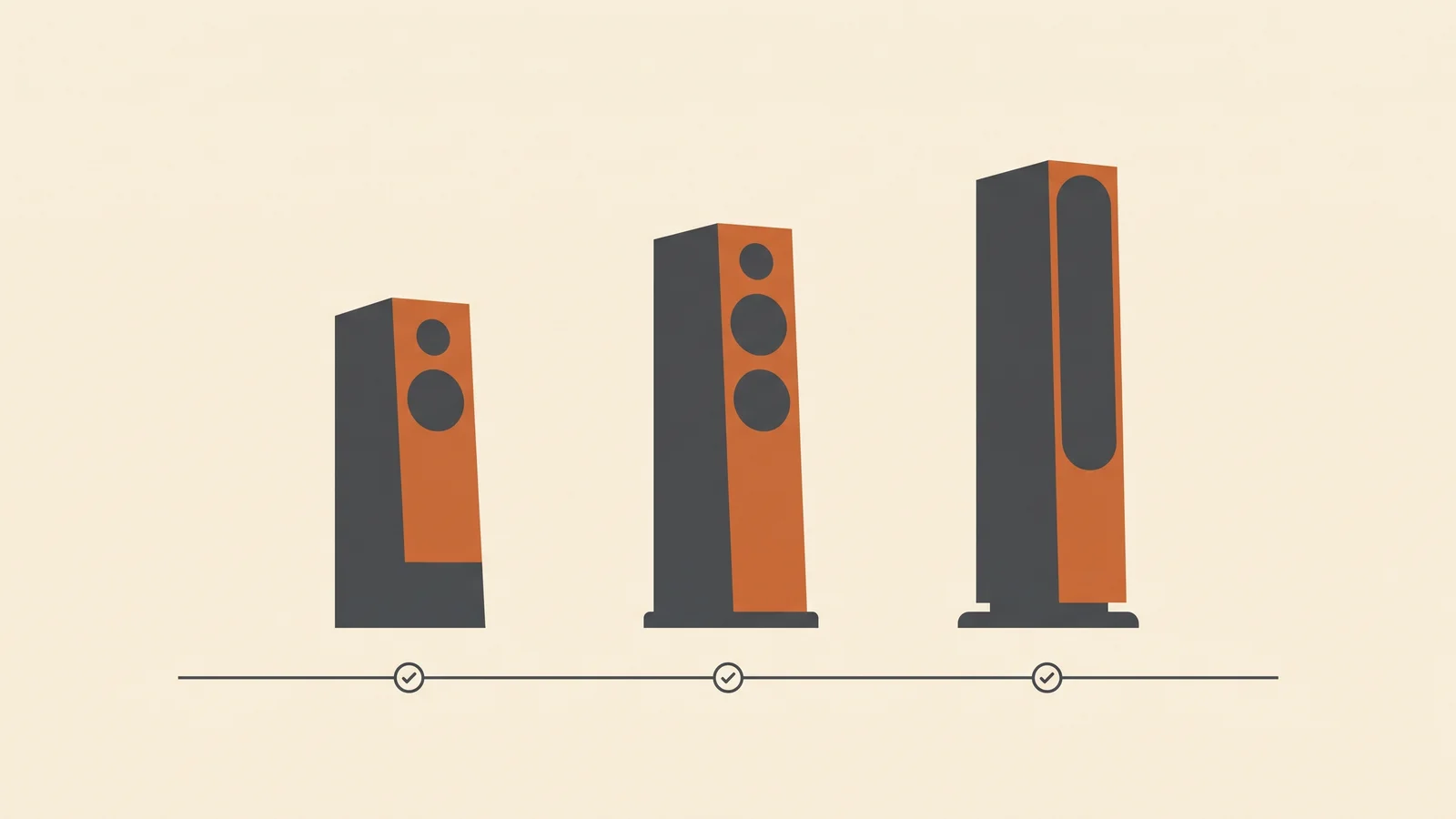
Definitive Technology was founded in 1990 in Owings Mills, Maryland, by Sandy Gross, Don Givogue, and Ed Blaise, and its first products were monolithic bipolar tower speakers that fired sound from both the front and rear of the cabinet (Wikipedia: Definitive Technology). The bipolar layout threw a big, room-filling soundstage. That became the brand's calling card almost overnight.
The idea behind bipolar radiation is simple to describe and hard to pull off well. By putting driver arrays on the front and back and running them in phase, the speaker leans on room reflections to create a larger, more enveloping image than a conventional forward-firing box. Definitive made that trick approachable and sold it hard. Gross, again, handled the story.
Then came the move that really set Definitive apart. The BP2000, introduced in 1995, built a powered 15-inch subwoofer directly into each tower, so a stereo pair carried its own bass amplification inside the cabinets (Wikipedia: Definitive Technology). One quick correction while we're here: you'll occasionally see Definitive credited with powered towers in the late 1980s. That's impossible. The company didn't exist until 1990. The powered-tower breakthrough is a mid-90s story, full stop.
I've always respected the powered-tower concept because it solves a real problem. Most rooms fight you on bass, and building the sub into the speaker gives the designer control over the crossover and the amp together. It's the same logic we use when we voice a custom speaker and its low end as one system instead of bolting parts together and hoping.
What is GoldenEar Technology, and what makes the HVFR tweeter special?
GoldenEar Technology was founded in 2010 by Sandy Gross with his longtime partner Don Givogue, built around the slogans "We Make High-End Affordable" and "A Passion for Sonic Perfection" and sold through specialty dealers rather than big-box retail (GoldenEar). In his 2014 Forbes interview, Gross also credited Anne Conaway as a co-founder (Forbes, 2014). The dealer-only route mattered. It kept the brand in rooms where people actually listen before they buy.
GoldenEar's flagship became the Triton tower line, a series of slim, high-value floorstanders that reviewers repeatedly ranked against speakers costing several times more (Stereophile, 2017). The value-flagship identity was the whole point. Gross wasn't trying to build the most expensive speaker in the room. He was trying to embarrass it.
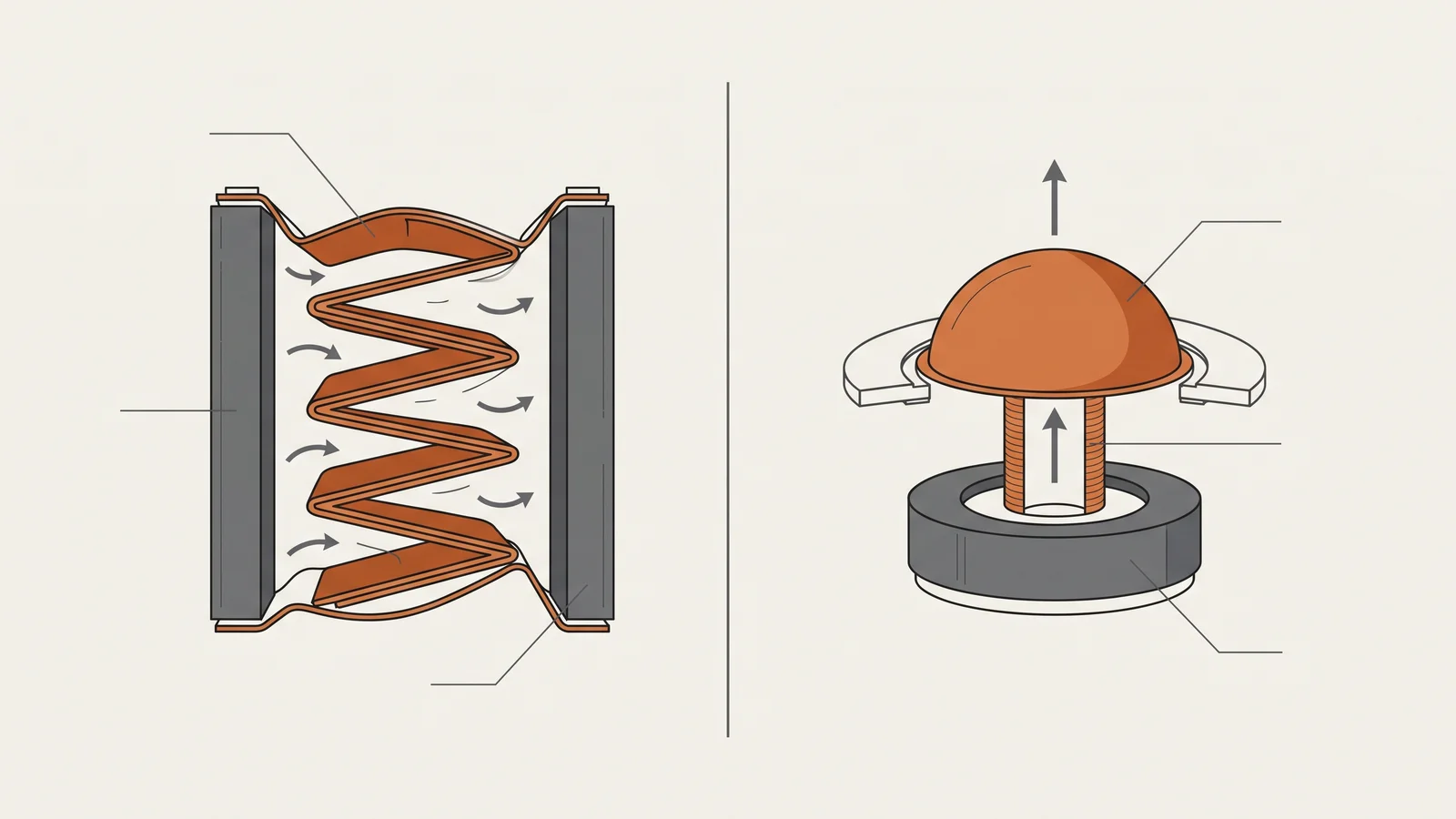
The technical signature across the line is the High-Velocity Folded Ribbon tweeter, or HVFR. It's an Air-Motion-Transformer-type design, descended from the AMT that physicist Oskar Heil developed in the 1970s, and it works by squeezing air out of the folds of a pleated diaphragm rather than pushing air with a flat dome (Audioholics, 2021). Because the pleated diaphragm has near-zero moving mass and moves air faster than it moves itself, an AMT can deliver airy detail and wide dispersion that a conventional dome struggles to match.
Here's the builder's take. A dome tweeter has to physically accelerate its whole mass back and forth, and mass is the enemy of high-frequency speed. The folded-ribbon approach sidesteps a lot of that, which is why the good ones sound so open up top. GoldenEar didn't invent the AMT, but they made it a mainstream calling card at prices normal people could reach. That's very Sandy Gross.
Who owns Polk, Definitive, and GoldenEar now?
All three of Sandy Gross's companies have changed hands, but they landed in very different places. Definitive Technology went to Directed Electronics in 2004, Polk Audio followed in 2006, and both eventually rode through Sound United to medical-device maker Masimo in 2022, then to Samsung's Harman International, which completed its $350 million purchase of the Sound United consumer-audio business on September 23, 2025 (HARMAN, 2025; Korea Herald, 2025). GoldenEar took a different exit entirely.
The Polk and Definitive path is the familiar carousel. Directed Electronics bundled them into a consumer-audio group, that group became Sound United, Sound United was acquired by Masimo in 2022, and Masimo sold the whole consumer-audio business to Harman, a Samsung subsidiary, in 2025 (Sound & Vision, 2020). Somewhere along that route, both names drifted toward offshore manufacturing and mass retail, well away from the founder's hands. That slow slide from craftsman-run brand to line item on a conglomerate's balance sheet is what writer Cory Doctorow calls enshittification, and audio nameplates are textbook cases.
GoldenEar's story bends the other way, and fairness demands I say so. Gross sold GoldenEar to The Quest Group, the parent of cable maker AudioQuest run by Bill Low, in January 2020, and he stepped down as President Emeritus that May (audioXpress, 2020; CE Pro, 2020). Then, effective January 1, 2025, GoldenEar moved to PML Sound International, the parent company of Paradigm, Anthem, and MartinLogan, and was rebranded GoldenEar Studio Inc. (Future Audiophile, 2025).
That last move is not strip-mining. PML is an audiophile-run house with real engineering and manufacturing behind Paradigm and Anthem, so GoldenEar landed with people who actually build speakers, not people who trade nameplates. I'd call that continuation, not decline. The through-line across all three companies is the man himself: a rare three-time founder who watched exactly what happens after you sell, and kept starting over anyway.
Why does Sandy Gross's start-over instinct matter?
Sandy Gross is a case study in the founder-craftsman impulse, the drive to design and build the thing yourself, set against the brand-as-asset logic that treats a great name as inventory to be bought, moved offshore, and flipped. Across more than 50 years he chose to build three times rather than sit and manage one (Strata-gee, 2020). That choice says everything about what he valued.
Read his own interviews and the pattern is obvious. Gross talks like a designer and a listener, not a portfolio manager (The Absolute Sound, 2016). He'd apparently rather start a fourth company than spend a quarter reviewing a spreadsheet. When the work stops being about the sound and starts being about the ledger, he leaves. There's real integrity in that, even if it means handing your name to someone else at the end.
That's the ethos we build on, too. Gross spent a career proving that high-end sound doesn't have to come from a conglomerate, and that the person who designs the speaker should be the person who cares how it sounds. We build custom speakers by hand in our Arizona workshop, a small batch a year, each pair voiced and signed off by the person whose name is on the shop. Small shop, owner designs it, owner stands behind it. Sandy Gross would recognize the whole idea.
Frequently Asked Questions
Who is Sandy Gross?
Sandy Gross is a self-described serial entrepreneur who co-founded three American loudspeaker brands: Polk Audio, Definitive Technology, and GoldenEar Technology (Forbes, 2014). A Johns Hopkins graduate and former pro slot-car racer, he is widely regarded in the trade press as one of the best speaker marketers the industry has ever produced.
What companies did Sandy Gross found?
Sandy Gross co-founded three companies over five decades: Polk Audio in Baltimore in 1972, Definitive Technology in Owings Mills, Maryland, in 1990, and GoldenEar Technology in 2010 (Wikipedia: Definitive Technology). Each aimed at the same target he chased his whole career, genuine high-end sound at a price real enthusiasts could afford.
What happened to Polk Audio?
Polk Audio passed through Directed Electronics in 2006, then Sound United, then medical-device maker Masimo in 2022, and finally Samsung's Harman International in September 2025 (Sound & Vision, 2020). Along the way the brand drifted toward offshore manufacturing and mass retail, far from its Baltimore founders.
Who owns GoldenEar now?
GoldenEar is owned by PML Sound International, the parent of Paradigm, Anthem, and MartinLogan, which acquired it effective January 1, 2025, and rebranded it GoldenEar Studio Inc. (Future Audiophile, 2025). PML bought it from The Quest Group, AudioQuest's parent, which had owned GoldenEar since January 2020.
What is a GoldenEar Triton?
A GoldenEar Triton is the brand's flagship line of slim floorstanding tower speakers, praised by reviewers as high-value performers that compete with far pricier rivals (Stereophile, 2017). Tritons use GoldenEar's High-Velocity Folded Ribbon tweeter, an Air-Motion-Transformer design with near-zero moving mass and wide dispersion.
Sources
- Forbes, "12 Questions For Sandy Gross": https://www.forbes.com/sites/geoffreymorrison/2014/03/12/12-questions-for-sandy-gross-presidentceo-of-goldenear-technology-former-presidentceo-of-definitive-technology-and-co-founder-of-polk-audio/
- Wikipedia, "Polk Audio": https://en.wikipedia.org/wiki/Polk_Audio
- Wikipedia, "Definitive Technology": https://en.wikipedia.org/wiki/Definitive_Technology
- GoldenEar, "About" (official company page): https://www.goldenear.com/about
- Strata-gee, "Sandy Gross Steps Down from GoldenEar; Reflects on His Illustrious 50-Year Career": https://www.strata-gee.com/sandy-gross-steps-down-from-goldenear-reflects-on-his-illustrious-50-year-career/
- CE Pro, "Sandy Gross Steps Down from GoldenEar": https://www.cepro.com/audio-video/sandy-gross-steps-down-from-goldenear/
- Sound & Vision, "Sandy Gross Departs GoldenEar": https://www.soundandvision.com/content/sandy-gross-departs-goldenear
- Future Audiophile, "Parent Company of Paradigm and MartinLogan Buys GoldenEar From Audioquest": https://futureaudiophile.com/parent-company-of-paradigm-and-martinlogan-buys-goldenear-from-audioquest/
- audioXpress, "The Quest Group Agrees to Acquire GoldenEar Technology": https://audioxpress.com/news/the-quest-group-agrees-to-acquire-goldenear-technology
- Stereophile, "GoldenEar Technology Triton Reference Loudspeaker": https://www.stereophile.com/content/goldenear-technology-triton-reference-loudspeaker
- Audioholics, "GoldenEar T44 Tower Speaker Review" (HVFR/AMT explanation): https://www.audioholics.com/tower-speaker-reviews/goldenear-t44
- The Absolute Sound, "A Q&A with Sandy Gross of GoldenEar Technology": https://www.theabsolutesound.com/articles/a-qa-with-sandy-gross-of-goldenear-technology/
- HARMAN, "HARMAN Completes Sound United Acquisition to Expand Premium Audio Leadership": https://news.harman.com/releases/harman-completes-sound-united-acquisition-to-expand-premium-audio-leadership
- Korea Herald, "Harman completes $350m acquisition of Masimo's Sound United": https://www.koreaherald.com/article/10582516
Mike Vincent is the founder of Mike Knows Audio Video and WubWub Audio, where he designs and hand-builds custom loudspeakers and home theaters in Arizona, the old way, for about fifteen clients a year. He has a real soft spot for founders who'd rather start over than coast on a name; if you want a tower built and voiced by the person whose name is on the shop, start with our custom loudspeakers.
Comments
Leave a Comment