
Not a format, not a codec: THX is the certification that taught living rooms to sound like the cinema. Here's where it came from and why it still matters.
You've heard it, even if you've never set foot in a THX-certified theater. The lights drop, the screen goes black, and a low rumble crawls out of nowhere and swells into a chord so wide it presses on your chest. That's the Deep Note. It's the sound of a promise: what you're about to watch will sound the way the people who made it actually intended.
That promise has a name, THX, and it began with one engineer at George Lucas's company who was sick of great movies sounding like garbage in bad rooms. I've calibrated enough theaters to tell you he was right about the thing that matters most. It isn't the gear. It's the room. Let's get into it.
Key Takeaways
- THX is a quality-assurance certification, not a sound format or codec, and it layers on top of Dolby and DTS rather than replacing them.
- Lucasfilm founded THX Ltd on May 20, 1983, and Return of the Jedi became the first film shown in a THX theater on May 25, 1983.
- Engineer Tomlinson Holman created the standard; he also coined the term "5.1" in 1987 and won a 2001 Academy Sci-Tech Award.
- The Deep Note logo was built by Dr. James A. "Andy" Moorer in 1983 from 30 computer-generated voices rising across roughly three octaves.
- THX certification is obsessed with the room: floating floors, non-parallel walls, acoustically transparent screens, and an NC30 background-noise limit.
- Lucasfilm spun THX off on June 12, 2002, and Razer has owned it since October 17, 2016.
What is THX, and why isn't it a sound format?
THX isn't a sound format, and that trips up almost everyone. It's a quality-assurance certification, born at Lucasfilm in 1983, that verifies a theater or a piece of gear actually meets a strict performance bar (Wikipedia). It layers on top of Dolby or DTS. It never replaces them.
Here's the cleanest way I can put it. Dolby and DTS decide what the soundtrack is. THX checks whether the room and the equipment can play that soundtrack back the way the mixing stage heard it. One is the recipe. The other is the health inspector who walks into the kitchen and makes sure the oven hits temperature.
That distinction matters because the marketing muddied it for decades. People still argue online about "THX versus Dolby" like they're rival codecs fighting for the same slot. They aren't. A theater can be THX-certified and running a Dolby Digital soundtrack at the same time, as the standard's own history makes clear. THX is the seal on the door, not the audio inside the film.
Who invented THX, and where did the name come from?
THX was created by Tomlinson Holman, an engineer at Lucasfilm, and the company dedicated THX Ltd on May 20, 1983, according to the standard's history. Days later, on May 25, 1983, Return of the Jedi became the first film screened in a THX-certified theater, as Lucasfilm recounts. The timing was deliberate. Lucas wanted his own movie shown right.
The name has a great backstory, and most of the internet gets it half wrong. THX is commonly said to mean "Tomlinson Holman's eXperiment," but that's a later retrofit. The name actually came from his crossover circuit, sometimes written as XVR, reworked by Lucasfilm's Jim Kessler into a tidy three-letter nod to Lucas's 1971 debut film THX 1138 (Wikipedia). Two meanings in three letters. Clean work.
Holman was no lightweight, either. He coined the term "5.1" in 1987 to describe five full-range channels plus a low-frequency channel, he taught film sound at USC, and he picked up a 2001 Academy Award for Scientific and Technical achievement, per the IEEE's engineering-history archive and his own career record. When USC honored him years later, it wasn't for marketing. It was for the science under the seal.
The problem Holman was actually solving
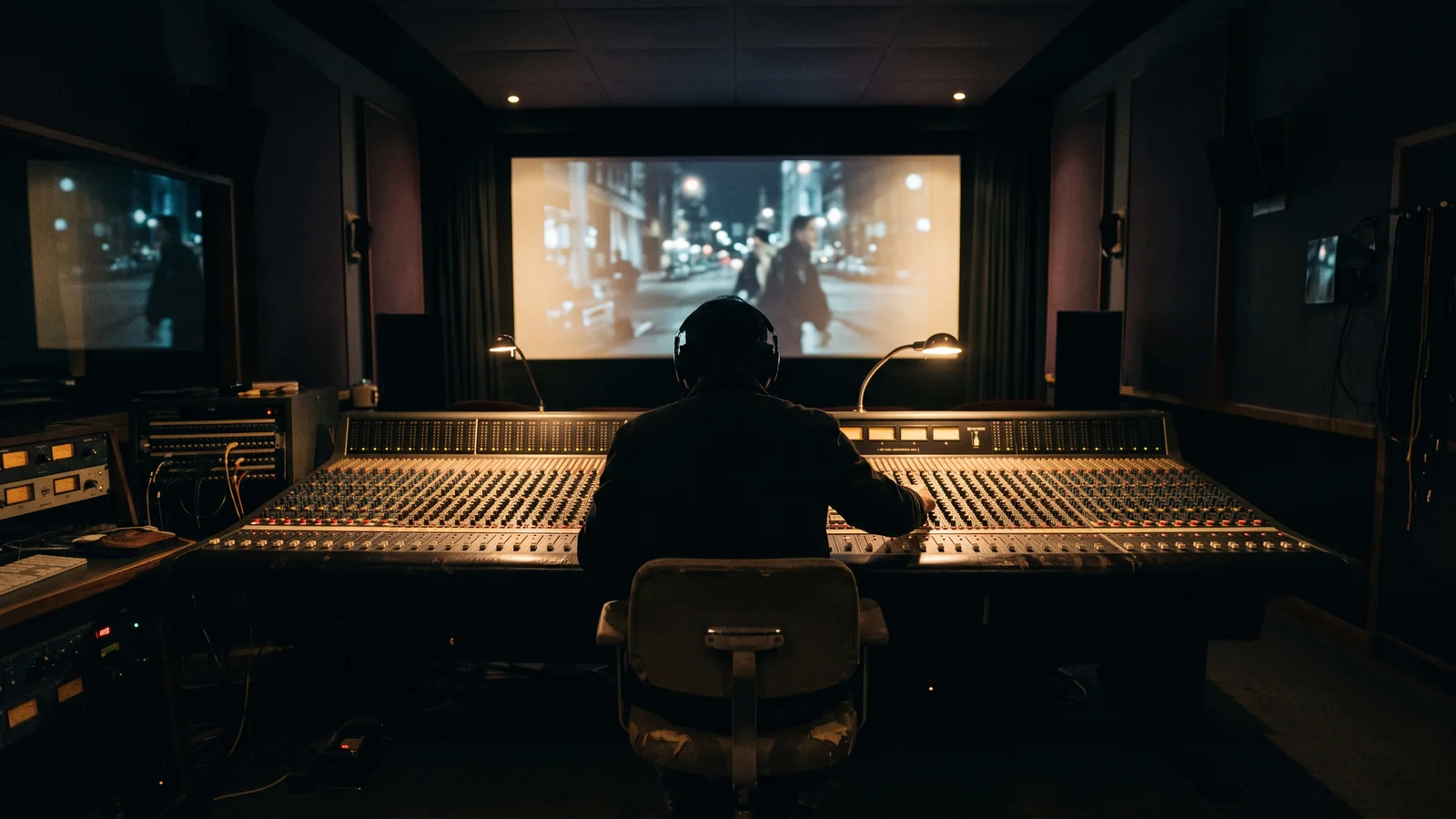
The real enemy was inconsistency. A film could be mixed to perfection on a Hollywood dubbing stage, then fall apart in a neighborhood theater with a dead screen, a boomy room, and a projector fan you could hear over the dialog. Holman's insight was that the playback chain had to be specified end to end, not just the electronics.
So THX set targets for the whole thing. Screen brightness, speaker performance, room acoustics, background noise, even the crossover between the main speakers and the subwoofer. Get every link right, and the movie sounds the same in Phoenix as it did on the stage in Burbank. That's the whole game. Consistency, enforced.
The Deep Note: the most famous twenty seconds in audio
The Deep Note, that swelling THX logo sound, was created by Dr. James A. "Andy" Moorer in 1983 from about 30 computer-generated voices that start scattered, then climb and spread across roughly three octaves into one enormous chord (Wikipedia). It runs a little over 20 seconds. It has scared a lot of children.
Moorer built it on an Audio Signal Processor at Lucasfilm's Sprocket Systems and drove it with a C program, as he documented on his own technical page. The voices begin at random pitches, then glide to notes spread over three octaves, tuned so the whole cluster resolves into a chord that feels less like music and more like a wall of air arriving. No two playings of the original program were exactly alike.
Here's the part I love as a builder. The Deep Note is a test signal disguised as a logo. It sweeps enormous dynamic range and a huge slice of the frequency spectrum, so a room that can play it cleanly, without buzzing, distorting, or running out of headroom, is a room that can probably handle the movie too. Fast Company called it the world's most iconic audio logo, and they weren't exaggerating. It's a stress test you applaud.
How did THX get from the theater into your living room?
THX went home in 1990, when the company introduced Home THX at the Consumer Electronics Show to bring cinema-grade playback standards into private rooms (Wikipedia). Through the 1990s it expanded into gear certification, with tiers like THX Ultra and THX Select rating receivers, speakers, and processors by the room size they could properly fill.
That tiered idea was smart. A THX Ultra receiver had to drive a large dedicated theater; a THX Select unit targeted a smaller room. It gave regular buyers a shortcut. Instead of decoding spec sheets, you matched the badge to your space. The certification did the homework for you, which is exactly what a good standard should do.
From there THX spread across the format shift, showing up on Laserdiscs, DVDs, and later Blu-rays with THX-optimized transfers, plus setup tools like the THX Optimizer to help people actually calibrate their sets. But the crown jewel of the program was never a disc or a receiver. It was the room certification, and that's where THX gets interesting for anyone building a real theater.
What does THX certification actually demand?
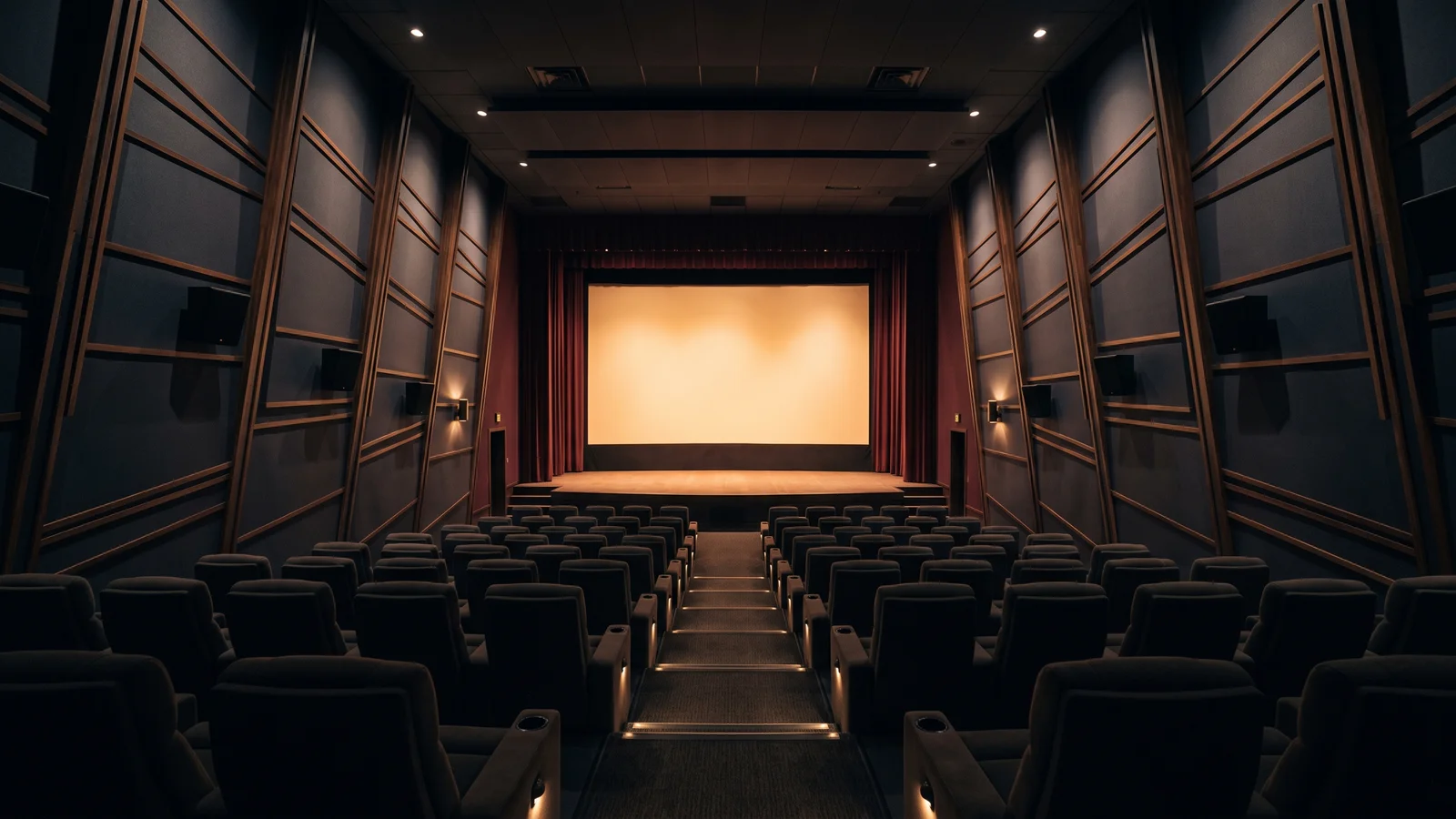
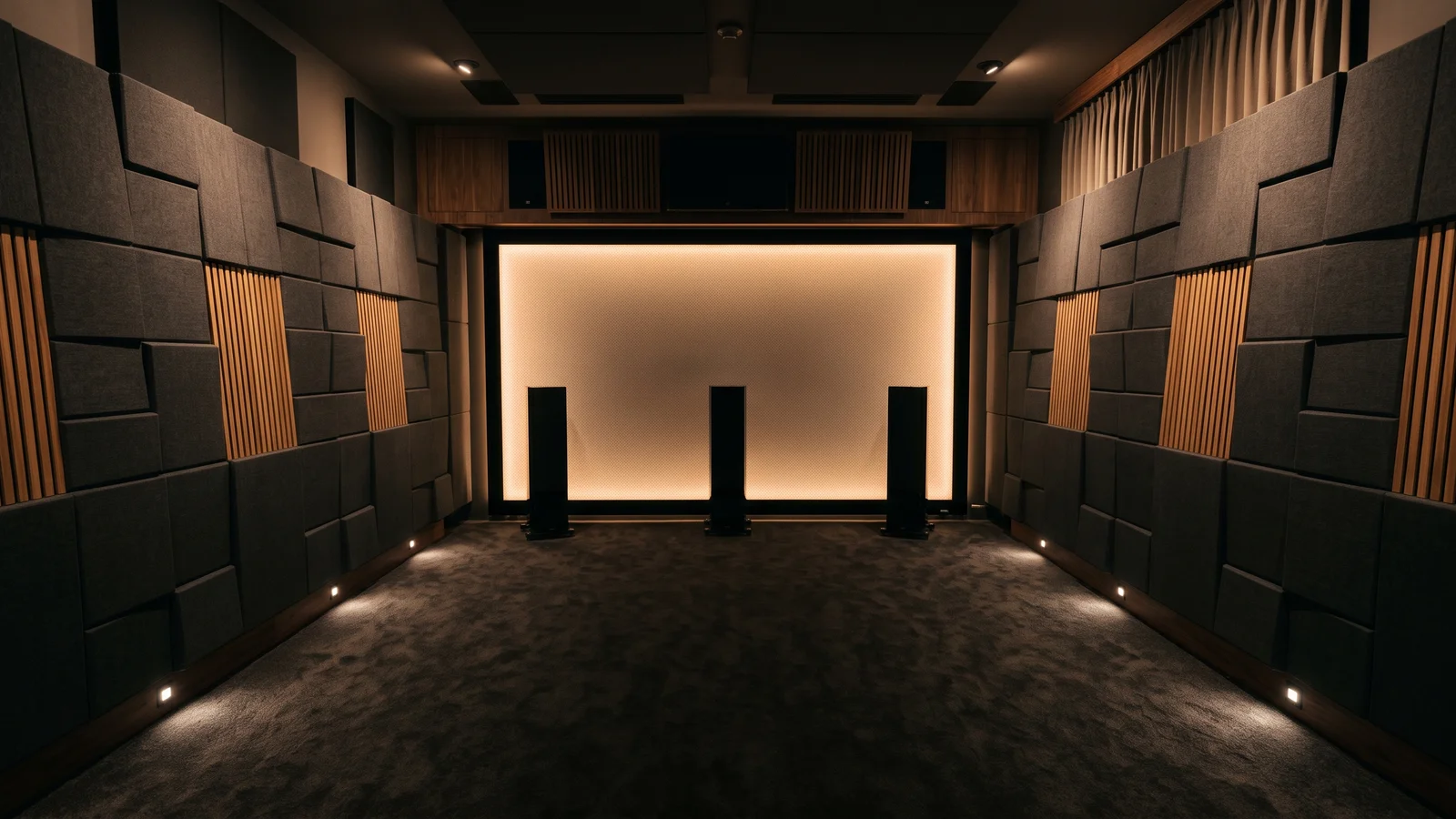
A THX-certified room is engineered, not decorated. The requirements read like a builder's punch list: a floating floor to isolate vibration, acoustically treated and baffled walls, non-parallel walls to break up standing waves, a perforated acoustically-transparent screen, and a strict NC30 background-noise limit, all part of the standard's specification. Then it adds defined playback levels and consistent coverage across every seat.
Look at that list again and notice what's missing: brand names. Not one requirement tells you which speaker to buy. Every single one is about the room and the way sound behaves inside it. Non-parallel walls stop bass from piling up into peaks and nulls. The perforated screen lets the center channel speak from behind the image, so the dialog comes from the actor's mouth, not a box below the screen.
The NC30 spec is my favorite, honestly. NC30 is a noise-criterion rating that caps how loud the room's own background hum is allowed to be, from HVAC, gear fans, whatever. Push the noise floor low enough and the quiet moments in a film finally land. That's the whole point Holman started with: the room is part of the instrument, and a noisy room is a broken one.

Why THX still matters when you build a real home theater
Certification programs come and go, but the physics THX codified is permanent, and that's why the standard still shapes how good rooms get built decades later. You don't need the badge on the door. You need what the badge was always checking for: a room engineered so the sound arrives clean, even, and quiet-floored at every seat (Wikipedia).
This is the gospel I preach on every build. The room is a component. You can hang the finest towers I make on the wall, and a bad room, parallel walls, a bright ceiling, a noisy air handler, will strangle them. That's why we spend real time on the boring physics, treatment and geometry, before we ever chase the last decibel. If you want the deep version, here's how we think about treating and calibrating a theater room so it behaves.
THX also proved that layout is a design decision, not an afterthought, which is the same discipline behind a clean immersive setup today. If you're planning height channels, the geometry still rules, exactly as it does when we lay out an Atmos installation around a real room instead of a diagram. And getting all of it right, screen, seating, treatment, and gear, in the correct order is precisely what a spec-driven theater build is supposed to sort out before the first panel goes up. THX just wrote the checklist first.
Who owns THX now?
THX has changed hands twice, and no, it wasn't gutted. Lucasfilm spun THX off as an independent company on June 12, 2002, with Creative Technology taking a majority stake of roughly 60 percent, according to the standard's corporate history. It ran independently for years after that, still certifying rooms and gear under its own name.
Then in 2016, the gaming-hardware company Razer stepped in. Razer acquired THX on October 17, 2016, and still owns it today as a subsidiary, as Variety reported at the time and Forbes confirmed the same day. TechCrunch framed it as Razer reaching past pure gaming, and THX itself announced the deal as a way to grow the brand.
I'll keep this one neutral, because the facts don't support a decline story. THX under Razer has kept certifying products and pushed into new categories, per Razer's own corporate record. Unlike a lot of names in this series, THX was never a small founder's factory that got hollowed out and offshored. It was a standard from day one, and standards outlive their owners. The seal still means what Holman built it to mean.
Frequently Asked Questions
What is THX?
THX is a quality-assurance certification for cinema and home-theater sound and picture, founded at Lucasfilm in 1983 (Wikipedia). It verifies that a theater, room, or piece of equipment meets a strict performance standard, so a movie plays back the way its creators intended. It is a seal of approval, not a soundtrack.
Is THX a sound format?
No. THX is not a format or a codec, and this is the most common misunderstanding about it (Wikipedia). It layers on top of formats like Dolby and DTS rather than competing with them. Dolby and DTS decide what the soundtrack is; THX certifies whether the room and gear can reproduce it correctly.
Who invented THX?
THX was created by engineer Tomlinson Holman at Lucasfilm, and the company dedicated THX Ltd on May 20, 1983 (IEEE ETHW). Holman also coined the term "5.1" in 1987 and later won a 2001 Academy Award for Scientific and Technical achievement. Return of the Jedi was the first film shown in a THX theater, on May 25, 1983.
What is the THX Deep Note?
The Deep Note is the THX audio logo, created by Dr. James A. "Andy" Moorer in 1983 (Wikipedia). It uses roughly 30 computer-generated voices that begin at random pitches, then rise and spread across about three octaves into one huge chord. It runs a little over 20 seconds and works like a dramatic system stress test.
Who owns THX now?
Razer, the gaming-hardware company, owns THX. Razer acquired it on October 17, 2016, and still runs it as a subsidiary (Variety). Before that, Lucasfilm spun THX off as an independent company on June 12, 2002, with Creative Technology holding a majority stake of roughly 60 percent.
What does THX certified mean?
THX certified means a room, theater, or product passed a defined performance standard, with requirements covering acoustics and playback. Certified rooms demand floating floors, non-parallel walls, acoustic treatment, an acoustically transparent screen, and an NC30 background-noise limit. The badge signals the environment can reproduce a soundtrack accurately and consistently at every seat.
Sources
- Wikipedia — "THX": https://en.wikipedia.org/wiki/THX
- Wikipedia — "Tomlinson Holman": https://en.wikipedia.org/wiki/Tomlinson_Holman
- Wikipedia — "Deep Note": https://en.wikipedia.org/wiki/Deep_Note
- Lucasfilm — "Lucasfilm Originals: THX": https://www.lucasfilm.com/news/lucasfilm-originals-thx/
- James A. Moorer — "The THX Logo Theme" (technical page): https://jamminpower.org/THX.html
- Fast Company — "Behind The Redesign Of The THX Deep Note, The World's Most Iconic Audio Logo": https://www.fastcompany.com/3044783/behind-the-redesign-of-the-thx-deep-note-the-worlds-most-iconic-audio-logo
- Variety — "Razer Acquires THX": https://variety.com/2016/digital/news/razer-thx-acquisition-1201891288/
- TechCrunch — "Razer acquires audiovisual icon THX": https://techcrunch.com/2016/10/17/razer-acquires-audiovisual-icon-thx-as-it-explores-growth-beyond-the-games-industry/
- Forbes — "Gaming Hardware Company Razer Is Acquiring THX": https://www.forbes.com/sites/alexknapp/2016/10/17/gaming-hardware-company-razer-is-acquiring-thx/
- THX — "THX Acquired by Leading Lifestyle Brand for Gamers, Razer": https://www.thx.com/blog/thx-acquired-leading-lifestyle-brand-gamers-razer/
- Wikipedia — "Razer Inc.": https://en.wikipedia.org/wiki/Razer_Inc.
- IEEE Engineering & Technology History Wiki — "Tomlinson Holman": https://ethw.org/Tomlinson_Holman
- USC School of Cinematic Arts — "Tomlinson Holman Honored": https://cinema.usc.edu/news/article.cfm?id=9696
Mike Vincent is the founder of Mike Knows Audio Video and WubWub Audio, where he designs and hand-builds custom loudspeakers and home theaters in Arizona, the old way, for about fifteen clients a year. He'll tell you the same thing THX figured out in 1983: the room is part of the instrument, which is why every custom home theater we build starts with the space, not the spec sheet.
Comments
Leave a Comment