
The professor audiophiles loved to mock trusted his ears over the measurements and built a multi-billion-dollar empire. A complicated legacy, told honestly.
Bring up Bose in a serious hi-fi crowd and you'll hear the joke before you finish the sentence. "No highs, no lows, must be Bose." Audiophiles have repeated that line for forty years like scripture. Here's the part that ruins the punchline: the man they were mocking built one of the most successful audio companies on earth, doing roughly $3.2 billion a year.
I've spent my career on the other side of that argument, hand-building speakers where the measured numbers matter to me. So you might expect me to pile on. I'm not going to. Amar Bose was a brilliant MIT engineer with a genuinely radical idea about how we hear, and a legacy that's more complicated, and frankly more honest, than the punchline gives him credit for. Let's tell it straight.
Key Takeaways
- Amar Bose (1929-2013) was born in Philadelphia to a Bengali Indian father and an American mother, and taught electrical engineering at MIT for about 45 years.
- A disappointing 1956 hi-fi purchase pushed him into psychoacoustics; he concluded that roughly 80% of concert-hall sound reaches us indirectly, as reflected sound.
- The Bose 901 (1968-2016) used nine full-range drivers, eight facing the wall and one facing you, plus a mandatory equalizer, and became the most argued-about speaker in audio.
- Bose pioneered the consumer noise-cancelling headphone, conceived on a 1978 flight, though the active-noise-control concept dates to a 1936 patent.
- Bose stayed private. In 2011 Amar Bose donated most of his stock to MIT as non-voting shares, and in 2024 Bose bought McIntosh and Sonus faber.
Who was Amar Bose?
Amar Bose was an American engineer, inventor, and MIT professor, born November 2, 1929, in Philadelphia to a Bengali Indian father and an American mother, according to MIT's obituary. He earned three electrical-engineering degrees from MIT, a bachelor's, a master's, and a doctorate, and taught there for about 45 years before his death on July 12, 2013, at age 83.
His father, Noshir Bose, had emigrated from Bengal to escape British colonial politics, and the family settled in Philadelphia (MIT). Amar was born and raised in the United States, so "Indian-American" fits his heritage, but he was an American kid through and through. During the Depression he helped keep the household afloat by repairing radios, a teenage side hustle that turned out to be the perfect training for the rest of his life.
He went to MIT and basically never left. Bose completed his BS in 1951, his SM in 1952, and his ScD in 1956, all in electrical engineering, as the Lemelson-MIT program records. He joined the faculty in 1956 and stayed for decades, a professor first and a mogul second. Students adored him. Ask anyone who took his acoustics course and they'll tell you the man could teach.
The disappointing hi-fi that started everything
The whole Bose story turns on one bad purchase. In 1956, freshly minted doctorate in hand, Bose bought a high-end stereo system that measured beautifully on paper and then sounded lifeless and flat when real music played, as Popular Science recounted. That gap between the spec sheet and his own ears bothered him enough to go find out why.
So he did what an MIT professor does. He started studying the problem, digging into psychoacoustics, the science of how humans actually perceive sound rather than how instruments measure it. That research would define both his academic career and, eventually, a company. The lesson he took from it was simple and stubborn: your ears care about things a microphone doesn't.
What made Amar Bose bet against the spec sheet?
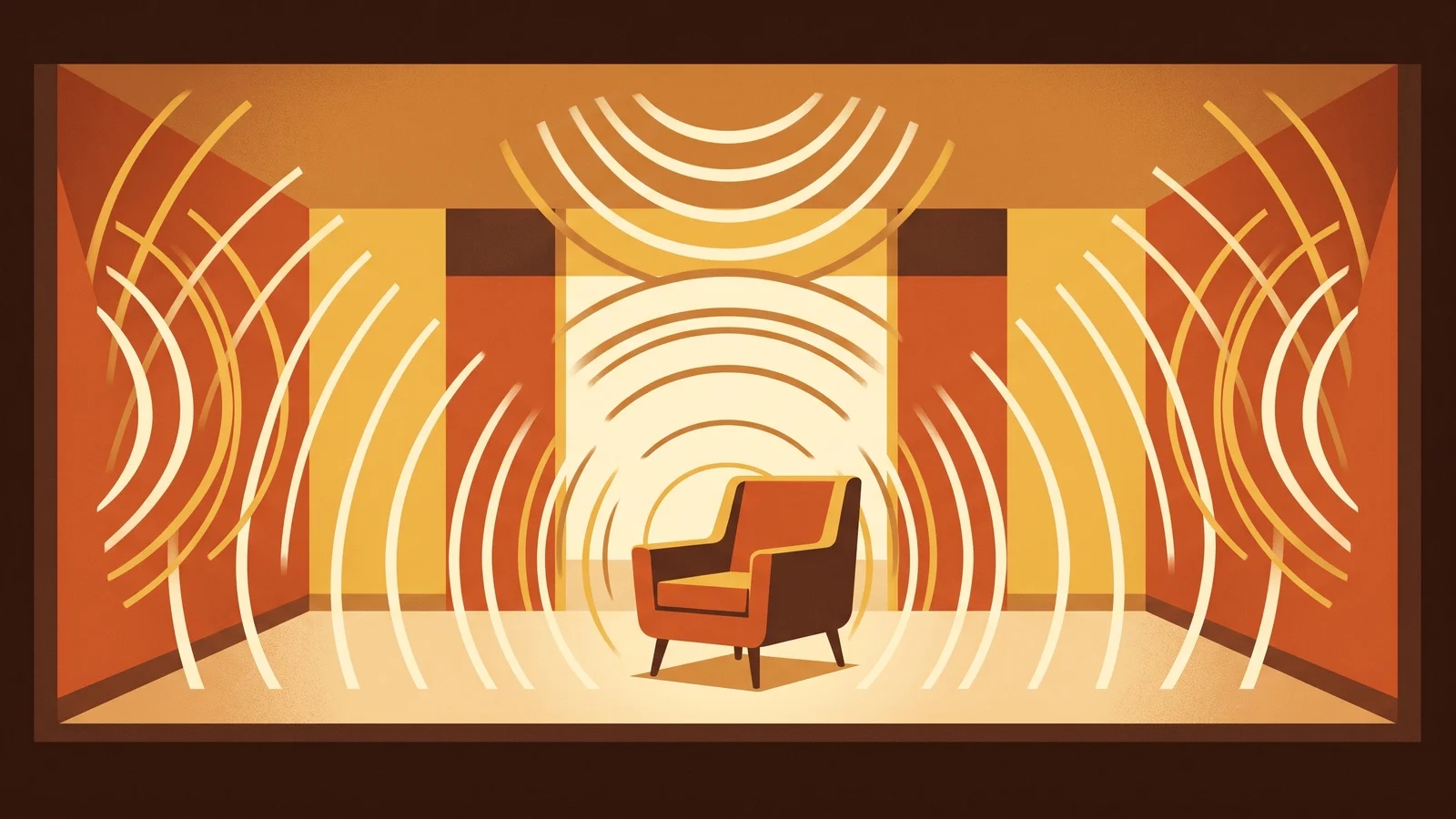
Bose's entire philosophy grew from one insight about concert halls. In a real hall, only a small fraction of the sound reaches you straight from the stage. He estimated that roughly 80% arrives indirectly, bouncing off the walls and ceiling before it gets to your ears, as the National Inventors Hall of Fame describes. Recreate that reflected sound field in a living room, he argued, and you recreate the feeling of being there.
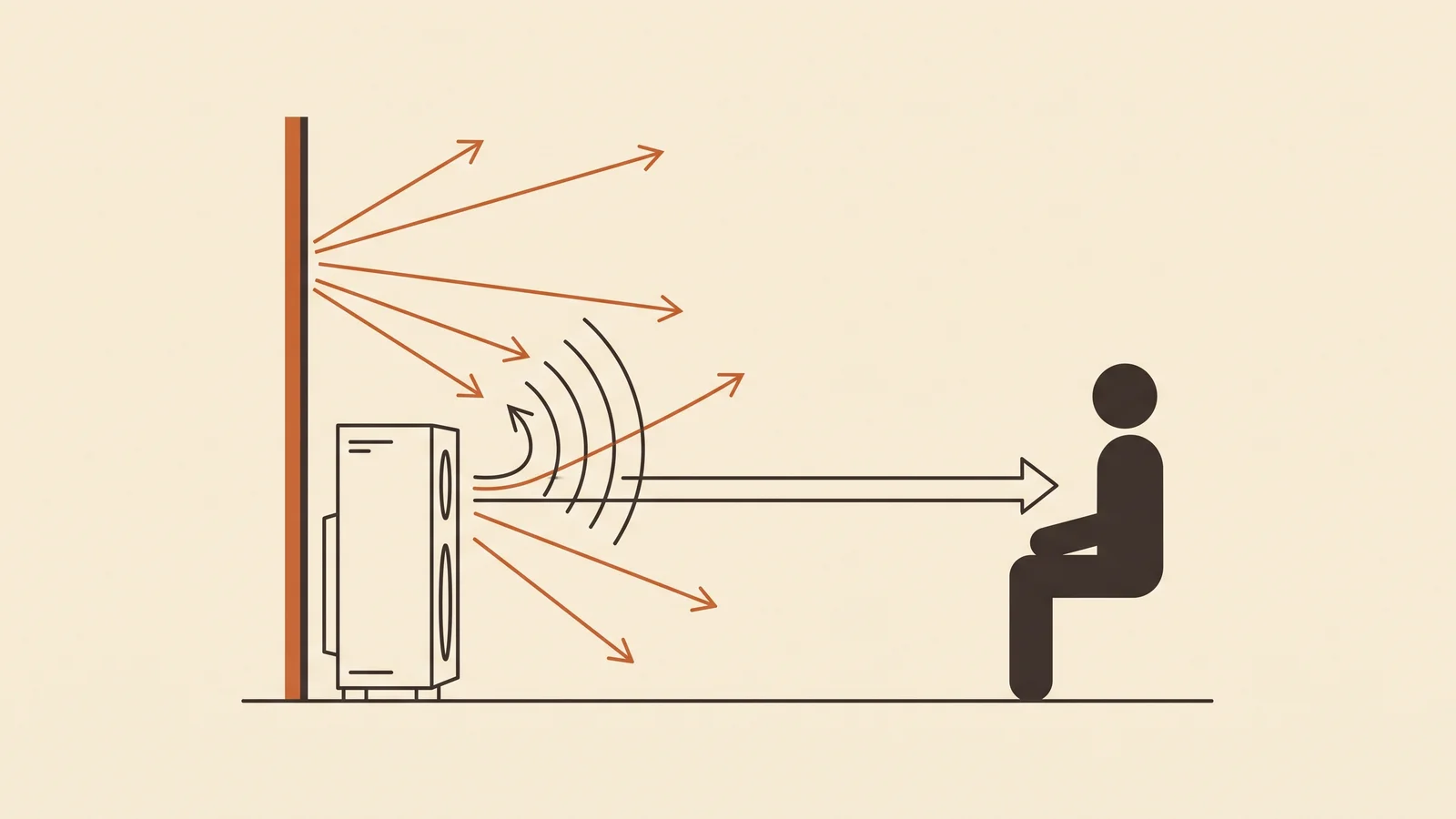
Most speakers of the day fired everything straight at the listener. Bose thought that was backwards. If live music is mostly reflected energy, a speaker that only throws direct sound will always feel a little flat, no matter how flat its response curve reads. That was the bet: engineer the reflections on purpose. He founded Bose Corporation in 1964 to chase it, per the company's history.
The Bose 901 and its wall of drivers
The idea became a real product in 1968: the Bose 901. It packed nine identical 4-inch full-range drivers into each cabinet, and here's the strange part, eight of them faced the wall behind the speaker and only one faced the listener, as Sound & Vision documented in its flashback on the design. Bose called it "direct/reflecting." Eight ninths of the sound was meant to bounce off your wall before you ever heard it.
The 901 came with a catch that drove purists up the wall: it would not work without its own active equalizer. That box was mandatory, not optional, because the raw drivers needed heavy correction to sound right (Sound & Vision). Love it or hate it, the 901 sold for nearly half a century, from 1968 all the way to 2016, one of the longest runs in speaker history. Very few designs get to argue with the audiophile world for 48 years.
Why won't Bose publish a frequency-response curve?
This is where Bose became a lightning rod. The company leaned hard on the reflected-sound concept and the listening experience, and it generally declined to publish the flat on-axis frequency-response curves that reviewers lived by, a stance that frustrated the audiophile press for decades. To the measurement crowd, no specs looked like dodging the test. That's a fair criticism, and I won't wave it away.
Here's Bose's side, stated fairly. His argument was that a single on-axis curve, taken from one microphone at one spot, can't describe a speaker engineered to flood a whole room with reflected energy. The number that matters, he'd say, is what reaches your two ears in a real room, not what a meter reads in an anechoic chamber. Whether you buy that or not, it was a real engineering position, not marketing cover.
The mockery got its own anthem. "No highs, no lows, must be Bose" is an audiophile-community saying, folklore passed around forums and hi-fi shops, not a measured finding (Stereophile). It stuck because it's catchy, and because refusing to show your numbers invites people to imagine the worst. Contrast that with a spec-honest, hand-built approach that publishes its measurements, and you've got two legitimate philosophies staring each other down. I land on one side. That doesn't make the other side a fraud.
What did Amar Bose actually invent?
Strip away the 901 argument and the man's real inventions are seriously impressive. Bose held dozens of patents and was inducted into the National Inventors Hall of Fame for his work in acoustics and audio, the organization's records show. Two innovations in particular changed products you've probably used, and neither one has anything to do with reflected-sound speakers.
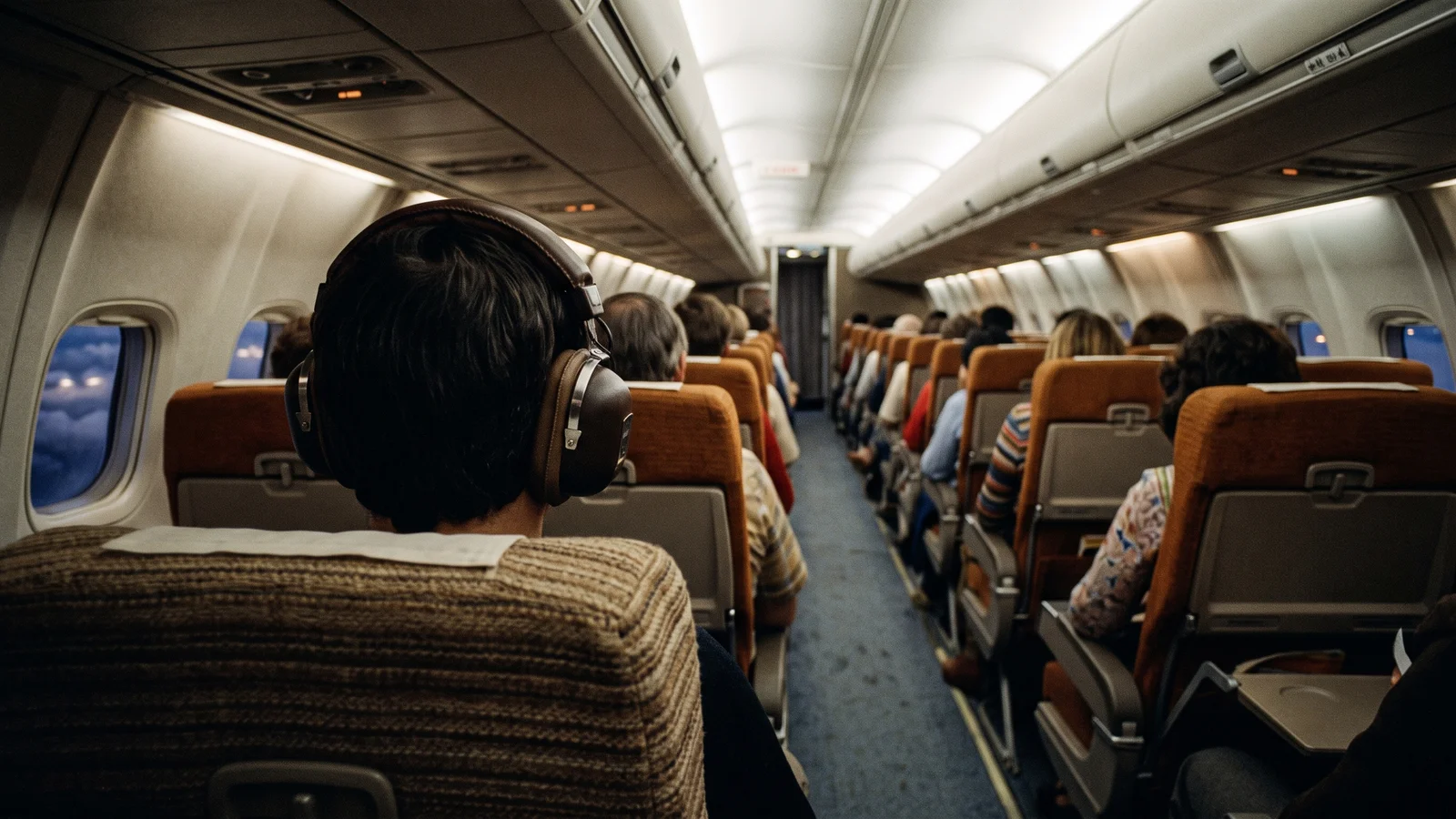
The famous one is noise cancellation. The story goes that Bose was on a 1978 flight, put on the airline's headphones, and found the engine roar drowned out the music. By the time he landed he'd sketched the math for actively canceling that noise, as Bose's aviation history recounts. The company shipped aviation headsets first, then brought the technology to travelers with the QuietComfort line in 2000. Bose pioneered and popularized the consumer noise-cancelling category, full stop.
Credit where it's due on the other side, too. Bose did not invent active noise control outright. The underlying idea was patented by Paul Lueg back in 1936, decades before Bose ever boarded that plane, as the technology's history documents. What Bose did was turn a lab concept into a product millions of people actually wear. That's a different kind of achievement, but a real one.
Then there's the acoustic waveguide, a folded tube that lets a tiny box produce surprising bass. It's the trick behind the Bose Wave radio, launched in 1993, which turned a clock-radio-sized enclosure into something that could fill a kitchen, per the company's history. You can argue about the 901 all day. The noise-cancelling headphone and the waveguide are genuine engineering wins, and pretending otherwise would be dishonest.
Did Bose win its Supreme Court fight with Consumers Union?
No. Bose lost, and it's worth getting that right because people assume the big company won. In Bose Corp. v. Consumers Union, decided in 1984, the U.S. Supreme Court ruled against Bose by a 6-3 vote, as the case record at Justia shows. The dispute started when Consumer Reports reviewed the 901 in 1970 and wrote that individual instruments "tended to wander about the room."
Bose sued for product disparagement, and the fight climbed all the way to the top court, where it became a landmark First Amendment case, as the First Amendment Encyclopedia explains. The justices held that a public-figure plaintiff has to prove "actual malice" with convincing clarity, and that appellate courts must review that finding independently. Bose couldn't clear that bar. The reviewer's word choice, wrong or not, was protected opinion, not reckless falsehood.
I'll be honest about what this shows. A company confident enough to sue Consumer Reports over one phrase was a company that took its reputation extremely seriously, maybe too seriously. But the case also handed American press-freedom law a lasting standard, so even Bose's courtroom loss left a mark. Not the mark he wanted, but a mark.
Who owns Bose now?
Bose Corporation is privately held and never went public, which is central to why it never got carved up by a spreadsheet. Amar Bose kept tight control his whole life, and in 2011 he gave the majority of his stock to MIT as non-voting shares the university cannot sell and does not manage, as MIT announced at the time. MIT collects dividends when there are any, but it has no say in running the company, as CNN Money reported.
That structure fits the man exactly. Bose once said he never cared about the money for its own sake. "I would have been fired a hundred times at a company run by MBAs," he told Popular Science. "But I never went into business to make money. I went into business so that I could do interesting things that hadn't been done before," he explained. Whatever you think of the 901, that's a founder who meant it. The company still runs independently today under CEO Lila Snyder, who took over in 2020.
Now for the twist I can't resist pointing out. In November 2024, Bose bought the McIntosh Group, which owns McIntosh and Sonus faber, from the private-equity firm Highlander Partners, as Forbes reported. Sit with that for a second. The company built on trusting your ears over the spec sheet just bought the blue-meter, published-numbers, audiophile-purist brands, a deal CNBC also confirmed. The experience company now owns the measurement companies. History has a sense of humor.
Two philosophies, both honest
Here's where I land, as a guy who builds speakers by hand. Amar Bose and the audiophiles who mocked him were both chasing the same thing, a system that moves you the way live music does. They just bet on different roads. Bose bet on engineered reflected sound and a curated, easy-to-love experience, and trusted his ears over the chart. That's a legitimate philosophy, and $3.2 billion a year says a lot of people agreed with him.
My road runs the other way, and that's fine. I'd rather build a spec-honest, hand-built speaker and hand you the measurements, so you know exactly what you're getting and why. Neither approach is a scam. One optimizes for the room and the feeling; the other optimizes for accuracy you can verify. Bose earned his empire honestly, invented things that outlived him, and kept his company out of the hands that hollowed out so many others in this series. Say what you want about the 901. The man was the real deal.
Frequently Asked Questions
Who was Amar Bose?
Amar Bose (1929-2013) was an American engineer, inventor, and longtime MIT professor who founded Bose Corporation in 1964. Born in Philadelphia to a Bengali father and an American mother, he earned three electrical-engineering degrees from MIT. His research into how we perceive sound in concert halls shaped every speaker his company built.
Why don't Bose speakers list a frequency-response curve?
Amar Bose believed a single frequency-response curve couldn't capture a speaker designed to fill a room with reflected sound, so Bose emphasizes the listening experience instead. Critics, especially audiophiles, saw the missing specs as ducking measurement. Both readings have merit, and that tension made the Bose 901 the most argued-about speaker in audio.
What is the Bose 901?
The Bose 901, sold from 1968 to 2016, was a direct/reflecting speaker with nine full-range drivers, eight aimed at the wall behind it and one aimed at you. It required a powered equalizer to work. The design chased the reflected sound of a concert hall rather than a flat on-axis measurement.
Did Bose invent noise-cancelling headphones?
Not exactly. Amar Bose conceived the idea on a 1978 flight and Bose pioneered the consumer noise-cancelling category, shipping aviation headsets first and the QuietComfort line in 2000. The underlying active-noise-control concept is older, though: Paul Lueg patented it back in 1936. Bose popularized it rather than invented it.
Who owns Bose now?
Bose Corporation is privately held and never went public. In 2011, Amar Bose donated the majority of his stock to MIT as non-voting shares the university cannot sell or manage. Bose remains independent, led by CEO Lila Snyder since 2020, and in 2024 it acquired McIntosh and Sonus faber.
Did Bose win its lawsuit against Consumer Reports?
No. Bose lost: in Bose Corp. v. Consumers Union (1984), the U.S. Supreme Court ruled 6-3 in favor of Consumer Reports. The justices held that Bose couldn't prove the reviewer acted with "actual malice," the demanding standard a public-figure plaintiff must clear.
Sources
- MIT News, "Amar G. Bose, professor and inventor, dies at 83": https://news.mit.edu/2013/obit-amar-bose-0712
- MIT News, "Bose Corporation founder donates majority of stock to MIT": https://news.mit.edu/2011/bose-gift
- Lemelson-MIT, "Amar Bose": https://lemelson.mit.edu/resources/amar-bose
- National Inventors Hall of Fame, "Amar Bose": https://www.invent.org/inductees/amar-bose
- Popular Science, "The Curious Genius of Amar Bose": https://www.popsci.com/science/article/2013-07/curious-genius-amar-bose/
- Sound & Vision, "Flashback 1968: Bose 901 Speaker System": https://www.soundandvision.com/content/flashback-1968-bose-901-speaker-system
- Stereophile, "Amar G. Bose, PhD, 1929-2013": https://www.stereophile.com/content/amar-g-bose-phd-19291502013
- Bose Aviation, "History": https://boseaviation.com/about/history/
- Justia, "Bose Corp. v. Consumers Union, 466 U.S. 485 (1984)": https://supreme.justia.com/cases/federal/us/466/485/
- The First Amendment Encyclopedia (MTSU), "Bose Corp. v. Consumers Union of United States, Inc.": https://firstamendment.mtsu.edu/article/bose-corp-v-consumers-union-of-united-states-inc/
- CNN Money, "Bose gives majority stake to MIT": https://web.archive.org/web/20230204222348/https://money.cnn.com/2011/04/29/technology/bose_mit_donation/index.htm
- Forbes, "Bose Corporation Snaps Up High-End Audio Brand McIntosh": https://www.forbes.com/sites/marksparrow/2024/11/19/bose-corporation-snaps-up-high-end-audio-brand-mcintosh/
- CNBC, "Bose buys McIntosh, storied maker of high-end luxury audio equipment": https://www.cnbc.com/2024/11/19/bose-buys-mcintosh-storied-maker-of-high-end-luxury-audio-equipment.html
- Wikipedia, "Amar Bose": https://en.wikipedia.org/wiki/Amar_Bose
- Wikipedia, "Bose Corporation": https://en.wikipedia.org/wiki/Bose_Corporation
- Wikipedia, "Noise-cancelling headphones": https://en.wikipedia.org/wiki/Noise-cancelling_headphones
Mike Vincent is the founder of Mike Knows Audio Video and WubWub Audio, where he designs and hand-builds custom loudspeakers and home theaters in Arizona, the old way, for about fifteen clients a year. He respects a good contrarian, even one he'd argue with about frequency curves; if you'd rather see the measurements behind your speakers, start with our custom loudspeakers.
Comments
Leave a Comment