
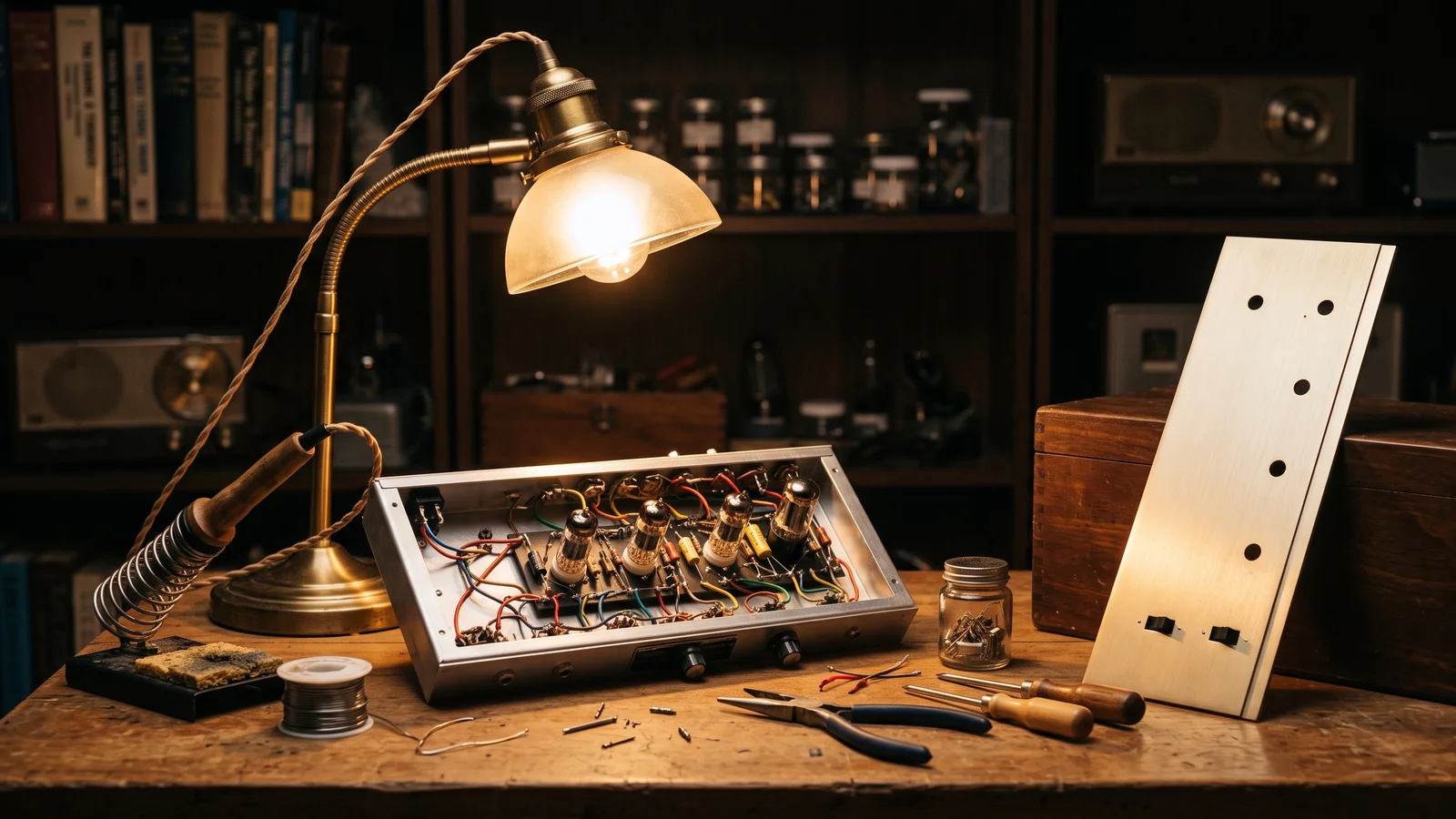
A Manhattan commercial artist so obsessed with playback that he hand-built the first 100 amplifiers at his kitchen table. This is the birth of Marantz.
Most people say the name like it's always been a corporation. Marantz. It's on receivers, streamers, and slim black boxes in showrooms all over the world. But the name belongs to a person, and here's the part that gets me every time: that person never trained as an engineer. He drew record-album covers for a living.
Saul Marantz was a Manhattan commercial artist and a serious amateur musician who got so fed up with how bad his records sounded that he built something better himself. Not in a lab. At his kitchen table, in Queens, one unit at a time. I've spent my whole career hand-building gear, so this story hits close to home. Let me tell it right.
Key Takeaways
- Saul Marantz (1911–1997) was a New York commercial graphic artist and amateur musician, not a trained engineer.
- He hand-built the first 100 Audio Consolettes at his kitchen table in Kew Gardens, Queens, and formally founded Marantz in 1953.
- He partnered with trained engineer Sidney Smith, whose circuits turned Marantz's ideas into shipping products.
- The Model 7 preamplifier of 1958 sold more than 130,000 units, and its "Marantz circuit" became a hi-fi reference.
- The Model 10B FM tuner (1964) was so costly and underpriced that it drained the company's capital and forced its sale.
- Marantz has changed hands repeatedly since, from Superscope to Philips to Samsung's Harman in 2025.
Who was Saul Marantz, the man behind the name?
Saul Bernard Marantz was born July 11, 1911, in New York City, and worked for years as a commercial graphic artist and amateur guitarist, not an engineer, according to his AP obituary. He designed album covers and record sleeves for a living. Sound was his obsession, not his trade. That distinction matters to the whole story.
Here's what I love about that. Marantz didn't come at hi-fi from a physics degree. He came at it as a listener who couldn't stand what he was hearing. He hosted musical evenings at home, played records for friends, and grew increasingly annoyed that the playback gear of the late 1940s mangled the music he cared about, as the company's own history recounts. The frustration was the fuel. It usually is.
The record that started everything
The spark, as the story goes, was a phono equalization problem. Early LPs used different recording curves from different labels, and there was no single standard to play them back correctly, as Marantz-history accounts explain. A record could sound thin or boomy simply because your gear couldn't match the curve it was cut with. For a musician with a good ear, that was intolerable.
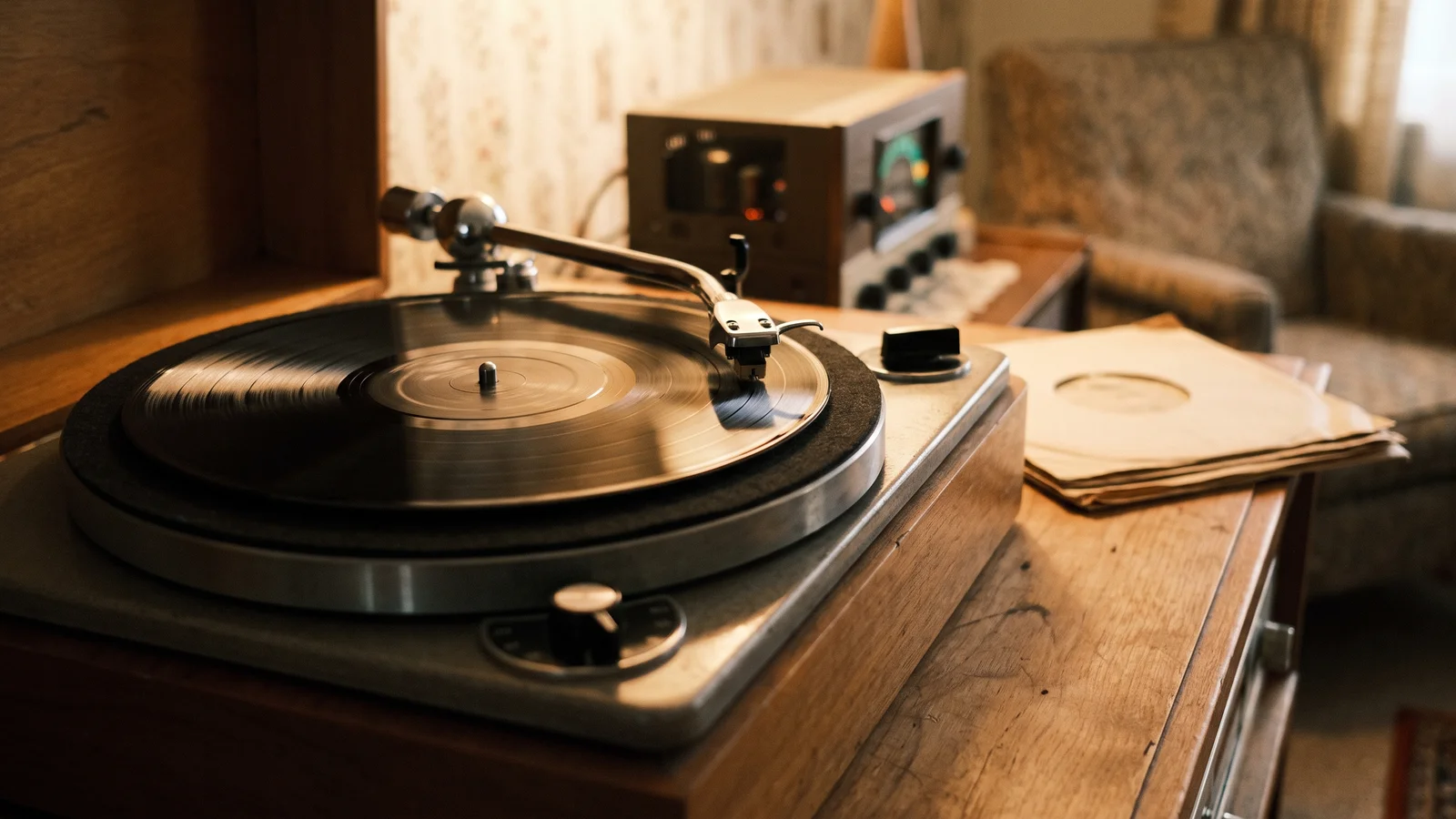
So Marantz did what obsessed people do. He decided to fix it himself. Working out of his home in Kew Gardens, Queens, he began building a preamplifier that let the listener dial in the correct equalization for whatever record was on the turntable, the Queens Chronicle documented in its profile of him. He wasn't trying to start a company. He was trying to make his own records sound right.
What was the Audio Consolette, and how did Marantz begin?
The Audio Consolette was Saul Marantz's first product, a phono preamplifier he developed around 1951 and sold beginning in 1952, and he built the first run of about 100 units by hand at his kitchen table, per the company's founding history. Word spread among audiophiles fast. Demand outran his kitchen almost immediately.
That kitchen-table detail isn't marketing gloss. It's Marantz's own account of how the thing got made: one man, a soldering iron, and a growing stack of orders he never planned for, as Marantz-history writers record. When you hand-build the first hundred of anything, you learn the product in your fingers. I know that feeling. There is no substitute for it.
He formally incorporated the Marantz Company in 1953, then moved production out of the house and into a factory in Woodside, Queens, according to the company record. (You'll see 1948 floating around online as the founding date. That's an error. The tinkering started around 1951, the first Consolette sold in 1952, and the company came in 1953.) The Consolette evolved into the Model 1 preamplifier around 1954, which added the new RIAA equalization standard, as the brand's history notes.
The engineer who made it real
Marantz knew his own limits, and that's a strength, not a weakness. He was the visionary with the ear and the eye; he needed a trained engineer to turn ideas into reliable circuits. He found one in Sidney Smith, who became the company's chief engineer and designed much of the gear that made the name legendary, as Marantz histories credit.
That partnership is the quiet engine of the whole story. Marantz set the standard and the look; Smith made the electronics sing. It's the same division of labor you find in a lot of great small shops, and it's how the best gear gets built. One person's taste, another person's hands, both refusing to ship junk.
Why is the Marantz Model 7 still the most famous preamp ever built?
The Marantz Model 7, introduced in December 1958, is the most celebrated tube preamplifier in audio history, with more than 130,000 units sold and a phono stage so admired that its topology is still called "the Marantz circuit," as vintage-audio historians document. Original units in good condition still trade for serious money today. That's not nostalgia. That's engineering that held up.
The Model 7 nailed something rare. It measured well and it sounded right, and it did both with a build quality that felt like laboratory equipment. Period pricing gets reported inconsistently, somewhere in the range of roughly $250 to $385 depending on the source, so I won't pin a single number on it. What's not in dispute is the impact: it became the reference preamplifier of its era and the benchmark competitors chased for a decade, as Marantz retrospectives note.
I've had a few genuine Model 7s across the bench over the years. Open one up and it tells you everything about the company's values: tidy point-to-point wiring, quality parts, nothing cheaped out. It's the kind of internal honesty we still chase when we build a home theater system around real components instead of a spec sheet.
The Model 8 and Model 9: the amps that matched the preamp
A great preamp needs a great amplifier behind it, and Marantz delivered two. The Model 8 stereo power amplifier arrived in 1959 at around 30 watts per channel, and the refined Model 8B followed around 1961 to 1962 at roughly $275, per Marantz product histories. It became a workhorse classic that vintage collectors still restore and run.
Then came the crown jewel. The Model 9 monoblocks of 1960 were massive ultra-linear EL34 amplifiers rated at about 70 watts each, weighing roughly 65 pounds apiece, as vintage-Marantz accounts describe. One amplifier per speaker, built like a bank vault. Original pricing on the Model 9 is poorly documented, so I'll leave it alone rather than invent a figure. What matters is the ambition: these were the best amplifiers Marantz knew how to make, cost be damned.
That last part, cost be damned, turns out to be the tragic flaw in the whole company. Marantz kept building the best possible product and pricing it like a craftsman, not a corporation. Beautiful to own. Dangerous to run a business on.
How did the Model 10B tuner break the company?
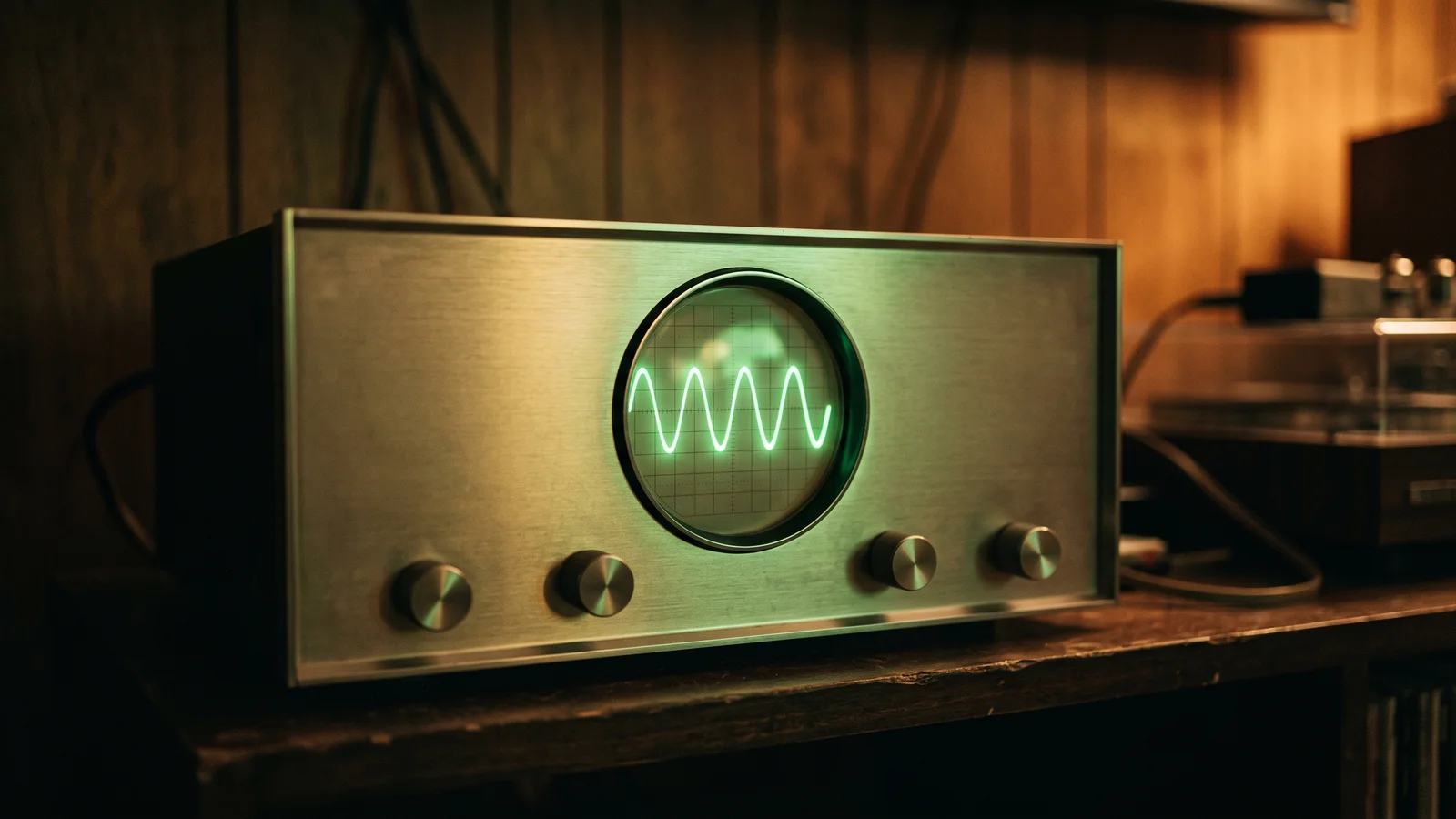
The Marantz Model 10B FM tuner, released in 1964, is the machine that broke the company, because it was so expensive to develop and so underpriced at retail that it drained the firm's capital and forced its sale, as Marantz histories recount. It featured a front-panel oscilloscope for visually tuning stations. Nothing else on the market looked or performed like it.
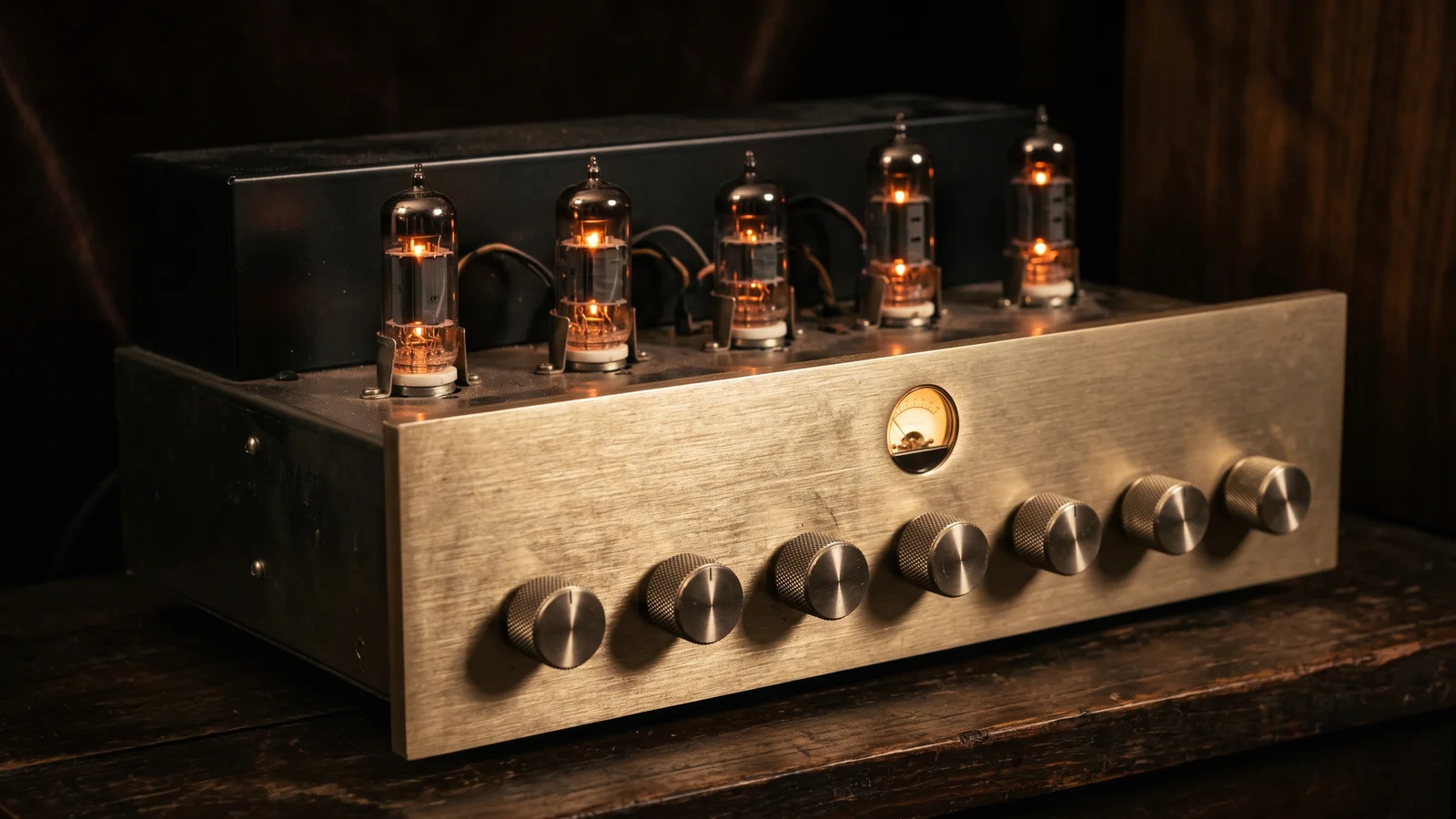
The 10B was a technical monster. It was designed largely by a young engineer named Richard Sequerra working with chief engineer Sidney Smith, and it took years and a fortune to perfect, as the company's history documents. Marantz reportedly summed up the effort with characteristic generosity toward his team: "Yes, Richard designed it but Sid made it work," as recorded in Marantz-history accounts. That line tells you exactly what kind of boss he was.
Here's the brutal irony. The 10B may be the finest FM tuner of its era, and building it nearly bankrupted the man who commissioned it. Marantz was a perfectionist running a company on perfectionist economics, and perfection doesn't balance a ledger. To keep the doors open, he sold. Saul Marantz stayed on as president until 1968 and was later honored as a Fellow of the Audio Engineering Society, per his obituary. He died in January 1997 at age 85.
Who owns Marantz now, and what happened to the name?
Marantz has passed through a long chain of owners, ending with Samsung's Harman division, which agreed in 2025 to buy the consumer-audio group that includes Marantz for about $350 million, per Masimo's investor announcement. The deal closed on September 23, 2025, as HARMAN and industry press confirmed. The name has traveled a long way from that kitchen table in Queens.
The chain reads like a case study in how a founder's name outlives his control. Saul Marantz sold to Superscope, run by Joseph Tushinsky, in 1964 for a reported $3 million, as the company record shows. Superscope shifted manufacturing to Japan through Standard Radio in 1966, which became Marantz Japan in 1975. Philips bought Marantz in 1980 and later picked up the U.S. and Canada trademarks in 1992, per the brand history.
Then it kept going. Marantz Japan reacquired the brand in 2001, merged with Denon into D&M Holdings in 2002, moved to Sound United in 2017, as Sound United's own history and press record, and then landed at the medical-device maker Masimo, which bought Sound United in 2022 for roughly $1.025 billion, as Masimo disclosed in its SEC filing. From an artist's kitchen to a pulse-oximeter company to Samsung, in one lifetime.
Is the old magic gone? The fair reckoning
Now let me be careful here, because this is where lazy takes go wrong. The modern Marantz 10 Series and 30 Series are genuinely well-reviewed, serious high-end components, and reviewers who've spent real time with them say so. The critique in this series isn't that the current gear is bad. It's that a founder's name and a founder's incentives are two different things. When a name becomes a line item on a holding company's balance sheet, the person whose ear set the standard is no longer the one signing off. That slow drift from craftsman to corporate asset is what the writer Cory Doctorow calls enshittification, and audio nameplates are textbook cases.
That's exactly why some of us still do it the old way. Saul Marantz hand-built the first hundred units himself because he cared how they sounded, not how cheaply they'd ship. We build custom speakers by hand in our Arizona workshop, one small batch a year, each one signed off by the person whose name is on the shop and shipped with a birth certificate. It's closer to a 1958 Model 7 than to a line item, and that's the whole point.
Frequently Asked Questions
Who was Saul Marantz?
Saul Marantz (1911–1997) was a New York commercial graphic artist and amateur musician who founded the Marantz Company in 1953, according to his AP obituary. He was not a trained engineer. He hand-built his first product, the Audio Consolette, at his kitchen table in Queens, then partnered with engineer Sidney Smith to build the electronics that made the brand legendary.
What is the Marantz Model 7?
The Marantz Model 7 is a tube preamplifier introduced in December 1958 that became the most celebrated preamp in hi-fi history, with more than 130,000 units sold, as vintage-audio historians document. Its phono-stage topology is still called "the Marantz circuit." Prized for both measured performance and sound quality, original units remain highly collectible and valuable today.
What made vintage Marantz special?
Vintage Marantz gear paired a musician's ear with serious engineering and no-compromise build quality, as Marantz histories record. Saul Marantz set the standard and the look, while chief engineer Sidney Smith designed reliable, superb-sounding circuits. Classics like the Model 7 preamp, Model 8B amplifier, Model 9 monoblocks, and Model 10B tuner defined the golden age of American hi-fi.
Who owns Marantz now?
Marantz is owned by Samsung's Harman division, which agreed in 2025 to buy the consumer-audio group that includes Marantz for about $350 million, closing on September 23, 2025, per Masimo's investor announcement. Marantz had previously passed through Superscope, Philips, D&M Holdings, Sound United, and the medical-device maker Masimo, which bought Sound United in 2022.
Is Marantz still good?
Yes, by most accounts. The modern Marantz 10 Series and 30 Series are genuinely well-reviewed high-end components, and reviewers who've tested them say so. The honest caveat is about ownership, not sound quality: a founder's name and a founder's incentives are different things once a brand becomes a corporate asset, a pattern traced across audio-industry histories.
Sources
- Deseret News / Associated Press, "Saul Marantz dies at 85": https://www.deseret.com/1997/2/2/19292866/saul-marantz-dies-at-85/
- Marantz, "Born in New York" (official company history): https://www.marantz.com/en-us/world-of-marantz/born-in-new-york.html
- Dutch Audio Classics, "Marantz: The Man and the Company": https://www.dutchaudioclassics.nl/marantz_the_man_and_the_company/
- Queens Chronicle, "Inventor and engineer Marantz lived in Kew Gardens": https://www.qchron.com/qboro/i_have_often_walked/inventor-and-engineer-marantz-lived-in-kew-gardens/article_85bc0c97-5152-5f73-95bf-0b6edc19702b.html
- Wikipedia, "Saul Marantz": https://en.wikipedia.org/wiki/Saul_Marantz
- Wikipedia, "Marantz": https://en.wikipedia.org/wiki/Marantz
- Robb Report, "Why Vintage Marantz Gear Is So Coveted by Collectors": https://robbreport.com/gear/audio/vintage-marantz-audio-equipment-coveted-collectors-eg18-2795242/
- AVForums, "We Didn't Start the Fire: 60 Years of Marantz": https://www.avforums.com/articles/we-didn-t-start-the-fire-60-years-of-marantz.9178/
- Masimo Investor Relations, "Masimo to Sell Consumer Audio Business to HARMAN International": https://investor.masimo.com/news/news-details/2025/Masimo-to-Sell-Consumer-Audio-Business-to-HARMAN-International/default.aspx
- U.S. Securities and Exchange Commission, Masimo Form 8-K exhibit (2022, Sound United acquisition): https://www.sec.gov/Archives/edgar/data/937556/000093755622000024/masi-20220215xex991.htm
- HARMAN, "HARMAN Completes Sound United Acquisition": https://news.harman.com/releases/harman-completes-sound-united-acquisition-to-expand-premium-audio-leadership
- Stereophile, "Sound United Finds a New Home: HARMAN": https://www.stereophile.com/content/sound-united-finds-new-home-harman
Mike Vincent is the founder of Mike Knows Audio Video and WubWub Audio, where he designs and hand-builds custom loudspeakers and home theaters in Arizona, the old way, for about fifteen clients a year. He has a real soft spot for kitchen-table perfectionists who priced their gear like craftsmen instead of accountants; if you want a speaker built with that kind of care and signed off by hand, start with our custom loudspeakers.
Comments
Leave a Comment