
An aerospace engineer built party speakers in his garage, then shook movie theaters with Sensurround. This is what happened to Cerwin-Vega.
Some brands whisper. Cerwin-Vega never learned how. For half a century this was the name you bought when you wanted your neighbors to file a complaint, the red-coned party speaker that turned garages, dorm rooms, and dance clubs into physical experiences. If you grew up near a subwoofer that could rearrange your internal organs, there's a decent chance it wore this badge.
Here's what most people don't know. The man behind all that glorious noise wasn't a rock promoter or a marketing genius. He was an aerospace engineer who built his first speakers in a garage and happened to understand low-frequency physics better than almost anyone alive. I've spent my career chasing real, physical bass, so this one's personal. Let me tell you what happened to Cerwin-Vega.
Key Takeaways
- Cerwin-Vega was founded in 1954 by aerospace engineer Gene Czerwinski, who built high-efficiency, high-SPL "loud" speakers, party rigs, DJ and club gear, and the red-coned Stroker car subwoofers still tagged "the world's loudest."
- The company engineered the low-frequency Sensurround system for the 1974 film Earthquake, using banks of folded-horn subwoofers to shake theater seats down to roughly 16 to 17 Hz.
- Cerwin-Vega went bankrupt in 2003, was bought by the Stanton Group, then swept up indirectly by guitar maker Gibson in December 2011.
- Gibson filed Chapter 11 in May 2018 with up to roughly $500 million in debt and divested its audio brands.
- On June 12, 2020, the Cerwin-Vega Mobile side bought the Pro and Home brand back from Gibson, reuniting the company under people who actually run it.
Who founded Cerwin-Vega, and why was it built to be loud?
Cerwin-Vega was founded in 1954 by Gene (Eugene) Czerwinski, an aerospace engineer who had worked at Bendix and built speakers in his garage, according to Wikipedia. The company first traded as Vega Associates; the name later became Cerwin-Vega, a mashup of Czerwinski and Vega. From day one, the mission was volume.
Czerwinski wasn't chasing the delicate, understated sound that a lot of high-end brands worship. He wanted efficiency and output, speakers that turned modest amplifier watts into serious, physical sound pressure, as the company's own history describes. That single obsession, high efficiency and high SPL, shaped every product the company ever made. It's an engineering philosophy, not a gimmick.

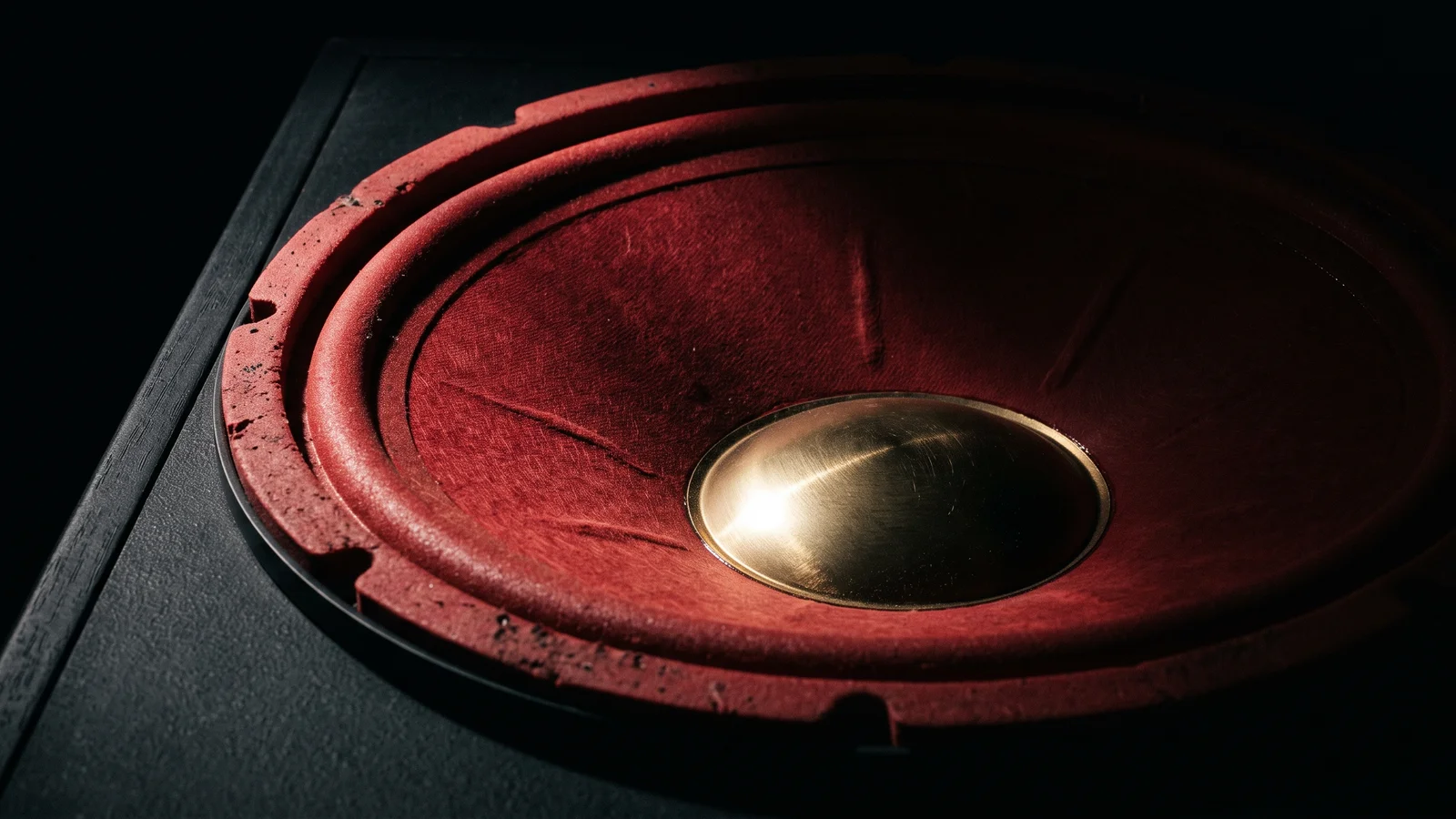
You can hear the results in what Cerwin-Vega became known for. Big, cheap, thunderous bass. Party and rock and DJ and club speakers that could fill a room and then some. The instantly recognizable red surround on the cone. And later the Stroker series of car-audio subwoofers, still marketed as the loudest in the world, plus red-coned 18-inch pro woofers that ended up inside PA and amplifier rigs everywhere, as Cerwin-Vega documents in its brand history.
I'll say the quiet part out loud. A lot of audiophiles used to sneer at gear like this. They shouldn't have. Building a driver that's genuinely efficient and can move real air without falling apart is hard engineering, and Czerwinski was doing it decades before "high output" became a marketing checkbox.
What was Sensurround, and how did it shake movie theaters?
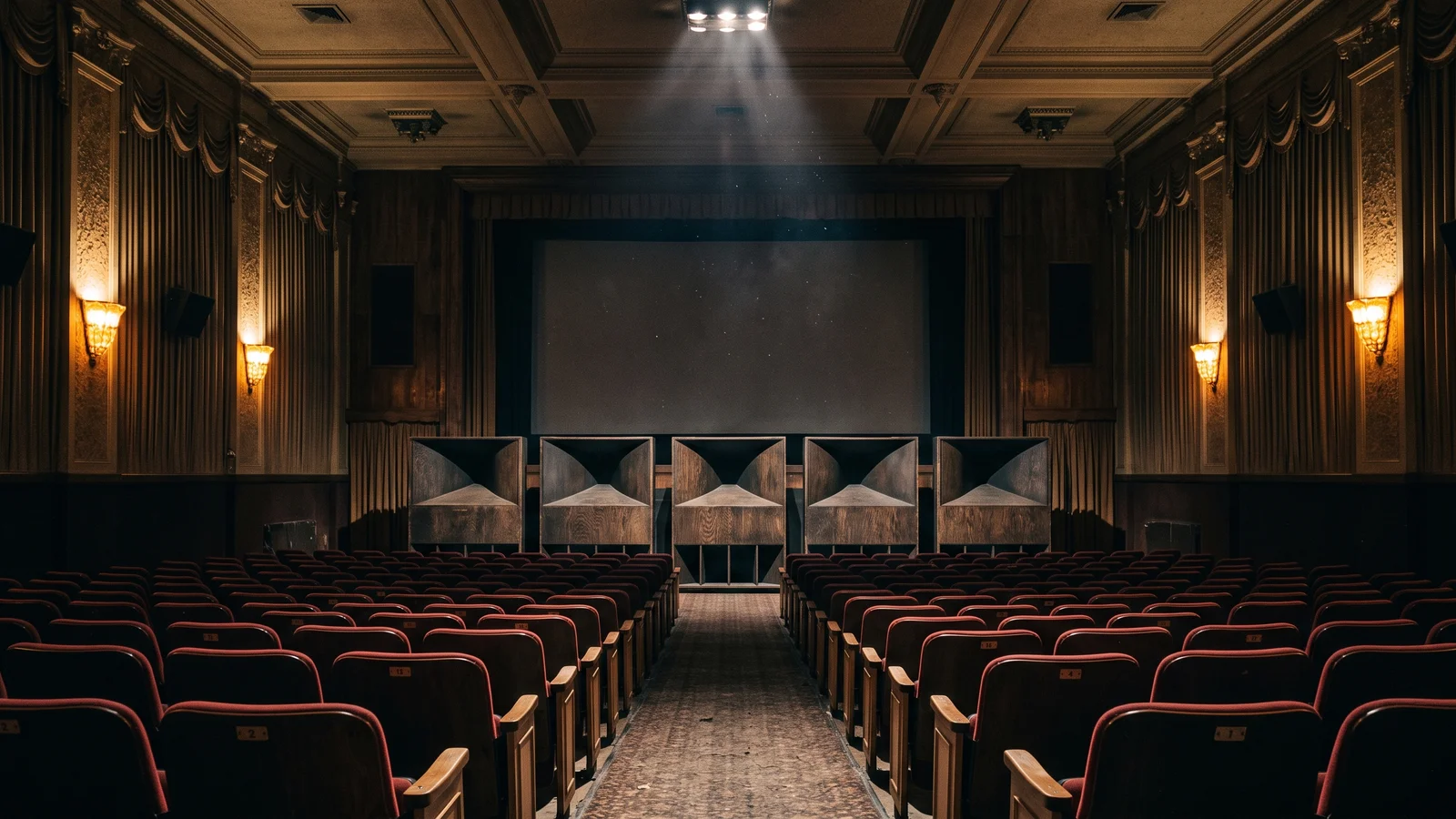
Sensurround, introduced in 1974 for the disaster film Earthquake, was a low-frequency system Cerwin-Vega engineered with Universal Studios, using banks of folded-horn subwoofers to reproduce rumble down to roughly 16 to 17 Hz at very high SPL, as KEF's explainer on the technology describes. Audiences didn't just hear the earthquake. They felt their seats move.
The scale of the install is the fun part. Reports cite as many as 18 to 20 folded-horn cabinets lined up in a single auditorium, pumping out infrasonic energy strong enough to physically vibrate the room, as KEF documents in its feature on the system. That's not a subwoofer. That's a weather event. Theater owners reportedly worried about plaster cracking loose from the ceilings.
Earthquake's groundbreaking sound was recognized with a Special Achievement Academy Award, as Red Bull Music Academy detailed in its retrospective on the film. Let me be precise about that, because the internet loves to garble it: the film's sound work earned the honor. Cerwin-Vega didn't personally collect an Oscar for building the subwoofers. What the company did earn was arguably bigger. Sensurround's folded-horn approach rippled outward into disco systems, club rigs, concert sound, and eventually home-theater subwoofers, as Wikipedia's entry on the format notes. Every time a movie makes your couch shake, there's a little Cerwin-Vega DNA in it.
This wasn't Czerwinski's first brush with landmark bass, either. Back in 1968 he built the custom 18-inch servo woofer used in Infinity's legendary Servo-Statik 1, one of the first speakers to use motional-feedback control on a woofer, as audioXpress has documented in its coverage of servo-control history. The man kept turning up wherever the deepest, most controlled bass of the era was being made.
How did Cerwin-Vega end up inside a guitar company?
Cerwin-Vega stayed independent under Gene Czerwinski from 1954 until it declared bankruptcy in 2003, after which it was acquired by the Stanton Group, according to Wikipedia's company history. That's the moment the brand stopped being a founder's shop and started becoming an asset that other people bought and sold. The chain that follows is a genuine head-spinner.
In 2007 the car and mobile division was split off to CVM Acquisition Services, operating as Cerwin-Vega Mobile. Then on December 5, 2011, Gibson, the guitar company, acquired the entire Stanton Group, as Crunchbase records the deal date. That single purchase swept up Cerwin-Vega's Pro and Home business, along with the KRK studio-monitor brand and Stanton DJ, folding all of them into Gibson Pro Audio, as announced at the time via PR Newswire. Worth underlining: Gibson bought Cerwin-Vega indirectly, as one item inside the larger Stanton buyout. Nobody at Gibson set out to acquire a folded-horn woofer company. It just came in the box.
Here's where it gets grim. Gibson's debt-financed roll-up, Gibson Innovations, went on a consumer-electronics shopping spree. It grabbed a majority stake in TEAC and TASCAM, took over the Philips-branded consumer-audio business, and partnered with Onkyo, as SonicScoop reported when the whole structure unraveled. And this is the part that stings if you love the gear. The loudest, most fun American speaker brand became a portfolio line item, bundled with TEAC, Philips-branded gear, and Onkyo inside a guitar company's roll-up that cared about scale and licensing more than the soul of a 130 dB folded-horn woofer. That slow hollowing-out, where a brand stops being a build and becomes a balance-sheet asset, is the pattern the writer Cory Doctorow calls enshittification, and audio nameplates keep starring in it.
The debt did exactly what debt does. Gibson Brands filed for Chapter 11 bankruptcy in May 2018, carrying up to roughly $500 million in debt and pointing straight at its electronics unit as the culprit, as Engadget reported. Industry coverage put the collapse in blunt terms, with Strata-gee detailing just how heavily the consumer-electronics gamble had loaded the company down, in its analysis of the filing. As part of the restructuring, Gibson dumped the audio brands. Cerwin-Vega was, once again, up for grabs. Gene Czerwinski didn't live to see it; he died in 2010.
Who owns Cerwin-Vega now?
Cerwin-Vega is owned, as of 2020, by Cerwin-Vega Inc. and Cerwin-Vega Mobile, the CVM side led by president Henry Razipour, which bought the Pro and Home brand back from Gibson on June 12, 2020, as audioXpress reported. That deal reunited Mobile, Pro, and Home under a single company for the first time in more than a decade. No later ownership change has been publicly confirmed.
This is the happy twist, and I don't get to write many of these. The buy-back put the brand in the hands of people who actually run Cerwin-Vega as a going concern, not a licensing footnote, as Mixonline reported when Gibson sold it back. After the Stanton flip, the guitar-company detour, and a half-billion-dollar bankruptcy, the loud kid from the garage came home more or less intact.
And the gear kept its reputation. The Stroker subwoofers and the classic party and PA speakers remain genuinely beloved, the kind of stuff people still hunt for used and drop into cars and DJ rigs today. The name still trades, the red cone still means something, and the engineering DNA, efficiency and real physical output, never got watered down the way some story arcs go. If you want to build real bass into a room today, the home theater systems worth having still respect the same physics Czerwinski chased in his garage.
Are Cerwin-Vega speakers still made, and what's the lesson?
Yes, Cerwin-Vega speakers are still made and sold under the reunified company that reacquired the Pro and Home brand in 2020, per audioXpress. The catalog still leans on the brand's identity: high output, big bass, and the Stroker line of car subwoofers still marketed as the loudest in the world.
So what's the takeaway? It isn't "loud is bad." Cerwin-Vega's obsession with efficiency and real, physical bass was right, and the survival of the brand proves people still want it. The lesson is quieter than the speakers. It's what happens when a build becomes a balance-sheet asset, when a company that once meant one engineer's ear gets shuffled through a bankruptcy, a guitar maker's roll-up, and a half-billion in debt before anyone who actually cares about the sound gets it back. The gear survived despite the ownership carousel, not because of it.
That's the whole reason some of us still work the old way. A speaker should be a build, not a line item. In our Arizona workshop we hand-build custom speakers to order, tuned for the actual room they'll live in, each one signed off and shipped with a birth certificate. Czerwinski would've understood that instinct completely. He was a garage guy who cared more about the woofer than the boardroom, and that's still the right way to do it.
Frequently Asked Questions
What happened to Cerwin-Vega?
Cerwin-Vega stayed independent from 1954 until it went bankrupt in 2003 and was bought by the Stanton Group. Guitar maker Gibson acquired it indirectly in December 2011, then filed Chapter 11 in May 2018. In June 2020, Cerwin-Vega Mobile bought the Pro and Home brand back from Gibson, reuniting the company.
Who owns Cerwin-Vega now?
Cerwin-Vega is owned, as of 2020, by Cerwin-Vega Inc. and Cerwin-Vega Mobile, the CVM side led by president Henry Razipour. The company bought the Pro and Home brand back from Gibson on June 12, 2020, reuniting the Mobile, Pro, and Home divisions under one owner. No later ownership change has been publicly confirmed.
Who founded Cerwin-Vega?
Cerwin-Vega was founded in 1954 by Gene (Eugene) Czerwinski, an aerospace engineer who had worked at Bendix and built speakers in his garage. The name combines Czerwinski and Vega; the company first traded as Vega Associates. Czerwinski, who died in 2010, focused from the start on high-efficiency, high-output "loud" loudspeakers.
What was Sensurround?
Sensurround was a low-frequency system Cerwin-Vega engineered with Universal Studios for the 1974 film Earthquake. Banks of folded-horn subwoofers, with reports citing up to 18 to 20 per auditorium, reproduced rumble down to roughly 16 to 17 Hz, physically shaking theater seats. The film's sound earned a Special Achievement Academy Award.
Are Cerwin-Vega speakers still made?
Yes. Cerwin-Vega speakers are still made and sold under the reunified company that reacquired the Pro and Home brand in 2020. The catalog keeps the brand's identity of high output and big bass, including the Stroker line of car-audio subwoofers still marketed as the loudest in the world.
Sources
- Wikipedia, "Cerwin-Vega": https://en.wikipedia.org/wiki/Cerwin-Vega
- Wikipedia, "Sensurround": https://en.wikipedia.org/wiki/Sensurround
- Cerwin-Vega, "About Us" (official company history): https://www.cerwinvega.com/pages/about-us
- KEF USA, "The History of Sensurround": https://us.kef.com/blogs/news/the-history-of-sensurround
- Red Bull Music Academy Daily, "The Earthquaking, Subwoofing Magic of Sensurround": https://daily.redbullmusicacademy.com/2019/07/earthquake-sensurround-cerwin-vega/
- KEF USA, "Sensurround: A Startling New Multi-Dimensional Film Experience": https://us.kef.com/blogs/news/sensurround-a-startling-new-multi-dimensional-film-experience
- audioXpress, "Cerwin-Vega Inc. Acquires Cerwin-Vega! Pro & Home Brands From Gibson": https://audioxpress.com/news/cerwin-vega-inc-acquires-cerwin-vega-pro-home-brands-from-gibson
- Mixonline, "Gibson Sells Cerwin-Vega to…Cerwin-Vega": https://www.mixonline.com/live-sound/cerwin-vega-gibson-acquisition
- PR Newswire, "Gibson Guitar Acquires Stanton Group": https://www.prnewswire.com/news-releases/gibson-guitar-acquires-market-leading-pro-audio-companies-krk-cerwin-vega-and-stanton-135019503.html
- Crunchbase, "Gibson acquires Stanton Group" (Dec 5, 2011): https://www.crunchbase.com/acquisition/gibson-guitar-corporation-acquires-cerwin-vega--60f3f495
- Engadget, "Gibson files for bankruptcy to ditch electronics, focus on guitars": https://www.engadget.com/2018-05-02-gibson-guitars-bankruptcy.html
- SonicScoop, "Gibson Brands Files for Bankruptcy — Owners of TASCAM, KRK, and Stanton": https://sonicscoop.com/gibson-brands-files-for-bankruptcy-owners-of-tascam-krk-and-stanton/
- TWICE, "Gibson Brands Files For Chapter 11 Protection": https://www.twice.com/industry/gibson-files-for-bankruptcy-protection
- Strata-gee, "Painting the Gibson Bankruptcy by the Numbers": https://www.strata-gee.com/painting-gibson-bankruptcy-numbers/
Mike Vincent is the founder of Mike Knows Audio Video and WubWub Audio, where he designs and hand-builds custom loudspeakers and home theaters in Arizona, the old way, for about fifteen clients a year. He has a real soft spot for engineers who cared more about moving air than moving units; if you want real, physical bass built for your actual room and signed off by hand, start with our custom loudspeakers.
Comments
Leave a Comment