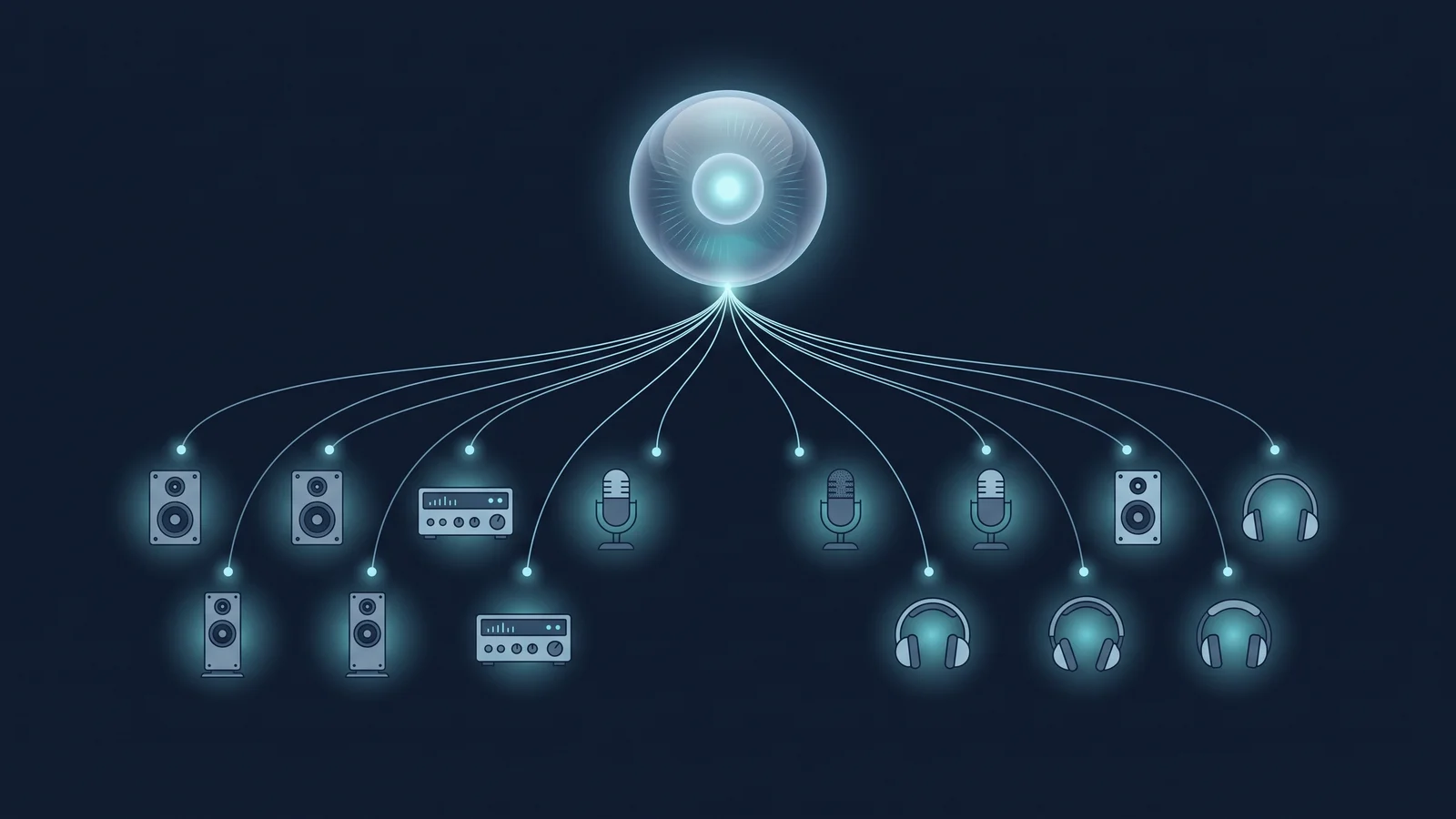
A phone company now owns JBL, Mark Levinson, Denon and Marantz. Follow the money and you'll see why: Samsung wanted the car business, and the audio brands came along for the ride.
Here's a thing that still trips people up at the counter. The company that makes your phone also makes your JBL speaker, your AKG headphones, and, since late 2025, your Denon receiver and your Marantz amp. One corporate parent, dozens of storied names. If you grew up thinking of these as rival American and European hi-fi houses, that world is gone.
I build loudspeakers by hand in Arizona, so I pay close attention to who really owns the names on the shelf. And the Samsung Harman story is the cleanest "follow the money" case in modern audio. It isn't a tale of a phone giant falling in love with music. It's a car-electronics deal, and the audio legends rode along in the trunk. Let me show you the receipts.
Key Takeaways
- Samsung Electronics announced its purchase of Harman in November 2016 for about $8 billion, or $112.00 per share cash, the largest overseas acquisition ever by a South Korean company.
- Roughly 65% of Harman's revenue was automotive, so Samsung was really buying the connected-car business; JBL, AKG, and the rest came with it.
- The Harman audio portfolio spans American and British heritage plus Austrian, Japanese, Swiss, and Canadian names: JBL, Harman Kardon, Infinity, AKG, Mark Levinson, Revel, Lexicon, Crown, Soundcraft, and Studer.
- In September 2025 Harman bought Sound United (Denon, Marantz, Bowers & Wilkins, Polk) for $350 million, about a third of what Masimo paid three years earlier.
- Bottom line: Samsung's 2017 Harman acquisition was primarily a bet on the automotive and connected-car business, and the consumer audio brands (JBL, Harman Kardon, AKG, Mark Levinson, and the rest) simply came along with the deal.
Who owns JBL now, and how did a phone company end up with it?
Samsung owns JBL. Samsung Electronics announced its acquisition of Harman International on November 14, 2016 for $112.00 per share in cash, roughly $8 billion total, and the deal closed on March 10, 2017, making Harman a wholly owned Samsung subsidiary. JBL, the loudspeaker company James B. Lansing started in 1946, has belonged to a Korean electronics giant ever since.
That one signature moved a lot of history. Harman didn't just own JBL. It held Harman Kardon, Infinity, AKG, Mark Levinson, Revel, and Lexicon on the consumer side, plus a stack of professional names. Samsung kept Harman's existing leadership and its Stamford, Connecticut headquarters, which is why the deal felt quiet to most listeners. The badges didn't change. The owner did.
For scale, it was a landmark even by Samsung's standards. Multiple outlets, including Bloomberg, reported it as the largest overseas acquisition ever made by a South Korean company at the time. Eight billion dollars is real money even for a chaebol. Which raises the obvious question. Why would a phone-and-television company want a house full of speaker brands in the first place?
Why did Samsung really buy Harman?
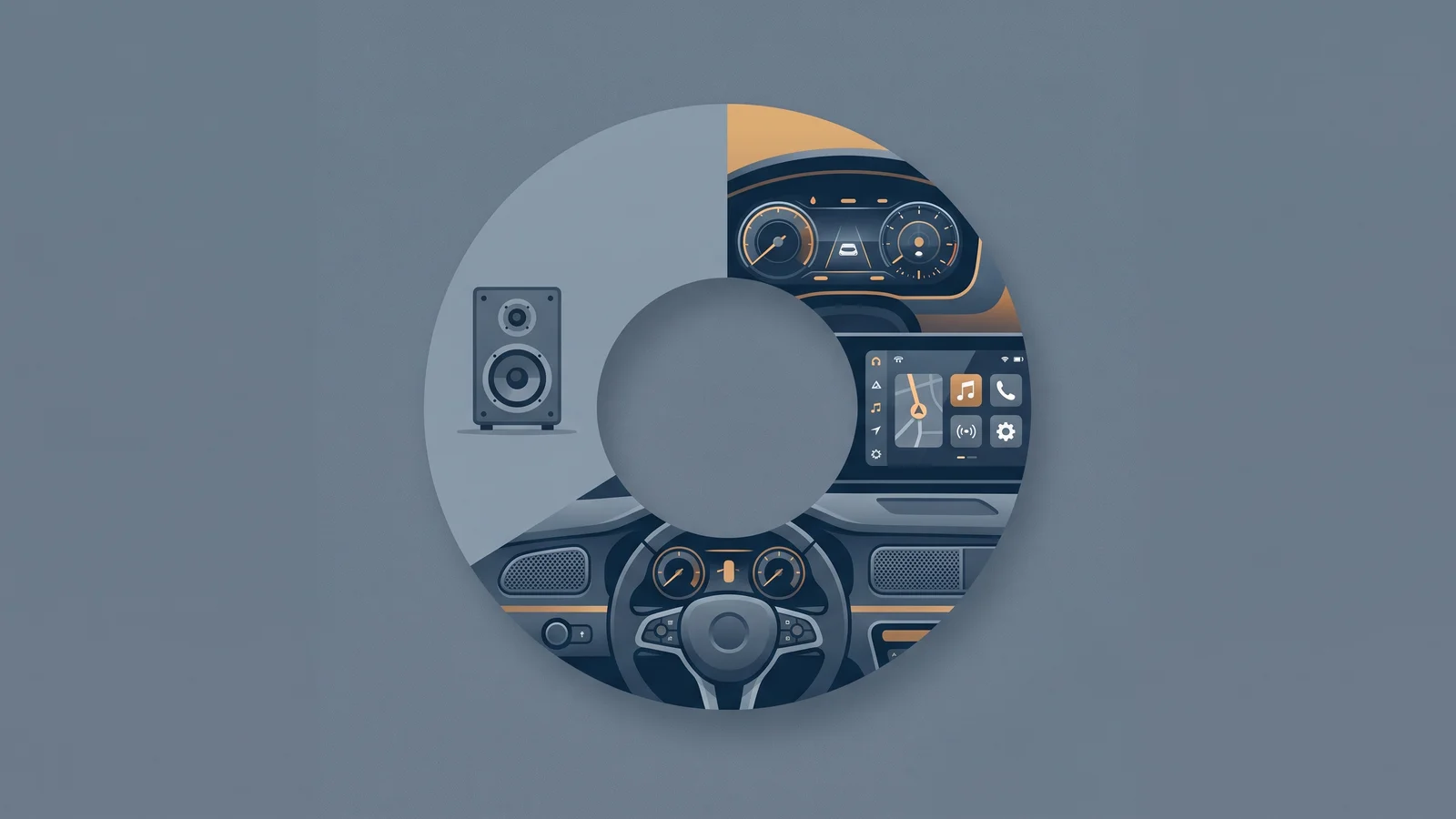
Samsung bought Harman for the cars, not the concerts. About 65% of Harman's roughly $7.0 billion in annual revenue came from automotive work, connected-car systems, infotainment, and telematics, according to Samsung's own announcement. The audio brands you recognize were the minority of the business. Samsung wanted the dashboard, and the drivers came bundled.
The numbers make the logic hard to argue with. At the time of the deal, more than 30 million vehicles on the road already carried Harman-built audio and connected systems, and Samsung pointed to a projected automotive-electronics market north of $100 billion by 2025. Forbes framed it the same way at the time: this was a bet on the connected car, full stop.
So here's the wry part I can't help pointing out. The Mark Levinson name, one of the most revered in American high-end audio, is now valuable to its owner in large part because it sells premium sound systems in Lexus sedans. That's not an insult. It's just the math. When you read Samsung's own investor materials on Harman, the word that keeps recurring isn't "music." It's "automotive."
How did Harman get all those brands in the first place?
Harman was already a conglomerate long before Samsung showed up. The company traces to Harman Kardon, founded in 1953 by Sidney Harman and Bernard Kardon, and over the following decades Harman International rolled up name after name: JBL, Infinity, AKG, Mark Levinson, Lexicon, Revel, and a long list of professional brands. By 2016 it was less a speaker company than a holding company that happened to own speaker companies.
That matters for the follow-the-money story, because it means Samsung didn't consolidate the audio industry by itself. It bought a machine that had already spent forty years doing the consolidating. When people ask how one owner ended up with so many legends, part of the answer is that the legends were pre-bundled. Samsung just wrote one very large check for the whole bundle, and the check was really about the cars riding on top of it.
What audio brands does Samsung's Harman actually own?
Samsung's Harman controls one of the deepest benches of legacy audio names anywhere. The 2017 deal alone brought in seven consumer brands plus a professional division, and the portfolio spans American and British audio heritage along with Austrian, Swiss, Japanese, and Canadian names. Some are still doing serious work. Others survive mostly as badges on car systems and lifestyle gear. Let's map it.
The consumer and lifestyle brands
Start with the names you'd know from a living room. JBL (US, 1946) is the volume engine now, everything from Bluetooth boxes to a still-serious JBL Professional line used in real studios and cinemas. Harman Kardon (US, 1953) leans lifestyle. Infinity (US, 1968), once a giant of American loudspeakers, lives mostly in car and OEM audio today. AKG (Austria, 1947) remains a respected maker of studio microphones and headphones.
Then the high end. Mark Levinson (US, 1972) still builds costly home electronics and lends its name to Lexus car audio. Revel (US, 1996) makes genuinely serious audiophile loudspeakers, the kind that measure well and get reviewed on merit. Lexicon (US, 1971) was a legend in digital reverb and AV processing. Each of these came to Samsung fully formed, decades of engineering absorbed in a single afternoon.
The professional audio brands
The pro side is where a lot of Harman's real credibility lives, and it's easy to forget. Crown builds the power amplifiers behind countless touring rigs and stadiums. dbx and DigiTech handle signal processing. Soundcraft and BSS Audio, both British, make mixing consoles and processing gear that working engineers actually reach for. And Studer, the Swiss console maker, is a name that means something in any serious recording room.
That professional catalog is the honest answer to anyone who assumes big-company ownership automatically ruins everything. Crown amps and Studer consoles aren't lifestyle fluff. They're tools. Samsung's Harman kept them serious, and that's a point worth sitting with before we get to the harder part of this story.
What did the 2025 Sound United deal add, and why is it strange?
The portfolio got dramatically bigger in 2025. Harman completed its purchase of the Sound United group on September 23, 2025 for $350 million, a deal first announced on May 6. That single transaction pulled Bowers & Wilkins, Denon, Marantz, Definitive Technology, Polk Audio, HEOS, Classé, and Boston Acoustics into the same house as JBL. Suddenly Samsung owned the receiver market and much of high-end hi-fi at once.
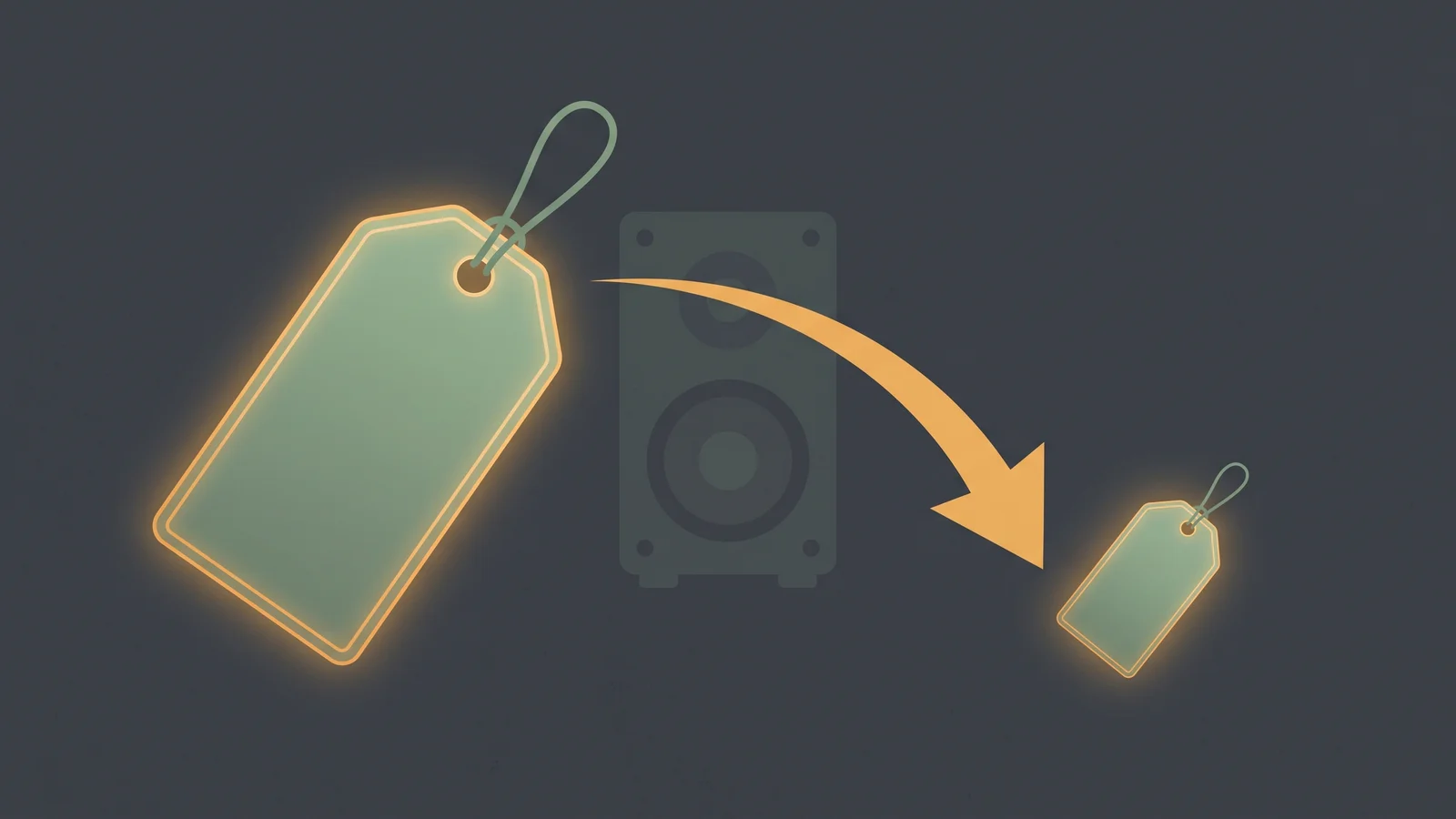
The strange part is the price. Medical-device maker Masimo had paid about $1.025 billion for those same brands in 2022, as its acquisition of Sound United was reported at the time. Harman bought them three years later for $350 million. That's roughly a two-thirds markdown on a bundle of legendary names in thirty-six months. When storied brands lose that much value that fast, it tells you they were being traded as assets, not nurtured as companies.
How does a billion-dollar bundle shed two-thirds of its value in three years? Through a boardroom fight, mostly. Masimo's move into consumer audio never sat well with its investors, and an activist campaign led by Politan Capital eventually ousted founder-CEO Joe Kiani in 2024. Once the new leadership decided audio wasn't core, the exit was less a sale than a fire sale. Denon, Marantz, and Bowers & Wilkins were collateral in someone else's proxy war, which is about as far from "built by an obsessive who cared about the sound" as it gets.
Sound United now runs as a standalone business unit inside Harman's Lifestyle Division. With it, Samsung's Harman is arguably the single largest owner of storied hi-fi names on the planet. That's my read, and it's shared by others: Audioholics called the combination an "audio empire," which is opinion but a fair one. Harman's own preferred phrasing is gentler, describing "one of the most comprehensive audio portfolios" in the business. Coverage from Forbes, Sound & Vision, and KED Global all landed on the same headline: the giant just got bigger.
Is one giant portfolio good or bad for the sound?
Honestly, it's both, and I'd be lying if I pretended otherwise. Consolidation at this scale is a real tension, not a simple villain story. On one hand, the risk is obvious and worth naming plainly. When a heritage brand becomes one line item in a multinational's portfolio, the temptation is to optimize it as a lifestyle product, chasing volume over voicing, until the name sells more than the sound does.
That's the pattern people have started calling enshittification: a beloved thing quietly reworked to serve the balance sheet instead of the listener. I'm naming it once, on purpose, because with dozens of names under one roof the pressure to turn every badge into a lifestyle SKU is structural. It isn't malice. It's just what portfolios do when nobody in the room is personally answerable for how a given speaker sounds.
Now let me be fair, because the other hand is real too. Harman kept JBL Professional, Mark Levinson, Revel, AKG, Crown, and Studer as genuinely serious lines, and its automotive audio is world-class by any measure. Consolidation also brought something small companies can't buy: global manufacturing scale and deep R&D funding. A well-run parent can pour money into acoustic research that a tiny founder-led shop simply can't match. That matters, and it's the strongest case for the giants.
So where does that leave a listener? With a question about accountability. When a brand is one entry in a portfolio spanning cars, phones, and a dozen audio badges, the person answerable for how it sounds is several org-charts removed from you, the customer. A small owner-run shop is the exact opposite. One builder is accountable for every speaker that leaves the bench, and that builder answers to your ears, not to a quarterly slide.
That's the whole reason I do it the way I do. I hand-build custom loudspeakers in Arizona for about fifteen clients a year, and when something isn't voiced right, there's exactly one person to blame, and he's holding the soldering iron. No portfolio. No org chart. Just the sound and the guy who made it. Both models can exist. I just know which one I trust with the thing that matters most.

Frequently Asked Questions
Who owns JBL now?
Samsung owns JBL. Samsung Electronics acquired Harman International, JBL's parent company, in a deal announced in November 2016 for about $8 billion and completed on March 10, 2017. JBL, founded by James B. Lansing in 1946, has been a wholly owned part of the South Korean electronics giant Samsung ever since, alongside AKG and Harman Kardon.
What audio brands does Samsung own?
Through its Harman division, Samsung owns JBL, Harman Kardon, Infinity, AKG, Mark Levinson, Revel, and Lexicon, plus professional lines like Crown, Soundcraft, BSS Audio, dbx, and Studer. Since September 2025 it also owns the Sound United brands: Denon, Marantz, Bowers & Wilkins, Polk Audio, Definitive Technology, Classé, HEOS, and Boston Acoustics.
Why did Samsung buy Harman?
Samsung bought Harman mainly for its automotive business, not its speakers. About 65% of Harman's roughly $7.0 billion in revenue came from connected-car systems, infotainment, and telematics. With more than 30 million vehicles already carrying Harman technology and a projected $100 billion-plus car-electronics market by 2025, the audio brands were essentially passengers in a car-tech deal.
Does Samsung own Denon and Marantz now?
Yes. Samsung's Harman division completed its purchase of the Sound United group, which includes Denon and Marantz, on September 23, 2025 for $350 million. The same deal brought Bowers & Wilkins, Polk Audio, Definitive Technology, Classé, HEOS, and Boston Acoustics under Samsung ownership, running as a standalone unit inside Harman's Lifestyle Division.
How much did Samsung pay for Harman?
Samsung paid about $8 billion for Harman, or $112.00 per share in cash, in a deal announced on November 14, 2016 and closed on March 10, 2017. It was the largest overseas acquisition ever made by a South Korean company at the time. Samsung later added the Sound United brands for a further $350 million in 2025.
Sources
- Harman - "Samsung Electronics Completes Acquisition of Harman" (March 10, 2017): https://news.harman.com/releases/samsung-electronics-completes-acquisition-of-harman
- Samsung Global Newsroom - "Samsung Electronics to Acquire Harman, Accelerating Growth in Automotive and Connected Technologies" (Nov 14, 2016; the 65% automotive rationale): https://news.samsung.com/global/samsung-electronics-to-acquire-harman-accelerating-growth-in-automotive-and-connected-technologies
- U.S. Securities and Exchange Commission - Harman International 8-K (Samsung merger announcement, $112.00 per share): https://www.sec.gov/cgi-bin/browse-edgar?action=getcompany&CIK=0000800459&type=8-K&dateb=&owner=include&count=40
- Bloomberg - "Samsung to Buy Harman for $8 Billion to Add Connected-Car Tech" (Nov 14, 2016): https://www.bloomberg.com/news/articles/2016-11-14/samsung-to-buy-harman-for-8-billion-to-add-connected-car-tech
- Forbes (Great Speculations) - "Why Samsung Is Buying Harman" (Nov 16, 2016): https://www.forbes.com/sites/greatspeculations/2016/11/16/why-samsung-is-buying-harman/
- Samsung Electronics - Investor Relations, business introduction / Harman investor materials: https://www.samsung.com/global/ir/ir-events-presentations/business-introduction/
- Harman - "Masimo to Sell Consumer Audio Business to Harman International" (Sound United completion, $350M, Sept 23, 2025): https://news.harman.com/releases/masimo-to-sell-consumer-audio-business-to-harman-international
- Masimo Investor Relations - "Masimo to Sell Consumer Audio Business to HARMAN International" (May 6, 2025): https://investor.masimo.com/news/news-details/2025/Masimo-to-Sell-Consumer-Audio-Business-to-HARMAN-International/default.aspx
- U.S. Securities and Exchange Commission - Masimo Corporation 8-K (Sound United sale, September 2025): https://www.sec.gov/cgi-bin/browse-edgar?action=getcompany&CIK=0000937556&type=8-K&dateb=&owner=include&count=40
- audioXpress - "Masimo Corporation Acquires Sound United to Expand Consumer Channel" ($1.025 billion, 2022): https://audioxpress.com/news/masimo-corporation-acquires-sound-united-to-expand-consumer-channel
- Forbes (Mark Sparrow) - "Harman To Acquire B&W, Denon, Polk And Marantz From Masimo In $350 Million Deal" (May 6, 2025): https://www.forbes.com/sites/marksparrow/2025/05/06/harman-to-acquire-bw-denon-polk-and-marantz-from-masimo-in-350-million-deal/
- Sound & Vision - Harman to acquire Sound United brands (2025): https://www.soundandvision.com/content/harman-acquire-sound-united-brands
- KED Global - "Harman acquires Masimo's audio arm in Samsung's car audio push" (May 7, 2025): https://www.kedglobal.com/mergers-acquisitions/newsView/ked202505070005
- Audioholics - "Harman Acquires Sound United" (the "audio empire" characterization, opinion): https://www.audioholics.com/news/harman-acquires-sound-united
- Wikipedia - "Harman International" (company history and brand roll-up): https://en.wikipedia.org/wiki/Harman_International
- MedTech Dive - Masimo consumer-audio sale and the Politan Capital proxy fight that ousted founder Joe Kiani: https://www.medtechdive.com/news/Masimo-consumer-audio-sale-Harman-Q1/747448/
Mike Vincent is the founder of Mike Knows Audio Video and WubWub Audio, where he designs and hand-builds custom loudspeakers and home theaters in Arizona, the old way, for about fifteen clients a year. He reads the ownership filings so you don't have to, and he keeps every build under one roof precisely so there's always a real person answerable for how a speaker sounds.
Comments
Leave a Comment